
Hanamkonda’s Thousand Pillar Temple
- 09 May 2026
In News:
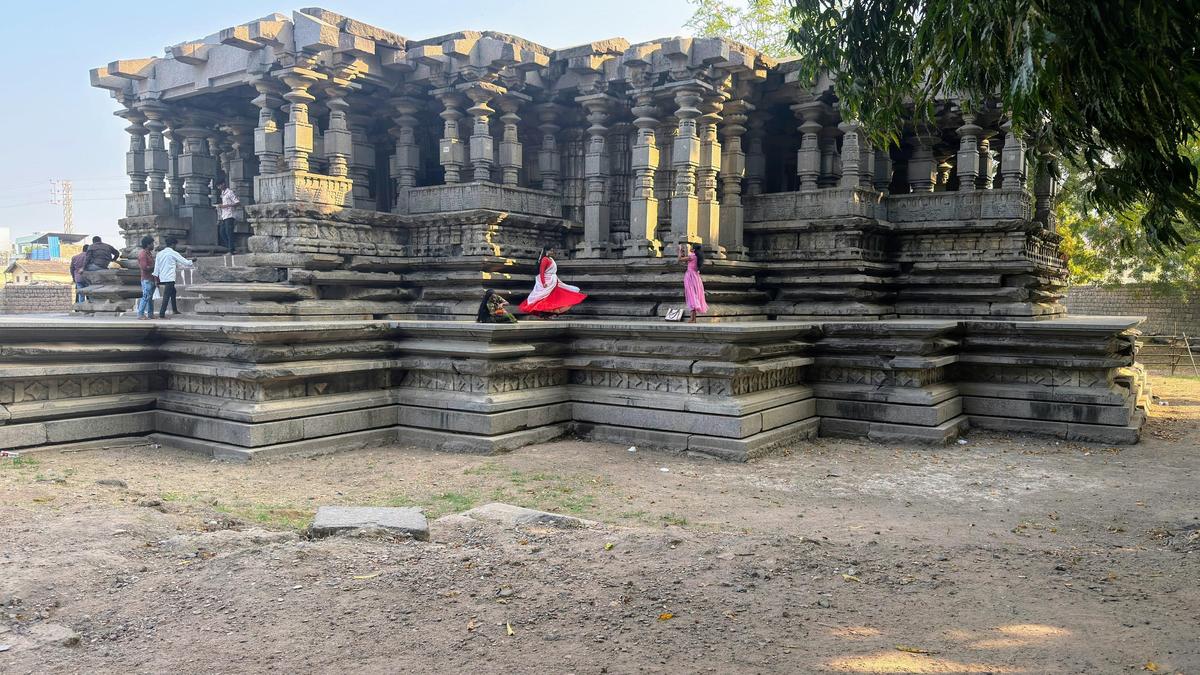
The Archaeological Survey of India (ASI) has achieved a monumental milestone by completing the 42-year-long restoration of the 12th-century dance pavilion (Kalyana Mandapam) at the Thousand Pillar Temple in Hanamkonda, Telangana. This meticulous reconstruction, which involved dismantling and reassembling the structure piece-by-piece, has not only revived a ransacked heritage site but also brought the ingenious "Sandbox Technology" of the Kakatiya era back into the global spotlight.
Hanamkonda’s Thousand Pillar Temple: A Trikutalaya Marvel
- Constructed in 1163 AD by the Kakatiya ruler Rudra Deva, the Thousand Pillar Temple is a masterpiece of medieval Indian architecture. It is a Trikutalaya—a triple-shrine temple—dedicated to the troika of Lord Shiva, Vishnu, and Surya Deva.
- Located in the historic city of Warangal, the temple is renowned for its star-shaped architecture, a design that provided greater surface area for the intricate carvings that characterize the Kakatiya style. While the temple is famous for its namesake "thousand pillars," the name actually derives from the sophisticated vertical carvings on many columns that create the visual illusion of multiple pillars.
- A major highlight of the temple complex is the monolithic Nandi. Carved from a single block of black basalt stone, this massive sculpture has also undergone recent restoration to repair its tail and folded leg, returning it to its original grandeur.
The Fall and Rise of the Kalyana Mandapam
The dance pavilion has endured a turbulent history. It was largely ransacked and damaged during the conquest by Ulugh Khan in 1323-24, leading to centuries of neglect. Over time, the structure suffered from foundational failure, causing it to sink into the earth. The restoration process was a complex "jigsaw puzzle" of stone, requiring modern engineers to re-learn the ancient geotechnical techniques used by the Kakatiyas to ensure the structure would remain stable for centuries to come.
Kakatiya-era Sandbox Technology: Ancient Earthquake Engineering
The most significant aspect of the temple’s durability is the use of Sandbox Technology, an indigenous geotechnical technique that predates modern seismic isolation methods.
How the Sandbox Works: Instead of building on conventional hard-rock foundations, Kakatiya engineers dug deep pits which were filled with a specific mixture:
- Primary Material: Fine sand.
- Binding Agents: A cocktail of lime, jaggery (unrefined sugar), and karakkaya (black myrobalan fruit).
This mixture created a flexible yet firm base. When the heavy stone pillars and beams were raised on this "sandbox," the foundation acted as a giant shock absorber.
Scientific Advantages:
- Seismic Resilience: During an earthquake, the sand acts as a cushion. Vibrations lose their intensity as they pass through the sand before reaching the stone structure. Laboratory tests indicate that this method can reduce vibration impact by nearly 60%.
- Unmatched Longevity: While modern rubber-based earthquake dampers degrade within 40 years, sand weathers at an incredibly slow rate. This technology has allowed Kakatiya monuments, including the UNESCO-listed Ramappa Temple, to survive for over 800 years.
- Sustainability: The technique is highly cost-effective and environmentally friendly, utilizing naturally available materials rather than industrial synthetics.
Western Disturbances
- 09 May 2026
In News:
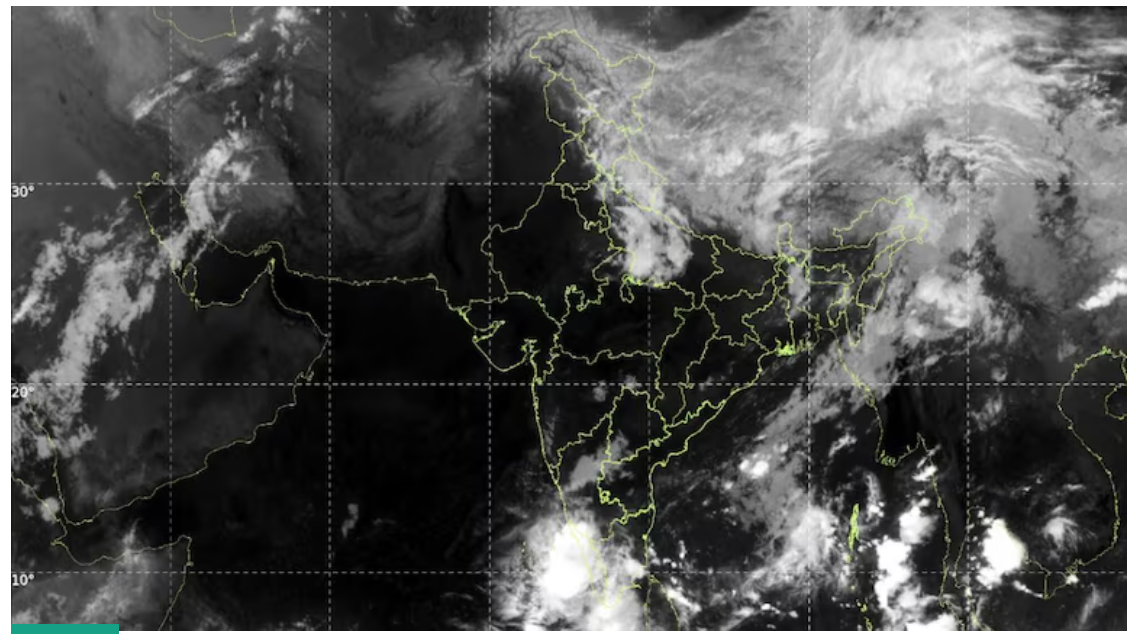
Northwest India is currently experiencing a temporary cessation of rainfall and thunderstorms as the most recent Western Disturbance (WD) weakens and shifts eastward. However, satellite imagery indicates that this respite may be short-lived, as new systems continue to develop, highlighting the persistent role these extratropical storms play in the Indian meteorological cycle.
Defining Western Disturbances
Western Disturbances are extratropical storm systems that originate in the Mediterranean region. Unlike the tropical cyclones that form in the Bay of Bengal or the Arabian Sea, WDs are non-tropical in nature and are driven by the Subtropical Westerly Jet Stream. These systems carry moisture-laden air from the Mediterranean Sea, and occasionally from the Caspian and Black Seas, traveling thousands of kilometers eastward across West and Central Asia to reach the Indian subcontinent.
The Etymology: Why "Western Disturbance"?
The nomenclature is derived directly from the system’s trajectory and meteorological impact:
- Western: Refers to the direction of origin (the Mediterranean region, west of India).
- Disturbance: In meteorological terms, this denotes an area of "disturbed" or reduced air pressure, which typically leads to unstable weather conditions, cloud cover, and precipitation.
Seasonal Impact and Geographic Reach
While WDs can occur year-round, they are most influential during the winter months (November to March) and early pre-monsoon season. Their reach extends across a vast geographic belt including Pakistan, North and Northwest India, Nepal, and Bangladesh.
In India, the primary beneficiaries and victims are the Himalayan states (which receive heavy snowfall) and the plains of Punjab, Haryana, Rajasthan, and Delhi (which receive winter rains).
The Economic and Agricultural Significance
For the Indian economy, particularly the agricultural sector, Western Disturbances are a double-edged sword:
- The Rabi Crop Vitality: The winter rain brought by these systems is crucial for the Rabi season. It provides the necessary moisture for crops like wheat, gram, and mustard. In the absence of WDs, Northwest India often faces "dry winters," leading to lower agricultural yields.
- Water Security: The heavy snowfall in the Himalayas serves as a frozen reservoir. As this snow melts during the summer, it feeds perennial rivers like the Ganga, Indus, and Yamuna, ensuring water availability for irrigation and hydropower.
- The Downside: Intense WDs can cause "disturbances" in the literal sense—triggering flash floods, landslides in the hills, and hailstorms in the plains that can severely damage standing crops just before harvest.
Climatological Interaction: The Subtropical Jet Stream
The intensity of a Western Disturbance is closely linked to the position and strength of the Subtropical Westerly Jet Stream. During winter, this jet stream shifts southward over the Indian subcontinent. When a WD embeds itself within this high-altitude wind current, it gains the momentum necessary to cross the high altitudes of the Hindu Kush and the Himalayas, bringing sudden weather shifts to the northern plains.
Chief of Defence Staff (CDS)
- 09 May 2026
In News:
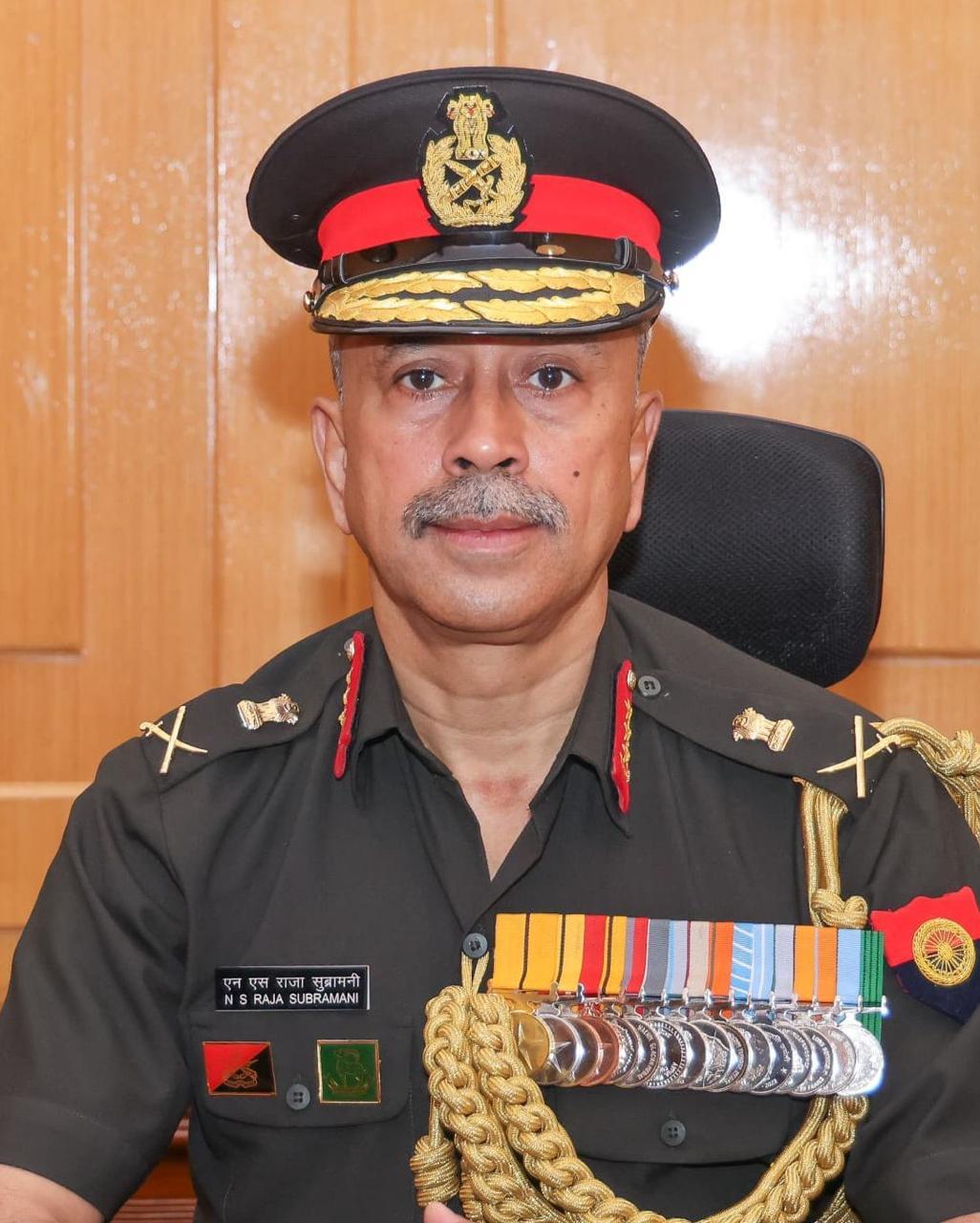
In a significant transition within India’s top military echelons, the Government of India has appointed Lieutenant General NS Raja Subramani as the next Chief of Defence Staff (CDS). Set to succeed General Anil Chauhan on May 30, 2026, Lt Gen Subramani brings a wealth of strategic experience to a role designed to revolutionize the Indian Armed Forces through integration and modernization.
About Lt Gen NS Raja Subramani
Lieutenant General NS Raja Subramani is a distinguished officer with a career spanning over four decades. Commissioned into the 8th Battalion of the Garhwal Rifles in December 1985, his trajectory reflects a blend of operational command and high-level strategic planning.
- Educational Excellence: An alumnus of the National Defence Academy (NDA) and Indian Military Academy (IMA), he has pursued advanced studies at the Joint Services Command Staff College (UK) and the National Defence College. His academic credentials include a Master’s Degree from King’s College London and an M.Phil in Defence Studies.
- Strategic Experience: Before his appointment as CDS, he served as the Military Adviser in the National Security Council Secretariat (NSCS) starting in September 2025, providing him with a holistic view of India's national security architecture.
Understanding the CDS: Role and Institutional Framework
The Chief of Defence Staff is the highest-ranking uniformed officer in the Indian Armed Forces, acting as a bridge between the political leadership and the military. The CDS holds three primary concurrent roles:
- Principal Military Adviser: Provides single-point military advice to the Union Defence Minister on all tri-services matters.
- Permanent Chairman of the Chiefs of Staff Committee (COSC): Leads the committee comprising the heads of the Army, Navy, and Air Force to ensure functional harmony.
- Secretary of the Department of Military Affairs (DMA): Heads a dedicated department within the Ministry of Defence created to handle military-specific administrative and structural tasks.
Historical Context:
The necessity for a CDS emerged from the lessons of the 1999 Kargil War. The Kargil Review Committee, led by K. Subrahmanyam, highlighted critical gaps in inter-service coordination. While a Group of Ministers (GoM) echoed the recommendation for a CDS in 2001, political and bureaucratic hurdles delayed the appointment for nearly 20 years.
The post was finally institutionalized on December 24, 2019, with General Bipin Rawat taking charge as India’s first CDS on December 31, 2019.
Mandate and Key Functions
The overarching objective of the CDS is to foster "Jointness"—a state where the three services operate as a single cohesive unit rather than independent entities. Key responsibilities include:
- Theatre Commands: The CDS is the primary driver behind the creation of Integrated Theatre Commands, which aim to unify the Army, Navy, and Air Force under a single operational commander for specific geographical regions.
- Unified Procurement and Planning: Rationalizing the acquisition of weapon systems to avoid duplication and ensure that the needs of all three services are met through a common budgetary framework.
- Indigenous Manufacturing: Strengthening the "Atmanirbhar Bharat" initiative by promoting Positive Indigenisation Lists and supporting domestic defence production.
- Joint Training and Logistics: Establishing common doctrines, joint training facilities, and integrated logistics nodes to optimize resource utilization and manpower.
Andaman & Nicobar Islands Set Guinness World Records

- 09 May 2026
In News:
The Andaman and Nicobar Islands have recently garnered global attention by securing two Guinness World Records in the span of just two days. These feats, centered around Swaraj Dweep (formerly Havelock Island), are part of a broader strategy to position the archipelago as a premier global hub for adventure and eco-tourism.
Record-Breaking Feats at Swaraj Dweep
The islands hosted two unprecedented underwater events designed to showcase the region's pristine marine environment:
- Largest Flag Unfurled Underwater: Near the world-renowned Radha Nagar Beach, divers successfully unfurled a massive Indian national flag measuring 60 meters by 40 meters.
- Tallest Human Stack Underwater: In the lighthouse area of the islands, a team of divers achieved a 10-meter-high human stack, setting a new benchmark for underwater coordination and skill.
These events hold particular significance for Swaraj Dweep. Renamed in 2018 to honor India’s independence struggle, the island is a vital part of the Ritchie’s Archipelago and serves as the face of the territory’s tourism industry.
Geographic and Administrative Profile
The Andaman and Nicobar Islands are a strategically vital Union Territory comprising 836 islands, islets, and rocks situated in the Bay of Bengal. With Port Blair as the capital, the archipelago is geographically divided into two primary groups:
- The Ten Degree Channel: Following the 10° North latitude, this maritime passage separates the Andaman group in the north from the Nicobar group in the south.
- Great Nicobar: This is the largest island in the Nicobar cluster, spanning approximately 910 sq. km.
- Indira Point: Located on Great Nicobar, this landmark represents the southernmost point of India.
Ecological Wealth and Indigenous Heritage
The region is one of India’s most significant biodiversity hotspots. It is characterized by dense tropical rainforests, extensive mangrove ecosystems, and vibrant coral reefs. This environment supports a high degree of endemism in both flora and fauna.
Equally critical is the human geography of the islands. The archipelago is the ancestral home of five Particularly Vulnerable Tribal Groups (PVTGs):
- The Great Andamanese
- The Jarwa
- The Onge
- The Shompen
- The Sentinelese (noted for their continued isolation)
The preservation of these tribes and their habitats remains a cornerstone of the islands’ administrative and environmental policies.
Strategic and Geopolitical Importance
Beyond tourism and ecology, the Andaman and Nicobar Islands are central to India’s maritime security and its "Act East" Policy.
- Maritime Chokepoints: The islands sit in close proximity to the Strait of Malacca, one of the world’s most critical and busiest maritime trade routes. This location allows India to monitor vital Sea Lines of Communication (SLOCs).
- Military Significance: The archipelago hosts the country's only integrated tri-service command (the Andaman and Nicobar Command), where the Army, Navy, and Air Force operate under a single operational commander. This unique setup enhances India’s rapid response capabilities in the Indian Ocean Region (IOR).
International Big Cat Alliance (IBCA)
- 09 May 2026
In News:
India is set to host the inaugural International Big Cat Alliance (IBCA) Summit in New Delhi from June 1st to 2nd, 2026.
Core Vision and the Delhi Declaration
The summit operates under the evocative theme: “Save Big Cats, Save Humanity, Save Ecosystem.” This underscores the ecological reality that big cats are "umbrella species"; by protecting their vast habitats, we inherently safeguard biodiversity, water security, and carbon sinks essential for human survival.
A primary outcome of this gathering will be the adoption of the ‘Delhi Declaration’. As the first global framework of its kind, the declaration aims to institutionalize:
- Transboundary Cooperation: Recognizing that wildlife does not adhere to political borders.
- Landscape-based Approaches: Moving beyond fragmented protected areas to holistic ecosystem management.
- Shared Priorities: Harmonizing anti-poaching protocols and habitat restoration efforts across range countries.
Genesis and Institutional Framework
The IBCA was envisioned by the Prime Minister of India in 2023, coinciding with the 50th anniversary of Project Tiger. Following its formal approval by the Union Cabinet in February 2024, the alliance was established through the National Tiger Conservation Authority (NTCA) under the Ministry of Environment, Forest & Climate Change (MoEFCC).
The IBCA is designed as a centralized global platform that serves three critical functions:
- Knowledge Repository: A digital and technical hub for sharing best practices in conservation.
- Expertise Exchange: Facilitating the transfer of technology and scientific research between nations.
- Financial Resource Mobilization: Funding localized conservation initiatives in developing range countries.
Target Species and Membership
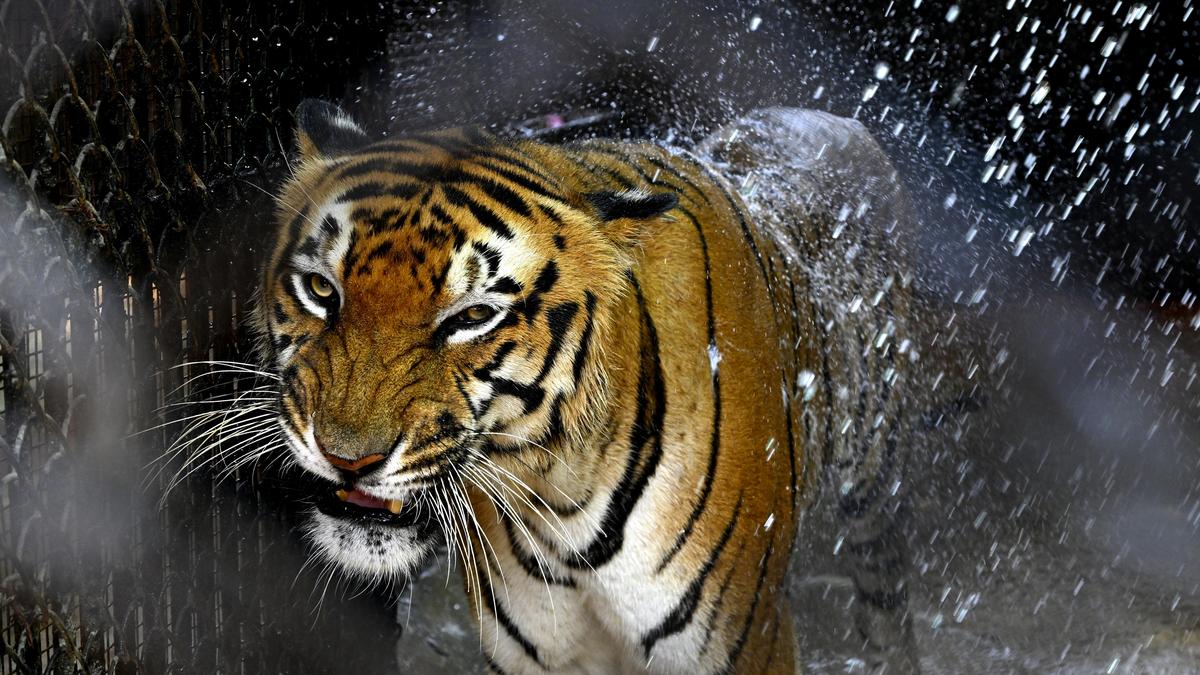
The alliance focuses on the conservation of seven major big cat species: the Tiger, Lion, Leopard, Snow Leopard, Cheetah, Jaguar, and Puma. Out of these, India is the only nation in the world to provide a natural home to five of these species (excluding the Jaguar and Puma).
Currently, the alliance boasts 24 member countries and 5 observer countries (Kazakhstan, Namibia, Thailand, Ecuador, and Vietnam). Eligibility is inclusive, extending to all United Nations member countries, regardless of whether they are "range countries" (nations where these cats naturally reside) or "non-range countries" interested in supporting the cause.
The Crisis and the Need for IBCA
The initiative arises from an urgent ecological crisis. Big cat populations worldwide are plummeting due to:
- Habitat Loss and Fragmentation: Expanding infrastructure and agriculture are shrinking the territories these predators require.
- Poaching and Illegal Trade: High demand for body parts in various markets remains a persistent threat.
- Human-Wildlife Conflict: As habitats shrink, interactions between humans and predators often lead to retaliatory killings.
- Climate Change: Shifting weather patterns are altering the prey base and vegetation of sensitive ecosystems like the Himalayas (home to the Snow Leopard).
Financial Commitment and Future Outlook
To ensure the alliance’s initial viability, the Government of India has committed Rs. 150 crore for the period of 2023-2028. Beyond this initial corpus, the IBCA is actively exploring diverse funding streams, including bilateral and multilateral aid, as well as contributions from international donor organizations and the private sector.
For India, the IBCA is an extension of its domestic success with Project Tiger and Project Lion. By leading this alliance, India transitions from a regional conservation player to a global steward, providing a template for how the Global South can lead in environmental preservation through South-South cooperation and indigenous conservation models.