
Netra Airborne Early Warning and Control (AEW&C) System
- 28 Jun 2026
In News:
India's indigenous Netra Airborne Early Warning and Control (AEW&C) system has received Final Operational Clearance (FOC), making it fully operational for deployment by the Indian Air Force (IAF).
About Netra AEW&C
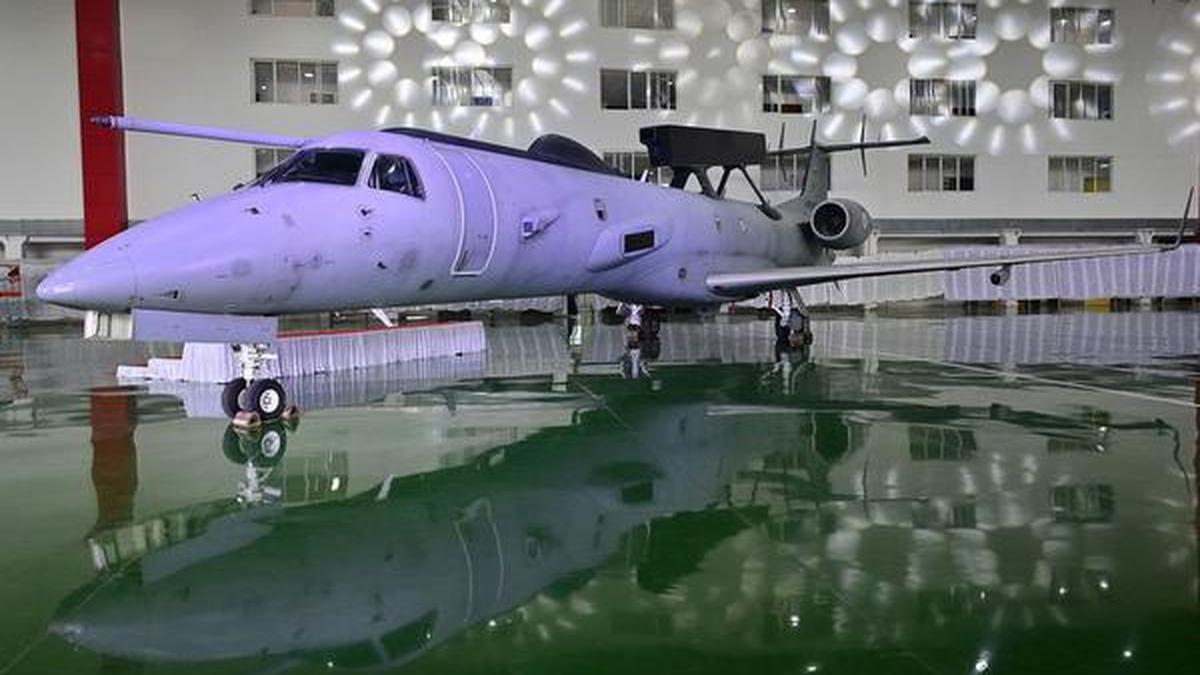
Netra is India's first indigenously developed Airborne Early Warning and Control (AEW&C) system, designed by the Centre for Airborne Systems (CABS) under the Defence Research and Development Organisation (DRDO). It serves as an airborne surveillance, command-and-control and battle-management platform, providing the Indian Air Force with real-time situational awareness during military operations.
With the development of Netra, India became the fifth country, after the United States, Russia, Israel and China, to possess an indigenous AEW&C capability.
How It Works
The system is mounted on the Embraer EMB-145I aircraft and functions as an "eye in the sky." Its Active Electronically Scanned Array (AESA) radar continuously scans the surrounding airspace to detect, identify and track hostile aircraft, missiles and selected maritime targets over long distances. The information is processed onboard and transmitted securely to fighter aircraft, air-defence systems and ground command centres, enabling rapid operational decision-making.
Key Features
Netra is equipped with an AESA radar, Identification Friend or Foe (IFF) system, Electronic Support Measures (ESM), Communication Support Measures (CSM), mission computers, secure communication links and self-protection systems. Together, these systems enable long-range surveillance, target tracking, electronic intelligence and airborne command-and-control during combat operations.
Operational Importance
Netra acts as a force multiplier by providing early warning of aerial threats, enhancing situational awareness and supporting network-centric warfare. It coordinates fighter aircraft, guides interception missions, strengthens air-defence operations and significantly improves India's ability to monitor its airspace without depending solely on ground-based radars.
Background
India's airborne surveillance programme began in the 1980s under Project Guardian, which used a modified HS-748 Avro aircraft. The programme suffered a setback following the 1999 Arakkonam crash, but was revived in 2004, eventually leading to the successful development of the Netra AEW&C system.
Significance
Netra has already demonstrated its operational effectiveness during the 2019 Balakot air strikes and Operation Sindoor (2025) by enhancing surveillance, battlefield awareness and command-and-control capabilities. Since the system is developed indigenously, India retains complete control over its software, source codes and future upgrades, reducing dependence on foreign manufacturers and strengthening defence self-reliance under the Atmanirbhar Bharat initiative.
The Cabinet Committee on Security (CCS) has approved six upgraded Netra Mk-1A systems, while the upcoming Netra Mk-2, to be mounted on the Airbus A321 platform, is expected to significantly expand India's airborne surveillance capability.
e-Sushrut@Clinic
- 28 Jun 2026
In News:
The Union Ministry of Health is set to launch e-Sushrut@Clinic, a cloud-based Hospital Management Information System (HMIS) aimed at enabling small and medium healthcare facilities to adopt affordable digital healthcare solutions and strengthen the Ayushman Bharat Digital Mission (ABDM) ecosystem.
About e-Sushrut@Clinic
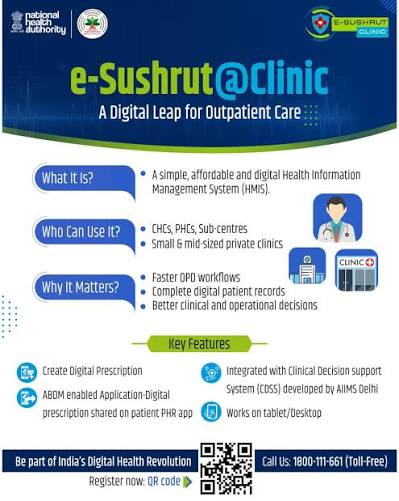
- e-Sushrut@Clinic is a lightweight, cloud-based HMIS developed by the Centre for Development of Advanced Computing (C-DAC).
- It is specifically designed for outpatient clinics, primary health centres (PHCs), Health and Wellness Centres (HWCs), sub-centres, private clinics, and medium-sized healthcare facilities.
- The platform caters to a wide range of healthcare professionals, including general practitioners, specialists, pharmacists, nurses, laboratory technicians, allied health workers, and clinic administrators.
- It is a simplified version of the flagship e-Sushrut HMIS, which is already operational in 17 AIIMS and over 4,000 healthcare facilities across India.
- The initiative seeks to reduce dependence on manual record-keeping and eliminate the need for costly IT infrastructure, making healthcare digitisation accessible to smaller establishments.
Key Features
- Comprehensive Digital Clinic Management: Supports patient registration, outpatient management, electronic preions, billing, pharmacy, nursing services, MIS reporting, and digital health records.
- Cloud-Based Architecture: Can be accessed through laptops or mobile devices without requiring dedicated servers or advanced technical expertise.
- ABDM Integration: Seamlessly integrates with the Ayushman Bharat Digital Mission, including the Health Facility Registry (HFR), Health Professional Registry (HPR), and ABHA-enabled digital health ecosystem.
- Easy Onboarding: Healthcare providers can register through HFR/HPR or complete registration directly on the platform.
- Clinical Decision Support: Incorporates AIIMS-developed Clinical Decision Support Systems (CDSS) for hypertension and diabetes to assist doctors in diagnosis and treatment.
- Speech-to-Text Functionality: Enables faster and more efficient clinical documentation.
- Online and Offline Operations: Ensures uninterrupted clinic management even in areas with limited internet connectivity.
- Affordable Pricing: Available at ?499 per month for up to five users. Under the partnership between the National Health Authority (NHA) and C-DAC, eligible users receive a ?200 monthly subsidy, reducing the effective subion cost to ?299 per month. Additional users can be added at ?50 per month, while the first three months are offered free of cost.
Implementation and Future Roadmap
- More than 800 healthcare facilities have already adopted the platform, generating over 680 digital health records during the initial rollout.
- Under the collaboration between NHA and C-DAC:
- NHA will provide cloud hosting, SMS services, customer support, and ecosystem integration.
- C-DAC will be responsible for software maintenance, upgrades, and nationwide expansion.
- The initiative is expected to accelerate the digitisation of primary healthcare institutions and deepen the reach of India's digital health ecosystem under the Ayushman Bharat Digital Mission (ABDM).
Bharat Taxi
- 28 Jun 2026
In News:
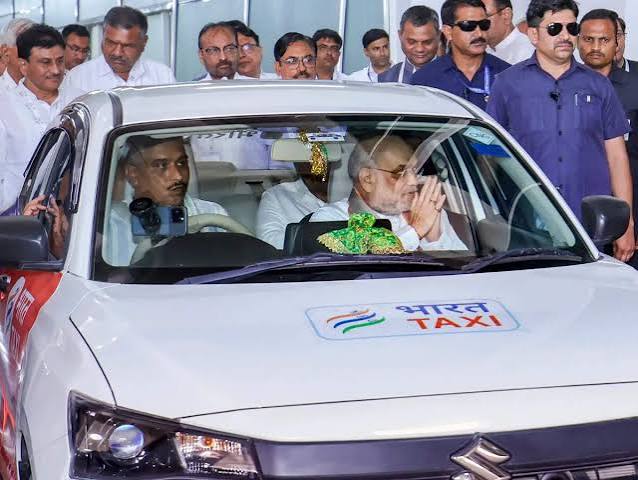
The Union Home Minister recently launched Bharat Taxi, India's first cooperative-led, driver-owned ride-hailing platform, in Gujarat.
About Bharat Taxi
- Bharat Taxi is India's first cooperative-model ride-hailing platform registered under the Multi-State Cooperative Societies Act, 2002.
- It is a government-supported initiative developed under the Ministry of Cooperation with technical support from the National e-Governance Division (NeGD).
- Unlike conventional cab aggregators, Bharat Taxi follows a cooperative ownership model in which drivers, referred to as "Sarathis", are shareholders and members of the cooperative rather than merely service providers.
- The platform has been developed by Sahkar Taxi Cooperative Limited with support from eight major cooperative institutions—NCDC, GCMMF (Amul), NDDB, NAFED, IFFCO, KRIBHCO, NABARD and NCEL.
Key Features
- Bharat Taxi operates on a driver-owned cooperative model, enabling drivers to purchase shares and participate in the management of the platform.
- The platform follows a zero-commission policy, ensuring that the entire fare collected from passengers is transferred directly to the driver.
- It also adopts transparent pricing, eliminating surge pricing during periods of high demand.
- The platform is integrated with India's digital public infrastructure, including DigiLocker, UMANG and API Setu, to facilitate seamless digital verification and service delivery.
- It complies with the Government of India's data protection and cybersecurity standards and provides drivers with access to loans, insurance and business expansion opportunities through the cooperative ecosystem.
Significance
Bharat Taxi seeks to strengthen the cooperative movement by extending it to the digital platform economy. The initiative aims to improve drivers' incomes by eliminating intermediary commissions, promote transparent pricing for consumers, and provide greater social security and financial inclusion to drivers. It also supports the vision of "Sahkar Se Samriddhi" by demonstrating how cooperative institutions can participate in the digital economy.
World's First Nuclear Heat-Based Hydrogen Production Facility
- 28 Jun 2026
In News:
The Department of Atomic Energy (DAE) has inaugurated the world's first hydrogen production facility based on the Copper–Chlorine (Cu–Cl) thermochemical cycle, utilizing nuclear process heat from the Fast Breeder Test Reactor (FBTR) at IGCAR, Kalpakkam (Tamil Nadu).
About the Facility
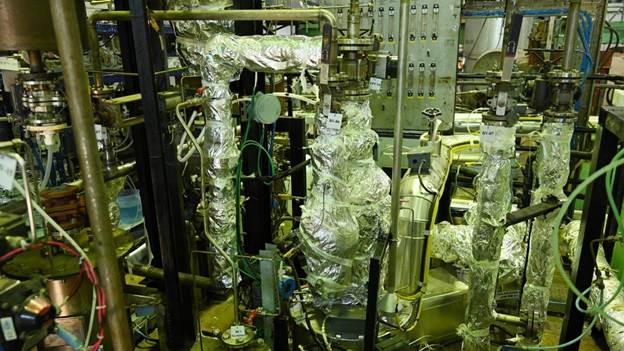
The facility is a technology demonstrator that produces carbon-free hydrogen using nuclear heat instead of relying primarily on electricity for conventional water electrolysis. It has been jointly established by the Bhabha Atomic Research Centre (BARC) and the Indira Gandhi Centre for Atomic Research (IGCAR). The Cu–Cl thermochemical process has been developed indigenously by BARC, while IGCAR integrated the technology with the Fast Breeder Test Reactor.
The project marks the first successful integration of nuclear process heat with hydrogen production, demonstrating the potential of advanced nuclear reactors for clean hydrogen generation.
Objectives
The facility aims to expand the role of India's three-stage nuclear power programme beyond electricity generation by enabling industrial-scale hydrogen production. It also seeks to strengthen India's clean energy transition, energy security and low-carbon development through indigenous technology.
How the Cu–Cl Thermochemical Cycle Works
The process uses a series of chemical reactions involving copper and chlorine compounds to split water into hydrogen and oxygen. High-temperature process heat from the Fast Breeder Test Reactor (FBTR) drives the reactions, while only a small amount of low-voltage electrolysis is required to regenerate the reactants, making the process more energy-efficient than conventional electrolysis.
Key Features
The facility is powered by FBTR, India's only operational sodium-cooled Fast Breeder Test Reactor. The Cu–Cl cycle operates at a maximum temperature of about 530°C, considerably lower than the Sulfur–Iodine thermochemical cycle, which requires temperatures above 850°C. The electrolysis stage requires only 0.5–1.0 volts, reducing electricity consumption. Unlike renewable-based hydrogen production, the nuclear-powered system can operate continuously, ensuring round-the-clock hydrogen generation.
Significance
The project demonstrates India's leadership in advanced nuclear technology and clean hydrogen production. It provides a pathway for decarbonizing industries such as steel, refineries and chemicals, supports the production of green ammonia for fertilizers, and promotes hydrogen use in transport and energy storage. It also reinforces the objectives of Atmanirbhar Bharat, strengthens India's three-stage nuclear programme and showcases the successful commercialization of indigenous nuclear technologies.
GPS Aided GEO Augmented Navigation (GAGAN)
- 28 Jun 2026
In News:
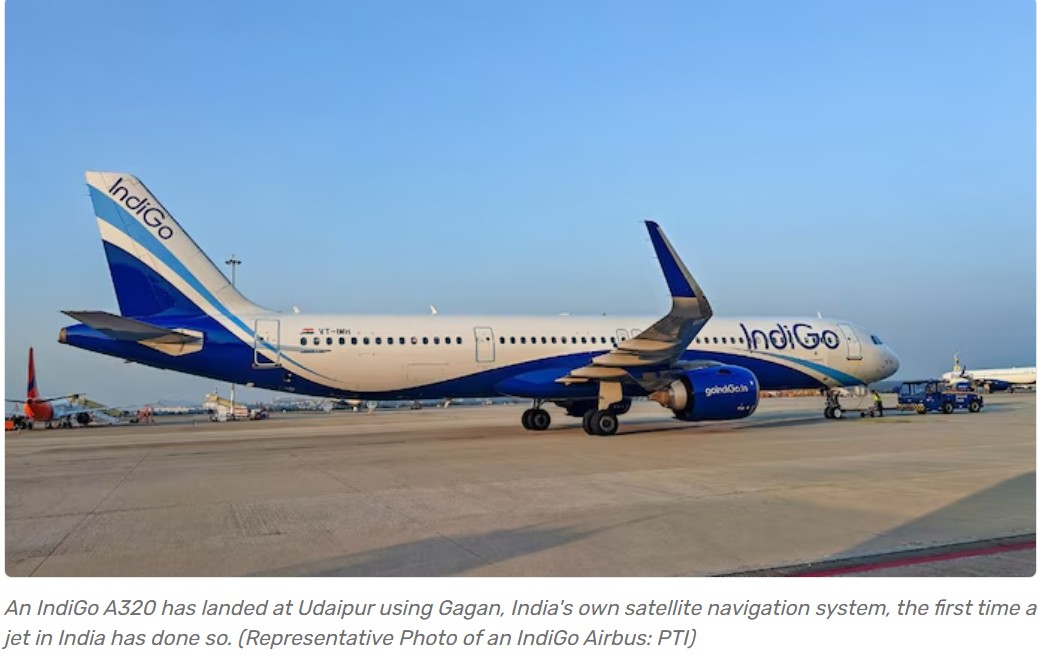
Recently, under the supervision of the Directorate General of Civil Aviation (DGCA), a private jet landed using GPS Aided GEO Augmented Navigation (GAGAN) for the first time in India, marking an important milestone in the adoption of satellite-based navigation for civil aviation.
About GAGAN
GPS Aided GEO Augmented Navigation (GAGAN) is India's Satellite-Based Augmentation System (SBAS), jointly developed by the Airports Authority of India (AAI) and ISRO. It enhances the accuracy, integrity and reliability of GPS signals, enabling aircraft to navigate and land with greater precision, particularly where conventional ground-based navigation systems are limited.
Objectives
GAGAN aims to provide highly accurate satellite-based navigation services for civil aviation, improve air traffic management across Indian airspace, and ensure seamless navigation by remaining interoperable with other international SBAS networks.
How GAGAN Works
GAGAN functions through an integrated ground segment and space segment. A network of 15 Indian Reference Stations (INRES) continuously monitors GPS signals and detects errors caused by ionospheric disturbances, satellite orbit deviations and clock inaccuracies. These observations are processed at the Indian Master Control Centre (INMCC), which generates correction and integrity messages. The corrections are then transmitted through the Indian Land Uplink Station (INLUS) to geostationary satellites, which broadcast the corrected navigation signals to aircraft equipped with compatible receivers.
The space segment comprises the geostationary satellites GSAT-8 (2011), GSAT-10 (2012) and GSAT-15 (2015), each carrying GAGAN payloads to relay these correction messages over the Indian region.
Significance
GAGAN significantly improves the accuracy and safety of aircraft navigation and precision landings, particularly during poor weather conditions. It enhances air traffic management, reduces dependence on costly ground-based navigation aids, optimizes flight paths to save fuel, and aligns India's aviation infrastructure with global satellite-based navigation standards.