
Revised Foreign Direct Investment (FDI) Policy for E-Commerce Exports

- 29 Jul 2026
In News:
The Government has revised the Foreign Direct Investment (FDI) policy to allow foreign-funded e-commerce companies to own and maintain inventories exclusively for exporting goods manufactured or produced in India. The change creates an export-specific exemption while retaining restrictions on inventory-based e-commerce for domestic retail sales.
What is the Revised FDI Policy?
- The revised policy permits foreign-owned e-commerce entities to procure, own, and manage inventories in India only for export purposes. The products must be manufactured or produced in India and sold exclusively in overseas markets.
- However, the existing prohibition on foreign-funded inventory-based e-commerce for domestic B2C retail sales continues, thereby protecting small retailers and maintaining the ban on FDI in multi-brand retail.
- The policy will come into force after the relevant notification under the Foreign Exchange Management Act (FEMA), 1999.
Key Features
- The policy creates a dedicated export-specific exception to India's existing FDI rules for e-commerce.
- Global e-commerce companies such as Amazon and Flipkart can now source products directly from Indian manufacturers, maintain export inventories, and manage activities such as quality testing, packaging, labelling, traceability, and export logistics.
- The measure aims to reduce compliance burdens for exporters and improve access to international markets, particularly for MSMEs, artisans, and manufacturers located in Tier-2 and Tier-3 cities.
Inventory-Based vs Marketplace Model
|
Feature |
Inventory-Based Model |
Marketplace Model |
|
Ownership of Goods |
E-commerce entity owns inventory |
Goods owned by independent sellers |
|
Role |
Direct seller to consumers |
Platform only connects buyers and sellers |
|
FDI Status |
Allowed only for exports under revised policy |
Up to 100% FDI permitted under automatic route |
|
Domestic Retail |
Foreign-funded B2C sales prohibited |
Platform can facilitate sales but cannot own sellers' inventory |
|
Export Model |
Platform manages exports directly |
Exports undertaken by sellers |
Pithora Painting

- 29 Jul 2026
In News:
The Pithora Painting, a traditional wall art of Gujarat's tribal communities, has been awarded the Geographical Indication (GI) tag in 2026, recognising its unique cultural heritage and traditional craftsmanship.
What is Pithora Painting?
- Pithora Painting is a traditional ritual wall painting practiced primarily by the Rathwa, Bhil, and Bhilala tribes of Gujarat, especially in the districts of Panchmahal and Chhota Udaipur. Believed to date back to the 13th century, it is deeply associated with tribal faith, rituals, and community life.
- The art is named after Pithora De, the tribal deity believed to bring prosperity, marriage, fertility, and well-being.
Key Features
- Traditionally, Pithora paintings are created on the interior walls of houses during important occasions such as marriages, childbirth, festivals, and the fulfilment of vows to invoke divine blessings.
- The paintings are executed by specialist ritual artists known as Lakharas, under the supervision of a tribal priest called the Badwa.
- Walls are first prepared using a mixture of cow dung and clay, after which artists paint using natural pigments obtained from minerals and plants. Bamboo sticks, cotton swabs, and wooden stencils are commonly used as painting tools.
- The paintings depict Pithora De, other tribal and Hindu deities, horses, birds, animals, trees, farming, hunting, dancing, and scenes from everyday tribal life.
SHetA2 Therapy
- 29 Jul 2026
In News:
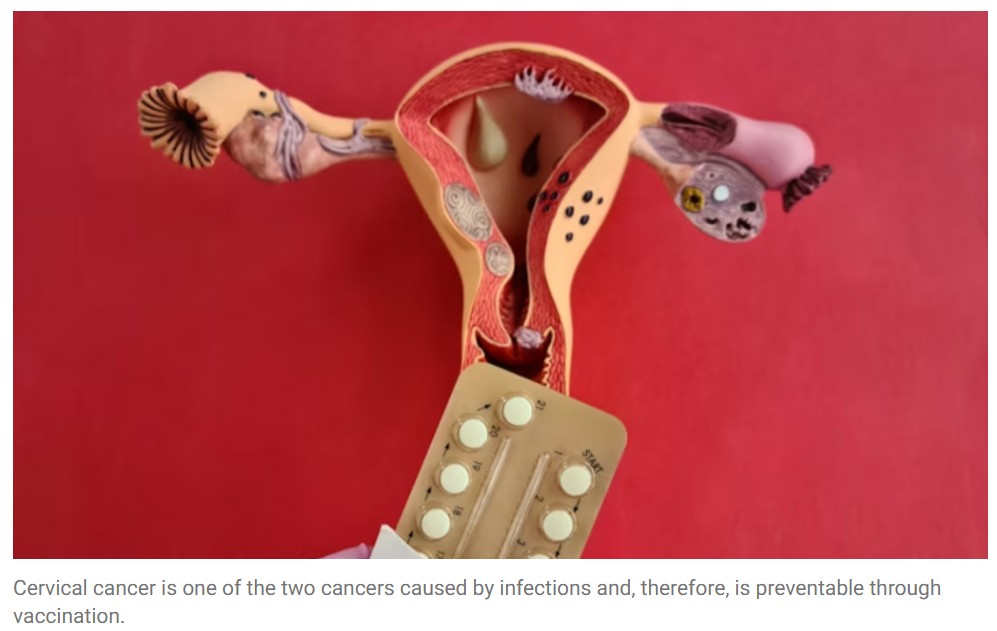
A new oral therapy called SHetA2 has shown promising results in preventing Human Papillomavirus (HPV) infection from progressing to cervical cancer. The therapy is being evaluated as a potential treatment for HPV-induced cervical dysplasia and early cervical cancer.
What is SHetA2 Therapy?
- SHetA2 is a small molecule therapy developed to prevent HPV infection from becoming cancerous. Small molecule drugs are chemically synthesized, low-molecular-weight compounds that are easily absorbed by the body and can enter cells to target specific proteins.
- The therapy is currently being evaluated as an oral capsule for treating precancerous cervical lesions (cervical dysplasia) and cervical cancer caused by HPV infection.
How Does SHetA2 Work?
- SHetA2 targets three host proteins—Mortalin, Heat Shock Cognate 70 (Hsc70), and Glucose-Regulated Protein 78 (Grp78)—which are essential for the survival and activity of HPV-induced cancer cells.
- It disrupts the interaction between the HPV-E7 oncoprotein and a protective protein inside human cells. Once this protective interaction is broken, the E7 protein is destroyed by the body's natural defence mechanisms, preventing abnormal cells from progressing to cancer.
Human Papillomavirus (HPV)
- Human Papillomavirus (HPV) is the most common sexually transmitted infection (STI), with more than 100 known types. While many HPV infections resolve naturally, certain high-risk strains can cause cervical cancer as well as cancers of the anus, throat, vulva, vagina, and penis.
- HPV spreads mainly through skin-to-skin sexual contact, including vaginal, anal, and oral sex. Around 80% of people are infected with HPV at some point in their lifetime.
- There is no specific cure for HPV infection. The HPV vaccine remains the most effective method of preventing HPV-related cancers, while regular screening helps detect precancerous lesions at an early stage.
PRAXIS Mission

- 29 Jul 2026
In News:
NASA has selected the Planetary Rings Autonomous EXploration with In-situ Sampling (PRAXIS) mission concept under the NASA Innovative Advanced Concepts (NIAC) Phase I (2026)programme. The mission aims to directly sample particles from planetary ring systems, offering new insights into their origin and evolution.
What is the PRAXIS Mission?
- PRAXIS (Planetary Rings Autonomous EXploration with In-situ Sampling) is a next-generation robotic mission concept developed by NASA to perform the first direct sampling and in-situ analysis of planetary ring particles.
- The mission is designed to study the rings of Saturn, Uranus, Neptune, and smaller ringed bodies such as the Centaurs Chariklo and Chiron.
Key Features
- PRAXIS will use a bio-inspired robotic explorer powered by Artificial Intelligence (AI) to autonomously navigate through planetary rings while avoiding collisions.
- The spacecraft combines robotic autonomy, precision sampling, and on-site scientific analysis. It employs a sport-casting-inspired sampling mechanism to capture free-floating ring particles and carries miniaturised scientific instruments for real-time analysis.
- The mission is planned to graze the ring plane rather than travel deep inside the rings, reducing operational risk.
How Will the Mission Work?
- After identifying a suitable target particle, the spacecraft will perform a touch-and-go sampling operation using a long deployable boom while maintaining a safe distance from surrounding particles.
- Following sample collection, the spacecraft will move to different regions or gaps within the ring system to obtain additional samples. AI-assisted instruments will analyse the collected particles by measuring their size, porosity, and composition.
Significance
PRAXIS is expected to provide the first direct observations of millimetre- to centimetre-sized ring particles, a key priority identified in planetary science. The mission could significantly improve understanding of the formation, structure, composition, and evolution of planetary ring systems, advancing knowledge of the Solar System.
Blue Straggler Stars (BSS)

- 29 Jul 2026
In News:
Astronomers from the Indian Institute of Astrophysics (IIA), along with international collaborators, have reported the rare discovery of a Blue Straggler Star (BSS) actively forming in the binary star system TIC 327546480. The finding provides direct evidence of how these unusual stars are formed through mass transfer in binary systems.
What are Blue Straggler Stars (BSS)?
- Blue Straggler Stars (BSS) are hotter, brighter, bluer, and more massive stars found in old open and globular star clusters. Although all stars in a cluster are believed to have formed at the same time, Blue Stragglers appear much younger because they continue to shine like younger stars after gaining fresh hydrogen fuel.
- The term Blue Straggler was introduced after Allan Sandage first identified these stars in 1953 in the globular cluster M3.
How are Blue Straggler Stars Formed?
Blue Stragglers are believed to form through two main mechanisms:
- Mass Transfer in Binary Systems: In a close binary system, an ageing star expands beyond its Roche lobe and transfers matter to its companion. The companion gains fresh hydrogen, becomes more massive, hotter, and brighter, effectively resetting its evolutionary clock.
- Stellar Collision or Merger: In dense star clusters, two stars may collide or merge, forming a single rejuvenated star with greater mass.
Key Features of the Newly Discovered System
- The newly discovered system TIC 327546480 is a semi-detached binary system in which the smaller companion star is continuously transferring matter to the Blue Straggler.
- The transferred gas also increases the star's angular momentum, causing it to rotate rapidly. The infalling material produces X-rays, providing direct observational evidence of active mass transfer.
- Researchers estimate that this rejuvenation process began around 5.46 billion years ago and is still continuing.
Significance of the Discovery
The discovery provides one of the clearest observational confirmations that mass transfer in binary systems can produce Blue Straggler Stars.
It improves scientific understanding of binary star evolution, stellar mass transfer, and the life cycle of stars, while helping astronomers refine models of stellar evolution across the universe.