
Skyroot’s Vikram-1: India’s First Private Orbital Rocket

- 20 Jul 2026
In News:
Skyroot Aerospace successfully launched Vikram-1 under Mission Aagaman, making it India's first privately developed orbital launch vehicle to place satellites into Low Earth Orbit (LEO). With this achievement, India became the third country after the US and China where a private company has independently reached orbit on its maiden mission.
About Vikram-1
Vikram-1 is an orbital launch vehicle developed by Hyderabad-based Skyroot Aerospace, named after Dr. Vikram Sarabhai, the father of India's space programme. It follows the successful Vikram-S suborbital mission (2022), but unlike its predecessor, Vikram-1 successfully achieved orbit. It is designed to carry 300–480 kg payloads to Low Earth Orbit (LEO), targeting the rapidly expanding small satellite launch market.
Key Features
- Carbon Composite Structure: Extensive use of lightweight carbon composites improves payload capacity and fuel efficiency.
- 3D-Printed Raman Engine: Uses a liquid-fuelled 3D-printed engine for precise orbital insertion while reducing manufacturing cost and complexity.
- Solid Propulsion: Lower stages employ advanced Kalam-series solid rocket motors for high thrust and reliability.
- Symbolic Payload: Carried Cosmic Bloom artwork and an 18-karat gold micro-rocket featuring microscopic sculptures of C.V. Raman, Vikram Sarabhai, and A.P.J. Abdul Kalam.
Government Initiatives Supporting the Private Space Sector
India's private space ecosystem has been enabled through a series of policy reforms:
- Indian Space Policy, 2023: Opened the entire space value chain to private entities and designated NewSpace India Limited (NSIL) as ISRO's commercial arm.
- IN-SPACe: Functions as the single-window regulator facilitating authorisation, technology transfer, and access to ISRO infrastructure.
- Financial Support:
- IN-SPACe Seed Fund Scheme: Grants up to ?1 crore for startups and MSMEs.
- ?1,000 crore Venture Capital Fund to promote early-stage space ventures.
- ?500 crore Technology Adoption Fund (TAF) for commercialising indigenous technologies.
- Liberalised FDI Policy: Permits 74% automatic FDI in satellite manufacturing and operations, 49% in launch vehicles and spaceports, and 100% in satellite components and subsystems.
India's Progress in the Private Space Sector
India's reforms have accelerated the growth of the commercial space ecosystem.
- Space startups increased from 1 in 2014 to over 400 in 2026.
- India's space economy is projected to grow from USD 8.4 billion to USD 40–45 billion by 2030, and USD 100 billion by 2040.
- Major milestones include:
- NSIL's commercial LVM3-OneWeb mission.
- Vikram-S (2022)—India's first privately developed rocket.
- Agnikul Cosmos (2024)—first private launch from India's private launch pad using a single-piece 3D-printed semi-cryogenic engine.
- IN-SPACe's approval of Pixxel's PPP Earth Observation constellation.
- Transfer of SSLV technology to HAL and demonstration of Bellatrix's indigenous Green Propulsion System.
LestesPaloti
- 20 Jul 2026
In News:
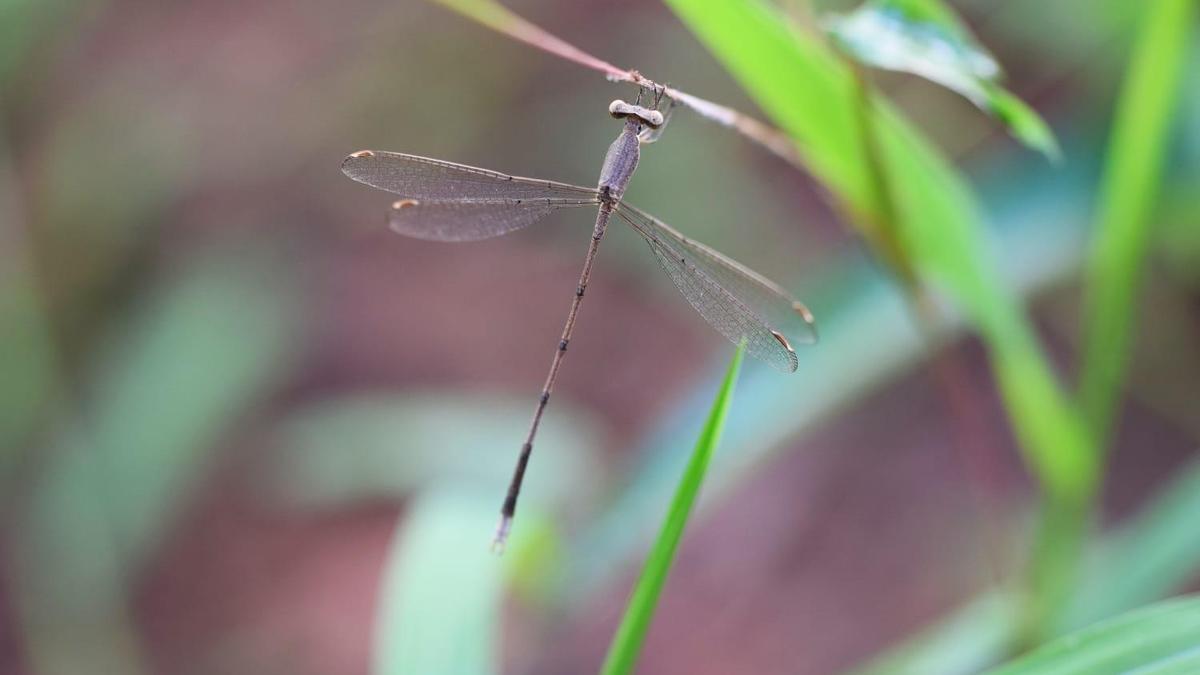
A team of odonatologists has discovered Lestespaloti, a new species of spreadwing damselfly, from the Western Ghats in Kerala.
About Lestespaloti
Lestespaloti is a newly discovered species of spreadwing damselfly belonging to the genus Lestes.
It is the first new species described under the genus Lestes from India since Lestesgaroensis, which was described by Lahiri in 1987, highlighting the rich but still underexplored biodiversity of the Western Ghats.
Habitat
The species inhabits scrub vegetation around homesteads and laterite hillocks, often occurring away from open freshwater bodies, an unusual habitat preference for damselflies.
Key Characteristics
One of its distinguishing features is its seasonal colour change:
- Brown during the dry season
- Bluish during the monsoon
This colour variation is believed to aid adaptation to changing environmental conditions.
What are Damselflies?
Damselflies are predatory aerial insects belonging to the order Odonata, which also includes dragonflies.
They are commonly found near shallow freshwater habitats and possess slender bodies with long, transparent, net-veined wings. Compared to dragonflies, damselflies are generally smaller, more delicate, and exhibit a weaker flight.
Spreadwing Damselflies
Spreadwing damselflies are easily recognised by their distinctive resting posture, in which they hold their wings partially open in a "V" shape over the abdomen, unlike most damselflies that fold their wings together.
VISHWAS 2026
- 20 Jul 2026
In News:
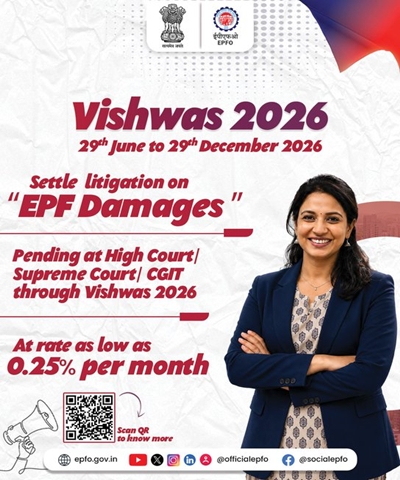
The Employees' Provident Fund Organisation (EPFO) has launched VISHWAS 2026, a one-time dispute resolution scheme to facilitate the amicable settlement of disputes relating to damages and penalties under the Employees' Provident Fund (EPF) framework.
About VISHWAS 2026
- VISHWAS 2026 is a one-time dispute resolution initiative launched by the Employees' Provident Fund Organisation (EPFO) under the Ministry of Labour& Employment.
- The scheme provides employers with an opportunity to resolve long-pending disputes relating to levy of damages and penalties through a transparent, fully digital and time-bound mechanism.
- The scheme aims to promote voluntary compliance, reduce litigation, and facilitate quicker resolution of legacy disputes while safeguarding employees' social security benefits.
- The scheme came into effect on 29 June 2026 and will remain operational for six months from the date of notification.
Coverage of the Scheme
VISHWAS 2026 covers four broad categories of cases:
- Cases where penalty or damages orders are under challenge before judicial forums.
- Cases where final orders have been passed, but recovery is pending or only partially completed, including Recovery Certificate (RRC) cases.
- Cases where notices have been issued, but final orders are yet to be passed.
- Cases where notices for damages or penalties are yet to be issued.
However, the scheme does not apply to:
- Cases where damages or penalties have already been fully recovered.
- Cases involving fraud, misappropriation, or deliberate falsification of records.
- Cases where the applicable statutory interest has not been fully deposited.
Key Features
Eligible employers can submit applications through the EPFO Employer Portal using a Digital Signature Certificate (DSC) or e-Sign.
Applicants are required to provide an undertaking that no further appeal will be pursued after settlement under the scheme.
The scheme offers substantially reduced rates for historical defaults (prior to 14 June 2024), subject to payment of the applicable statutory interest and fulfilment of prescribed conditions.
Manasbal Lake
- 20 Jul 2026
In News:
Following large-scale de-weeding and channel dredging over 70,000 sq. ft., Manasbal Lake in Jammu & Kashmir has shown significant ecological recovery, with the return of several migratory bird species after years of decline.
About Manasbal Lake
- Manasbal Lake is a natural freshwater lake located in the Ganderbal district of Jammu & Kashmir, about 30 km north of Srinagar.
- Named after the sacred Lake Manasarovar, it is regarded as one of Kashmir's most picturesque lakes.
- It is the deepest natural freshwater lake in India, with a maximum depth of about 13 metres (43 feet).
- The lake lies in the Jhelum River basin at an elevation of around 1,585–1,600 metres and is surrounded by the villages of Jarokbal, Kondabal, Nesbal and Gratbal. It is bounded by the Baladar Hills, Karewa plateau, and Ahtung Hills.
Key Features
- Manasbal is believed to have originated during the Himalayan glaciation period and is primarily fed by over 1,200 underground springs and local precipitation, rather than major surface rivers. Excess water drains into the Jhelum River through an outlet channel.
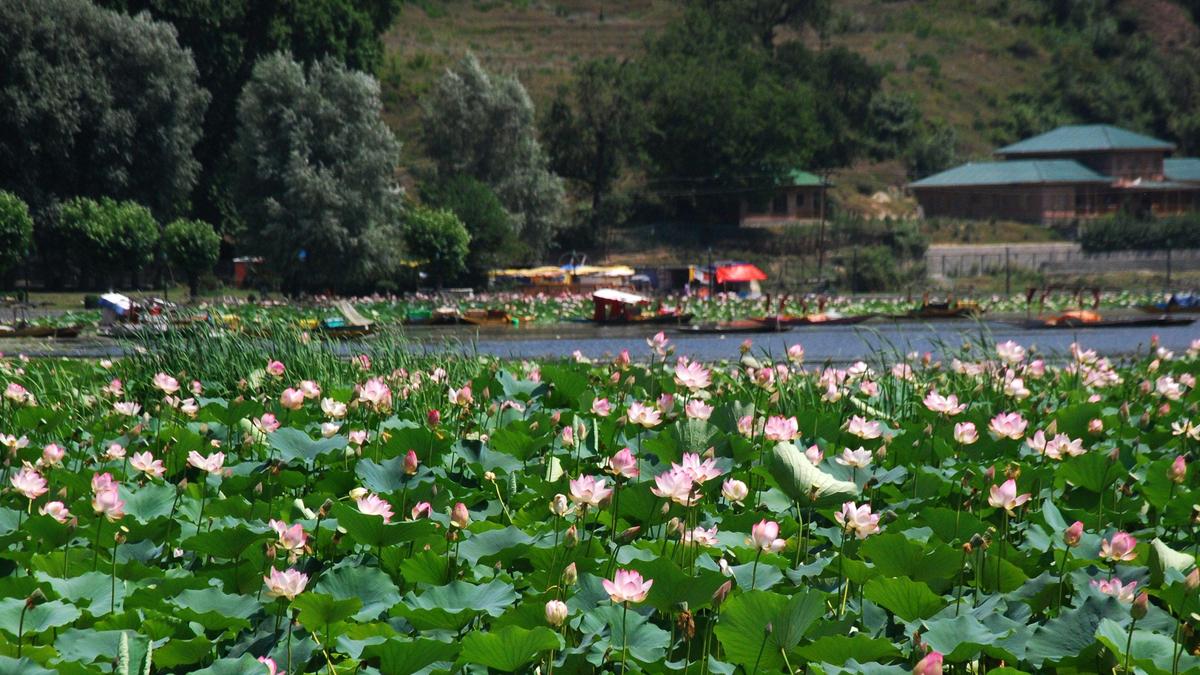
- The lake is renowned for its extensive lotus (Nelumbo nucifera) beds, particularly during July and August, and supports the cultivation of lotus stems (Nadru), an important local food and livelihood source.
- Its northern shore is home to the historic Jharokha Bagh, a Mughal-era terraced garden associated with Empress Nur Jahan.
Ecological Significance
Manasbal Lake is an important wetland supporting rich aquatic biodiversity and serves as a major breeding and wintering habitat for numerous resident and migratory birds along the Central Asian Flyway.
The recent ecological restoration has led to the return of migratory bird species, highlighting the success of habitat restoration efforts and the importance of wetland conservation.
Besides supporting biodiversity, the lake sustains local livelihoods through fisheries, lotus cultivation, and tourism.
E-Commerce Council of India (ECCI)
- 20 Jul 2026
In News:
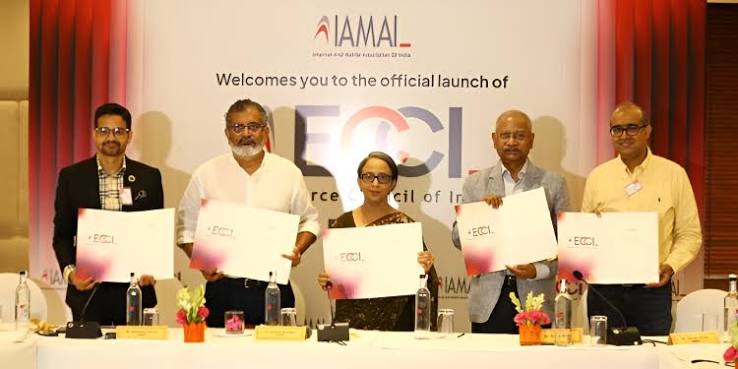
The Internet and Mobile Association of India (IAMAI) has launched the E-Commerce Council of India (ECCI) in Bengaluru to provide a unified platform for India's rapidly growing digital commerce ecosystem.
About E-Commerce Council of India (ECCI)
The E-Commerce Council of India (ECCI) is India's first dedicated national industry council for the e-commerce sector. Established under the aegis of the Internet and Mobile Association of India (IAMAI), it serves as a common platform to represent and advance the interests of India's digital commerce ecosystem.
Its primary objective is to provide a single industry voice during policy consultations with the government while promoting the sustainable growth of digital commerce.
Key Functions
The Council will act as a structured interface between the government and the digital commerce industry by supporting evidence-based policy formulation on issues such as digital payments, consumer protection and e-commerce regulations.
It also aims to:
- Facilitate cross-border e-commerce and improve logistics for Indian exporters and MSMEs.
- Promote digital onboarding of MSMEs, enabling their participation in domestic and global value chains.
- Encourage the adoption of emerging technologies such as Artificial Intelligence (AI), digital payments and quick-commerce solutions.
- Organise the Indian E-Commerce Summit (IECS) as an annual platform for dialogue among policymakers, industry, academia and global stakeholders.