
Digital India BHASHINI Division (DIBD)
- 10 Jun 2026
In News:
Recently, the Digital India BHASHINI Division (DIBD) signed a Memorandum of Understanding (MoU) with Kathmandu University Centre for Digital Public Infrastructure and Artificial Intelligence to strengthen cooperation in multilingual AI, Digital Public Infrastructure (DPI), and language technologies. The partnership reflects India's growing role in promoting digital public goods and AI-driven governance beyond its borders.
What is the Digital India BHASHINI Division?
- The Digital India BHASHINI Division (DIBD) functions under the Digital India Corporation, which operates under the Ministry of Electronics and Information Technology (MeitY).
- It serves as India's flagship initiative for AI-driven multilingual digital inclusion and language technology development.
- At its core is the BHASHINI platform (BHASHaINterface for India), which seeks to bridge India's linguistic diversity by making digital services accessible in multiple Indian languages through Artificial Intelligence and Natural Language Processing (NLP).
Key Features
- Through the National Hub for Language Technology (NHLT), BHASHINI provides scalable speech and text-based AI solutions for governance, public service delivery, education, and digital platforms.
- The initiative promotes open-source innovation, multilingual AI research, dataset creation, startup support, and academic collaboration.
- The platform has emerged as a critical component of India's Digital Public Infrastructure ecosystem by enabling seamless communication across languages and improving digital accessibility.
Scale and Reach
BHASHINI has witnessed significant adoption across government platforms and digital services:
- Powers more than 800 government websites.
- Processes over 15 million AI inferences daily.
- Supports 36 Indian text languages.
- Supports 23 Indian voice languages.
- Provides capabilities in 35 international languages.
The platform also makes AI and NLP resources available in the public domain for MSMEs, startups, researchers, and innovators, fostering the development of indigenous language technologies.
Economic Advisory Council to the Prime Minister (EAC-PM)
- 10 Jun 2026
In News:
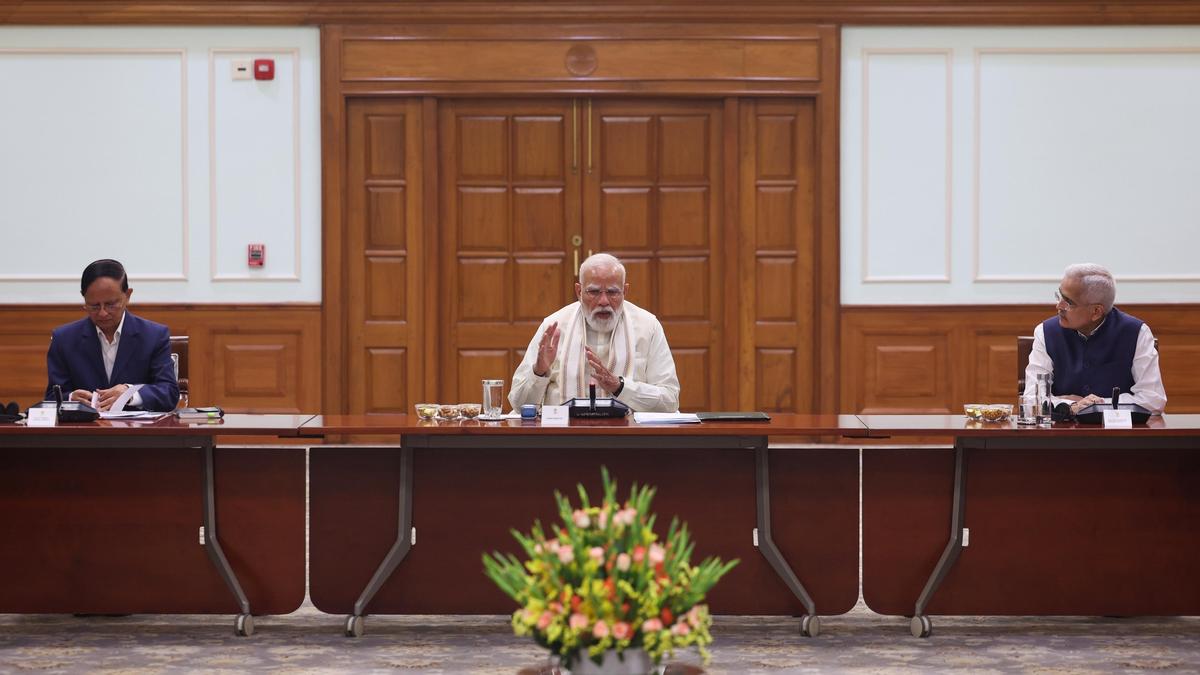
Recently, the Prime Minister chaired a meeting of the Economic Advisory Council to the Prime Minister (EAC-PM), highlighting the body's role in providing expert economic inputs to the highest levels of policymaking.
What is the EAC-PM?
- The EAC-PM is an independent advisory body constituted to provide advice on economic and related issues directly to the Prime Minister.
- It serves as a platform through which eminent economists and experts offer informed perspectives on key economic challenges and policy priorities facing the country.
- The Council's recommendations are advisory in nature and not binding on the Government, allowing it to function as an independent source of expert opinion.
Functions and Mandate
- The Terms of Reference of the EAC-PM include analysing economic and other issues referred to it by the Prime Minister and providing recommendations thereon.
- It examines matters of macroeconomic importance, identifies emerging challenges and opportunities, and presents its views to the Prime Minister.
- The Council may undertake studies either suo motu or on issues referred by the Prime Minister or other stakeholders. It can also perform any additional tasks assigned by the Prime Minister from time to time.
- Beyond policy advice, the EAC-PM contributes to fostering greater public understanding of economic issues through research papers, reports and analytical studies.
Composition
- The EAC-PM is headed by a Chairperson and comprises eminent economists and experts as members. It is supported by a team of officials and administrative staff.
- There is no fixed statutory strength for the Council, and its composition may vary over time based on requirements.
- For administrative, logistical and budgetary support, NITI Aayog acts as the nodal agency for the Council.
Panchayat Advancement Index (PAI) Wins Gold Award at National Awards for e-Governance 2026
- 10 Jun 2026
In News:
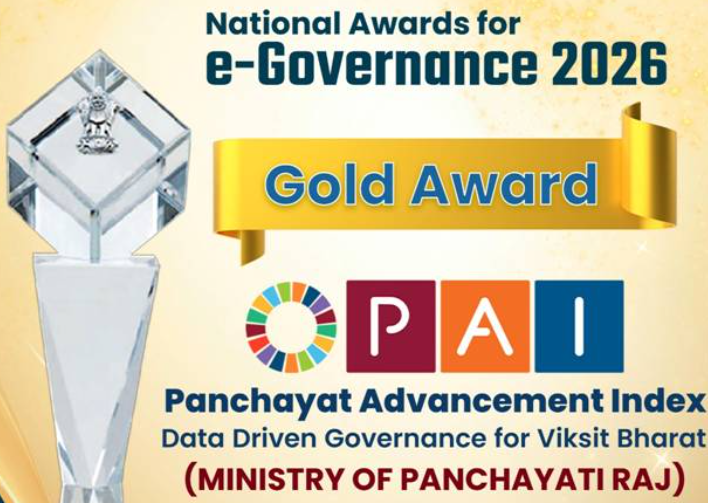
The Panchayat Advancement Index (PAI), a flagship initiative of the Ministry of Panchayati Raj, has been awarded the Gold Award at the National Awards for e-Governance (NAeG) 2026 under the category “Digital Transformation through the Use of Data Analytics in Digital Platforms.”
The recognition reflects India's growing emphasis on data-driven governance and evidence-based policymaking at the grassroots level.
What is the Panchayat Advancement Index?
- The Panchayat Advancement Index (PAI) is India's first comprehensive, analytics-based framework for evaluating the performance of Gram Panchayats across the country.
- Developed by the Ministry of Panchayati Raj, it serves as a standardized report card for rural local bodies, enabling objective assessment of development outcomes and governance performance.
- Under its latest PAI 2.0 version, the platform assesses more than 6 lakh Gram Panchayats using over 150 indicators and 230 data points.
- The index is aligned with the Localisation of Sustainable Development Goals (LSDGs) and evaluates Panchayats across nine themes, including poverty reduction, health, child welfare, water security, environmental sustainability, infrastructure, social protection, good governance, and women-centric development.
- By generating composite scores and performance rankings, the index helps identify developmental gaps, promote accountability, and facilitate better targeting of government resources and interventions.
About the National Awards for e-Governance
- The National Awards for e-Governance, instituted in 2003, are India's premier awards recognizing excellence in digital governance and public service delivery.
- Presented annually by the Department of Administrative Reforms and Public Grievances (DARPG) in coordination with the Ministry of Electronics and Information Technology (MeitY), the awards encourage innovative technology-driven solutions that improve governance outcomes.
- The 2026 edition was organized around the theme “Viksit Bharat 2047: AI-Enabled, Data-Driven and Secure Digital Governance.” Along with a trophy and citation, the Gold Award carries a ?10 lakh incentive to support further technological enhancement of the platform.
E85 Fuel
- 10 Jun 2026
In News:
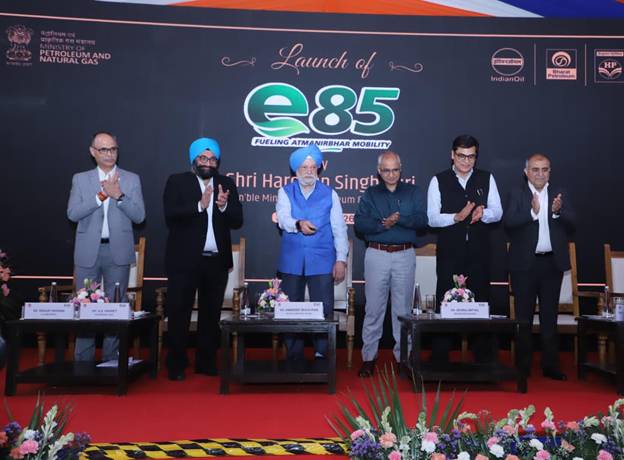
On World Environment Day 2026, the Union Minister for Petroleum and Natural Gas launched E85 fuel at an IndianOil retail outlet in New Delhi, marking a significant step in India's transition towards a structured flex-fuel ecosystem. The rollout has begun across 48 retail outlets of Public Sector Oil Marketing Companies (OMCs) and is targeted to expand to 500 outlets by December 2026 and 5,000 outlets by December 2027.
What is E85 Fuel?
E85 is a high-ethanol blended fuel containing:
- 80–85% Ethanol
- 14–19% Petrol
It is specifically designed for Flex-Fuel Vehicles (FFVs), which can operate on multiple ethanol-petrol blends ranging from E20 to E100. Unlike conventional petrol vehicles, E85 can only be used in specially designed flex-fuel engines.
Why is E85 Important?
The introduction of E85 represents the next phase of India's ethanol blending programme. Having already achieved the 20% ethanol blending target (E20) five years ahead of schedule, India is now seeking to deepen ethanol penetration in the transport sector.
The initiative seeks to:
- Enhance energy security by reducing crude oil imports.
- Promote cleaner transportation fuels.
- Increase farmer incomes through greater demand for ethanol feedstocks.
- Support India's climate commitments through lower carbon emissions.
The government estimates that wider adoption of E85 and FFVs could raise India's aggregate ethanol blending level to nearly 26% by 2030-31.
Key Benefits of E85 Fuel
Economic Benefits
E85 is priced nearly ?20 per litre lower than conventional petrol, allowing consumers to directly benefit from the lower cost of domestically produced ethanol.
The broader ethanol programme has already delivered significant gains:
- Ethanol blending increased from 1.53% in 2014 to 20% in 2026.
- Foreign exchange savings exceeding ?1.84 lakh crore.
- Substitution of nearly 302 lakh metric tonnes of crude oil imports.
Environmental Benefits
E85 offers substantial environmental advantages:
- Around 61% reduction in lifecycle greenhouse gas emissions compared to petrol.
- Potential annual reduction of 66.4 lakh metric tonnes of CO? emissions through large-scale adoption.
- Near-zero particulate matter emissions due to cleaner combustion.
- Improved urban air quality and reduced pollution levels.
Technical Advantages
Ethanol possesses a Research Octane Number (RON) of about 108, considerably higher than conventional petrol.
This results in:
- Superior knock resistance.
- Higher engine compression ratios.
- Optimized ignition timing.
- Improved engine efficiency and performance.
Flex-Fuel Vehicles (FFVs): The Backbone of E85 Adoption
Flex-Fuel Vehicles are capable of operating on varying ethanol blends from E20 to E100 without requiring major modifications.
Their advantages include:
- Fuel flexibility.
- Lower running costs.
- Utilization of existing fuel distribution infrastructure.
- Lower acquisition cost compared to many electric vehicles.
Unlike electric vehicles that rely heavily on imported batteries and critical minerals, FFVs run on ethanol produced domestically from agricultural feedstocks such as sugarcane and food grains.
Benefits for Farmers and the Rural Economy
The E85 initiative strengthens the government's vision of transforming farmers from "Annadatas" (food providers) into "Urjadatas" (energy providers).
Government estimates suggest that if 50% of new two-wheelers and four-wheelers adopt flex-fuel technology:
- Ethanol demand could exceed 312 crore litres annually.
- Nearly ?12,403 crore could flow directly to farmers.
- Foreign exchange savings could reach ?15,151 crore annually.
Thus, E85 has the potential to create a strong linkage between agriculture, energy security and rural prosperity.
Lessons from the Brazil Model
India's flex-fuel strategy draws inspiration from Brazil, which has successfully adopted ethanol-based mobility over several decades.
Key features of Brazil's experience include:
- Extensive use of high-ethanol blended fuels.
- More than 80% of the country's light vehicle fleet operating on flex-fuel technology.
- Demonstrated long-term viability of ethanol as a transport fuel.
Brazil's experience highlights the potential of ethanol to reduce dependence on fossil fuel imports while supporting domestic agricultural production.
Addressing Common Misconceptions
The government has clarified several concerns regarding ethanol-blended fuels:
- E85 is intended only for flex-fuel vehicles, not ordinary petrol vehicles.
- Since the nationwide adoption of E20 fuel, no engine failures attributable to ethanol blending have been reported.
- E20-compatible vehicles often demonstrate improved acceleration and driving performance.
- Usage of ethanol-blended fuel does not affect vehicle insurance validity.
NASA’s MAVEN Mission Ends
- 10 Jun 2026
In News:
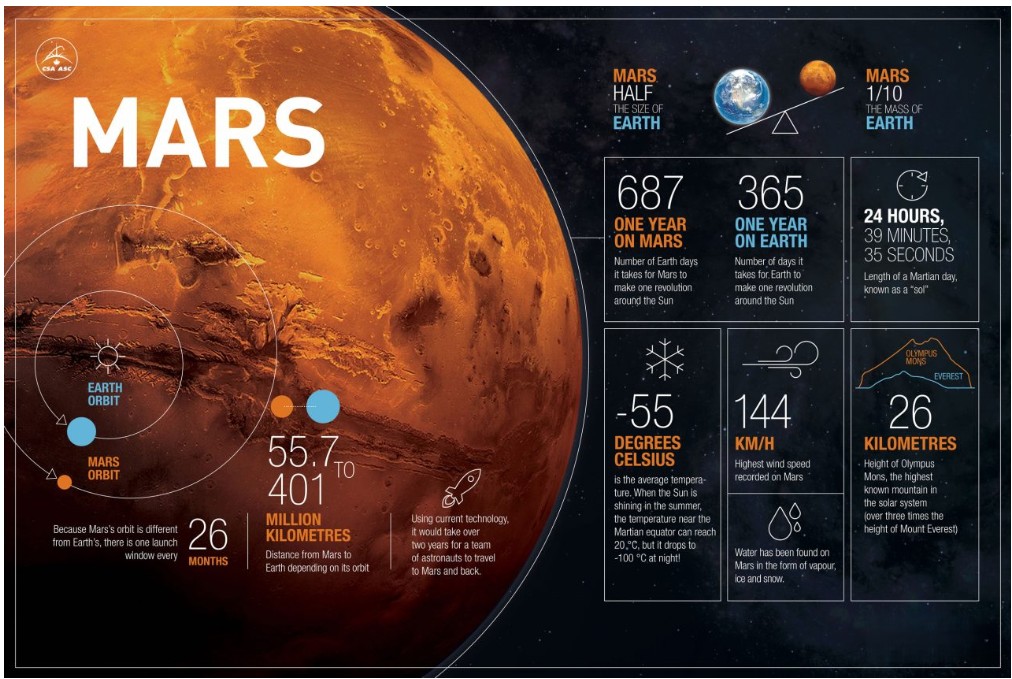
NASA’s Mars Atmosphere and Volatile Evolution (MAVEN) mission, the first spacecraft dedicated exclusively to studying the Martian atmosphere, has officially concluded after more than 11 years in orbit around Mars. Launched in 2013 and entering Martian orbit in 2014, MAVEN far exceeded its planned one-year mission life and became one of the most successful Mars exploration missions.
Why was MAVEN important?
MAVEN was designed to investigate how Mars lost much of its atmosphere and water over billions of years, helping scientists understand how the planet transformed from a potentially habitable world into the cold, dry planet.
Key Contributions
Understanding Atmospheric Loss
- Demonstrated that solar wind and solar storms continuously strip atmospheric particles from Mars.
- Established a direct link between solar activity and atmospheric escape.
- Provided crucial evidence explaining the long-term thinning of the Martian atmosphere.
Discovery of New Auroras
- Detected previously unknown types of Martian auroras, including proton auroras.
- Improved understanding of interactions between the Sun and planetary atmospheres.
Evidence of Atmospheric Sputtering
- Measured the escape of atmospheric gases such as argon.
- Confirmed atmospheric sputtering as a major mechanism responsible for atmospheric erosion.
Dust Storm and Water Loss Studies
During the global dust storm of 2018, MAVEN observed that dust-driven heating lifted water vapour to higher altitudes, where it was broken down by solar radiation and lost to space. This explained periodic spikes in water loss from Mars.
Additional Scientific Contributions
- Studied Mars’ ionosphere and magnetosphere.
- Observed the interstellar comet 3I/ATLAS using ultraviolet and multi-wavelength instruments.
- Served as an important communication relay for Mars rover missions.
End of the Mission
NASA lost contact with MAVEN in December 2025 after the spacecraft experienced an anomaly and entered an unrecoverable state. The mission was officially declared concluded in 2026.