
Pandavani
- 07 Jul 2026
In News:
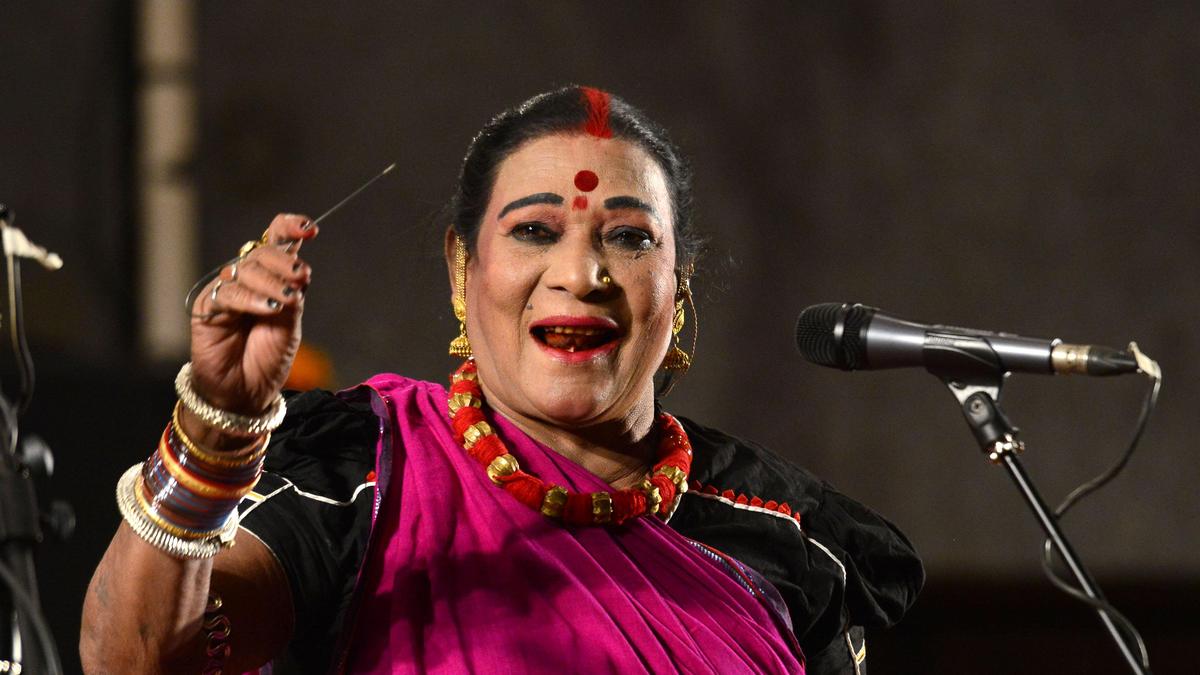
Renowned Pandavani exponent Teejan Bai, who popularised Chhattisgarh's traditional storytelling art on national and international platforms, recently passed away. She played a transformative role in bringing this unique oral folk tradition to global recognition and was one of India's most celebrated folk artists.
What is Pandavani?
Pandavani is a traditional oral storytelling and musical performance tradition originating from Chhattisgarh. The word "Pandavani" literally means "the story of the Pandavas" and revolves around episodes from the Mahabharata, particularly highlighting the lives, struggles and heroism of the Pandava brothers.
Blending music, narration, acting and improvisation, Pandavani occupies a unique place among India's folk performing arts. Unlike classical theatre, it is centred on the expressive abilities of a single lead performer, who narrates the epic while portraying multiple characters through changes in voice, facial expressions and dramatic gestures.
Features of Pandavani
The performance combines storytelling with music and theatrical elements, making it a powerful medium of oral tradition.
Some of its important features include:
- Narration is based on episodes from the Mahabharata, especially the exploits of the Pandavas.
- A single lead performer narrates, sings and enacts different characters.
- Accompanied by musicians playing instruments such as the harmonium, tabla, dholak and manjira.
- The performer usually carries a tambura or ektara, which serves both as a musical instrument and a symbolic prop.
- During the performance, the tambura may represent a bow, mace, sword, chariot or other objects, depending on the scene being enacted.
- The narration often includes improvisation, audience interaction and spontaneous dramatic expression.
Styles of Pandavani
Pandavani is traditionally performed in two distinct styles:
Vedamati Style
- The performer remains seated throughout the performance.
- Greater emphasis is placed on simple narration and singing.
- Dramatic enactment is minimal, with the focus on the oral narration of the epic.
Kapalik Style
- The performer moves across the stage, enacting various characters and battle scenes.
- Uses dramatic gestures, voice modulation and expressive acting.
- The tambura is creatively used as different symbolic objects during the performance.
- This style is more theatrical and visually engaging.
Teejan Bai's Contribution
Teejan Bai is widely regarded as the greatest exponent of the Kapalik style of Pandavani. She broke traditional gender barriers by performing a style that was historically dominated by male artists and transformed Pandavani into a globally recognised folk art form.
Her contributions include:
- PopularisedPandavani across India and internationally.
- Revitalised interest in Chhattisgarh's folk traditions.
- Inspired generations of women artists to enter the field.
- Elevated an oral folk tradition to national cultural prominence.
Another noted contemporary exponent of Pandavani is Ritu Verma.