
India's First SkyCast System
- 01 Jun 2026
In News:
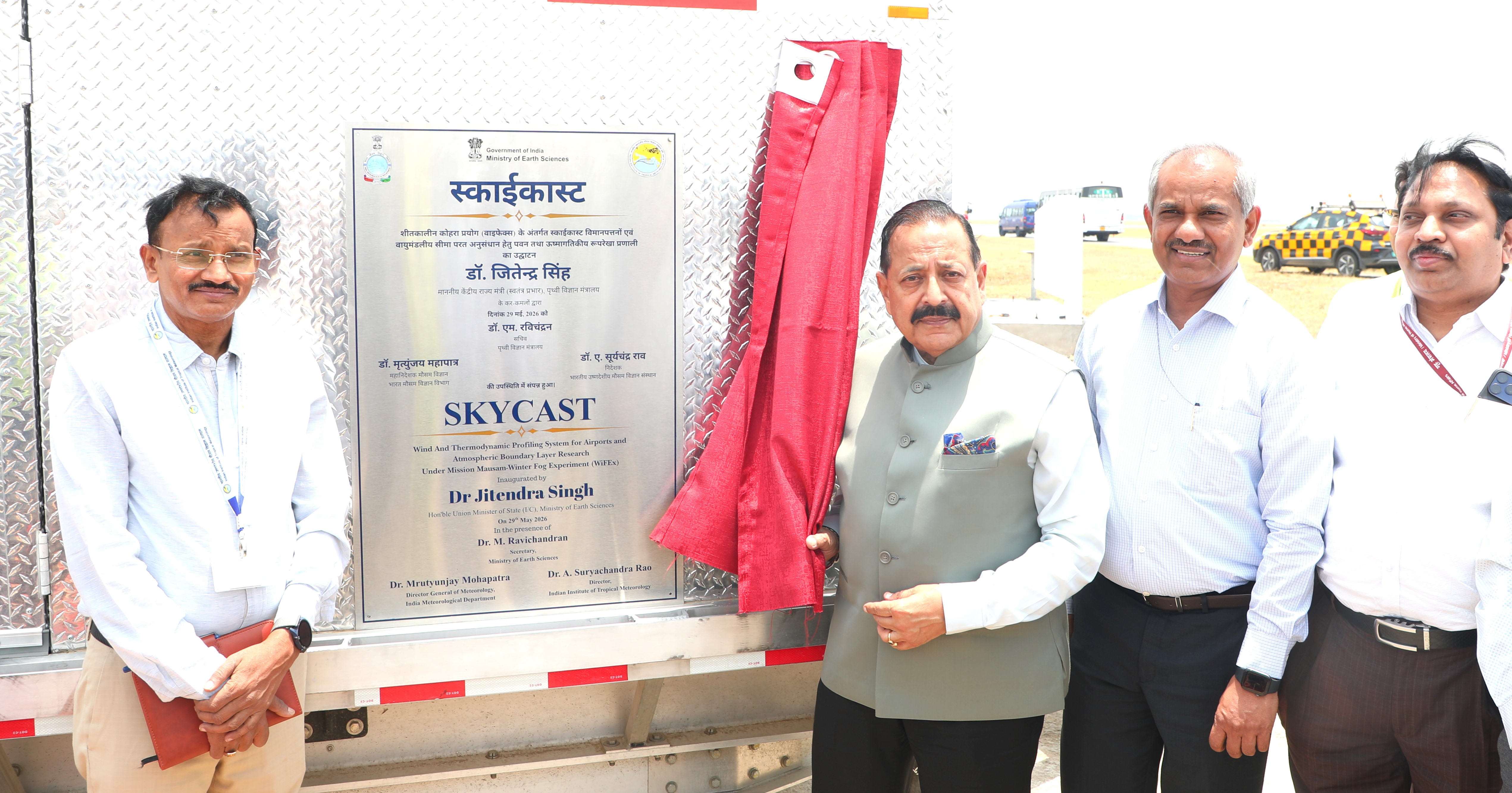
- In a major boost to aviation safety and weather forecasting, Union Minister Dr. Jitendra Singh inaugurated India’s first SkyCast System at Indira Gandhi International (IGI) Airport, New Delhi.
- Developed under the Ministry of Earth Sciences’ (MoES) Mission Mausam, SkyCast is a next-generation integrated atmospheric remote sensing system designed to provide real-time weather intelligence for aviation operations.
- Its deployment marks India's entry into an era of “fog-free, weather-smart aviation” and makes India the 19th country in the world to possess such advanced aviation weather monitoring infrastructure.
What is SkyCast?
- SkyCast is a comprehensive aviation weather intelligence framework that integrates real-time observations of fog, aerosols, turbulence, moisture, visibility, wind and atmospheric conditions into a single operational platform.
- Its primary objective is to reduce flight delays, cancellations and diversions caused by adverse weather while enhancing safety during critical take-off and landing operations.
- The system emerged from the Winter Fog Experiment (WiFEX), jointly launched by the Indian Institute of Tropical Meteorology (IITM) and the India Meteorological Department (IMD) at IGI Airport in 2015, which generated valuable insights into fog formation, aerosol-cloud interactions and visibility reduction.
Key Technological Components
SkyCast integrates multiple state-of-the-art atmospheric observation systems:
- Radar Wind Profiler (RWP): Measures wind speed, wind direction, turbulence, vertical velocity and boundary-layer dynamics.
- SODAR (Sonic Detection and Ranging): Monitors lower atmospheric wind structures.
- Microwave Radiometer: Provides temperature and humidity profiles.
- Ground-based Fog Aerosol Spectrometer (GFAS): Analyses fog droplets, aerosols and aerosol-fog interactions, particularly relevant for Delhi’s pollution-driven fog conditions.
- CL61 Lidar-based Ceilometer: Continuously tracks the vertical structure, density and evolution of fog.
Key Features
- Continuous monitoring of atmospheric conditions up to nearly 3 km altitude above the airport.
- Real-time assessment of fog, turbulence, visibility and moisture conditions.
- Nowcasting and early-warning capability within a 3-hour forecasting window.
- Supports pilots, airlines, airport operators and air traffic management agencies with precise weather intelligence.
- Generates high-quality atmospheric data for improved weather prediction models and AI-enabled forecasting systems.
Significance
- Aviation Safety and Efficiency: SkyCast enables pilots to make informed landing and take-off decisions, reducing operational disruptions and enhancing passenger safety. It is expected to significantly reduce weather-induced delays and diversions, particularly during Delhi’s winter fog season.
- Strengthening Mission Mausam: SkyCast is a major component of Mission Mausam, the Government of India’s ?2,000 crore initiative launched to make India a “Weather-Ready and Climate-Smart Nation.” The mission focuses on improving weather observations, forecasting accuracy, AI-enabled prediction systems and disaster resilience.
Wider Applications
Beyond aviation, SkyCast data will support:
- AI-enabled weather forecasting,
- Urban weather prediction,
- Pollution management,
- Transport advisories,
- Disaster preparedness and response.
Future Expansion
Following IGI Airport, the next SkyCast facility will be established at Jewar Airport, with plans for expansion across major airports in India.
NITI Aayog’s “Future of India’s Semiconductor Industry” Roadmap
- 01 Jun 2026
In News:
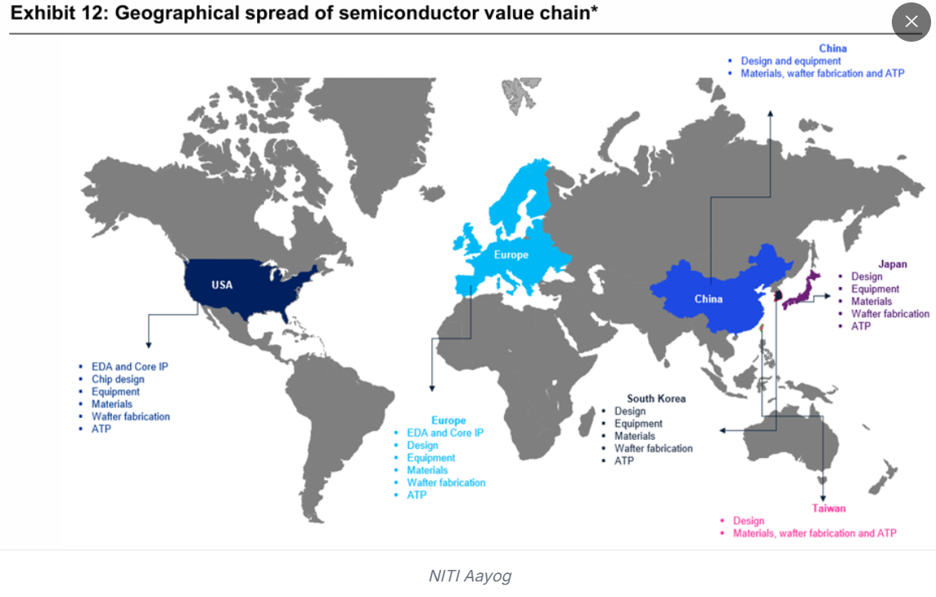
Recognising semiconductors as the foundation of national security, digital sovereignty, economic resilience, AI infrastructure, defence systems, telecommunications, healthcare technologies, automobiles, and advanced manufacturing, NITI Aayog’s Frontier Tech Hub has released India’s first comprehensive 10-year roadmap titled “Future of India’s Semiconductor Industry.” The roadmap envisions building a USD 120–150 billion domestic semiconductor value chain by 2035, transforming India from a major chip consumer into an indispensable global semiconductor player.
Why the Roadmap is Important
India currently faces extreme strategic vulnerability, with 90–95% of its semiconductor demand met through imports. Between FY17 and FY25, semiconductor imports cost the country nearly USD 150 billion, and if current trends continue, the annual import bill could rise to USD 240 billion by 2035. At the same time, India’s domestic semiconductor market is projected to reach USD 200 billion by 2035, driven by rapid growth in electronics manufacturing, electric vehicles (EVs), AI systems, data centres, telecom equipment and digital infrastructure.
India’s Strategic Approach: Beyond the Wafer Race
Instead of competing directly in the highly capital-intensive cutting-edge wafer fabrication race, the roadmap advocates a “More-than-Moore” strategy, focusing on areas where India can build sustainable competitive advantages:
- Advanced Packaging and OSAT (Outsourced Semiconductor Assembly and Test)
- Compound Semiconductors
- Wide-Bandgap Materials (SiC and GaN)
- Advanced Semiconductor Design and Design IP
- AI-Native Chip Design
The roadmap aims to position India among the top global destinations for advanced packaging and OSAT, emerge as a major supplier of wide-bandgap semiconductors, and create more than 100 advanced semiconductor design IPs by 2035.
Key Strengths and Opportunities
India possesses several structural advantages:
- Houses 20% of the global semiconductor design workforce.
- Benefits from the China 1 strategy and global supply-chain diversification.
- Can leverage growing partnerships with the US, Japan and the European Union.
- Rising EV adoption creates demand for SiC and GaN power devices.
- Backed by India Semiconductor Mission (ISM) 2.0, which shifts focus from ecosystem creation to ecosystem deepening.
Major Challenges
Despite the opportunity, significant barriers remain:
- USD 135–180 billion investment requirement over the next decade.
- A modern semiconductor fab requires over USD 5 billion, while leading-edge facilities can exceed USD 15 billion.
- Long gestation periods of 4–5 years before production begins.
- Shortage of specialized fabrication, materials and cleanroom talent.
- High requirements of ultra-pure water and uninterrupted electricity.
- Strong market dominance of established East Asian semiconductor ecosystems.
Five Pillars of the Roadmap
The strategy is built around five mutually reinforcing pillars:
- Pioneering Frontier R&D and Design IP
- Policy and Investment Mobilisation
- Production through Advanced Packaging and Compound Semiconductors
- People and Talent Development
- Partnerships with Trusted Nations and Global Industry
The roadmap marks India's transition from ecosystem creation to ecosystem deepening, focusing on design leadership, advanced packaging, compound semiconductors, talent development, R&D and trusted global partnerships. By leveraging its design strengths and targeting high-value segments rather than the traditional wafer race, India seeks to capture 10–13% of the global semiconductor market by 2035 while strengthening its technological sovereignty and advancing the vision of Viksit Bharat 2047.
National Family Health Survey–6 (NFHS-6)
- 01 Jun 2026
In News:
The Ministry of Health and Family Welfare (MoHFW) has released the National Family Health Survey–6 (NFHS-6) (2023–24), conducted by the International Institute for Population Sciences (IIPS), Mumbai across 715 districts covering nearly 6.79 lakh households. As India’s most comprehensive health and demographic survey, NFHS-6 provides district-level evidence for policy formulation, monitoring of welfare schemes, and tracking progress towards the Sustainable Development Goals (SDGs).
Major Gains Recorded
Maternal and Child Health
India has made significant progress towards safe motherhood and improved healthcare access:
- Institutional deliveries increased from 88.6% to 90.6%.
- Antenatal Care (ANC) coverage rose from 92.6% to 95.9%.
- Women receiving ANC in the first trimester increased from 70% to 76.2%.
- Mothers receiving at least four ANC visits increased from 58.5% to 65.2%.
- Skilled birth attendance improved from 89.4% to 91.3%.
- Postnatal care within two days of delivery rose from 79.1% to 85.3%.
Child Nutrition and Immunisation
The survey reflects encouraging improvements in child health outcomes:
- Stunting declined from 35.5% to 29.3% (17% reduction).
- Severe wasting reduced from 7.7% to 5.2% (32% reduction).
- Children aged 6–8 months receiving complementary feeding increased from 45.9% to 59.5%.
- Full immunisation among children aged 12–23 months increased from 83.8% to 87.1%.
- Rotavirus vaccine coverage more than doubled from 36.4% to 85.4%.
- Coverage of the second dose of measles vaccine rose from 58.6% to 71.8%.
- 95.6% of vaccinations were administered through public health facilities, demonstrating strong public trust.
Family Planning and Financial Protection
- India’s Total Fertility Rate (TFR) remains stable at 2.0, below the replacement level of 2.1.
- Contraceptive Prevalence Rate (CPR) increased from 66.7% to 69.1%.
- Household health insurance coverage rose sharply from 41.0% to 60.2%, driven largely by Ayushman Bharat–PMJAY and related initiatives.
Women’s Empowerment
- Women who have ever used the internet increased from 33.3% to 64.3%.
- Women operating their own bank accounts increased from 78.6% to 89.0%.
- Women owning and using a mobile phone rose from 53.9% to 63.6%.
Key Challenges
Despite the progress, NFHS-6 highlights several emerging concerns:
- 12.9% of children aged 12–23 months are still not fully immunised.
- Only 37.8% of pregnant women consumed Iron-Folic Acid supplements for the recommended 180 days.
- Rising burden of Non-Communicable Diseases (NCDs) and lifestyle-related disorders.
- Growing dual burden of malnutrition, with persistent undernutrition coexisting alongside rising overweight and obesity among adults.
- Caesarean section deliveries increased sharply from 21.5% to 27.2%, requiring closer monitoring.
Government Initiatives Driving Progress
Key schemes contributing to these gains include Janani Suraksha Yojana (JSY), Janani Shishu Suraksha Karyakram (JSSK), Pradhan Mantri SurakshitMatritva Abhiyan (PMSMA), SUMAN, POSHAN Abhiyaan, Saksham Anganwadi and POSHAN 2.0, Universal ImmunisationProgramme, U-WIN, Mission Parivar Vikas, and Ayushman Bharat–PMJAY.
NFHS-6 presents a picture of accelerated improvements in maternal health, child nutrition, immunisation, women’s empowerment and financial protection, reaffirming India's progress towards SDGs and Universal Health Coverage. However, rising NCDs, obesity, incomplete immunisation, and nutritional challenges indicate that future health policy must move beyond access and focus on preventive healthcare, behavioural change, nutrition security, and quality health outcomes.
Chandrayaan-2 Detects Possible Subsurface Ice Near the Moon’s South Pole

- 01 Jun 2026
In News:
India’s Chandrayaan-2 mission has provided fresh evidence suggesting the presence of subsurface water ice beneath the lunar south polar region, a discovery with significant implications for future lunar exploration and long-term human presence on the Moon. The findings, published by scientists from the Physical Research Laboratory (PRL), Ahmedabad, are based on observations made by the Dual Frequency Synthetic Aperture Radar (DFSAR) onboard the Chandrayaan-2 orbiter.
Launched by ISRO in July 2019, Chandrayaan-2 was India’s second lunar mission. While the Vikram lander lost communication during its landing attempt, the orbiter has continued to function successfully, generating valuable scientific data about the Moon.
DFSAR: A Unique Lunar Radar Instrument
The DFSAR is the first fully polarimetric synthetic aperture radar designed specifically for lunar studies. Operating in both L-band and S-band microwave frequencies, it can penetrate beneath the lunar surface and detect variations in subsurface composition, making it particularly useful for identifying water ice deposits hidden beneath layers of regolith.
Study and Methodology
The research focused on doubly shadowed craters situated within the Moon’s Permanently Shadowed Regions (PSRs) near the south pole. These regions never receive direct sunlight and maintain extremely low temperatures of about 25 Kelvin (-248°C), creating ideal conditions for the long-term preservation of water ice.
Scientists analysed radar data using two important parameters:
- Circular Polarization Ratio (CPR) > 1
- Degree of Polarization (DOP) < 0.13
Such radar signatures are considered potential indicators of volumetric scattering, a phenomenon commonly associated with subsurface ice deposits.
Key Findings
The study identified radar evidence suggesting possible subsurface ice beneath four doubly shadowed craters. The strongest indication came from a 1.1-km-wide crater located within the larger Faustini crater.
An additional clue emerged from the crater’s lobate-rim morphology, a geological feature that may indicate that the impact event penetrated an ice-rich subsurface layer. This strengthens the hypothesis that water ice could exist beneath the lunar surface rather than merely as surface frost.
Significance of the Discovery
The presence of water ice on the Moon has immense scientific and strategic importance:
- Supports future human missions by providing a potential source of drinking water.
- Can be split into hydrogen and oxygen for rocket fuel and life-support systems.
- Helps identify suitable sites for future lunar landers and bases.
- Advances understanding of the Moon’s geological and climatic history.
- Strengthens India's contribution to global lunar science and exploration.
Insolvency and Bankruptcy Code (IBC) completes 10 years

- 01 Jun 2026
In News:
The Insolvency and Bankruptcy Code (IBC), 2016 has completed a decade since its enactment, emerging as one of India's most significant economic and institutional reforms. Enacted on the recommendations of the Bankruptcy Law Reforms Committee (2015) chaired by T.K. Viswanathan, the Code consolidated multiple fragmented insolvency laws into a unified, creditor-driven and time-bound framework. It fundamentally shifted India from a “debtor-in-possession” model to a “creditor-in-control” regime, thereby strengthening credit discipline, improving recovery mechanisms and enhancing investor confidence.
Key Achievements of IBC
Over the last ten years, IBC has significantly transformed India's financial landscape:
- ?4.32 lakh crorerealised for creditors through resolution processes till March 2026.
- Recovery value reached 167% of liquidation value and 95% of fair value.
- Gross NPA ratio of Scheduled Commercial Banks declined sharply from 11.8% (2017) to 2.1% (September 2025), a 12-year low.
- More than 30,000 cases involving nearly ?14 lakh crore were resolved at the pre-admission stage, demonstrating the Code’s strong deterrent effect.
- 58% of closed cases resulted in successful rescue of firms rather than liquidation.
- Resolution timelines reduced from 6–8 years (pre-IBC) to around 2 years.
- S&P Global Ratings upgraded India’s insolvency framework from Group C to Group B.
- According to RBI, IBC accounted for ?0.54 lakh crore (52.4%) of total recoveries made by banks through various recovery channels in 2024–25.
Institutional Framework and Process
The IBC ecosystem is anchored by:
- Insolvency and Bankruptcy Board of India (IBBI) – regulator.
- National Company Law Tribunal (NCLT) and Debt Recovery Tribunal (DRT) – adjudicating authorities.
- Insolvency Professionals (IPs) – manage resolution proceedings.
- Information Utilities (IUs) – maintain authenticated financial information.
The Corporate Insolvency Resolution Process (CIRP) begins upon default, followed by a moratorium, constitution of the Committee of Creditors (CoC), and approval of a resolution plan by 66% voting share. The Code prescribes a maximum timeline of 330 days for resolution.
Recent Reforms
The IBC (Amendment) Act, 2026 introduced:
- Creditor-Initiated Insolvency Resolution Process (CIIRP) requiring approval of 51% financial creditors.
- Strengthening of the Clean Slate Principle.
- Greater powers for the CoC during liquidation.
- Clarification that government dues are not secured debt.
- Penalties for frivolous filings and fraudulent transactions.
Persistent Challenges
Despite its success, several concerns remain:
- Average resolution time has increased to 744 days, far exceeding the statutory limit of 330 days.
- Recovery against admitted claims declined to 23% in FY26 from 46% in FY25, leading to large creditor haircuts.
- Shortage of NCLT members and infrastructure bottlenecks.
- Complex insolvency cases in the real-estate sector, involving thousands of homebuyers.
- Delays in post-resolution approvals and credit access for resolved firms.
Way Forward
Strengthening NCLT capacity, institutionalising mediation, adopting the UNCITRAL Model Law on Cross-Border Insolvency, improving accountability of insolvency professionals, and focusing on enterprise value maximisation are critical for enhancing the effectiveness of the Code.