
Electrolyte Engineering for Advanced Aqueous Zinc-Ion Batteries (AZIBs)
- 29 Jun 2026
In News:
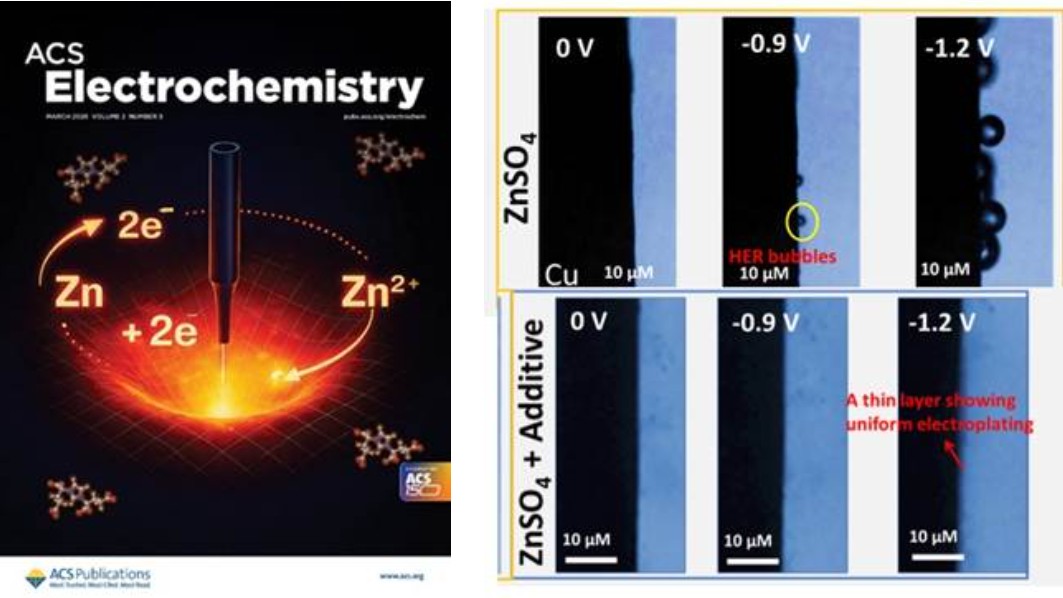
Scientists at the Institute of Nano Science and Technology (INST), Mohali, an autonomous institute under the Department of Science & Technology (DST), have developed a novel electrolyte additive (BDIM) that significantly improves the performance, safety and lifespan of Aqueous Zinc-Ion Batteries (AZIBs), offering a promising alternative to lithium-ion batteries.
About the Research
Researchers have developed a new electrolyte additive called 1,3-bis (1,3-dicarboxypropyl)-1H-imidazole-3-ium chloride (BDIM), which improves the stability of the zinc anode by regulating the Inner Helmholtz Plane (IHP)—the interfacial region where electrochemical reactions occur.
Unlike expensive battery redesigns, the innovation focuses on electrolyte interface engineering, making it a cost-effective and scalable solution for next-generation rechargeable batteries.
Why are Aqueous Zinc-Ion Batteries (AZIBs) Important?
AZIBs are emerging as a promising alternative to lithium-ion batteries because they are:
- Safer due to non-flammable water-based electrolytes.
- Low-cost owing to the abundance of zinc.
- Environment-friendly and sustainable.
- Suitable for grid-scale and renewable energy storage.
However, their commercialization has been limited due to:
- Zinc dendrite formation.
- Hydrogen Evolution Reaction (HER).
- Corrosion of the zinc anode.
- Poor cycling stability.
How Does BDIM Work?
The BDIM additive selectively adsorbs on the zinc surface and occupies the Inner Helmholtz Plane (IHP).
This prevents water molecules from directly interacting with the zinc surface, thereby:
- Suppressing Hydrogen Evolution Reaction (HER).
- Reducing corrosion.
- Preventing zinc dendrite formation.
- Improving battery stability and lifespan.
The researchers also employed Ultramicroelectrode (UME) and Fast-Scan Cyclic Voltammetry (FSCV) techniques to better understand zinc deposition and interfacial charge-transfer mechanisms.
Applications
The technology has significant potential in:
- Grid-scale energy storage.
- Renewable energy integration.
- Backup power systems.
- Long-duration stationary energy storage.
- Safer and affordable rechargeable batteries.
By increasing battery life and reducing degradation, it can lower maintenance costs and improve the reliability of clean energy infrastructure.
Project BRAHMANK of Border Roads Organisation (BRO)
- 29 Jun 2026
In News:
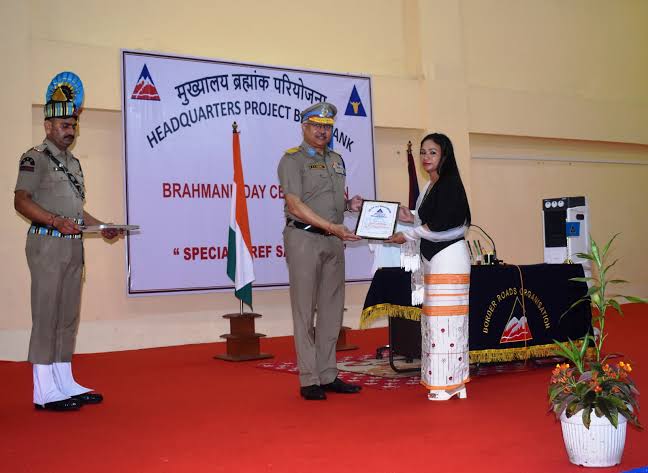
Project BRAHMANK of the Border Roads Organisation (BRO) celebrated its 16th Raising Day on 29 June 2026 at Ranaghat, Arunachal Pradesh, marking sixteen years of developing strategic road infrastructure and improving connectivity in India's northeastern border areas.
About Project BRAHMANK
- Project BRAHMANK is one of the strategic infrastructure projects of the Border Roads Organisation (BRO).
- It was raised on 29 June 2011 at Ranaghat (East Siang district), Arunachal Pradesh, and became fully operational on 3 December 2011.
- The project is responsible for the construction, upgradation and maintenance of strategic road infrastructure in Siang, East Siang, West Siang, Upper Siang and Shi-Yomi districts of Arunachal Pradesh, besides parts of Dhemaji district in Assam.
- It plays a crucial role in enhancing military mobility while improving connectivity for remote border communities.
Key Achievements
Project BRAHMANK currently maintains:
- 811 km of strategic roads.
- Around 86 bridges, ranging from culverts to major steel and arch bridges.
Some notable engineering achievements include:
- 100-metre Steel Arch Bridge over Siyom Nallah.
- 165-metre Prestressed Concrete (PSC) Bridge over Simang Nallah on the Along–Yingkiong Road.
During FY 2025–26, the project achieved significant milestones:
- Construction of 13 new bridges with a cumulative span of 390 metres.
- Blacktopping of 61 km of roads to National Highways Double Lane (NHDL) specifications.
- Development of helipads to strengthen strategic connectivity in remote areas.
About the Border Roads Organisation (BRO)
- Established: 7 May 1960
- Parent Ministry: Ministry of Defence
- Headquarters: New Delhi
- Motto: "Shramena Sarvam Sadhyam" (Everything is Achievable Through Hard Work)
Functions
- Construction and maintenance of strategic roads, bridges, tunnels and airfields.
- Development of border infrastructure in difficult terrain.
- Supporting military logistics and border management.
- Assisting in disaster relief and national development projects.
Rural Internal Audit Portal
- 29 Jun 2026
In News:
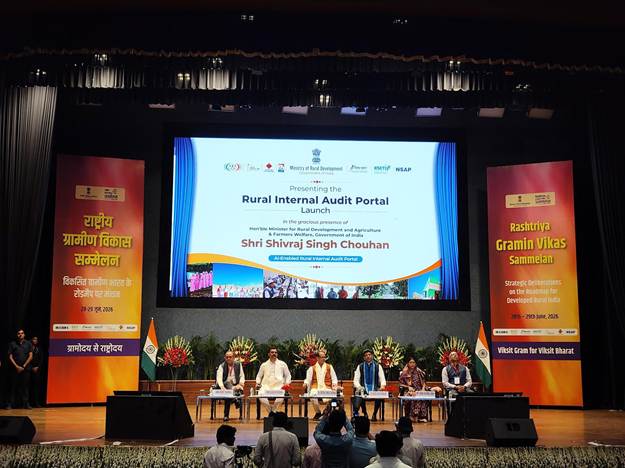
The Union Minister for Rural Development launched the Rural Internal Audit Portal during the Rashtriya Gramin Vikas Sammelan at Pusa Campus, New Delhi, to strengthen transparency, accountability and efficiency in the implementation of rural development programmes.
About the Rural Internal Audit Portal
- The Rural Internal Audit Portal is a unified digital platform for end-to-end management of risk-based and compliance audits under the Ministry of Rural Development.
- It has been conceived by the Office of the Chief Controller of Accounts (CCA), Ministry of Rural Development, and developed in collaboration with the National Informatics Centre (NIC).
- The portal digitizes the entire internal audit lifecycle, from audit planning to monitoring compliance and Action Taken Reports (ATRs).
Objectives
The portal aims to strengthen internal audit systems by:
- Digitizing and simplifying the audit process.
- Creating a centralized repository of audit records and Action Taken Reports (ATRs).
- Enabling risk-based audit planning for better prioritization.
- Automating audit reports and standardizing documentation.
- Facilitating real-time monitoring of audit progress and compliance.
- Leveraging data analytics and emerging technologies to identify implementation gaps and systemic risks.
Key Features
The platform offers a comprehensive digital audit ecosystem with features such as:
- End-to-End Digital Audit Management covering audit planning, execution and reporting.
- Centralized Audit Repository for audit observations, reports and compliance records.
- Role-Based Access Control for auditors, auditees, State Governments, programme divisions and approving authorities.
- Real-Time Dashboards to monitor audit coverage, pending observations and compliance status.
- Geospatial (Map View) Monitoring for visualizing audit activities across India.
- Multilingual and User-Friendly Interface for wider accessibility.
- AI and Advanced Analytics Integration for future risk assessment, audit prioritization and decision support.
Technology Architecture
The portal is built using modern digital infrastructure to ensure security and reliability.
It incorporates:
- Git-based version control systems.
- Continuous Integration/Continuous Deployment (CI/CD) workflows.
- Secure API-based integration.
- Role-based access control.
- Centralized monitoring systems.
- Automated exception handling.
- Disaster recovery protocols.
Kisan Sarathi Platform

- 29 Jun 2026
In News:
The Kisan Sarathi Platform has expanded its digital agricultural services by providing farmers with access to 610 Central and State Government schemes, along with real-time agro-advisories, weather information, market intelligence and expert consultations, strengthening India's digital agricultural extension system.
About Kisan Sarathi
- Launched in July 2021, Kisan Sarathi is India's largest integrated digital agro-advisory platform.
- It is a joint initiative of the Ministry of Electronics & Information Technology (MeitY) and the Ministry of Agriculture & Farmers' Welfare, implemented by the Indian Agricultural Statistics Research Institute (IASRI) and the Digital India Corporation (DIC).
- The platform is powered by the Interactive Information Dissemination System (IIDS), enabling two-way communication between farmers and experts and facilitating the transfer of scientific knowledge from lab to land.
Key Features
Kisan Sarathi acts as a one-stop platform by integrating:
- 730 Krishi Vigyan Kendras (KVKs)
- 100 ICAR Institutes
- 65 Agricultural Universities
It offers:
- Personalized crop advisories.
- Expert consultation in 13 regional languages.
- Weather forecasts and mandi prices.
- Information on 610 government schemes (including 102 Central schemes).
- Advisories covering crops, livestock, fisheries and allied sectors.
- Video consultations, farmer training and push alerts.
The platform is integrated with Kisan Call Centre, Common Service Centres (CSCs), IMD, MyScheme Portal and BHASHINI, making agricultural services available through mobile app, web portal, WhatsApp and call centres.
Interactive Information Dissemination System (IIDS)
The IIDS is the technological backbone of Kisan Sarathi. It enables seamless communication between farmers and agricultural experts through voice calls, video calls, text messages, images and video sharing.
Key Functions
- Two-way interaction between farmers and experts.
- Personalized advisories based on farmer requirements.
- Subion-based advisory services.
- Storage of farmer interaction history.
- Expert access to farmer profiles and previous consultations.
Unique Features
The system follows the Know Your Farmer (KYF) approach, wherein farmers' queries are routed to the most relevant domain experts. It also maintains a knowledge database and stores query history, enabling more accurate, personalized and context-specific advisories.
Coverage (As of 25 June 2026)
- Available in 37 States/UTs
- Covers 768 districts and 6.63 lakh villages
- 2.95 crore registered farmers, including 56.16 lakh women
- Network of 4,767 ICAR scientists and 113 ICAR institutes
- 19.21 lakh farmer queries addressed
- 21,900 advisories issued covering 351 commodities
Exercise RIMPAC 2026

- 29 Jun 2026
In News:
The United States has launched Exercise Rim of the Pacific (RIMPAC) 2026, the world's largest multinational maritime exercise, being conducted from 24 June to 31 July 2026 around the Hawaiian Islands.
About Exercise RIMPAC
- The Rim of the Pacific (RIMPAC) is the world's largest international maritime exercise, hosted by the U.S. Navy's Pacific Fleet and conducted biennially (every two years) in and around the Hawaiian Islands.
- Since its inception in 1971, the exercise has served as a premier platform for strengthening military cooperation, improving interoperability among participating armed forces, and promoting stability across the Indo-Pacific region.
- It enables participating countries to train together in complex maritime operations while fostering trust, defence diplomacy and collective preparedness.
RIMPAC 2026: Key Highlights
The 30th edition of RIMPAC is being conducted under the theme "Partners: Integrated and Prepared." The exercise witnesses participation from 31 countries, involving over 25,000 military personnel, around 40 surface ships, 5 submarines, and nearly 140 aircraft, making it one of the largest multinational military exercises in the world.
The exercise includes a broad spectrum of operations such as:
- Anti-submarine warfare
- Air defence operations
- Missile and gunnery exercises
- Amphibious assault operations
- Mine countermeasure operations
- Maritime interdiction
- Humanitarian Assistance and Disaster Relief (HADR)
- Search and Rescue (SAR)
- Explosive Ordnance Disposal (EOD)
These activities are designed to enhance operational readiness and interoperability among participating navies and armed forces.
India's Participation
- India has been participating in RIMPAC since 2014, reflecting its growing role in the Indo-Pacific maritime architecture.
- The participation of the Indian Navy demonstrates India's commitment to enhancing naval cooperation, improving interoperability with partner countries, and contributing towards a free, open, inclusive and rules-based Indo-Pacific.
- The exercise also complements India's maritime initiatives such as SAGAR (Security and Growth for All in the Region) and the Indo-Pacific Oceans Initiative (IPOI).
Significance of RIMPAC
RIMPAC has evolved beyond a naval exercise into an important platform for strategic cooperation and maritime governance.
- Enhancing Collective Maritime Security: The exercise strengthens the ability of participating nations to respond jointly to conventional and non-conventional maritime threats, including piracy, maritime terrorism, illegal fishing and other security challenges.
- Improving Interoperability: Joint training enables armed forces from different countries to operate together using common operational procedures, communication systems and tactical doctrines, thereby improving effectiveness during multinational operations.
- Promoting a Rules-Based Indo-Pacific: RIMPAC supports the vision of a free, open and rules-based Indo-Pacific, encouraging adherence to international law, freedom of navigation and peaceful resolution of maritime disputes.
- Strengthening Defence Diplomacy: The exercise builds confidence among participating nations through military-to-military engagement, fostering long-term strategic partnerships and regional stability.
- Enhancing Disaster Response Capabilities: Regular Humanitarian Assistance and Disaster Relief (HADR) drills improve coordination among participating countries during natural disasters and humanitarian emergencies, which are common across the Indo-Pacific region.