
Hindu Kush Himalaya
- 27 Apr 2026
In News:
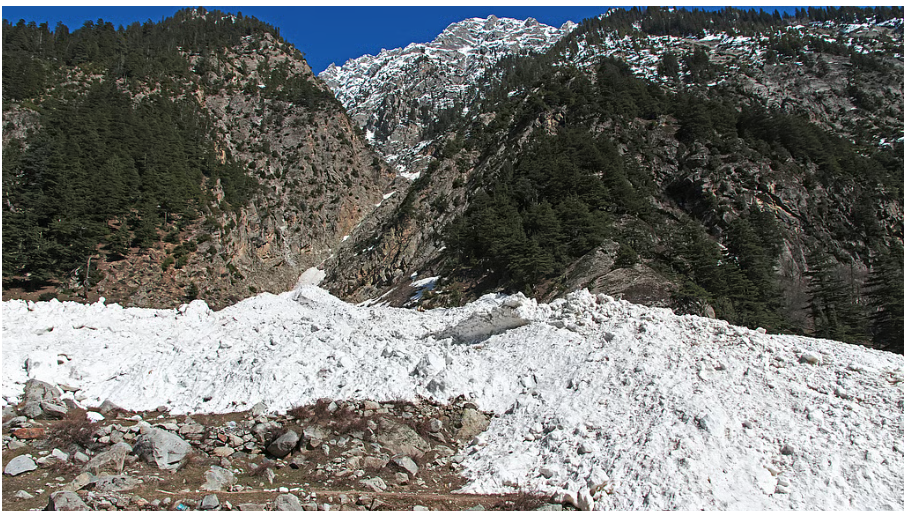
A recent report by the International Centre for Integrated Mountain Development (ICIMOD) has sounded a critical alarm for the Hindu Kush Himalaya (HKH) region. The findings reveal a record 27% drop in snow persistence—the duration for which snow remains on the ground—marking the fourth consecutive year of significant decline. This trend poses an existential threat to water security, biodiversity, and the livelihoods of nearly 2 billion people downstream.
Geographical Profile: The Water Tower of Asia
The Hindu Kush Himalaya is often referred to as the "Third Pole" because it contains the largest volume of permanent ice and snow outside the North and South Poles.
- Extent: It stretches approximately 3,500 km across eight countries: Afghanistan, Bangladesh, Bhutan, China, India, Nepal, Myanmar, and Pakistan.
- Topography: The range runs from northeast to southwest, acting as a colossal geographical divide between the Amu Darya valley to the north and the Indus River valley to the south.
- Highest Peak: The highest point is Tirich Mir (7,708 meters) located in the Chitral district of Pakistan.
- Sub-sections: The range is traditionally divided into three sections: the Eastern, Central, and Western Hindu Kush (the latter known as the B?b? Mountains).
Hydrological and Ecological Significance
The HKH region is the primary source of ten major Asian river systems:
- Amu Darya
- Indus
- Ganges
- Brahmaputra
- Irrawaddy
- Salween
- Mekong
- Yangtze
- Yellow River
- Tarim
These rivers support agriculture, energy, and industry for roughly a quarter of the global population. Furthermore, the region is an ecological powerhouse, home to four global biodiversity hotspots and a mosaic of ecosystems including glaciers, alpine meadows, wetlands, and desert vegetation in the arid inner valleys.
The Crisis: Declining Snow Persistence
Snow persistence is a vital indicator of mountain health. Unlike glaciers, which provide long-term water storage, seasonal snowmelt is the immediate driver of river flow during the spring and summer.
The ICIMOD report highlights that the current 27% decline is significantly below the historical average. This "snow drought" leads to:
- Water Scarcity: Reduced runoff affects irrigation and drinking water for downstream communities long before the monsoon arrives.
- Ecological Shift: Altered timing of snowmelt disrupts the life cycles of flora and fauna in alpine ecosystems.
- Increased Hazards: Warmer temperatures lead to unstable permafrost and a higher frequency of Glacial Lake Outburst Floods (GLOFs) and landslides.
RBI Eases Rupee NDF Curbs
- 27 Apr 2026
In News:
In a significant regulatory shift, the Reserve Bank of India (RBI) has partially rolled back restrictions on rupee-linked Non-Deliverable Forward (NDF) transactions. This decision follows a period of improved market stability and aims to streamline hedging operations for banks and their clients while maintaining a vigilant stance on exchange rate volatility.
The Policy Shift: From Restriction to Partial Relaxation
Previously, the RBI had tightened norms on NDFs to curb excessive speculation and arbitrage during periods of heightened global uncertainty. The recent relaxation introduces specific changes:
- Related-Party Transactions: Banks are now permitted to undertake limited related-party transactions, specifically the cancellation and rebooking (rollover) of existing NDF contracts.
- Targeted Relief: This move is primarily aimed at providing operational flexibility to clients who need to manage their long-term currency risks without being hampered by rigid "one-time" transaction rules.
- Maintained Safeguards: The regulatory framework remains cautious. The $100 million cap on net open positions in the onshore market remains intact, and broader restrictions on complex forex derivatives continue to stay in force to prevent systemic risks.
Understanding Non-Deliverable Forwards (NDFs)
For a clear understanding of the context, it is essential to define the NDF mechanism:
- Definition: An NDF is a cash-settled, short-term forward contract on a foreign currency. Unlike standard forward contracts, there is no physical delivery of the underlying currencies.
- Settlement: At maturity, the profit or loss is calculated based on the difference between the agreed-upon NDF rate and the prevailing spot rate. The difference is settled in a freely traded currency, typically the US Dollar.
- Purpose: They are primarily used by offshore investors and multinational corporations to hedge currency exposure in "restricted" currencies like the Indian Rupee (INR), which are not fully convertible on the capital account.
Why were the Curbs Imposed?
The original restrictions were a defensive measure against external shocks. Two primary factors led to the tightening:
- Geopolitical Volatility: Escalating tensions in West Asia triggered capital outflows and unpredictable swings in the rupee’s value.
- Arbitrage Risks: A significant price gap often emerges between the onshore market (regulated by RBI) and the offshore market (Dubai, Singapore, London). Speculators exploit these "arbitrage" opportunities, which can lead to artificial pressure on the rupee’s spot price in India.
Impact Assessment: Will the Rupee Strengthen?
While the relaxation is a positive signal for market liquidity, analysts suggest its impact on the spot rupee (the current exchange rate) will be minimal. The rupee’s trajectory remains heavily influenced by "macro-fundamentals":
- Crude Oil Prices: As a major importer, India’s currency is sensitive to energy costs.
- The Dollar Index: Strengthening of the US Dollar globally often leads to depreciation in emerging market currencies like the INR.
- Capital Flows: Foreign Portfolio Investment (FPI) trends and global risk appetite continue to be the primary drivers of the exchange rate.
1st Structured Pulse Procurement in Bihar
- 27 Apr 2026
In News:
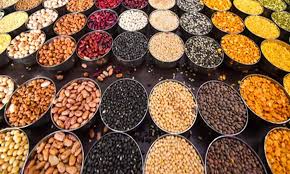
In a major push toward agricultural self-reliance, the Government of India has significantly scaled up Minimum Support Price (MSP)-based procurement operations. This expansion, driven by the National Cooperative Consumers’ Federation of India Limited (NCCF) and the National Agricultural Cooperative Marketing Federation of India Limited (NAFED), marks a strategic shift under the Pradhan Mantri Annadata Aay Sanrakshan Abhiyan (PM-AASHA) and the newly launched Atmanirbhar Pulses Mission.
The Atmanirbhar Pulses Mission: A Vision for 2030
Announced in the Union Budget 2025–26 and formally launched in October 2025, this Centrally Sponsored Scheme aims to eliminate India’s dependency on pulse imports by the end of the 2030–31 fiscal year.
- Priority Crops: The mission specifically targets Tur (Arhar), Urad, and Masoor (Lentil)—crops that are vital to Indian nutritional security but currently suffer from production deficits.
- Core Strategy: The mission focuses on improving crop yields, adopting climate-resilient agricultural practices, and ensuring long-term price stability to incentivize farmers.
State-Level Milestones: Bihar and Chhattisgarh
The government’s strategy is currently manifesting through intensified procurement drives in key states, utilizing both cooperative networks and digital infrastructure.
1. Bihar’s First Structured Procurement
For the first time, Bihar has initiated an organized procurement of Masoor (Lentil). This milestone is supported by the NCCF, which utilizes WDRA-approved warehouses in collaboration with the Central Warehousing Corporation to ensure scientific storage and minimize post-harvest losses.
- Target: 32,000 MT of Masoor.
- Progress (as of April 2026): Over 100 MT has already been procured, with Primary Agricultural Credit Societies (PACS) and Farmer Producer Organizations (FPOs) being rapidly onboarded.
2. Chhattisgarh’s Digital Procurement Ecosystem
Procurement in Chhattisgarh has crossed 12,000 MT, primarily focusing on Chana and Masoor. The state’s success is attributed to:
- E-Samyukti Portal: A digital platform facilitating seamless farmer registration and transparent transactions.
- Infrastructure: A robust network of 85 PACS centers across districts like Durg, Raipur, and Raigarh, with plans to expand into Sarguja and Kondagaon.
- Performance: Thousands of farmers have already benefited, with Chana procurement alone nearing 13,000 MT between NCCF and NAFED operations.
PM-AASHA: The Institutional Backbone
Launched in 2018, PM-AASHA provides the regulatory framework to ensure farmers receive remunerative prices. It operates through three distinct pillars:
- Price Support Scheme (PSS): Physical procurement of pulses, oilseeds, and copra by central agencies.
- Price Deficiency Payment Scheme (PDPS): Direct compensation to farmers when market prices fall below the MSP, without physical procurement.
- Private Procurement &Stockist Scheme (PPSS): Encouraging private sector participation in the procurement process.
Project DANTAK
- 27 Apr 2026
In News:
Project DANTAK of the Border Roads Organisation (BRO) celebrated its 66th Raising Day in Thimphu, Bhutan. This milestone commemorates over six decades of infrastructure development and serves as a testament to the enduring diplomatic and developmental ties between India and the Kingdom of Bhutan.
Historical Genesis and Mandate
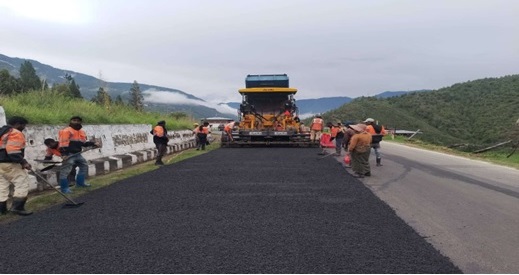
Project DANTAK was established on April 24, 1961, following a landmark agreement between the third King of Bhutan, Jigme Dorji Wangchuck, and India’s then-Prime Minister, Jawaharlal Nehru. As an overseas project of the BRO—operating under the Ministry of Defence—its primary mandate was to break the geographical isolation of remote Bhutanese regions by constructing the country's pioneering motorable roads.
Transformative Infrastructure Achievements
Over the past 65 years, Project DANTAK has been a cornerstone of Bhutan’s socio-economic transformation. Its contributions span various sectors:
- Road Connectivity: The project has constructed over 1,500 km of roads, including the strategically vital East–West Highway linking Trashigang to Thimphu. It was also instrumental in building the Phuentsholing–Thimphu Highway.
- Aviation: DANTAK played a pivotal role in the development of Paro International Airport and the Yongphula Airfield.
- Institutional Development: Beyond transport, the project contributed to telecommunications, hydropower infrastructure, hospitals, and educational institutions like Sherubtse College in Kanglung and the India House Estate.
Recent Advancements and Modernization
In alignment with modern developmental priorities, Project DANTAK has shifted focus toward capacity enhancement and climate resilience:
- Double Laning Projects: Significant stretches such as the Confluence–Haa road (inaugurated August 1, 2025) and the 168-km SamdrupJongkhar–Trashigang highway have been upgraded to improve safety and reduce travel time.
- Strategic Corridors: Ongoing works include road construction in the South-Eastern regions (Nganglam–Dewathang, Samrang–Jomotsangkha) and the strengthening of the Damchu–Chhukha axis.
- Disaster Resilience: The project has demonstrated an exceptional ability to restore connectivity in record time following landslides and road washouts, ensuring Bhutan's lifelines remain open during natural calamities.
The Border Roads Organisation (BRO): An Overview
The BRO serves as the executive force behind these projects, providing critical support to the Indian Armed Forces while fostering regional connectivity.
- Established: May 7, 1960.
- Governance: Originally a joint effort, the BRO was brought entirely under the Ministry of Defence in 2015 to streamline strategic infrastructure projects.
- Mission: To secure India's borders and develop infrastructure in remote areas of the North and North-Eastern states, as well as in friendly neighboring countries.
- Motto:Shramena Sarvam Sadhyam ("Everything is achievable through hard work").
Nasha Mukt Bharat Abhiyaan
- 27 Apr 2026
In News:
The Ministry of Social Justice & Empowerment (MoSJE) is set to launch the Nasha Mukt Bharat Abhiyaan (NMBA) App 2.0. This upgrade marks a pivotal shift toward data-driven governance under the National Action Plan for Drug Demand Reduction (NAPDDR), aiming to create a "Drug-Free India" through enhanced institutional coordination and public participation.
Evolution of the Campaign
Launched on August 15, 2020, the NMBA was initially targeted at 272 vulnerable districts. Recognizing the pervasive nature of substance abuse, the government extended the campaign to all districts nationwide on August 15, 2023.
The initiative has achieved significant scale since its inception:
- Massive Reach: Over 26 crore people sensitized, including 9.5 crore youth and 6.47 crore women.
- Ground-level Action: More than 8.3 lakh activities conducted across educational institutions and community spaces.
- Human Capital: Mobilization of 28,000 "Master Volunteers" (Nasha Mukti Mitrs).
Objectives and Strategy
The NMBA operates on a multi-pronged strategy to reduce drug demand by:
- Awareness Generation: Targeting schools, university campuses, and higher educational institutions.
- Community Outreach: Identifying dependent populations and facilitating early intervention.
- Treatment and Rehabilitation: Strengthening counseling and clinical facilities in hospitals.
- Capacity Building: Training service providers to handle the complexities of substance use disorders.
The Digital Leap: Features of NMBA App 2.0
While the original app served as an internal tracking tool, the 2.0 version transforms the platform into a comprehensive digital ecosystem for both administrators and the general public.
1. Enhanced Public Engagement: Unlike its predecessor, the 2.0 app is citizen-centric. Users can now take an e-Pledge, access Information, Education, and Communication (IEC) materials, and utilize a dedicated feedback mechanism to help improve the campaign’s efficacy.
2. Institutional Transparency & "Anudan" Tracking: A critical addition is the dedicated access for Grant-in-Aid Institutions (GIAs). The app provides real-time visibility of Anudan (Grant) status, allowing the Ministry, State governments, and the institutions themselves to track fund utilization. This ensures greater financial accountability and streamlines the administrative bottleneck.
3. Location-Based Support: The 'Nearest De-addiction Centre' feature uses geolocation to help users find immediate treatment services, bridging the gap between awareness and clinical referral.
4. Real-time Monitoring: The app serves as a centralized dashboard for real-time reporting from National to District levels. This allows for evidence-based policy adjustments and ensures that ground-level activities are aligned with national goals.