
Actinarctusodissi
- 25 May 2026
In News:
An international team including researchers from the CSIR-National Institute of Oceanography (CSIR-NIO), the University of Minho, Portugal, and the Academy of Scientific and Innovative Research (AcSIR) discovered a new species of tardigrade in the shallow marine waters of the Bay of Bengal, near the coastal region of Markandi, Odisha. This marks the first time in 43 years that a new member of the elusive Actinarctus genus has been identified — a landmark moment for India's marine biodiversity documentation.
About Actinarctusodissi
- The new tardigrade has been officially named Actinarctusodissi, with "odissi" chosen to honour the famous traditional classical dance form originating from Odisha, where the tiny animal was unearthed.
- Researchers collected sand samples from the ocean floor at a depth of 14 metres in shallow marine waters off the Odisha coast.
- The study was published in the journal Marine Biodiversity (Springer Nature). The new species belongs to the family Tanarctidae under Heterotardigrada, and can be distinguished from its congeners by the structure and ornamentation of the dorsal body cuticle, shape and arrangement of lateral epicuticular alae (wing-like flaps), structure and length of the leg IV sensory organ, and the presence of Van der Land's organ in cephalic and leg sensory organs.
Unique morphological features:
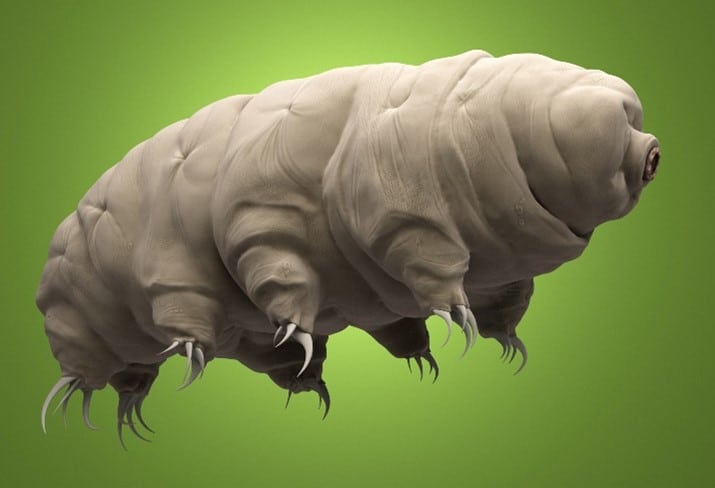
- A dome-shaped body surrounded by transparent, wing-like flaps called alae, supported by translucent pillars
- Noticeably shorter lateral wings compared to other members of the genus
- Blunt-tipped sensory appendages (rather than sharp ones)
- Back uniquely heavily sculptured with tiny, trombone-shaped pillars
- Simple, un-split sensory organs on back legs, shorter than those of its congeners
What are Tardigrades?
Tardigrades — colloquially known as "water bears" or "moss-piglets" — are microscopic animals, typically 0.05 mm–1.2 mm in body length. About 1,300 species have been identified globally. They are bilaterally symmetrical, segmented organisms with four pairs of legs, each ending in four to eight claws, feeding on plant cell fluids, animal cell fluids, and bacteria.
Marine tardigrades account for 17% of all known tardigrade species — a category that remains among the most understudied in global marine biodiversity.
Their most remarkable trait is extreme environmental resilience: they can survive punishing heat, freezing cold, ultraviolet radiation, and even the vacuum of outer space. Under unfavourable conditions, they enter a state of suspended animation called the "tun" state — during which the body desiccates and metabolism drops to as low as 0.01% of its normal rate. Tardigrades can survive as tuns for years or even decades, making them candidates for research in astrobiology, cryptobiosis, and pharmaceutical biotechnology.
Scientific and Policy Significance
Marine tardigrades from Indian waters represent an important but largely overlooked component of regional biodiversity, and every new record contributes significantly to understanding their distribution and taxonomy. The discovery highlights the hidden diversity of marine meiofauna in the Indian subcontinent.
The discovery carries broader implications:
- Biodiversity documentation: India's coastal and deep-sea environments remain significantly under-surveyed. The Actinarctusodissi find demonstrates that major taxonomic discoveries remain possible even in relatively shallow, accessible coastal zones — underlining the case for sustained marine biological surveys under India's Deep Ocean Mission.
- Biotechnology potential: Tardigrades' extraordinary survival mechanisms — particularly cryptobiosis and DNA repair under extreme stress — are of active interest to pharmaceutical research, space biology, and materials science. India's discovery of a new marine species adds to the genetic and biochemical resource pool accessible for future research.
- CSIR-NIO's Role: The involvement of CSIR-NIO — India's premier oceanographic research institution based in Goa — highlights the institution's expanding contribution to marine taxonomy beyond its traditional focus on physical and chemical oceanography.