
Sub-Orbital Launch Vehicle for Experiment (SOLVE)
- 07 Jul 2026
In News:
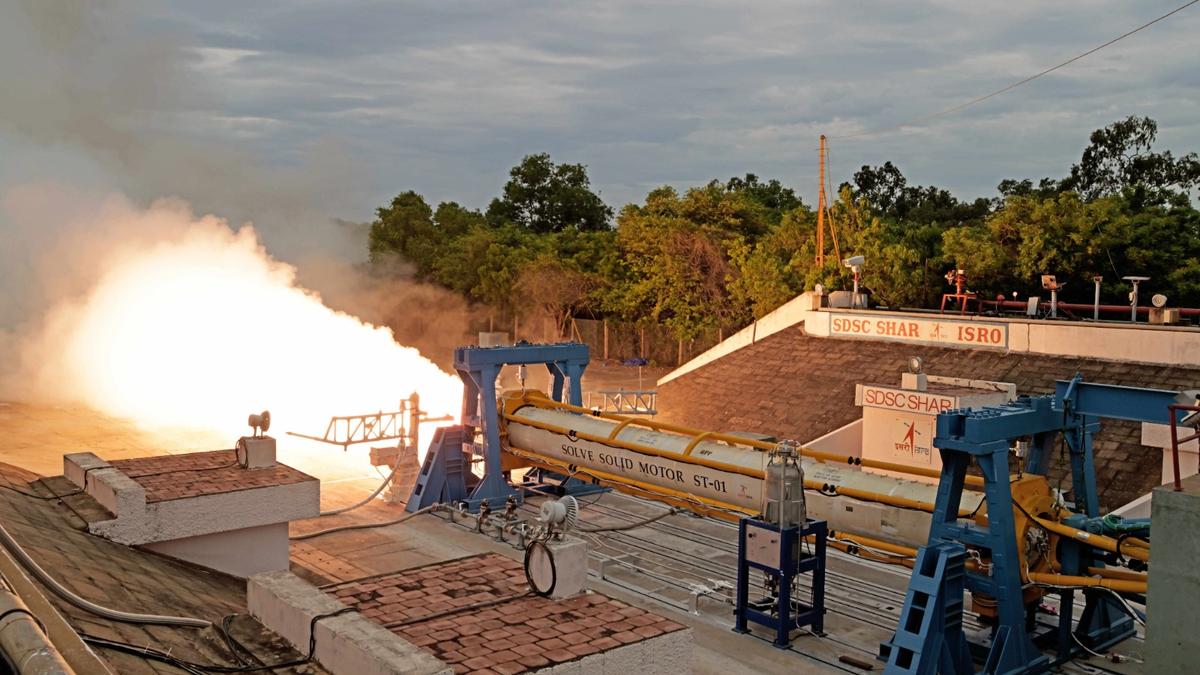
The Indian Space Research Organisation (ISRO) has successfully conducted the first ground test of the Sub-Orbital Launch Vehicle for Experiment (SOLVE) solid motor at the Static Test Facility, Satish Dhawan Space Centre (SDSC), Sriharikota. The successful test marks a significant milestone in validating critical technologies for India's Gaganyaan Human Spaceflight Mission.
What is SOLVE?
The Sub-Orbital Launch Vehicle for Experiment (SOLVE) is a specialised test platform developed by ISRO to validate the deceleration and recovery systems of the Gaganyaan Crew Module under realistic flight conditions before undertaking human spaceflight.
Unlike an orbital launch vehicle, SOLVE performs sub-orbital missions, reaching lower altitudes without entering Earth's orbit. These missions are intended to test critical systems that ensure the safe return of astronauts.
Key Features
- Developed specifically for Gaganyaan qualification tests.
- Carries the Crew Module to an altitude of 10–17 km before separation.
- Designed to validate the Integrated Parachute Deceleration System.
- Uses a solid propulsion stage derived from the PSLV Strap-on Motor, with modifications to meet human spaceflight requirements.
- Incorporates:
- Slow burn-rate solid propellant for controlled performance.
- Straight nozzle configuration.
- Secondary Injection Thrust Vector Control (SITVC) for improved flight stability and control.
How the Test Mission Works
During a SOLVE mission:
- The launch vehicle carries the Crew Module to an altitude of 10–17 km.
- The Crew Module separates from the vehicle.
- A carefully sequenced parachute deployment system is activated.
- A total of 10 parachutes deploy in different stages to progressively reduce the module's speed.
- The Crew Module finally performs a safe splashdown in the sea, simulating the recovery phase of the Gaganyaan mission.
These tests help verify the reliability of the deceleration system under different flight conditions before astronauts are flown.
About the Gaganyaan Mission
Gaganyaan is India's first indigenous human spaceflight programme, aimed at demonstrating the country's capability to safely send humans into space and return them to Earth.
Objectives
- Demonstrate India's indigenous capability to undertake human spaceflight.
- Send a crew of three astronauts into Low Earth Orbit (LEO) at an altitude of approximately 400 km.
- Keep the crew in orbit for about three days before ensuring their safe return through splashdown and recovery.
- Promote scientific research by conducting microgravity experiments.
- Lay the foundation for a long-term Indian human space exploration programme, including future space stations and deep-space missions.
Pandavani
- 07 Jul 2026
In News:
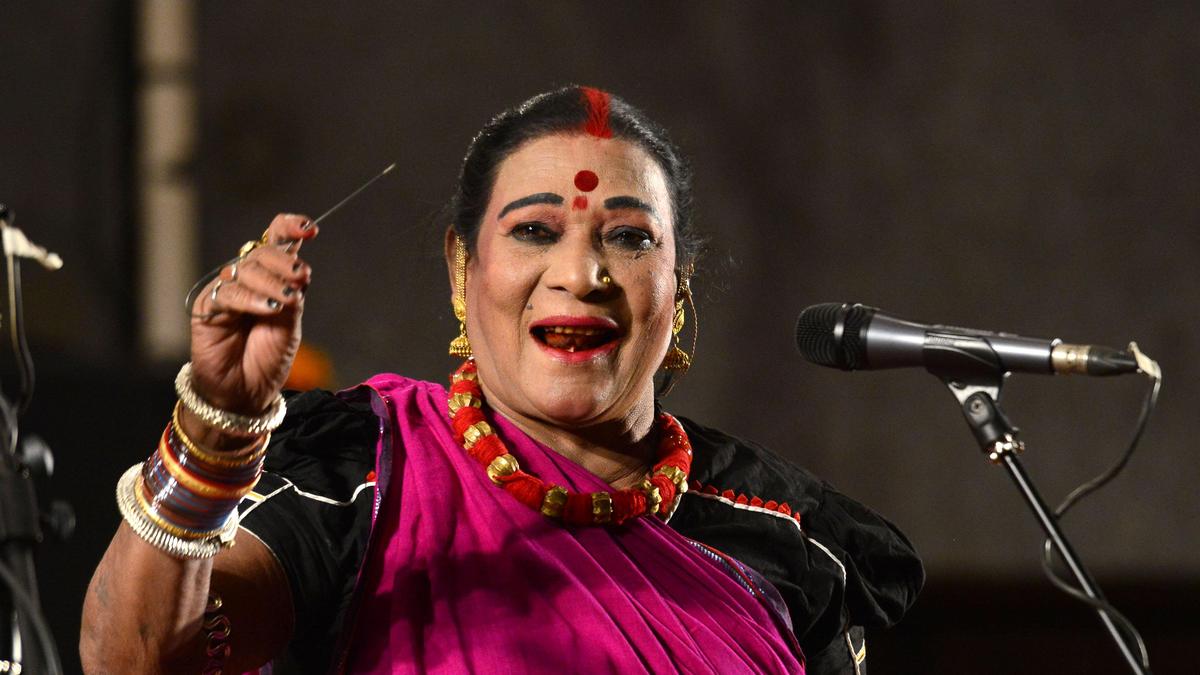
Renowned Pandavani exponent Teejan Bai, who popularised Chhattisgarh's traditional storytelling art on national and international platforms, recently passed away. She played a transformative role in bringing this unique oral folk tradition to global recognition and was one of India's most celebrated folk artists.
What is Pandavani?
Pandavani is a traditional oral storytelling and musical performance tradition originating from Chhattisgarh. The word "Pandavani" literally means "the story of the Pandavas" and revolves around episodes from the Mahabharata, particularly highlighting the lives, struggles and heroism of the Pandava brothers.
Blending music, narration, acting and improvisation, Pandavani occupies a unique place among India's folk performing arts. Unlike classical theatre, it is centred on the expressive abilities of a single lead performer, who narrates the epic while portraying multiple characters through changes in voice, facial expressions and dramatic gestures.
Features of Pandavani
The performance combines storytelling with music and theatrical elements, making it a powerful medium of oral tradition.
Some of its important features include:
- Narration is based on episodes from the Mahabharata, especially the exploits of the Pandavas.
- A single lead performer narrates, sings and enacts different characters.
- Accompanied by musicians playing instruments such as the harmonium, tabla, dholak and manjira.
- The performer usually carries a tambura or ektara, which serves both as a musical instrument and a symbolic prop.
- During the performance, the tambura may represent a bow, mace, sword, chariot or other objects, depending on the scene being enacted.
- The narration often includes improvisation, audience interaction and spontaneous dramatic expression.
Styles of Pandavani
Pandavani is traditionally performed in two distinct styles:
Vedamati Style
- The performer remains seated throughout the performance.
- Greater emphasis is placed on simple narration and singing.
- Dramatic enactment is minimal, with the focus on the oral narration of the epic.
Kapalik Style
- The performer moves across the stage, enacting various characters and battle scenes.
- Uses dramatic gestures, voice modulation and expressive acting.
- The tambura is creatively used as different symbolic objects during the performance.
- This style is more theatrical and visually engaging.
Teejan Bai's Contribution
Teejan Bai is widely regarded as the greatest exponent of the Kapalik style of Pandavani. She broke traditional gender barriers by performing a style that was historically dominated by male artists and transformed Pandavani into a globally recognised folk art form.
Her contributions include:
- PopularisedPandavani across India and internationally.
- Revitalised interest in Chhattisgarh's folk traditions.
- Inspired generations of women artists to enter the field.
- Elevated an oral folk tradition to national cultural prominence.
Another noted contemporary exponent of Pandavani is Ritu Verma.
Doctrine of Per Incuriam
- 07 Jul 2026
In News:
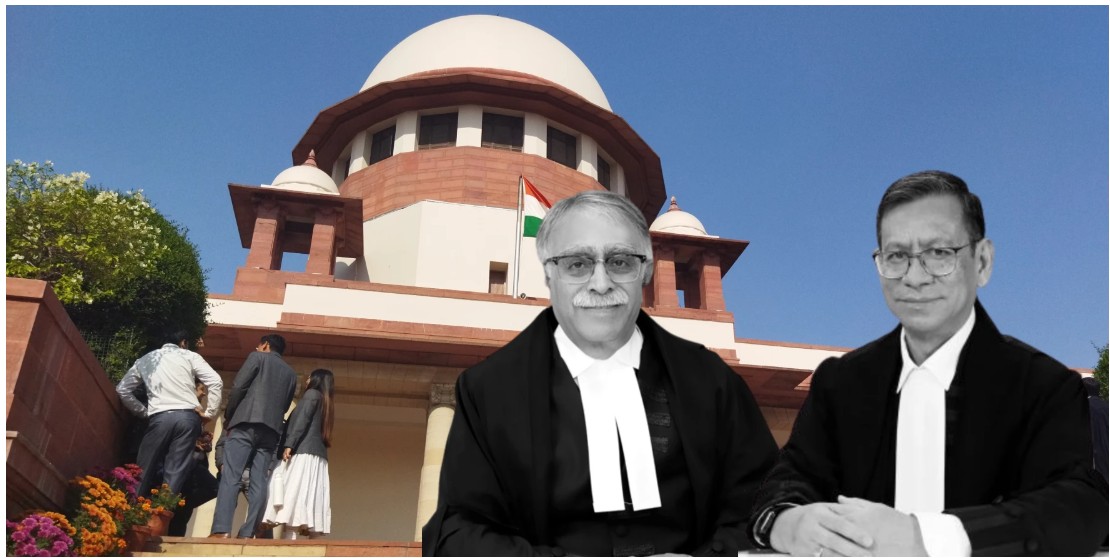
The Supreme Court recently clarified the scope and application of the Doctrine of Per Incuriam, explaining the limited circumstances under which a judicial precedent can be disregarded. The Court reaffirmed that the doctrine is an exception to the principle of judicial precedents and should be invoked only in exceptional situations to maintain consistency and certainty in the legal system.
What is the Doctrine of Per Incuriam?
The Latin expression "per incuriam" means "through lack of care" or "through inadvertence." A judgment is said to be per incuriam when it is delivered without considering a binding statutory provision or an earlier authoritative judicial precedent that would have materially affected the outcome of the case.
Such decisions are regarded as having been rendered due to ignorance or oversight of the applicable law and, therefore, do not possess binding precedential value.
The doctrine prevents erroneous judicial decisions from becoming binding law and helps preserve consistency in the administration of justice.
Relationship with the Doctrine of Stare Decisis
The doctrine of per incuriam is closely linked to the principle of stare decisis, which means "to stand by what has been decided." Under this doctrine, courts generally follow precedents established by higher courts to ensure legal certainty, predictability and uniformity.
The doctrine of per incuriam acts as a limited exception to this rule by allowing courts to disregard a precedent that was rendered in ignorance of binding law or an earlier authoritative decision.
Constitutional Basis
The doctrine operates as an exception to Article 141 of the Constitution, which provides that:
"The law declared by the Supreme Court shall be binding on all courts within the territory of India."
While Article 141 gives binding force to Supreme Court judgments, a decision rendered per incuriam does not enjoy the same precedential authority because it is considered legally flawed due to the omission of relevant law.
Applicability
The doctrine applies only to the ratio decidendi of a judgment—the legal principle or reasoning that forms the basis of the decision and is binding on lower courts.
It does not apply to obiter dicta, which are incidental observations or remarks made by a judge that may have persuasive value but are not legally binding.
Supreme Court's Recent Observations
The Supreme Court clarified the following principles regarding the doctrine:
- A judgment may be declared per incuriam if its ratio decidendi is irreconcilable with an earlier decision of a bench of equal or larger strength.
- The doctrine also applies where a relevant statutory provision, rule or regulation was not brought to the Court's attention while deciding the case.
- The strength of the bench, rather than the number of judges expressing a particular opinion, determines the binding nature of a precedent.
- A co-equal bench cannot overrule an earlier decision of another co-equal bench. If it disagrees with the earlier view, it must refer the matter to a larger bench.
- Decisions of a larger bench are binding on all benches of equal or smaller strength.
- A judgment cannot be declared per incuriam merely because it reached an incorrect conclusion after considering an earlier precedent or because another interpretation of the law appears more persuasive.
Important Case Law
State of Assam v. Ripa Sarma
The Court held that a judgment rendered without considering an earlier binding decision of a bench of equal or larger strength would be regarded as per incuriam and would not constitute a binding precedent.
Matcha Tea
- 07 Jul 2026
In News:
An Assam tea estate has sold India's first commercially produced matcha tea, marking a significant diversification of the Indian tea industry beyond conventional black and green teas. The initiative reflects the growing demand for premium specialty teas in domestic and international markets and opens new avenues for value addition in the tea sector.
What is Matcha Tea?
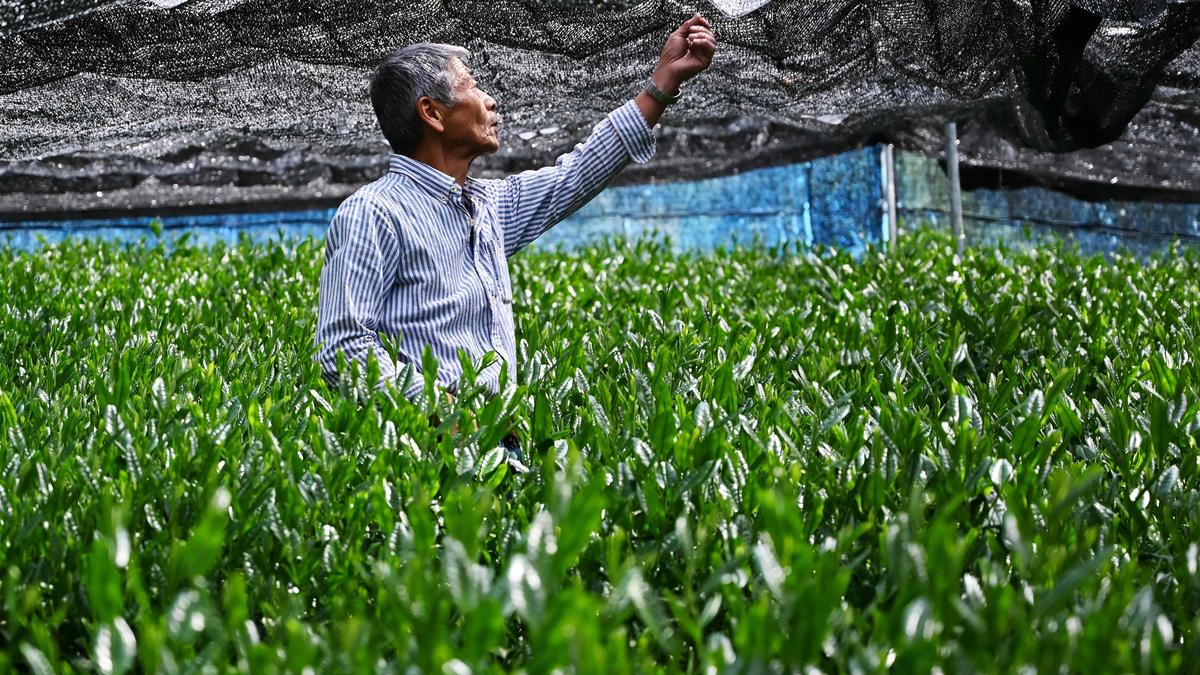
Matcha is a finely ground green tea powder prepared from specially cultivated shade-grown leaves of Camellia sinensis, the same plant species used to produce black, green, oolong and white teas. Unlike conventional green tea, where the leaves are infused in hot water and discarded, matcha is whisked into water and consumed entirely, resulting in higher intake of nutrients and bioactive compounds.
The practice of consuming powdered tea originated in China during the Song Dynasty and was later introduced to Japan by Zen Buddhist monks, where it evolved into an integral part of the Japanese tea ceremony. Today, Japan remains the world's leading producer of high-quality matcha.
How is Matcha Produced?
The distinctive quality of matcha lies in its unique cultivation and processing method.
- Tea plants are shade-grown for about 3–4 weeks before harvest, with nearly 90% of sunlight blocked.
- Reduced sunlight increases the concentration of chlorophyll and L-theanine (an amino acid), giving the leaves their vibrant green colour and characteristic umami flavour.
- Only the young, tender leaves are harvested.
- The leaves are steamed immediately to prevent oxidation, preserving their green colour.
- After drying and removing stems and veins, the processed leaves are known as tencha.
- The tencha is then slowly stone-ground into an ultra-fine green powder called matcha.
Why is Matcha Different from Regular Green Tea?
Unlike ordinary green tea, which is prepared by steeping leaves in hot water, matcha is consumed as the whole leaf in powdered form. As a result, it provides higher concentrations of:
- Antioxidants (especially catechins such as EGCG)
- Chlorophyll
- L-theanine
- Natural caffeine
- Vitamins and minerals
This combination has made matcha popular as a functional beverage in the global health and wellness market.
India–Southeast Asia (I-2SEA) Submarine Cable System
- 07 Jul 2026
In News:
A consortium comprising Microsoft, Singtel, Tata Communications and Lightstorm has signed agreements to develop the India–Southeast Asia (I-2SEA) Submarine Cable System, a major digital infrastructure project connecting India, Malaysia and Singapore. Expected to be operational by Q4 2029, it seeks to meet the growing demand for Artificial Intelligence (AI), cloud computing and hyperscaler connectivity across the India–Southeast Asia corridor.
What is the I-2SEA Submarine Cable System?
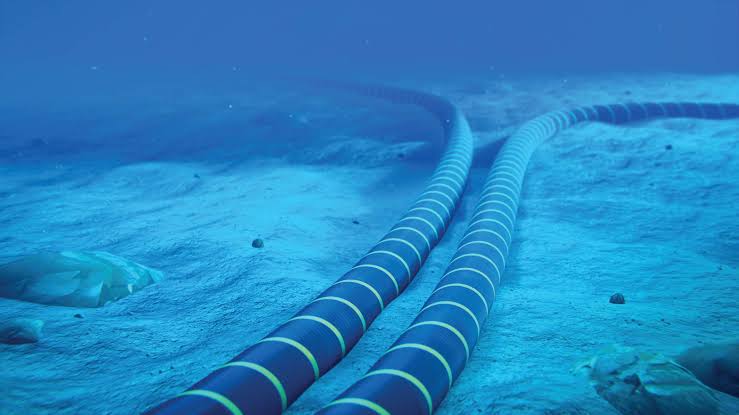
The I-2SEA is an approximately 3,600-km submarine fibre-optic cable system that will connect India's east coast with Southeast Asia through a carrier-neutral landing infrastructure. It is designed to provide high-capacity, low-latency and resilient digital connectivity for AI, cloud services and enterprise data traffic.
Submarine cables are undersea fibre-optic cables that transmit data using light signals and carry nearly 99% of global international internet and telecommunications traffic, making them the backbone of the global digital economy.
Key Features
- Connects India, Malaysia and Singapore, strengthening regional digital connectivity.
- Dual landing stations in India at Machilipatnam (Andhra Pradesh) and South Chennai (Tamil Nadu).
- Machilipatnam offers the shortest subsea route to Hyderabad, enabling faster connectivity to India's growing AI and data centre ecosystem.
- Provides onward connectivity to Mumbai and over 80 data centres through Lightstorm's terrestrial fibre network.
- Features carrier-neutral landing infrastructure, allowing multiple telecom operators and service providers to use the network.
- Uses interoperable cable architecture, ensuring seamless integration with various international networks.
- Incorporates deep cable burial to protect against damage from anchors, fishing activities and natural hazards.
- Integrated with Lightstorm's SmartNet AI Fabric and Polarin platform for intelligent network management and real-time monitoring.
Purpose
The project has been designed to address the rapid growth in international data traffic driven by AI and cloud computing. It will support:
- Hyperscalers and cloud service providers.
- GPU infrastructure for AI model training and inference.
- High-performance computing workloads.
- Enterprises requiring high-capacity, low-latency digital connectivity.