
Investment Friendliness Index (IFI)
- 19 Jul 2026
In News:
NITI Aayog has released the first Investment Friendliness Index (IFI) to assess and benchmark the investment ecosystem across States and Union Territories, encouraging reforms to strengthen India's investment climate.
About the Investment Friendliness Index (IFI)
- The Investment Friendliness Index (IFI) is a data-driven assessment framework developed by NITI Aayog to evaluate how effectively States and Union Territories create an enabling environment for domestic and foreign investments.
- The Index was conceived following the Prime Minister's directive during the 9th Governing Council Meeting of NITI Aayog (July 2024) to prepare an Investment-Friendly Charter, and was subsequently announced in the Union Budget 2025–26.
- Its objective is to promote competitive and cooperative federalism, encourage continuous reforms, and support the vision of Viksit Bharat @2047 through stronger State-level investment ecosystems.
Key Features
The Index evaluates all 28 States and 8 Union Territories across eight pillars:
- Infrastructure
- Business Climate
- Resources
- Government Policy
- Regulatory Ease
- Institutional Environment
- Financial Health
- Environmental Resilience
The assessment is based on 84 indicators, combining secondary data with investor perception surveys, thereby capturing both objective performance and on-ground business experience.
Performance Categories
Based on overall scores, States and UTs are classified into four categories:
- Top Performers: Above 50
- Frontrunners: 45–50
- Emerging Performers: 40–45
- Aspiring States: Below 40
To ensure fair comparison, rankings are also prepared separately for:
- Large States
- Hilly & North-Eastern States
- Union Territories & City States
Key Findings
Among the Large States, Gujarat secured the 1st rank, followed by Maharashtra and Tamil Nadu.
In the overall national rankings, the Top Five Performers are:
- Gujarat
- Maharashtra
- Tamil Nadu
- Goa
- Odisha
Among Hilly & North-Eastern States, Uttarakhand ranked first, followed by Assam and Himachal Pradesh.
Among Union Territories & City States, Goa emerged as the best performer, followed by Delhi and Chandigarh.
World Artificial Intelligence Cooperation Organization (WAICO)

- 19 Jul 2026
In News:
Twenty-nine countries recently signed an agreement in Shanghai, China, to establish the World Artificial Intelligence Cooperation Organization (WAICO), a new intergovernmental body aimed at strengthening global cooperation and governance in Artificial Intelligence (AI).
About WAICO
- The World Artificial Intelligence Cooperation Organization (WAICO) is an independent intergovernmental international organisation headquartered in Shanghai, China.
- It was first proposed by China in July 2025 to create a multilateral platform for cooperation on AI governance, innovation and capacity building.
- The organisation seeks to promote international cooperation, facilitate global AI governance, and encourage the responsible development and application of Artificial Intelligence.
- WAICO is guided by the purposes and principles of the United Nations Charter and follows the principles of extensive consultation, joint contribution and shared benefits, while adopting a people-centric approach to AI development.
Founding Members
- The organisation has 29 founding members, including:China, Russia, Pakistan, South Africa, Brazil, Malaysia, Indonesia, Myanmar, Cambodia, Laos, Oman, Cuba, Venezuela, Belarus, Serbia, Kazakhstan, Kyrgyzstan, Tajikistan, Uzbekistan, Algeria, Cameroon, Congo, Ethiopia, Kenya, Lesotho, Mozambique, Senegal, Zambia, and Nicaragua.
- Notably, India has not joined WAICO, making it the only founding BRICS member absent from the organisation.
Objectives
WAICO aims to:
- Promote international cooperation in Artificial Intelligence.
- Develop a framework for global AI governance.
- Encourage responsible, inclusive and people-centric AI development.
- Strengthen collaboration among member countries in AI research, innovation and capacity building.
- Facilitate knowledge sharing and international partnerships in emerging AI technologies.
India–UK Comprehensive Economic and Trade Agreement (CETA)
- 19 Jul 2026
In News:
The India–UK Comprehensive Economic and Trade Agreement (CETA) officially came into force on 15 July 2026, marking a new phase in bilateral economic relations between the two countries.
What is India–UK CETA?
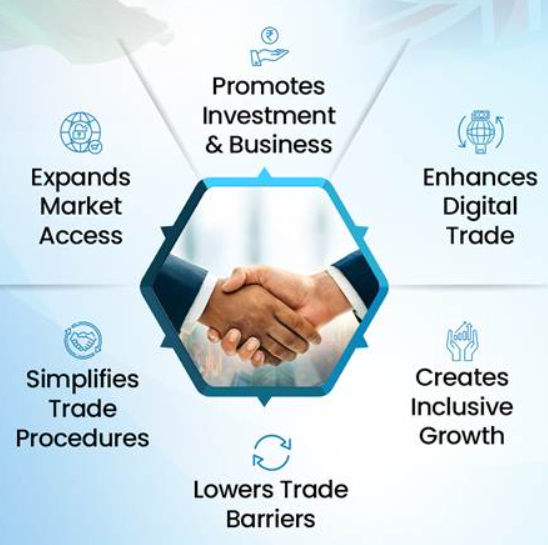
- The India–UK Comprehensive Economic and Trade Agreement (CETA) is a comprehensive bilateral Free Trade Agreement (FTA) aimed at liberalising trade in goods, services, investment, and professional mobility. It seeks to enhance market access, reduce trade barriers, strengthen supply chains, and expand economic cooperation.
- The agreement aims to double bilateral trade from about US$56 billion by the end of the decade, while promoting investment, technology collaboration and employment generation.
Key Features of CETA
Duty-Free Market Access
- The UK has provided zero-duty access on nearly 99% of India's export tariff lines, covering almost the entire value of India's merchandise exports to the UK. This is expected to significantly benefit labour-intensive sectors such as textiles, garments, leather, footwear, marine products, engineering goods, pharmaceuticals and auto components.
- The agreement also removes the tariff disadvantage that Indian exporters earlier faced vis-à-vis countries such as Bangladesh, Pakistan and Cambodia, which already enjoyed duty-free access to the UK market.
Market Access for Services
- India secured improved access across 12 major services sectors and 137 sub-sectors, including information technology, finance, education and professional services. Both countries also agreed to conclude Mutual Recognition Agreements (MRAs) for professional qualifications in sectors such as nursing, architecture and accountancy, facilitating easier mobility of skilled professionals.
Double Contribution Convention (DCC)
A major achievement is the Double Contribution Convention (DCC), under which Indian professionals temporarily working in the UK will be exempt from paying British National Insurance contributions for up to 60 months, preventing double social security payments. This is expected to benefit around 75,000 Indian professionals and nearly 900 companies, generating savings of around US$600 million annually.
Calibrated Market Opening by India
India has agreed to gradually reduce tariffs on selected British products:
- Import duty on British passenger vehicles will decline from around 110% to 10% over ten years under a quota of 37,000 Completely Built Units (CBUs) annually.
- Customs duty on Scotch whisky will be reduced in phases from 150% to 40% over a decade.
The phased approach seeks to protect domestic industries while promoting greater competition and consumer choice.
Operation Southern Readiness 26-2
- 19 Jul 2026
In News:
The Indian Navy will host Operation Southern Readiness 26-2 at the Southern Naval Command, Kochi, in partnership with the Combined Maritime Forces (CMF).
About Operation Southern Readiness 26-2
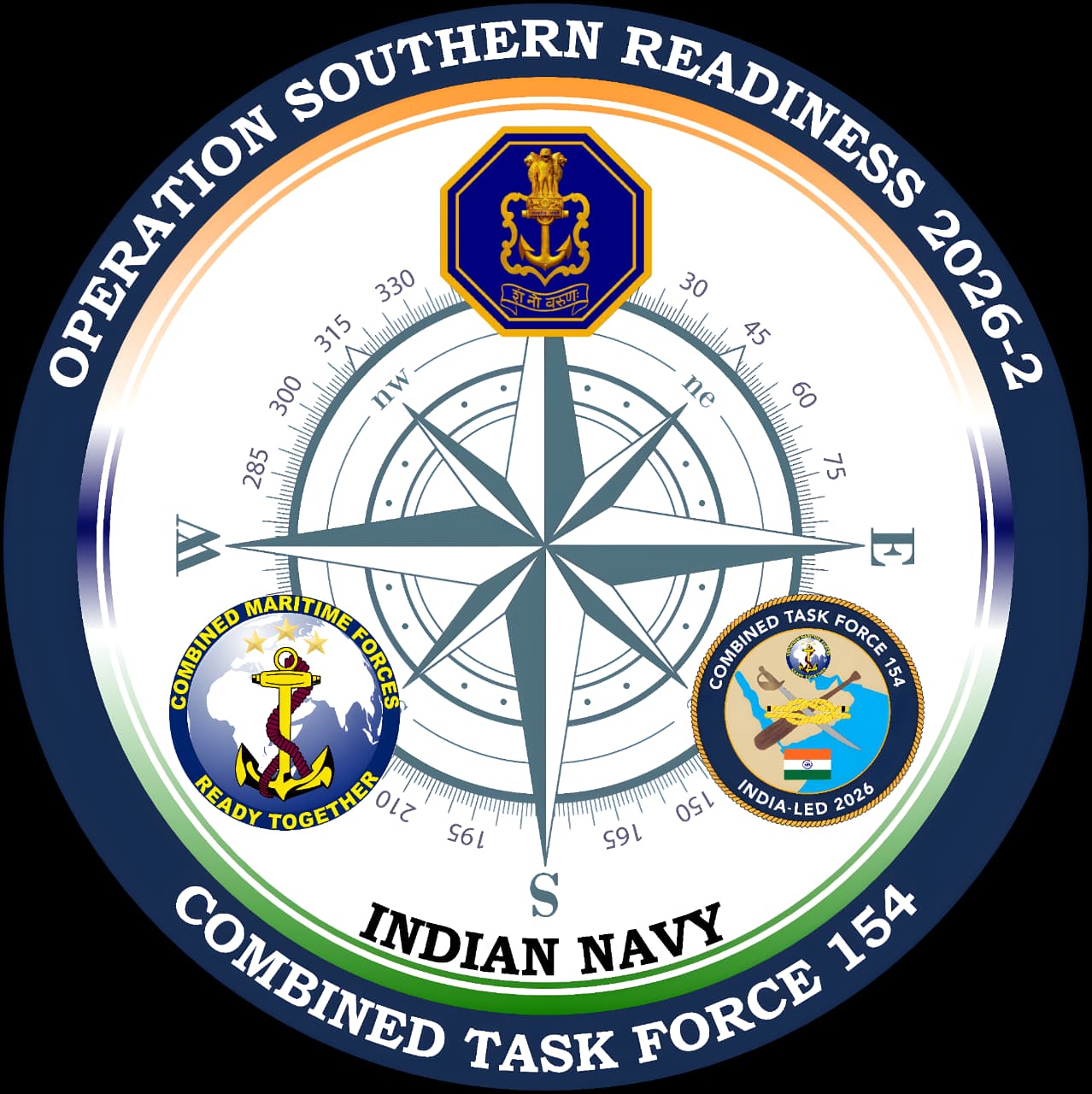
- Operation Southern Readiness 26-2 is a multinational maritime training exercise aimed at strengthening maritime security cooperation, enhancing interoperability, and building regional capacity among partner navies.
- The exercise is hosted by the Indian Navy at the Southern Naval Command, Kochi, under the aegis of the Indian Navy-led Combined Task Force (CTF) 154, the dedicated Training Task Force of the Combined Maritime Forces (CMF).
- The four-day engagement brings together personnel from CMF partner nations for professional maritime security training, practical exercises, and the exchange of operational best practices.
Key Features
The training programme integrates classroom instruction, simulator-based learning, and hands-on training onboard Indian naval ships.
The exercise covers a wide range of maritime security domains, including:
- Maritime Law
- Maritime Domain Awareness (MDA) and Information Sharing
- Counter-Narcotics Operations
- Force Protection
- Asymmetric Maritime Threats
- Maritime Uncrewed Systems
- Damage Control and Firefighting
- Maritime Communications
- Survival at Sea
- Boarding Operations
The programme aims to improve professional understanding, interoperability, and operational coordination among participating navies.
Combined Maritime Forces (CMF)
- The Combined Maritime Forces (CMF) is a multinational maritime partnership comprising over 40 nations, working together to promote maritime security, ensure freedom of navigation, and counter illicit activities at sea.
- Within the CMF, Combined Task Force (CTF) 154 serves as the dedicated Training Task Force, with the Indian Navy leading its activities.
PARIVARTAN Scheme
- 19 Jul 2026
In News:
The Ministry of Housing & Urban Affairs (MoHUA) has approved the Guidelines for the PARIVARTAN Scheme, aimed at accelerating the replacement of old, polluting commercial vehicles with cleaner alternatives in the National Capital Region (NCR).
About PARIVARTAN Scheme
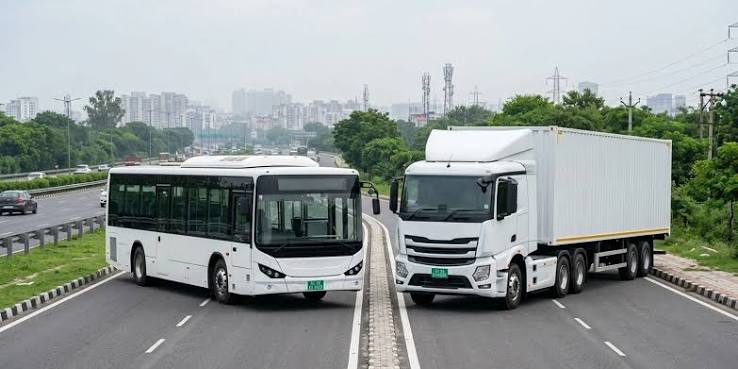
- PARIVARTAN (Programme for Accelerated Renewal and Incentivization of Vehicle Assets for Reducing Transport Air Pollution and Network Emissions) is a Central Government initiative to facilitate the phasing out of old, highly polluting trucks and buses operating in the National Capital Region (NCR) and replace them with Bharat Stage (BS)-VI compliant or electric vehicles (EVs).
- The scheme seeks to reduce transport-related air pollution, improve vehicular emission standards, and promote cleaner mobility in one of India's most polluted regions.
- The scheme is implemented by the Ministry of Road Transport and Highways (MoRTH) and is funded by the National Capital Region Planning Board (NCRPB).
Key Features
The scheme covers the National Capital Territory (NCT) of Delhi and the NCR districts of Haryana, Uttar Pradesh and Rajasthan, where notifications have been issued providing motor vehicle tax concessions for eligible vehicles.
To encourage vehicle replacement, the scheme offers a package of financial incentives, including:
- Motor Vehicle Tax concessions.
- Waiver of registration fees.
- 5% interest subvention on vehicle loans.
- Minimum 8% Original Equipment Manufacturer (OEM) discount on eligible new vehicles.
- Monthly fuel voucher support for eligible diesel and CNG replacement vehicles.
- One-time financial assistance for electric replacement vehicles.
- Certificate of Deposit (CoD) trading for eligible scrapped vehicles.
Implementation Mechanism
The scheme will be implemented through an integrated digital platform that will seamlessly interface with:
- VAHAN
- V-Scrap
- DigiELV
- Public Financial Management System (PFMS)
- Participating financial institutions and lenders
This digital ecosystem aims to ensure transparent processing of incentives, vehicle scrappage verification, and seamless financial support.