
Prime Minister Research Chair (PMRC) Scheme 2026

- 07 Jun 2026
In News:
The Department of Higher Education, Ministry of Education, Government of India, opened applications for the Prime Minister Research Chair (PMRC) Scheme 2026 from June 1, 2026, on the PMRC Portal (pmrc.education.gov.in). The scheme is a flagship national initiative to attract accomplished Indian-origin researchers back to India.
About the PMRC Scheme
- The PMRC Scheme is a prestigious talent-repatriation and research architecture that creates a direct pathway for top-tier researchers of Indian origin — working in globally renowned foreign universities, private laboratories, and tech industries — to take up high-level research positions in premier Indian institutions.
- Eligible applicants include Indian Nationals working abroad, OCI cardholders, and Persons of Indian Origin with outstanding achievements in research, innovation, and technology.
- The scheme aims to reverse the outflow of high-skilled talent, integrate global expertise into India's scientific pipeline, accelerate domestic breakthroughs in critical technology sectors, and position India as an advanced global research hub in alignment with the Viksit Bharat vision.
- Estimated funding is approximately ?200 crore, covering multi-year research grants, relocation allowances, competitive fellowships, and laboratory infrastructure.
Three-Tier Fellowship Structure
- The scheme provides engagement under three categories: Young Research Fellows for early-career researchers; Senior Research Fellows for experienced researchers and industry experts; and Research Chairs for globally accomplished research leaders and technology pioneers.
13 Priority Thematic Areas
Research proposals must align with 13 national priority sectors: Advanced Computing (AI, Quantum Computing & Supercomputing), Semiconductors, Energy, Sustainability & Climate Change, Cybersecurity, Healthcare & MedTech, Biotechnology, Advanced Materials & Critical Minerals, Space &Defence, Next-Generation Communications, Manufacturing & Industry 4.0, Agri & Food Technologies, Blue Economy, and Atomic Energy.
Institutional Architecture
- Seven Lead Institutions have been designated for thematic implementation: IIT Delhi, IIT Bombay, IIT Madras, IIT Kanpur, IIT Hyderabad, IIT (ISM) Dhanbad, and IISc Bengaluru.
- Host Institutions must be government HEIs ranked in the Top 100 of NIRF Overall or Engineering categories, or Top 50 in the NIRF Research category, along with national laboratories under DST, DBT, ICMR, and CSIR.
Governance
- Selection of fellows and proposals is overseen by an Empowered Committee chaired by the Principal Scientific Advisor (PSA) to the Government of India, ensuring rigorous, independent, and mission-aligned evaluation.
Khet Bachao Abhiyan
- 07 Jun 2026
In News:
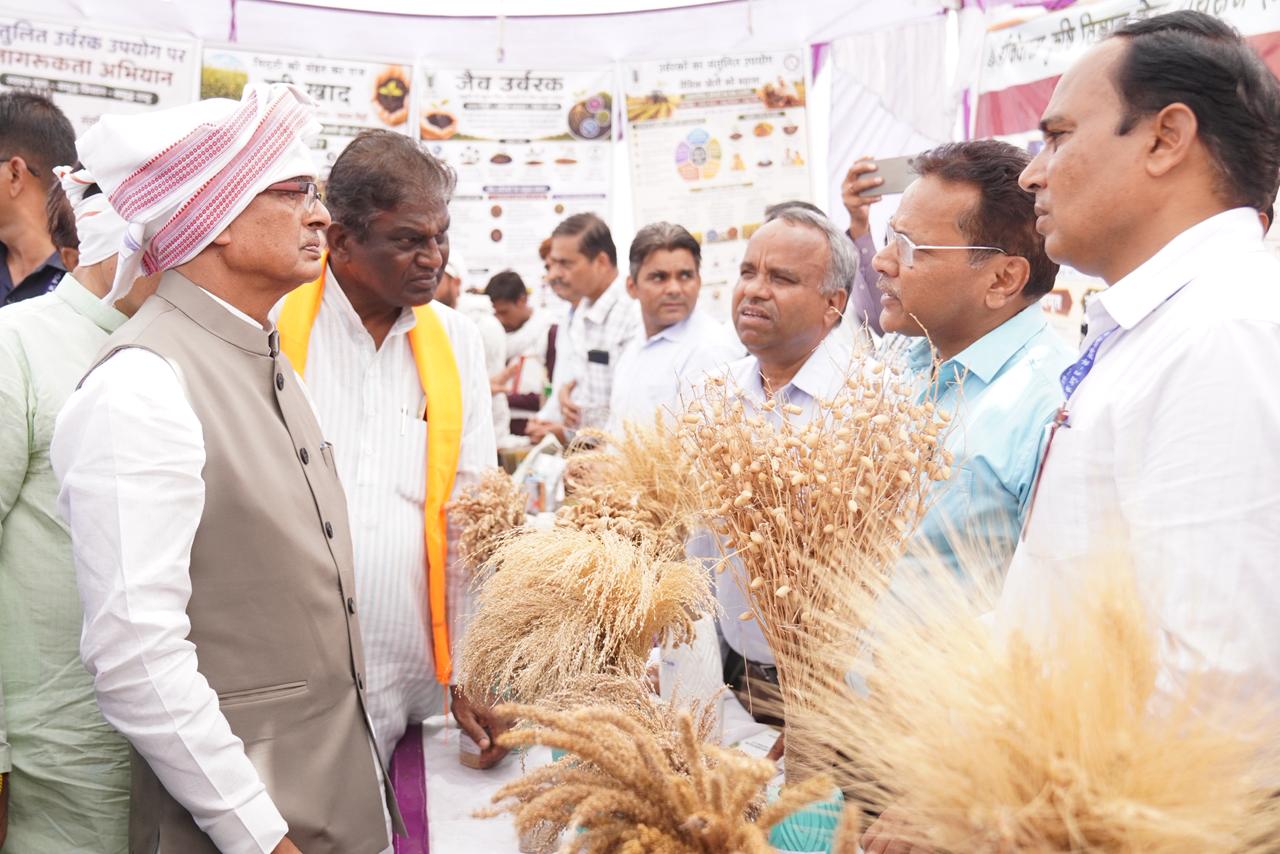
Union Minister for Agriculture & Farmers Welfare and Rural Development launched the nationwide 'Khet Bachao Abhiyan' on June 1, 2026, from Ramasiya village in Raisen district of Madhya Pradesh. The campaign will run across the country from June 1 to June 30, 2026.
Core Message
- The campaign is built on the principle: "Save the Soil, Save Farming, Save Farmers." The campaignemphasised that excessive use of chemical fertilisers reduces soil fertility and destroys beneficial microorganisms in the soil, directly affecting agricultural productivity and increasing cultivation costs. Also, noted that the government provides fertilisers at subsidised rates, but this must not encourage overuse — sustainable agriculture depends on judicious, balanced application.
Key Activities and Focus Areas
- Soil Health and Balanced Nutrition: The campaign promotes soil testing and Soil Health Cards so that fertiliser application is based on the actual nutrient requirements of the land. Every farmer must have a Soil Health Card, which will reduce cultivation costs, enhance productivity, and help maintain long-term soil fertility.
- Scientific Farming Demonstrations: Special field demonstrations will be organised for soybean, paddy, and pulse crops. Farmers will be trained in the use of improved seeds, scientific sowing methods, modern technologies such as laser levellers, and water-efficient farming practices.
- Natural Farming and Water Conservation: The campaign actively promotes natural farming, green manure use, water conservation, seed treatment, improved seeds, and modern sowing techniques aligned with local agro-climatic conditions.
- Anti-Counterfeit Awareness: The campaign will create awareness against counterfeit fertilisers, pesticides, and seeds, which are a significant menace to farmers' investment and crop yields.
- Government Scheme Access: Farmers will be helped to access PM-Kisan Samman Nidhi, the Crop Insurance Scheme, Kisan Credit Card, and farm mechanisationprogrammes through the outreach activities.
- Village-Level Outreach Mechanism Agricultural scientists, experts from agricultural universities, Krishi Vigyan Kendra officials, agriculture department teams, and public representatives will visit villages across the country to educate farmers and provide technical support. Regular training programmes will be conducted with Krishi Vigyan Kendras and expert institutions. The campaign also connects women through Self-Help Groups to income-generation and self-employment opportunities, embedding women's empowerment within the agricultural transformation agenda.
India's First Blue Bond

- 07 Jun 2026
In News:
Recently, Sagarmala Finance Corporationannounced plans to issue India's first-ever blue bond to diversify funding sources and support maritime and coastal infrastructure development.
Key Details of the Issuance
- The issue is structured as a ?500 crore base with a greenshoe option of ?500 crore, totalling up to ?1,000 crore.
- The bond will carry a 10-year tenor and is aimed at ESG-focused investors seeking exposure to India's maritime infrastructure.
- No fixed launch date has been set — issuance will proceed "when the market is conducive and yields stabilise." Sagarmala carries an AA credit rating from CARE and India Ratings, on par with top-rated PSU bonds.
About Blue Bonds
- A blue bond is a debt instrument used to raise funds specifically for projects linked to oceans, seas, coasts, rivers, and water-based ecosystems, targeting investors with an environmental mandate.
- Unlike green bonds — which fund broader climate and environmental projects such as solar and wind energy — blue bonds are exclusively tied to ocean, coastal, and maritime activities.
- Globally, just over $15 billion in blue bonds had been issued by mid-2025, according to World Bank data. In 2020, the Bank of China issued Asia's first blue bond.
- The world's first sovereign blue bond was issued by Seychelles in 2018 with World Bank support. Belize used a debt-for-ocean swap in 2021 for marine conservation.
About Sagarmala Finance Corporation
- Established in 2016 under the Ministry of Ports, Shipping and Waterways, Sagarmala Finance Corporation received its NBFC licence in June 2025.
- It also administers the government's ?25,000 crore Maritime Development Fund, which includes a ?5,000 crore Interest Incentivisation Fund for providing interest subsidies to borrowers.
- Sagarmala plans to raise as much as ?10,000 crore in FY2027 to finance greenfield and brownfield ports, last-mile port connectivity, shipbuilding, inland waterways, and coastal road networks. It is also seeking a ?2,000 crore equity infusion from the government to maintain a healthy debt-to-equity ratio.
India's Blue Economy Context
India's blue economy — encompassing fisheries, shipping, offshore energy, and coastal tourism — contributes approximately 4% to GDP and supports around 4 million livelihoods. India's long coastline, large fishing communities, and climate-vulnerable coastal regions make blue bonds particularly relevant. The bond proceeds will fund ports, port connectivity, shipbuilding, inland waterways, and coastal road networks — sectors central to India's maritime ambitions under the SagarmalaProgramme.
RudraM-II Missile

- 07 Jun 2026
In News:
Recently, DRDO and the Indian Air Force (IAF) successfully conducted flight-tests of the RudraM-II Air-to-Surface Missile from an airborne platform. The tests were conducted under extreme release conditions, with critical trajectory data establishing the capability of all subsystems. The missiles were guided to a predefined target with pin-point accuracy, with all test objectives confirmed through flight data captured by the Integrated Test Range (ITR), Chandipur.
About RudraM-II
- RudraM-II is an indigenously developed solid-propelled, air-launched anti-radiation missile designed for the Air-to-Surface role, intended to detect, track, and neutralise enemy radar installations, communication assets, and other radio frequency-emitting components of adversary air defence systems.
- It has been developed by Research Centre Imarat (RCI), Hyderabad, as the nodal DRDO laboratory, in collaboration with sister labs including the Defence Research and Development Laboratory, High Energy Materials Research Laboratory, Armament Research & Development Establishment, and ITR.
- Development cum Production Partners include Hindustan Aeronautics Limited (HAL), Regional Centre for Military Airworthiness, and Missile System Quality Assurance Agency.
Key Technical Specifications
- RudraM-II reaches a peak speed of Mach 5.5, classifying it as a hypersonic-class weapon.
- It can strike targets at a range of approximately 300 km and carries a warhead of up to 200 kg.
- It can be deployed from Sukhoi fighter aircraft operating at altitudes between 3 and 15 km.
- The missile employs a hybrid navigation system combining an inertial navigation system (INS), GPS, and a sophisticated passive homing head that detects and classifies radio frequency emissions across a wide frequency band — enabling it to autonomously home in on active radar and communication targets.
What is an Anti-Radiation Missile?
Anti-radiation missiles (ARMs) are a specialised class of precision-guided munitions designed to home in on electromagnetic emissions — primarily radar and communication signals — used by enemy air defence networks. By targeting these emission sources, ARMs can blind or degrade an adversary's air defence umbrella before or during an air campaign, significantly enhancing the survivability of friendly aircraft. RudraM-II is intended to eventually replace the older Russian-origin Kh-31 anti-radiation missiles currently in IAF service.
Mission "Senehjori"
- 07 Jun 2026
In News:
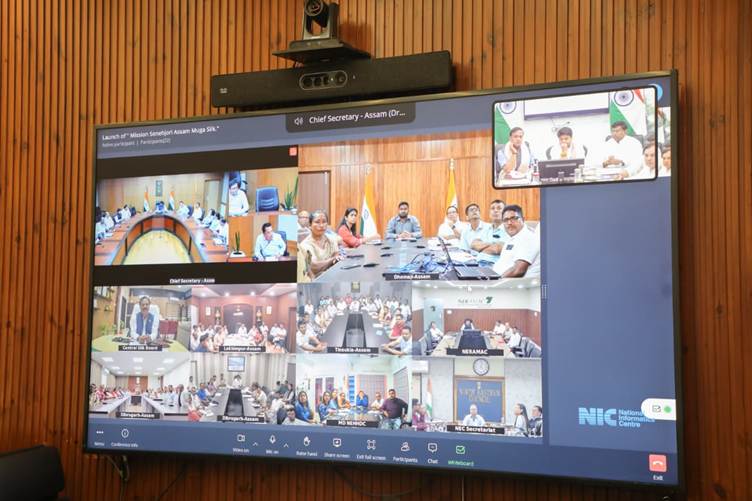
Recently, Union Minister for Development of North Eastern Region (MDoNER), along with the Chief Minister of Assam, launched Mission "Senehjori" — Assam Muga Silk USP — a comprehensive cluster-based initiative aimed at transforming Assam's unique Muga silk sector into a globally competitive, high-value luxury textile ecosystem.
About Muga Silk
Muga silk is the world's only naturally golden silk and India's first Geographical Indication (GI)-tagged silk. Assam accounts for 90% of the world's Muga silk production, and the sector supports nearly 2.6 lakh rearer and weaver families across the state. Despite its rarity, global recognition, and exceptional durability, the sector remains significantly under-monetised — producers currently earn only ?18,000–21,000 per year from Muga silk. Mission Senehjori is designed to bridge this value gap.
About Mission Senehjori
Anchored by MDoNER in convergence with the Government of Assam, Central Silk Board, Ministry of Textiles, and other Central Ministries, the Mission adopts a "whole-of-government" approach. It has an estimated investment of ?396–411 crore over three years, including ?136–151 crore from MDoNER.
The Mission seeks to strengthen the entire Muga silk value chain — from host-plant cultivation and silkworm seed production to reeling, weaving, branding, export promotion, digital traceability, and tourism — under the unified brand identity "Senehjori."
Cluster-Based Approach
The Mission covers major Muga silk producing districts: Jorhat, Sivasagar, Lakhimpur, Dhemaji, Dibrugarh, Tinsukia, Majuli, and Sualkuchi. It envisages strengthening host plant ecology, establishing modern reeling infrastructure, promoting Farmer Producer Organisations (FPOs) and Common Facility Centres (CFCs), enforcing GI authentication, and building global market access.
Key Targets by 2028
The Mission aims to establish five modernised Muga reeling units and a Muga Spun Mill; create 30 FPOs and over 1,180 Farmer Interest Groups; regenerate 5,000 hectares of Som and Soalu host plants; authenticate over 80% of traded Muga silk through GI-linked systems; create digital traceability mechanisms for more than 8,000 households; and expand Muga silk exports to over 2,000 kg annually.
Cultural Economy
Mission Senehjori also promotes Assam's cultural economy through development of a Muga Silk Trail, establishment of a Silk Tourism Park, and organisation of annual Muga Utsav festivals — positioning Assam as a premier destination for silk heritage tourism.