
Anthropological Survey of India (AnSI)
- 25 Jun 2026
In News:
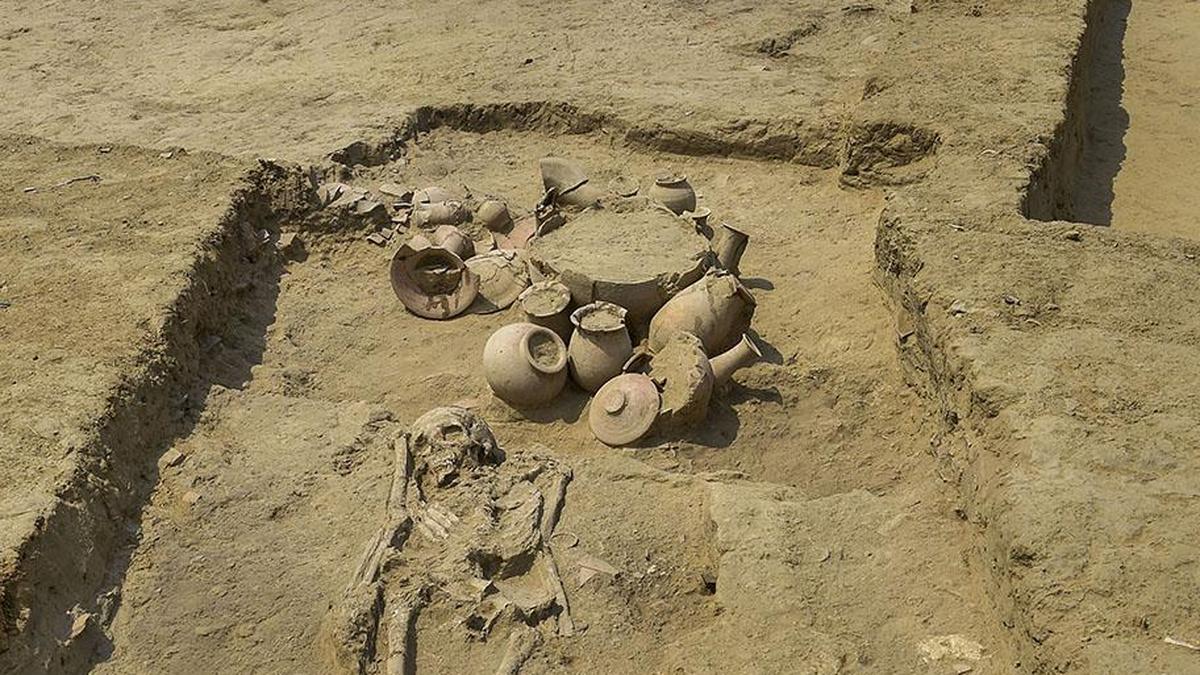
The Archaeological Survey of India (ASI) has recently handed over human skeletal remains excavated from the Harappan site of Rakhigarhi in Haryana to the Anthropological Survey of India (AnSI) for detailed anthropological, bio-archaeological, and scientific research. The study is expected to provide valuable insights into the ancestry, health, lifestyle, and population history of the Indus Valley Civilization.
About the Anthropological Survey of India (AnSI)
The Anthropological Survey of India (AnSI) is the premier government-funded institution dedicated to anthropological research in India. It is the only Central Government research organisation exclusively engaged in anthropological studies under the Ministry of Culture.
Established in 1945 under the leadership of Dr. S.C. Roy, a pioneering Indian anthropologist, AnSI was initially tasked with documenting and studying India's tribal and caste communities. Over the decades, its mandate has expanded considerably to encompass the biological, cultural, linguistic, and social diversity of the entire Indian population.
Headquarters: Kolkata, West Bengal.
Objectives
AnSI works towards understanding India's diverse human populations through scientific research and documentation. Its major objectives include:
- Conducting biological and cultural anthropological research on India's tribes and other communities.
- Examining, preserving, and analysing ancient and modern human skeletal remains.
- Documenting and conserving India's tribal arts, crafts, and cultural heritage.
- Providing training in anthropology and publishing research findings for academic and policy use.
Major Areas of Research
Over the years, AnSI has evolved into a multidisciplinary research institution. While its early work focused mainly on the ethnographic study of tribal societies—their social organisation, kinship systems, religious beliefs, and economic life—it now undertakes research across a much wider spectrum.
Its areas of study include biological anthropology, cultural anthropology, social anthropology, medical anthropology, linguistic anthropology, human genetics, archaeology, tribal studies, and bio-archaeology. It also studies rural and urban populations, marginalised communities, and the Indian diaspora to understand the country's evolving social landscape.
Organisational Structure
To facilitate region-specific research, AnSI operates through its headquarters in Kolkata and several regional centres located across the country, including Delhi, Lucknow, Shillong, and Pune.
The organisation brings together experts from multiple disciplines such as anthropology, archaeology, sociology, linguistics, and human biology, enabling comprehensive research on India's cultural and biological diversity.
Publications
AnSI disseminates its research through several scholarly publications, including:
- Journal of the Anthropological Survey of India
- Occasional Papers
- Monographs and technical research reports
Ambubachi Mela
- 25 Jun 2026
In News:
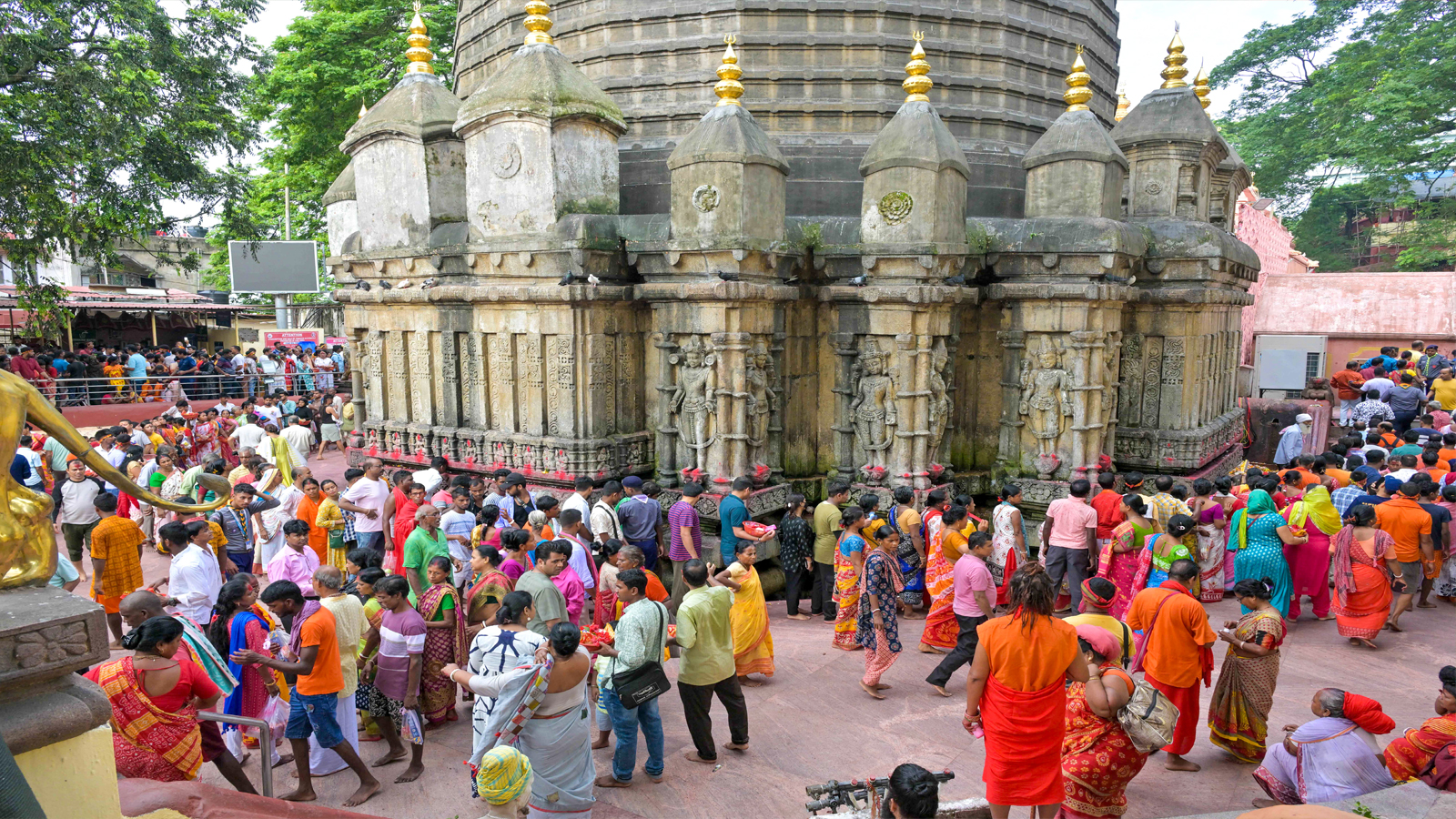
The annual Ambubachi Mela, one of the largest and most significant religious gatherings in eastern India, commenced at the revered Kamakhya Temple in Guwahati, Assam, attracting lakhs of devotees, ascetics, and Tantric practitioners from across India and abroad.
About Ambubachi Mela
Ambubachi Mela is an annual Hindu festival celebrated during the monsoon season, usually in June, at the Kamakhya Temple. The festival marks the annual menstruation of Goddess Kamakhya, symbolising the creative and regenerative powers of nature.
During this period, the temple remains closed for three days, as it is believed that the Goddess undergoes her annual menstrual cycle. The temple reopens on the fourth day after elaborate purification rituals, drawing large numbers of pilgrims seeking blessings.
The festival is deeply associated with fertility, womanhood, agricultural prosperity, and the onset of the monsoon. The word 'Ambubachi' literally means "water flowing,"symbolising both the rains and the fertility of the Earth.
Religious Significance
- Celebrates the divine feminine and the fertility of Mother Earth.
- Closely associated with the arrival of the southwest monsoon and the beginning of the agricultural season.
- Considered one of the most important festivals of Tantric Shaktism.
- Attracts Tantric practitioners, Aghori sadhus, ascetics, and devotees from across the country.
- Devotees receive the sacred Angodak (holy water) and Angabastra (cloth believed to have been sanctified during the Goddess's menstruation) as blessings after the temple reopens.
Kamakhya Temple
The Kamakhya Temple is one of the most revered shrines dedicated to Goddess Shakti and is regarded as one of the oldest and most sacred centres of Tantric worship in India.
It is believed to be one of the 51 Shakti Peethas, where the yoni (womb and generative organ) of Goddess Sati is said to have fallen according to Hindu mythology.
Location
- Situated atop Nilachal Hill in Guwahati, Assam.
- Overlooks the southern bank of the Brahmaputra River.
Key Features
- One of the foremost centres of Tantric Shaktism.
- Unlike many Hindu temples, the sanctum does not contain an idol; instead, worship is offered to a natural rock fissuresymbolising the divine feminine, continuously fed by an underground spring.
- Holds immense religious significance for both Shakta and Tantric traditions.
Temple Architecture
The Kamakhya Temple exhibits a distinctive architectural style known as the Nilachala Style, which blends:
- Traditional Nagara architecture.
- Saracenic (Mughal) architectural influences.
This unique fusion makes it one of the most distinctive temple structures in India.
Architectural Features
- The only temple in Assam with a fully developed ground plan.
- Comprises five principal chambers:
- Garbhagriha (sanctum sanctorum)
- Antarala (vestibule)
- Jagamohan (assembly hall)
- Bhogmandir (offering hall)
- Natmandir (dance and music hall)
- Each chamber possesses a distinct superstructure:
- The main shrine is crowned with a modified Saracenic dome.
- The Antarala features a two-tiered roof.
- The Bhogmandir has five domes resembling the main temple.
- The Natmandir has a shell-shaped roof with an apsidal end, resembling traditional Assamese Namghars (prayer halls).
Nirbhay Chetna Initiative
- 25 Jun 2026
In News:
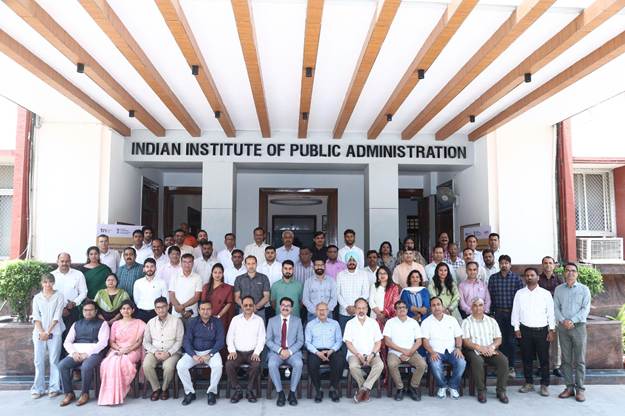
The Union Government has launched Nirbhay Chetna to sensitise over 17.5 lakh elected male representatives of Panchayati Raj Institutions (PRIs) on gender equality, women's safety, and gender-responsive governance across rural India.
About Nirbhay Chetna Initiative
- Nirbhay Chetna is a flagship gender-sensitisationprogramme launched under the broader Nirbhay Raho initiative. It is the first-of-its-kind national initiative implemented through the Nirbhaya Fund to engage elected male representatives in promoting women's safety and gender equality at the grassroots level.
- The initiative recognises that achieving gender-responsive governance requires the active participation of both women and men in local self-government institutions.
- Nodal Ministry: Ministry of Panchayati Raj
- Objectives: The initiative aims to:
- Promote gender-sensitive governance in Panchayati Raj Institutions.
- Sensitise elected male representatives on women's rights, dignity, and safety.
- Foster accountability and community leadership for preventing gender-based violence.
- Encourage inclusive decision-making and equal participation of women in local governance.
- Strengthen grassroots efforts towards creating safer and more equitable rural communities.
- Key Features
- Implemented under the Nirbhaya Fund, dedicated to initiatives for women's safety and security.
- Targets over 17.5 lakh elected male representatives across Panchayati Raj Institutions.
- Focuses on behavioural change through awareness, dialogue, and leadership development.
- Promotes collaboration among Panchayats, government agencies, and local communities to address gender issues.
- Seeks to institutionalise gender-responsive practices in rural governance.
Capacity-Building Mechanism
A nationwide network of 28,500 Master Trainers is being developed at:
- State level
- District level
- Block level
These trainers will conduct structured awareness and training programmes to sensitise male elected representatives across the country.
Components of the Nirbhay Raho Initiative
1. Nirbhay Chetna
- Sensitises elected male representatives on:
- Gender equality
- Women's safety and security
- Prevention of gender-based violence
- Gender-responsive governance
2. Nirbhay Netri
Focuses on empowering elected women representatives through:
- Capacity building
- Leadership development
- Legal literacy and awareness
- Strengthening participation in Panchayati Raj Institutions
3. Nirbhay Drishti
Aims to enhance rural safety infrastructure by:
- Installing CCTV cameras at strategic public locations in Panchayats.
- Promoting technology-enabled surveillance to improve women's safety.
- Supporting safer public spaces in rural areas.
Expected Outcomes
The initiative seeks to:
- Build gender-sensitive leadership within Panchayati Raj Institutions.
- Improve the implementation of women-centric government schemes.
- Strengthen community ownership of women's safety initiatives.
- Encourage greater participation of women in local governance.
- Foster safer, inclusive, and equitable rural communities through behavioural and institutional change.
Project Nimbus

- 25 Jun 2026
In News:
Growing global protests against Project Nimbus have reignited debates over the ethical use of Artificial Intelligence (AI), cloud computing, and the role of Big Tech companies in military and government operations. Student groups, technology employees, and human rights activists have questioned whether advanced AI tools supplied under the project are being used in the ongoing Israel–Gaza conflict.
About Project Nimbus
- Project Nimbus is a USD 1.2 billion cloud-computing agreement, announced in 2021, between the Israeli government and two global technology companies—Google Cloud Platform (GCP) and Amazon Web Services (AWS).
- Its primary objective is to modernize and digitize Israel's public-sector digital infrastructure by migrating government databases, applications, and computing systems to secure domestic cloud platforms.
- The project is designed to improve the efficiency, security, and scalability of government digital services while ensuring that sensitive government data remains within Israel.
Key Features
- Signed in 2021 with an estimated value of USD 1.2 billion.
- Jointly implemented by Google Cloud and Amazon Web Services (AWS).
- Provides cloud infrastructure for Israeli government ministries, public agencies, and defence-related institutions.
- Establishes localized cloud data centres within Israel to ensure data sovereignty.
- Includes long-term cloud storage, computing power, cybersecurity support, and AI-based analytical services.
Technological Capabilities
Project Nimbus provides a wide range of advanced cloud and Artificial Intelligence services, including:
- High-performance cloud computing.
- Large-scale data storage and management.
- Machine learning and AI model development.
- Facial detection and image recognition.
- Automated image categorization.
- Object detection and tracking.
- Speech recognition and language processing.
- Sentiment analysis and predictive analytics.
These technologies are generally classified as dual-use technologies, meaning they can serve both civilian and military purposes.
Sovereign Non-Restriction Clause
Leaked contract documents indicate that Project Nimbus contains a Sovereign Non-Restriction Clause, under which:
- Google and Amazon cannot suspend or deny cloud services to Israeli government entities due to external political pressure or internal corporate policy changes.
- Critical government operations remain insulated from service disruptions.
- Data processing, storage, and server administration are maintained within Israel to strengthen national control over government data.
Concerns and Controversies
Project Nimbus has attracted significant international criticism due to several concerns:
- Potential military use: Critics allege that AI-powered surveillance and image-analysis tools could support military operations and targeting in conflict zones.
- Human rights concerns: Activists argue that advanced surveillance capabilities may be used to monitor Palestinians in occupied territories.
- Lack of transparency: The exact deployment and end-use of AI services under the project remain largely undisclosed.
- Corporate ethics: Employees and civil society groups have accused Big Tech companies of indirectly facilitating geopolitical conflicts by providing foundational digital infrastructure.
- Dual-use dilemma: Technologies intended for civilian governance can also be adapted for intelligence gathering and military applications.
Google and Amazon's Position
Google and Amazon have consistently stated that:
- Project Nimbus is intended to provide commercial cloud services to government agencies.
- The contract is not designed for classified weapons systems or intelligence operations.
- Their services comply with contractual obligations and applicable laws.
North-East India as "Ashtalakshmi"
- 25 Jun 2026
In News:
The Government of India has highlighted the remarkable transformation of the North-Eastern Region (NER) over the last twelve years (2014–2026). Through sustained investments in infrastructure, connectivity, social development, clean energy, and governance, the region has witnessed a paradigm shift from being a geographically isolated frontier to becoming a strategic growth hub. Recognised as "Ashtalakshmi", the North-East is now central to India's Act East Policy and the vision of Viksit Bharat, serving as India's gateway to Southeast Asia.
Why is the North-East Called "Ashtalakshmi"?
The term Ashtalakshmi originates from Hindu tradition, where Goddess Lakshmi manifests in eight forms representing prosperity, abundance, and well-being. Similarly, India's North-East comprises eight states—Arunachal Pradesh, Assam, Manipur, Meghalaya, Mizoram, Nagaland, Sikkim, and Tripura—each endowed with unique cultural, ecological, agricultural, and strategic strengths.
The Government uses this symbolism to project the region as a collective source of national prosperity. The terminology also reflects a strategic shift in policy—from viewing the North-East merely as a border region constrained by the "tyranny of distance" to recognising it as India's Gateway to ASEAN and an important pillar of regional integration.
Strategic Importance of the North-East
The North-East occupies a unique geopolitical position and plays a critical role in India's security, economy, and diplomacy.
Its importance stems from:
- Sharing international borders with Bangladesh, Bhutan, China, Myanmar, and Nepal, making it strategically significant for border management.
- Acting as India's land bridge to Southeast Asia under the Act East Policy.
- Possessing rich natural resources including hydropower, forests, biodiversity, bamboo, tea, spices, horticultural crops, and organic farming potential.
- Serving as a crucial region for India's Indo-Pacific strategy, regional connectivity, and cross-border trade.
Major Drivers of Transformation
1. Connectivity Revolution: Bridging the Geographic Divide
For decades, poor connectivity remained the biggest obstacle to the region's development. The past decade has witnessed unprecedented investments aimed at overcoming geographical isolation through integrated transport and digital infrastructure.
Road Connectivity
- Road infrastructure has expanded significantly, with the National Highway network increasing from 10,905 km in 2014 to over 16,200 km in 2026.
- Flagship programmes such as BharatmalaPariyojana and Pradhan Mantri Gram Sadak Yojana (PMGSY) have enhanced rural connectivity, improved market access, strengthened border infrastructure, and facilitated tourism and disaster response.
Railway Modernisation
- Rail connectivity has expanded through broad-gauge conversion, new railway lines, and extensive electrification.
- Arunachal Pradesh, Meghalaya, Mizoram, Nagaland, and Tripura have achieved 100% railway electrification, while Assam is close to full electrification. This transition has reduced dependence on diesel traction, improved operational efficiency, and promoted environmentally sustainable transportation.
Landmark Infrastructure Projects
Several iconic engineering projects have transformed connectivity across the region.
- Bogibeel Bridge (Assam): India's longest rail-cum-road bridge, significantly improving connectivity between Assam and Arunachal Pradesh while strengthening defence logistics.
- Noney Bridge (Manipur): The world's tallest railway pier bridge, forming part of the Jiribam–Imphal railway project.
- Sela Tunnel (Arunachal Pradesh): Provides all-weather access to Tawang and enhances military preparedness along the India-China border.
Air Connectivity
- The UDAN Scheme has substantially improved regional air connectivity. Operational airports increased from 9 in 2014 to 17 in 2026, making air travel more affordable and accessible while promoting tourism, trade, healthcare access, and emergency services.
Inland Waterways
- The number of National Waterways in the region has increased from one in 2014 to twenty in 2024, reviving the Brahmaputra and Barak river systems for cargo transportation, river tourism, and multimodal logistics.
Digital Connectivity
- Digital inclusion has expanded rapidly with over 6,350 Gram Panchayats becoming service-ready for high-speed broadband, facilitating e-governance, telemedicine, online education, digital banking, and entrepreneurship.
2. Strategic Integration through the Act East Policy
The Act East Policy has fundamentally altered the strategic significance of the North-East by positioning it as India's gateway to Southeast Asia.
- Major cross-border connectivity projects such as the India–Myanmar–Thailand Trilateral Highway and the Kaladan Multi-Modal Transit Transport Project are expected to deepen India's economic integration with ASEAN by creating faster and more efficient land and maritime trade routes.
- The development of Integrated Check Posts (ICPs), particularly at Moreh (Manipur), has streamlined customs, immigration, and border trade. Simultaneously, Border Haats such as Kamalasagar and Bholaganj have revived traditional cross-border commerce while strengthening local livelihoods and people-to-people ties.
Together, these initiatives are transforming the North-East from India's peripheral frontier into an important regional trade and logistics corridor.
3. Policy Support and Institutional Framework
The transformation of the North-East has been supported by targeted policy interventions and dedicated institutional mechanisms.
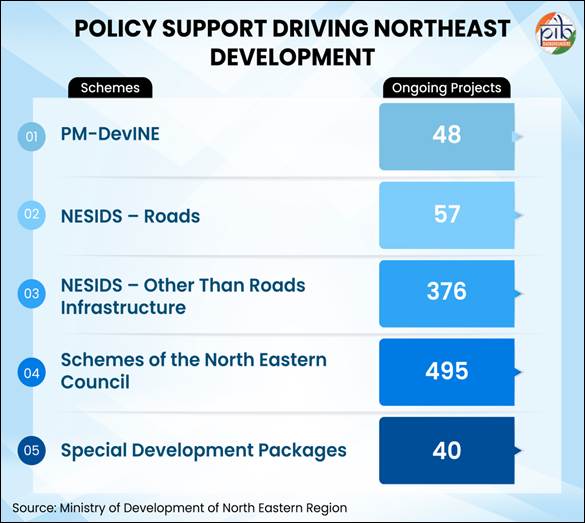
PM-DevINE
The Prime Minister's Development Initiative for North East Region (PM-DevINE) is a 100% Centrally Funded Scheme aimed at financing high-impact infrastructure, social development, livelihood generation, and tourism projects.
North East Special Infrastructure Development Scheme (NESIDS)
Launched in 2017–18 and extended until March 2026, NESIDS supports infrastructure development through two components:
- NESIDS-Roads, focusing on connectivity and strategic road infrastructure.
- NESIDS-Other Than Roads Infrastructure (OTRI), supporting projects related to healthcare, education, power, drinking water, bridges, and public infrastructure.
North Eastern Council (NEC)
The North Eastern Council continues to function as the region's apex planning body by promoting bamboo-based industries, tourism, entrepreneurship, livelihood generation, and regional planning.
Dedicated Budgetary Support
Recognising the strategic importance of the region, all non-exempted Central Ministries are mandated to allocate at least 10% of their annual budget for the development of the North-East under the guiding principle of "Act East, Act Fast, Act First."
4. Energy Security and Green Growth
The North-East is central to India's renewable energy ambitions due to its vast hydropower and natural gas resources.
- Major projects include the 2,880 MW Dibang Multipurpose Project in Arunachal Pradesh, which will become India's tallest dam, and the 2,000 MW Subansiri Lower Hydroelectric Project located on the Assam–Arunachal Pradesh border. These projects are expected to improve energy security, flood moderation, irrigation, and regional development.
- Complementing hydropower development is the 1,656 km North East Gas Grid, which connects all eight states with the national gas network. The project includes Asia's longest underwater hydrocarbon pipeline beneath the Brahmaputra River, enabling cleaner energy access while promoting industrial growth.
5. Human Development and Social Infrastructure
Alongside infrastructure, significant investments have been made in improving quality of life and human development.
- Under the Jal Jeevan Mission, Arunachal Pradesh and Mizoram have achieved 100% Functional Household Tap Water Connections, while all eight states have attained Open Defecation Free (ODF) status.
- Housing infrastructure has expanded through Pradhan Mantri Awas Yojana (PMAY), under which over 31 lakh houses have been constructed with integrated access to electricity, LPG, sanitation, and drinking water.
- Healthcare infrastructure has improved considerably through the operationalisation of AIIMS Guwahati, approval of 12 new medical colleges, and expansion of tertiary healthcare facilities.
- Educational opportunities have also expanded with the establishment of IITs, NITs, and Eklavya Model Residential Schools (EMRS), improving access to quality education in remote areas.
6. Agricultural Diversification and Rural Prosperity
The North-East is gradually transitioning from subsistence agriculture to a high-value, market-oriented economy.
Fisheries and Livestock
Inland fish production has increased by 68% over the last decade, with Assam contributing nearly 70% of regional production. This growth has been supported by the Pradhan Mantri Matsya Sampada Yojana, distribution of 3,823 Kisan Credit Cards, and establishment of 501 Fish Farmer Producer Organisations (FFPOs).
Milk and egg production have also witnessed steady growth, supported by the establishment of the region's first Cattle IVF Laboratory in Guwahati for genetic improvement.
Organic Farming and GI Products
The Mission Organic Value Chain Development for North Eastern Region (MOVCDNER) has integrated over 2.36 lakh hectares under certified organic farming. The region also possesses 89 Geographical Indication (GI)-tagged products, including Lakadong Turmeric, Naga King Chilli, Muga Silk, Chak-Hao Black Rice, Queen Pineapple, and Sikkim Large Cardamom, enhancing export potential and farmers' incomes.
Agarwood Economy
The North-East hosts nearly 90% of India's 150 million agarwood trees, with Tripura alone possessing an estimated market potential of ?2,000 crore, making agarwood a promising export commodity.
Brand North East
The Ministry of Development of North Eastern Region (MDoNER) has launched the Brand North East initiative to develop state-specific value chains through flagship missions such as the Kiwi Mission (Arunachal Pradesh), Coffee Mission (Nagaland), Ginger Mission (Mizoram), Queen Pineapple Mission (Tripura), Muga Silk Mission (Assam), Organic Food Mission (Sikkim), and Lakadong Turmeric Mission (Meghalaya). The initiative aims to transform the region into a globally competitive, export-oriented economy.