
The Union Territories Laws (Amendment) Bill, 2026
- 21 Apr 2026
In News:
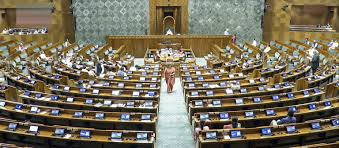
As India undergoes a transformative phase in its parliamentary structure, the introduction of The Union Territories Laws (Amendment) Bill, 2026 in the Lok Sabha marks a pivotal step. Introduced alongside the 131st Constitutional Amendment and the Delimitation Bill, 2026, this legislation serves as a supplementary framework to ensure that structural reforms in the Indian legislature are inclusive of Union Territories (UTs).
Overview and Purpose
The primary objective of the Bill is to extend the benefits of the national-level constitutional shifts—specifically the expansion of Parliament and the implementation of women’s reservation to UTs with their own Legislative Assemblies. It targets the legal frameworks of the National Capital Territory (NCT) of Delhi, Puducherry, and Jammu & Kashmir.
Historically, major legislative changes often faced a "notification lag" when being applied to UTs due to their unique administrative status. This Bill bridges that gap, ensuring that the Nari Shakti Vandan Adhiniyam and the redrawing of electoral boundaries happen simultaneously across states and relevant UTs.
Key Features of the 2026 Bill
1. Accelerated Women’s Reservation
A cornerstone of this Bill is the delinking of women’s reservation from the 2027 Census. Under previous frameworks, the implementation of the one-third reservation for women was tied to the publication of the first census after 2023. The 2026 Bill modifies this requirement for UTs, allowing reservation to be implemented based on the 2011 Census data. This ensures that women can contest reserved seats in these UTs as early as the 2029 elections.
2. Integration with Parliamentary Expansion
The Bill aligns UT-specific statutes with the 131st Amendment, which increases the maximum number of representatives from UTs in the Lok Sabha from 20 to 35 members. This expansion reflects the demographic shifts and the need for more granular representation in India’s growing democracy.
3. Synchronized Delimitation
The Bill empowers the Delimitation Commission, constituted under the Delimitation Bill, 2026, to redraw assembly constituencies within Delhi, Puducherry, and Jammu & Kashmir. This ensures that the redrawing of seats is not a fragmented process but is synchronized with the national effort to rebalance electoral representation based on the latest available data.
4. Rotational Allotment
To maintain electoral fairness and prevent the entrenchment of specific seats, the Bill mandates that seats reserved for women in UT Assemblies will be allotted by rotation. This means the specific constituencies reserved for women will change in successive election cycles, ensuring diverse representation across all regions of the UT.
Strategic Significance
- Uniformity in Federal Structure: By passing this Bill, the government prevents a legal discrepancy where states could have moved forward with gender parity reforms while UTs remained stalled due to census-linked timelines. It enforces a uniform legislative timeline across the Union.
- Democratic Deepening: The increase in Lok Sabha seats for UTs (from 20 to 35) ensures that the voices of citizens in these administratively unique regions carry more weight in the national discourse.
- Empowerment of Nari Shakti: By bypassing the wait for the 2027 Census, the Bill translates the intent of the Nari Shakti Vandan Adhiniyam into reality at the grassroots level of UT governance.
CAFE-III Norms
- 21 Apr 2026
In News:
In a significant move toward decarbonizing the transport sector, the Indian government and the automobile industry have reached a consensus on the implementation of Corporate Average Fuel Efficiency (CAFE) Phase III norms. These standards represent a critical pillar of India’s strategy to achieve its climate commitments and reduce energy dependency.
Understanding CAFE Norms
Unlike Bharat Stage (BS) emission standards, which regulate the pollutant levels of individual vehicle models, CAFE norms focus on the weighted average fuel consumption and CO2 emissions of an automaker’s entire fleet. This holistic approach ensures that high-emission vehicles are balanced by the sale of more efficient or zero-emission models.
- Regulating Authority: The standards are formulated by the Bureau of Energy Efficiency (BEE) under the Ministry of Power.
- Target Segment: The norms specifically target M1 category passenger vehicles, which include vehicles weighing under 3,500 kg and designed to seat up to nine individuals.
- Timeline: CAFE-III is set to commence on April 1, 2027, and will remain in effect until March 31, 2032.
Core Objectives: Strategic and Environmental
- Energy Security: By improving fuel efficiency, India aims to reduce its massive crude oil import bill, a vulnerability highlighted by recent geopolitical instabilities such as the West Asia crisis.
- Climate Mitigation: The norms align with India’s Panchamrit goals, pushing the transport sector toward a lower carbon footprint.
- Technological Leapfrogging: The standards necessitate the transition from traditional Internal Combustion Engines (ICE) to advanced technologies, including Strong Hybrids, Battery Electric Vehicles (BEVs), and Flex-Fuel systems.
Key Features of the CAFE-III Framework
The transition from CAFE-II to CAFE-III involves a significant tightening of compliance parameters:
- Aggressive Emission Targets: Automakers must bring down their fleet-wide average CO2 emissions from the current target of approximately 113 g/km (at the end of FY27) to a stringent 78.9 g/km by FY32.
- The "Flatter Curve" Approach: To ensure parity, the government scrapped a proposal that would have given a 3 g/km relief to small petrol cars (under 909 kg). This encourages efficiency across all vehicle sizes rather than subsidizing smaller, less efficient engines.
- The Super Credit Scheme: To incentivize "green" production, the policy uses a multiplier system for every clean vehicle sold. Each sale of a Battery EV counts as 3.0 units, a Plug-in Hybrid (PHEV) as 2.5, and a Strong Hybrid as 1.6 toward the fleet average.
- Technological Incentives: Manufacturers can earn "discounts" on their emission scores by adopting any of the 12 approved energy-efficient technologies, such as 6-speed transmissions, start-stop systems, and high-efficiency air conditioning units.
- Regulatory Flexibility: Recognizing the challenges of a rapid transition, the framework allows for credit trading between manufacturers and the ability to carry forward excess compliance from previous years.
Anticipated Socio-Economic Implications
The implementation of CAFE-III will reshape the Indian automotive landscape in several ways:
- Shift in Market Share: As petrol engines become harder to justify under strict fleet averages, there will be a decisive shift toward CNG, which is expected to dominate a significant market share by 2032, alongside Hybrids and EVs.
- Impact on Affordability: The integration of advanced hybrid systems and lightweight materials is likely to drive up the manufacturing costs, potentially making entry-level vehicles more expensive for the average consumer.
- Infrastructure Demand: The "Super Credit" push for EVs and Hybrids will necessitate a rapid expansion of charging and fueling infrastructure across the country.
Jumping Spiders

- 21 Apr 2026
In News:
The biodiversity landscape of India continues to expand with the recent identification of two new species of jumping spiders: Mogrus shushka and Mogrus pune.
Understanding the Genus: Mogrus
The newly identified spiders belong to the genus Mogrus, a group of medium-sized jumping spiders. Members of this genus are primarily distributed across the arid and semi-arid landscapes of Africa, Europe, and Asia. Jumping spiders (family Salticidae) are renowned for their exceptional vision and agile hunting techniques, often pouncing on prey rather than weaving traditional webs.
1. Mogrus shushka: The Arid Specialist
Discovered in the Desert National Park (DNP), Rajasthan, Mogrus shushka represents the hardy nature of the Thar Desert’s micro-fauna.
- Etymology: The species name is derived from the Sanskrit word ‘shushka’, meaning ‘dry’. This nomenclature directly references the hyper-arid environment of its habitat.
- Adaptations: It is evolutionarily tuned to survive extreme thermal fluctuations, negligible humidity, and the shifting sandy terrain of the desert.
- Morphological Distinctions:
- Males: They are distinguished from their close relative, M. cognatus, by a unique triangular-shaped bump on their pedipalp (mating appendage), as opposed to a thumb-shaped structure.
- Females: They possess a deep, semi-circular epigynal depression (on the underside) characterized by short, tightly spaced internal ducts.
2. Mogrus pune: The Urban Biodiversity Indicator
In a significant finding for urban ecology, Mogrus pune was discovered in the Alfa Laval Biodiversity Park, Maharashtra.
- Etymology: The species is named after the city of Pune, emphasizing the role of urban green spaces in sustaining undiscovered life forms.
- Morphological Distinctions:
- Males: These are identified by a heart-shaped bump on their reproductive organs and specific, uniquely curved anatomical structures.
- Females: They are characterized by a central depression that is notably wide and membranous, a key feature used for taxonomic classification.
Significance for Biodiversity and Conservation
These discoveries underscore several critical points regarding India’s environmental health:
- Arid Ecosystem Value: The discovery in Desert National Park highlights that even "wastelands" or hyper-arid zones are reservoirs of unique genetic diversity that require stringent protection.
- Urban Green Spaces: The presence of a new species in Pune’s biodiversity park validates the "Oases in Concrete" concept, proving that urban parks can serve as vital refugia for wildlife amidst industrialization.
- Taxonomic Gap: Identifying new species helps scientists better understand the evolutionary lineage of the Salticidae family in the Indian subcontinent, which is essential for building robust ecological conservation strategies.
Rising Labour Protests in India
- 21 Apr 2026
In News:
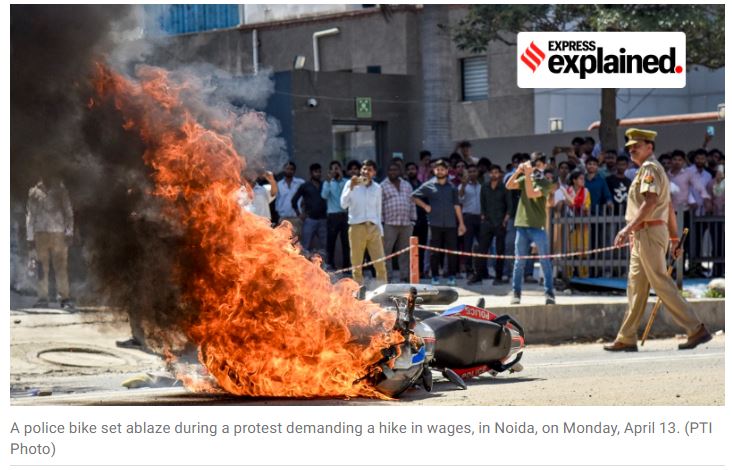
Industrial hubs in North India, specifically Noida (Uttar Pradesh) and Manesar (Haryana), have recently emerged as epicenters of violent labour protests. These demonstrations represent a critical inflection point in India’s industrial relations, highlighting a deepening rift between the workforce, employers, and state regulatory frameworks.
The Landscape of Discontent: Current Realities
The contemporary wave of labour unrest is characterized by a "decoupling" of wages from the actual cost of living. While the Indian industrial sector has seen recovery in production, the benefits have not trickled down to the grassroots level. Workers are currently agitating against stagnant base pays and the ambiguity surrounding the transition to the 2025 Labour Codes.
Statistical Overview of Labour Vulnerability
- The Inflation-Wage Gap: Between 2021 and 2026, the Consumer Price Index for Industrial Workers (CPI-IW) surged by 24.8%. In contrast, wage increments in industrial states like Haryana averaged only 15%, leading to a significant contraction in real income and purchasing power.
- The Minimum Wage Chasm: Before the most recent emergency revisions, an unskilled worker in Haryana earned approximately ?11,274.60. This stood in stark contrast to the Central Sphere rate of ?20,358, fueling a sense of systemic deprivation.
- Administrative Inertia: Legal mandates require a revision of base minimum wages every five years. However, Uttar Pradesh had not updated its base rate since 2012, and Haryana faced a ten-year delay, highlighting a breakdown in the statutory machinery.
Core Drivers of the Unrest
- Legislative Ambiguity and the 2025 Labour Codes: The notification of four new Labour Codes in November 2025 was intended to streamline regulations. However, it has inadvertently created a "notification lag." While the Codes exist, the absence of finalized state-level rules has led to confusion regarding "spread-over hours." Workers fear that the provision for a 12-hour workday (meant to facilitate a four-day week) is being exploited to increase workloads without corresponding overtime pay.
- Geopolitical and Economic Headwinds: External shocks have played a disproportionate role in domestic labour stability. The closure of the Strait of Hormuz and escalating conflict in West Asia have triggered a dual crisis:
- Input Cost Inflation: Factories are reeling under high raw material costs, leading to squeezed margins and delayed wage disbursements.
- Living Cost Spikes: Migrant workers have reported paying up to ?4,000 for LPG cylinders on the black market due to disrupted supply chains.
- The Information Vacuum: Misinformation on social media platforms specifically regarding a rumored uniform national minimum wage of ?20,000 has set unrealistic benchmarks, leading to friction when actual paychecks do not match digital expectations.
State and Central Responses
To mitigate the escalating violence, several interim measures have been enacted:
- Uttar Pradesh: The state government announced an interim hike, raising the minimum wage for unskilled workers in Noida to ?13,690.
- Haryana: Following the Manesar protests, a 35% hike was notified, bringing the minimum wage to ?15,220.71.
- Central Benchmark: In September 2024, the Union government revised wages for central sphere establishments to over ?20,000 per month, attempting to set a "floor" for states to follow.
Critical Challenges in the Industrial Ecosystem
The crisis reveals deep-seated structural flaws:
- Erosion of Collective Bargaining: The new codes grant states significant discretion in recognizing trade unions. This has weakened the institutionalized "safety valve" where grievances are settled through negotiation, pushing workers toward street protests.
- Race to the Bottom: Regional disparities in wage notifications create a risk where industries migrate to states with the lowest labour costs, undermining the concept of a "living wage" across India.
- External Vulnerabilities: US-imposed tariffs and global shipping disruptions have made employers reluctant to pass on any financial gains to workers, citing "global uncertainty."
The Way Forward: Towards Industrial Harmony
To ensure long-term stability and align with the "Make in India" vision, the following steps are essential:
- Automaticity in Wage Revision: Base minimum wage revisions must be made mandatory and automatic every five years, linked directly to the CPI-IW to prevent real-wage erosion.
- Legislative Clarity: The Centre and State governments must fast-track the notification of final rules for the 2025 Labour Codes to eliminate the "grey areas" regarding working hours and social security.
- Energy Security for Labour: During global energy crises, the government should consider Direct Benefit Transfer (DBT) for energy subsidies (like LPG) specifically targeted at registered industrial and migrant workers.
- Strengthening Institutional Dialogue: Rather than bypassing trade unions, the state must formalize their role to ensure that industrial disputes are resolved through tripartite mechanisms (Government-Employer-Worker) rather than law-and-order interventions.
Apis mellifera
- 21 Apr 2026
In News:
In a significant advancement for India's apiculture sector, the CSIR-Indian Institute of Integrative Medicine (IIIM), Pulwama, has successfully demonstrated that Apis mellifera (the Western Honey Bee) can survive sub-zero temperatures. This breakthrough is set to revolutionize beekeeping in the Himalayan regions, particularly in Jammu and Kashmir, by eliminating the need for the traditional, expensive, and stressful winter migration of hives to the plains.
Profile of Apis mellifera: The Global Generalist
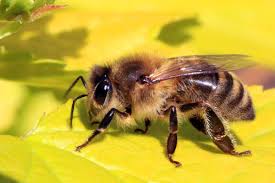
Apis mellifera, commonly known as the Western or European Honey Bee, is the most widely distributed and well-known domesticated insect species globally.
- Native Range & Global Spread: While native to Europe, Western Asia, and Africa, human introduction since the 17th century has established them across every continent except Antarctica.
- Commercial Importance: They are the primary species exploited commercially for honey, beeswax, propolis, and royal jelly. Furthermore, they play a critical role in global food security by providing pollination services for a vast array of crops.
- Biological Features:
- Appearance: Reddish-brown to yellow with black bands and orange-yellow rings. They possess forked or frayed hairs on their thorax and abdomen.
- Architecture: They construct sophisticated nests consisting of multiple vertical beeswax combs, typically built inside protective cavities like hollow trees.
- Social Structure: They are eusocial insects. A single colony consists of tens of thousands of bees, including one fertile Queen, thousands of non-reproductive female Workers, and a small number of fertile male Drones.
The Challenge: Winter Migration
Historically, beekeepers in high-altitude regions like Kashmir faced a major logistical hurdle: the extreme winter. Since Apis mellifera was perceived as vulnerable to sub-zero temperatures, beekeepers were forced to migrate their hives to warmer states like Rajasthan, Punjab, and Haryana. This "transhumance" of bees involved:
- High transportation and labor costs.
- Increased mortality rates due to the stress of travel.
- Exposure to pesticides and different pathogens in the plains.
The Innovation: The "Warm Womb" Approach
The CSIR-IIIM breakthrough involves creating a "warm womb" environment for the bees, allowing them to remain in the Valley during the harsh winters. By utilizing specialized hive insulation and optimized feeding strategies, researchers proved that these colonies can thrive even when temperatures drop significantly below freezing.
Key Impacts of the Breakthrough:
- Economic Relief: Beekeepers save significantly on transportation and logistics, making the practice of apiculture more profitable and sustainable.
- Healthier Colonies: Avoiding the stress of long-distance migration results in lower colony collapse rates and healthier bees ready for the spring pollination season.
- Local Ecosystem Support: Maintaining bee populations year-round supports the local flora and ensures that pollination begins immediately as the first spring blossoms appear in the Valley.