
Anaimangalam Copper Plates
- 19 May 2026
In News:
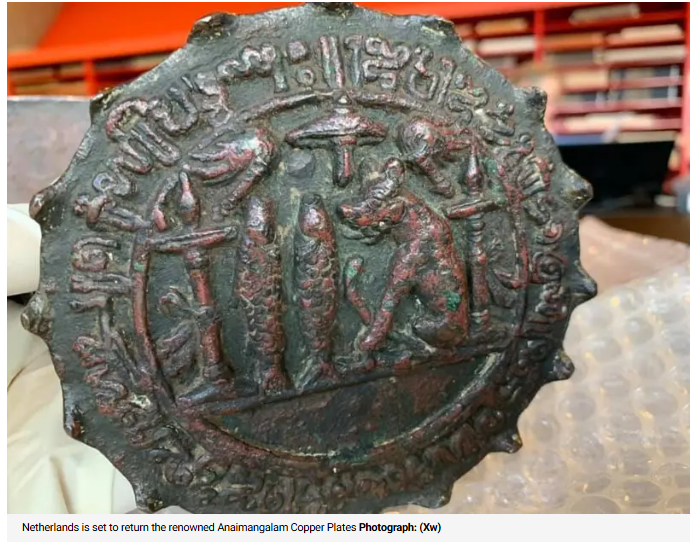
During Prime Minister Narendra Modi's recent visit to the Netherlands, the Dutch government formally returned the Anaimangalam Copper Plates — also called the Leiden Plates — to India. The repatriation marks a significant diplomatic achievement and revives interest in one of South Asia's most powerful medieval empires.
Historical Significance
The Anaimangalam Copper Plates are a set of 21 inscribed copper sheets dating to the reign of Emperor Rajaraja Chola I (985–1014 CE) and his son Rajendra Chola I. Together, they weigh approximately 30 kg and are bound by a bronze ring bearing the royal seal of Rajendra Chola I. The plates are bilingual — early plates carry Sanskrit text tracing the Chola royal genealogy and invoking divine legitimacy, while the majority are in Tamil, recording administrative and grant-related details.
The Tamil section is of particular historical import: it documents Rajaraja Chola I's grant of land revenues from villages near Anaimangalam in Tamil Nadu to the Chudamani Vihara, a Buddhist monastery at the bustling port of Nagapattinam. Crucially, this monastery had been built by Sri Mara Vijayotunga Varman, the ruler of the Srivijaya kingdom — a maritime empire centred in present-day Indonesia. Although the grant was originally a verbal order of Rajaraja, Rajendra later had it formally engraved on copper to ensure its preservation — an act reflecting the period's administrative sophistication.
Why It Matters: Heritage, Trade and Pluralism
The plates offer rare primary evidence of the Chola Empire's cosmopolitan character. At their peak, the Cholas dominated South India, Sri Lanka, and launched naval campaigns across Southeast Asia. Their reign saw flourishing Indian Ocean trade networks, cross-cultural patronage, and — as these plates demonstrate — active religious pluralism, with a Hindu king endowing land revenues for a Buddhist monastery constructed by a foreign ruler.
This makes the Anaimangalam Copper Plates a unique document at the intersection of diplomacy, religion, and commerce across medieval Asia.
Colonial Displacement and Repatriation
The plates' displacement began around 1700 CE when Dutch missionary Florentius Camper acquired them during the Dutch East India Company's (VOC) control of Nagapattinam. They subsequently reached the Leiden University Library in the Netherlands, where they remained for over three centuries — accessible to scholars but not the general public.
India's systematic repatriation drive, strengthened since 2012, received a significant boost when the UNESCO Intergovernmental Committee (2023) validated India's claim as the country of origin and recommended bilateral talks. The Netherlands' decision to return the plates is a direct outcome of this sustained diplomatic engagement.
Bhojshala Temple
- 19 May 2026
In News:
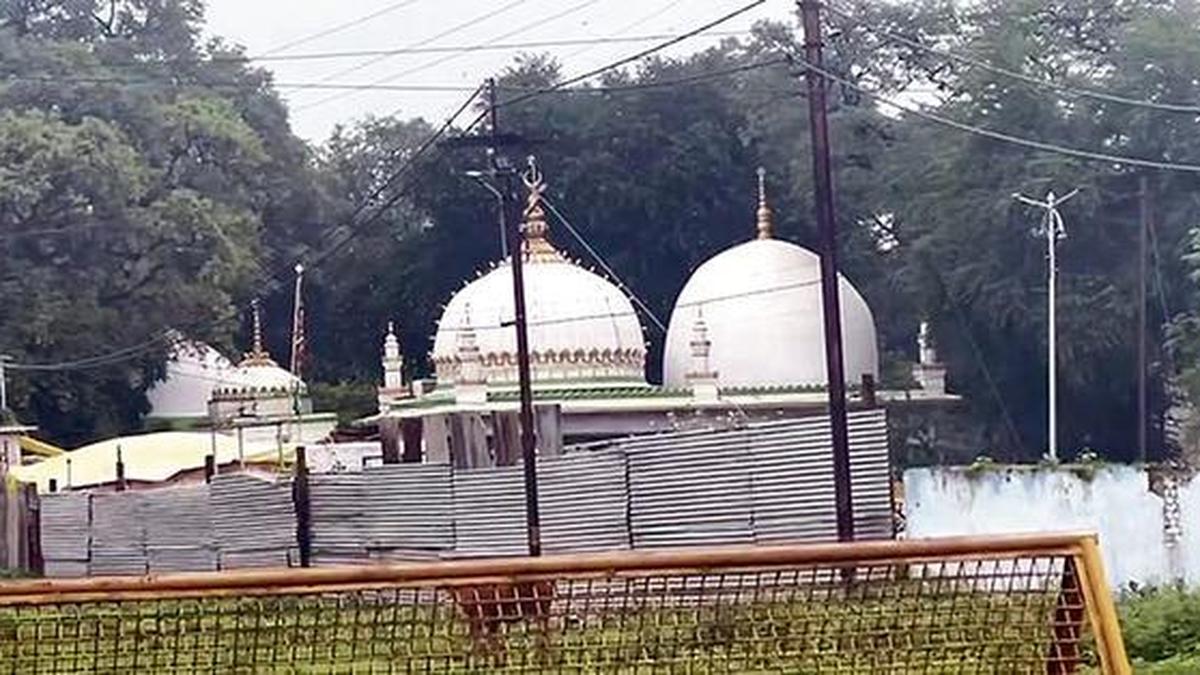
The Indore Bench of the Madhya Pradesh High Court issued a landmark judgment declaring the disputed 11th-century Bhojshala-Kamal Maula Mosque complex in Dhar district fundamentally a Hindu temple dedicated to Goddess Vagdevi (Saraswati). In doing so, the High Court quashed a 2003 Archaeological Survey of India (ASI) arrangement that allowed shared worship (Tuesdays for Hindus, Fridays for Muslims) and transferred administrative stewardship to the ASI.
Core Historical Background of the Complex
The Bhojshala complex represents a critical site of medieval architecture, epigraphy, and educational heritage.
- The Paramara Legacy: The complex is historically tied to Raja Bhoj (1010–1055 CE) of the Paramara dynasty, a celebrated polymath and patron of arts and Sanskrit literature. He established the site as a premier university (Bhojshala) and temple dedicated to Vagdevi.
- Epigraphical Significance: The site houses unique Sarpabandha (serpentine chart) pillar inions containing grammatical tools like the Sanskrit alphabet and tenses. Additionally, walls feature ancient Prakrit odes honoring the Kurma-Avatara (tortoise incarnation of Vishnu) and theatrical dramas composed by the royal tutor Madana.
- The Vagdevi Idol: A highly sophisticated 11th-century white marble sculpture of Goddess Saraswati was excavated from the site in the late 19th/early 20th century and is currently housed in the British Museum, London.
- The Mosque Conversion Claim: The Muslim community identifies the site as the Kamal Maula Mosque, attributing its foundation to Hazrat Maulana Kamaluddin Chishti around 1306–1307 CE. Historical records like the Imperial Gazetteer of India (1908) corroborate that the mosque was built by reusing structural elements (basalt pillars and carved stone slabs) from a pre-existing Hindu temple.
Key Legal and Constitutional Dimensions
The high court's judgment introduces critical interpretations of Indian statutory and constitutional law:
1. Decoupling from the Places of Worship Act, 1991
The primary defense argued that the Places of Worship (Special Provisions) Act, 1991, freezes the religious character of any place of worship as it existed on August 15, 1947.
The High Court rejected this, clarifying that Section 4(3)(a) of the 1991 Act explicitly excludes any ancient and historical monument covered under the Ancient Monuments and Archaeological Sites and Remains (AMASR) Act, 1958. Because the Bhojshala complex had been declared a protected monument since 1904, it is exempt from the 1991 freeze, leaving its religious character open to judicial determination based on historical truth.
2. Application of the "Ayodhya Framework" and Preponderance of Probabilities
Instead of treating this as a property title suit (like the Babri Masjid case), the court addressed it as a Writ Petition under Article 226 seeking the enforcement of the fundamental right to worship (Article 25).
The Bench applied the 10 core judicial principles from the Supreme Court's 2019 Ayodhya Verdict, establishing that:
- The standard of proof is the preponderance of probabilities rather than mathematical certainty.
- Architectural and scientific evidence (like the 2,189-page ASI report detailing 1,700 artifacts and reused temple columns) holds strong evidentiary weight.
- The legal "pious purpose" and continuity of Hindu worship at the core of the deity's endowment are never legally extinguished by the physical destruction of an idol or subsequent architectural modifications.
Public Health Emergency of International Concern
- 19 May 2026
In News:
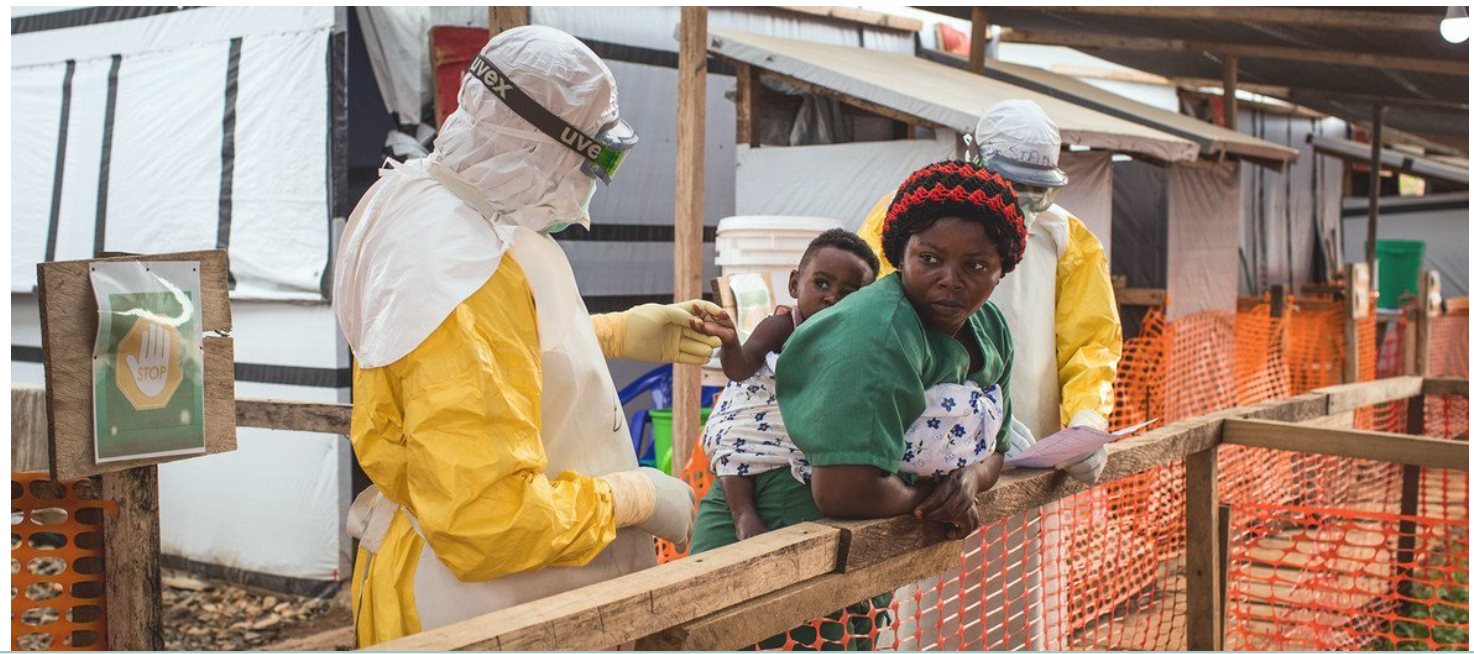
The World Health Organization (WHO) declared the ongoing Ebola outbreak in the Democratic Republic of the Congo (DRC) and Uganda a Public Health Emergency of International Concern (PHEIC). Triggered by rising cases, cross-border transmission, and the specific complexities of the Bundibugyo strain—for which no approved vaccines or specific treatments currently exist—the announcement emphasizes global health vulnerability.
What is a Public Health Emergency of International Concern (PHEIC)?
A PHEIC is a formal declaration by the WHO, representing its highest level of global health alert. It signifies an extraordinary event determined to constitute a public health risk to other states through the international spread of disease, potentially requiring a coordinated international response.
Key Institutional Features:
- Governance and Mandate: It is bound by the International Health Regulations (IHR), legally requiring involved state parties to respond promptly.
- The Decision-Making Body: Declarations are determined by the IHR Emergency Committee, an expert group constituted in the aftermath of the 2002–2004 Severe Acute Respiratory Syndrome (SARS) outbreak.
- Review Cycle: The declaration is reassessed on a tri-monthly (three-month) basis and renewed based on evolving epidemiological data.
- Scope Beyond Infections: Uniquely, a PHEIC can be triggered not just by infectious biological pathogens, but also by public health hazards arising from chemical agents or radioactive materials.
- Exceptional Powers: Certain critical disease outbreaks can be fast-tracked and declared a PHEIC directly by the WHO Director-General without prior consensus or approval from the broader IHR framework.
The International Health Regulations (IHR): Evolution and Mandate
The IHR functions as the governing legal instrument for global epidemiological surveillance and response.
- Origin: The Health Assembly (the apex decision-making organ of the WHO) initially adopted the IHR in 1969 to prevent cross-border disease spread.
- The 2005 Revisions: Following the highly disruptive, chaotic global outbreak of SARS (2002–2004), the framework underwent a massive overhaul. The IHR (2005) was adopted at the 58th World Health Assembly.
- Jurisdiction: It acts as a binding international agreement across 196 signatory countries committed to upholding global health security, with the WHO designated as the central coordinating body.
Eublepharisjhuma
- 19 May 2026
In News:
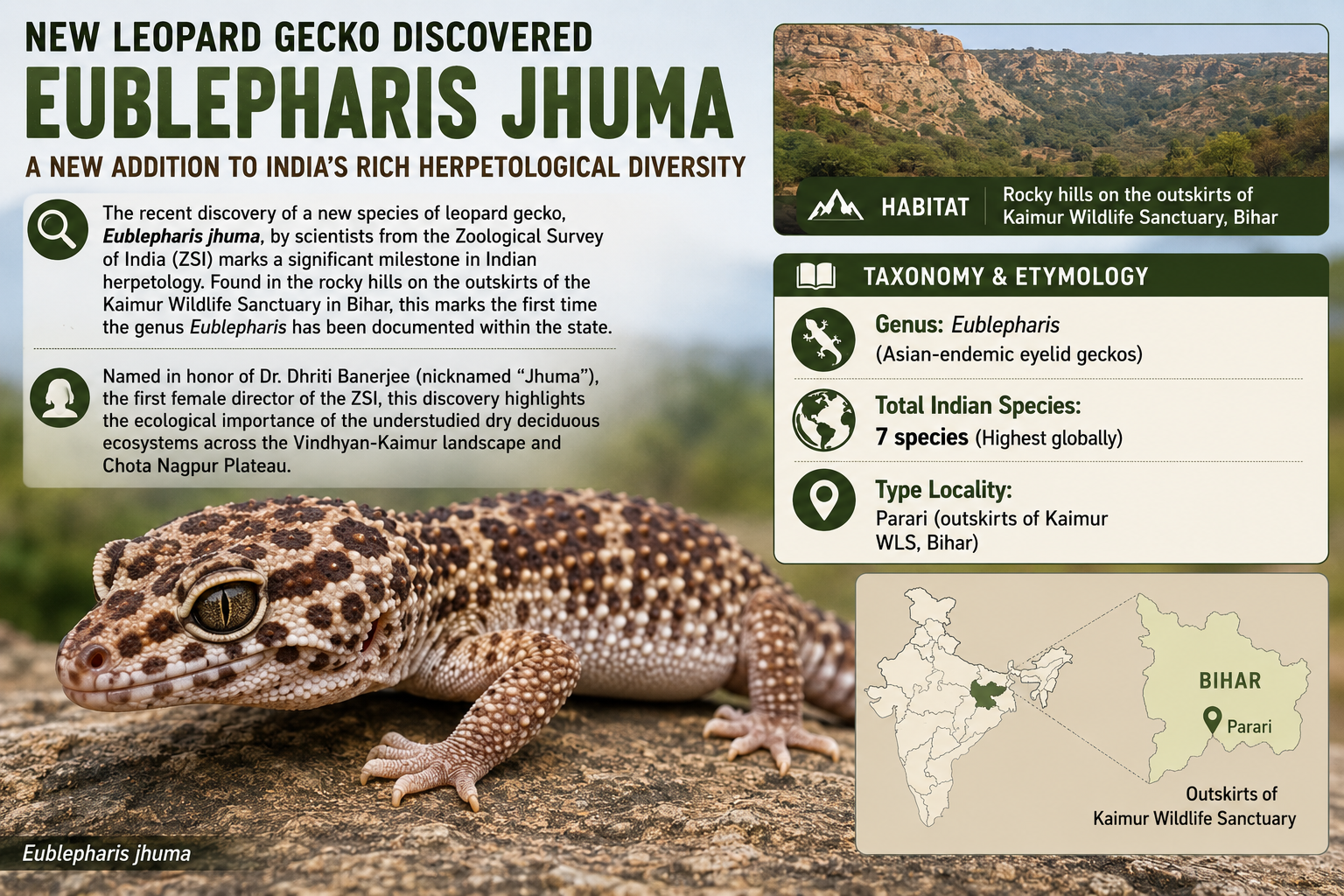
The recent discovery of a new species of leopard gecko, Eublepharisjhuma, by scientists from the Zoological Survey of India (ZSI) marks a significant milestone in Indian herpetology. Found in the rocky hills on the outskirts of the Kaimur Wildlife Sanctuary in Bihar, this marks the first time the genus Eublepharis has been documented within the state.
Named in honor of Dr. Dhriti Banerjee (nicknamed "Jhuma"), the first female director of the ZSI, this discovery highlights the ecological importance of the understudied dry deciduous ecosystems across the Vindhyan-Kaimur landscape and Chota Nagpur Plateau.
Taxonomy & Etymology
- Genus:Eublepharis (Asian-endemic eyelid geckos)
- Total Indian Species: 7 species (Highest globally)
- Type Locality:Parari (outskirts of Kaimur WLS, Bihar)
Morphological and Genetic Distinctiveness
Initially mistaken for its central Indian relative, Eublepharissatpuraensis, comprehensive physical and mitochondrial DNA sequencing confirmed E. jhuma as a phylogenetically independent lineage, showing a 6.9% to 7.8% genetic divergence from its closest relatives. This divergence suggests a history of allopatric speciation (evolution driven by geographic isolation) shaped by deep-time geological forces acting across India's plateau systems.
Unique Physical Adaptations
- Scale Architecture: Reaching up to 14 cm in body length, its dark brown dorsum (back) features large, flat, bumpy, tubercle-like scales with unusually wide gaps between them.
- Locomotive Efficiency: It possesses an elevated number of tiny, textured ridges (lamellae) under its fourth toe, providing crucial gripping power on steep, rocky terrains.
- Tail Regeneration: It features 12 to 13 pre-cloacal pores near its tail. Unique to this species, if its tail drops and regrows, the replacement scales grow back in a flat, rectangular configuration rather than the standard circular layout seen in related species.
Conservation Status and Systemic Threats
While newly discovered and currently marked as Not Assessed (NE) on the IUCN Red List, the species faces immediate anthropogenic pressures:
- Exotic Wildlife Trafficking: Leopard geckos are highly sought after in international and domestic exotic pet markets due to their calm demeanor and unique color patterns.
- Habitat Fragmentation: The unique habitat of the Kaiser range is structurally isolated from the main sanctuary forest by agricultural fields, making the species highly vulnerable to quarrying, forest fires, pollution, and roadkill.
Legal Protection Framework
In India, all leopard gecko species are protected under Schedule I of the Wildlife Protection Act, 1972 (as updated by the Amendment Act of 2022). This legal baseline mandates top-priority protection, making hunting, trade, or domestic captivity strictly illegal.
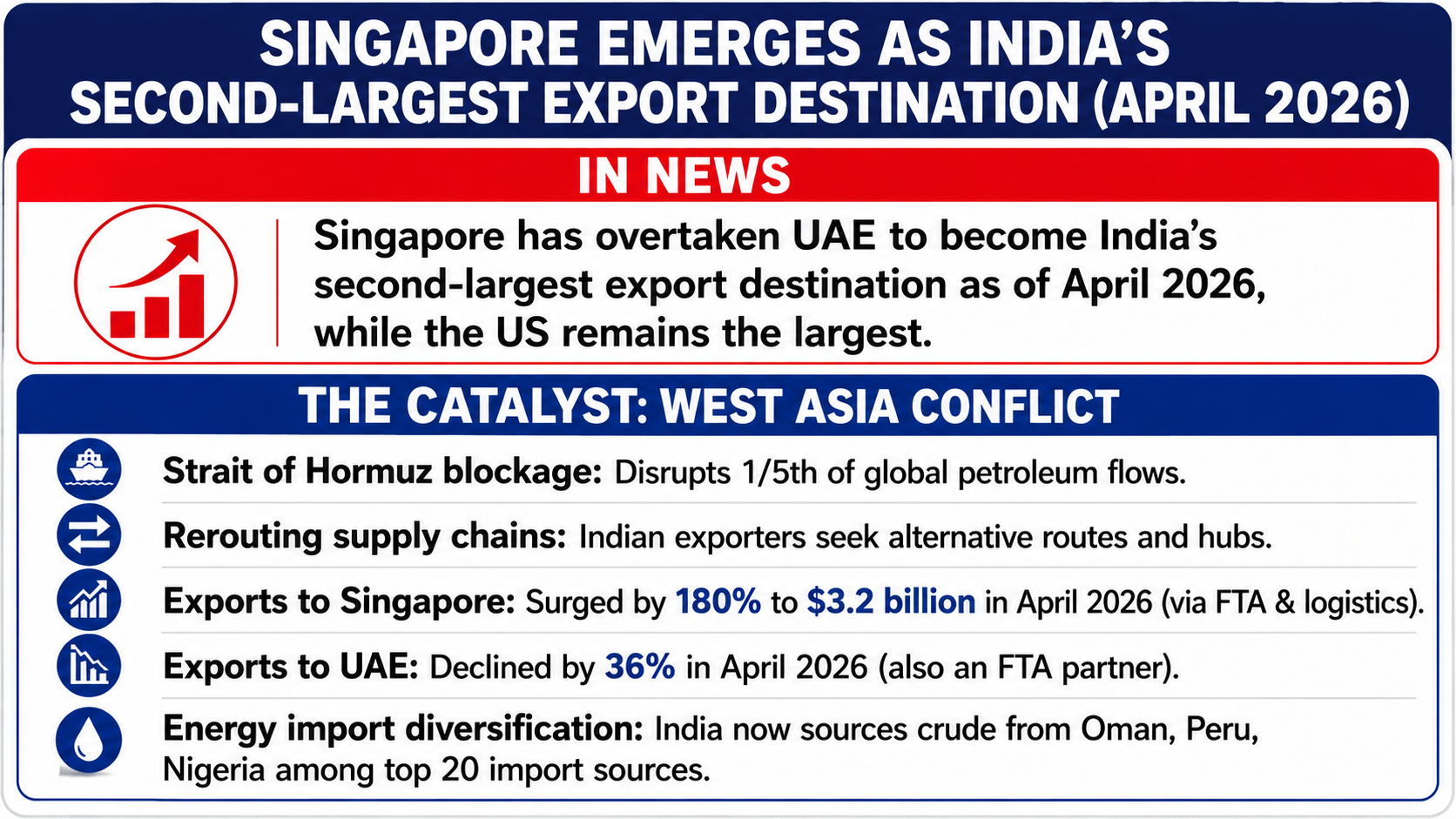
Singapore Emerges as India’s Second-Largest Export Destination
- 19 May 2026
In News:
The protracted West Asia conflict has triggered systemic shocks in global supply chains, driving a significant structural shift in India’s external trade dynamics. In an unprecedented realignment, Singapore has overtaken the United Arab Emirates (UAE) to become India’s second-largest export destination as of April 2026, while the United States continues to retain the pole position.
The Catalyst: Geopolitical Disruptions in West Asian Trade
The primary driver behind this shift is the logistical blockage of the Strait of Hormuz—a critical maritime choke point between Iran and Oman that historically facilitates a fifth of global petroleum flows.
- Rerouting Supply Chains: The trade paralysis in the Gulf has forced Indian exporters to aggressively seek alternative routes and transshipment hubs.
- The Contrast in FTA Partners: Leveraging its world-class logistics infrastructure and the bilateral Free Trade Agreement (FTA), India's exports to Singapore surged exponentially by 180% to reach $3.2 billion in April 2026. Conversely, exports to the UAE (another key FTA partner) witnessed a sharp decline of 36%.
- Energy Import Diversification: To insulate itself from Middle Eastern energy shocks, India has altered its crude oil sourcing, integrating non-traditional suppliers like Oman, Peru, and Nigeria into its top 20 import sources.
Macroeconomic Strain on the Indian Economy
The enduring global energy supply crisis has severely impacted India's macroeconomic indicators:
- Currency Depreciation: Widening import bills have drained foreign exchange reserves, causing the Indian rupee to depreciate by 5.2% against the US Dollar since February 2026, touching multiple record lows.
- Fiscal Interventions: To defend the domestic currency and curb non-essential imports, the Government of India has hiked import duties on precious metals. Furthermore, oil marketing companies (OMCs) were permitted to increase retail petrol and diesel prices for the first time in four years to check domestic consumption.
India-Singapore Economic Matrix
- Bilateral Trade Scale: Expanded from USD 6.7 billion (FY 2004-05) to USD 34.3 billion (FY 2024-25) via the Comprehensive Economic Cooperation Agreement (CECA). Singapore is currently India’s 6th largest trading partner.
- FDI Inflows: Singapore stands as India’s largest source of Foreign Direct Investment, bringing in USD 14.94 billion in FY 2024-25.
Deeping Institutional and Fintech Integration
The trade surge is underpinned by a robust framework of institutional mechanisms and digital financial architecture established between the two nations:
- Institutional Presence: Facilitating cross-border capital, Invest India set up a dedicated office in Singapore (September 2024), matched by the Singapore Business Federation opening its debut Indian office in Bengaluru (November 2025).
- Fintech Leadership: The operationalization of the UPI-PayNow Linkage created India's first cross-border Person-to-Person (P2P) payment facility, significantly slashing the cost of remittances.
- Digital Trade Architecture: Bilateral trade finance has been modernized through the GIFT Connect linkage (unifying liquidity between the NSE and SGX for NIFTY products), ONDC-Proxtera connectivity for MSME retail trade, and the TradeTrust framework for interoperable electronic Bills of Lading (eBLs).