
Mount Erebus
- 02 Jul 2026
In News:
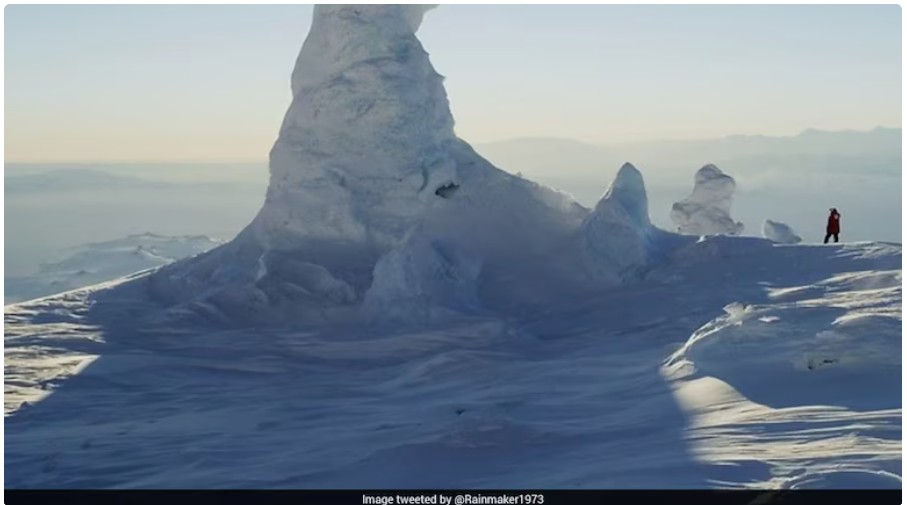
Mount Erebus, the world's southernmost active volcano, has recently drawn attention for its unique geological features. Besides possessing a permanent lava lake, it is the only known volcano that emits microscopic crystals of pure gold into the atmosphere during volcanic activity.
About Mount Erebus
Mount Erebus is a stratovolcano situated on the western half of Ross Island in the Ross Sea, Antarctica. It is the southernmost active volcano on Earth and the second-highest volcano in Antarctica, rising to 3,794 metres (12,448 feet) above sea level after Mount Sidley.
Unlike volcanoes located along plate boundaries, Mount Erebus is an intraplate volcano belonging to the McMurdo Volcanic Group. It is situated within the Terror Rift, a part of the West Antarctic Rift System. Although Antarctica itself is not a major tectonic plate boundary, the volcano is associated with the broader tectonic processes linked to the Pacific Ring of Fire.
One of the most remarkable features of Mount Erebus is its persistent lava lake, which has remained continuously active since at least 1972. Such permanent lava lakes are extremely rare, making Erebus one of only a handful of volcanoes worldwide with this phenomenon. Most of its eruptions are Strombolian in nature, characterised by relatively mild but frequent explosive bursts that eject incandescent volcanic bombs and lava fragments around the crater.
Unique Feature
Mount Erebus is the only known volcano in the world that naturally releases microscopic crystals of pure gold into the atmosphere. These tiny gold particles, carried by volcanic gases, are dispersed over considerable distances by prevailing winds, making the volcano geologically unique.
Gitchaknakana
- 02 Jul 2026
In News:
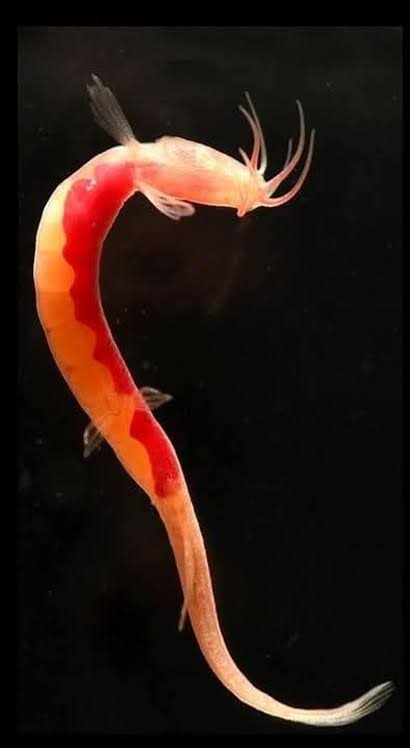
An international team of taxonomists has discovered a new genus and species of blind, aquifer-dwelling fish, Gitchaknakana, from a dug-out well in Assam. The discovery marks the first record of a subterranean (aquifer-dwelling) fish from Northeast India and the Eastern Himalayan region, significantly expanding the known distribution of India's underground freshwater biodiversity.
About Gitchaknakana
Gitchaknakana is a newly identified blind subterranean fish belonging to a new genus within the family Cobitidae (true loaches). The species is highly specialised for life in underground aquifers and was found in extremely low numbers in a single dug-out well. To safeguard the vulnerable population, the exact collection site has not been disclosed.
The name 'Gitchak' is derived from the Garo language, meaning 'red', referring to the fish's striking reddish colour when alive, while 'na-tok kana' means 'blind fish', reflecting the complete absence of eyes.
Habitat and Adaptations
The species is phreatobitic, meaning it spends its entire life in groundwater aquifers. Such subterranean habitats are characterised by complete darkness, stable temperatures, and limited food availability.
Like many cave and groundwater-dwelling fishes, Gitchaknakana exhibits remarkable evolutionary adaptations, including:
- Complete absence of functional eyes.
- Adaptation to permanent underground aquatic habitats.
- Highly specialised morphology suited to low-light and nutrient-poor environments.
These adaptations make subterranean fishes among the most evolutionarily distinct freshwater vertebrates.
Ecological Significance
The discovery provides the first definitive evidence that the Eastern Himalayas support highly specialisedsubterranean aquatic fauna. Earlier, such unique groundwater fishes were primarily known from the lateritic landscapes of the Western Ghats, particularly Kerala, where species such as the Blind Catfish (Horaglaniskrishnai) occur.
The finding considerably expands scientific understanding of India's hidden freshwater biodiversity and evolutionary history.
Conservation Concerns
The discovery also highlights the fragile nature of subterranean ecosystems. Species inhabiting underground aquifers generally have:
- Extremely restricted geographical distribution.
- Small population sizes.
- High vulnerability to groundwater extraction and pollution.
- Limited ability to recolonise disturbed habitats.
Researchers have also expressed concern over another cave-dwelling fish, Neolissochiluspnar, a cave mahseer from Meghalaya regarded as the world's largest cavefish, which faces increasing pressure from the international aquarium trade despite limited information on its population status.
Ayushman Sarathi
- 02 Jul 2026
In News:
The Union Minister of Health and Family Welfare recently launched 'Ayushman Sarathi', the official WhatsApp chatbot for the Ayushman Bharat Pradhan Mantri Jan Arogya Yojana (AB PM-JAY). The chatbot aims to provide citizens with easy, secure, and real-time access to various PM-JAY services through a familiar digital platform.
About Ayushman Sarathi
Ayushman Sarathi is a secure, API-based digital public health interface that operates on WhatsApp. Developed by the National Health Authority (NHA) under the Ministry of Health and Family Welfare (MoHFW), it enables beneficiaries to access PM-JAY services through simple, automated conversations on their mobile phones without visiting government offices or call centres.
The initiative seeks to improve accessibility to healthcare services, particularly for senior citizens, rural populations, and digitally underserved communities, by delivering citizen-centric services through a widely used messaging platform.
Key Features
The chatbot offers a wide range of services related to Ayushman Bharat PM-JAY, allowing beneficiaries to manage their health cards and access scheme-related information conveniently.
Its major features include:
- Checking eligibility under AB PM-JAY.
- Applying for new Ayushman Cards.
- Downloading digital health cards.
- Completing eKYC verification and updating beneficiary details.
- Locking or unlocking PM-JAY cards to prevent misuse or identity fraud.
- Managing the Ayushman Vaya Vandana Card for senior citizens aged 70 years and above.
- Viewing available insurance balance and treatment history.
- Locating nearby empanelled government and private hospitals.
- Registering, tracking, or withdrawing grievances and providing feedback on hospital services.
The chatbot is available 24×7 and can be accessed by sending "Hi" to the official WhatsApp number or by scanning the QR code issued by the National Health Authority.
Nodal Agency
- Ministry: Ministry of Health and Family Welfare (MoHFW)
- Implementing Agency: National Health Authority (NHA)
The Ayushman Sarathi Chatbot represents another important step in strengthening India's Digital Public Health Infrastructure. By leveraging the widespread use of WhatsApp, the platform simplifies access to government healthcare services without requiring users to install additional applications. It enhances transparency, improves grievance redressal, enables real-time beneficiary support, and strengthens monitoring of healthcare delivery. The initiative is expected to bridge the digital divide, particularly in rural and underserved regions, while making the implementation of Ayushman Bharat Pradhan Mantri Jan Arogya Yojana (AB PM-JAY) more accessible, efficient, and citizen-centric.
Aldabra Giant Tortoise
- 02 Jul 2026
In News:
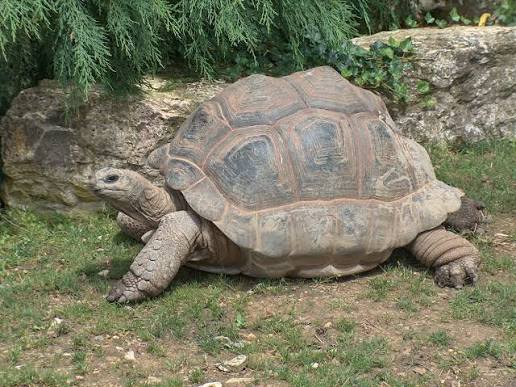
During his visit to Seychelles, the Prime Minister of India met Jonathan, an Aldabra Giant Tortoise estimated to be 194 years old. Recognised by the Guinness World Records as the world's oldest living land animal, Jonathan has become a global symbol of longevity and wildlife conservation.
About Aldabra Giant Tortoise
The Aldabra Giant Tortoise (Aldabrachelys gigantea) is the second-largest living land tortoise in the world after the Galápagos Giant Tortoise. Endemic to the Aldabra Atoll of Seychelles in the western Indian Ocean, it is among the longest-living vertebrates, with many individuals surviving beyond 100 years and some believed to exceed 150 years.
The species is entirely terrestrial and inhabits diverse ecosystems such as scrub forests, mangrove swamps, coastal dunes, beaches, and grasslands (platins). Through continuous grazing, these tortoises create a unique vegetation type known as "tortoise turf," making them important ecosystem engineers.
Key Features
- Scientific Name:Aldabrachelys gigantea (formerly Geochelone gigantea)
- Distribution: Endemic to Aldabra Atoll, Seychelles
- Habitat: Scrub forests, mangroves, coastal dunes, beaches and grasslands
- Size: Can exceed 120 cm in length and weigh over 250 kg
- Appearance: Dark grey to black body with a highly domed shell, long neck, thick scaled legs and a small pointed head
- Diet: Herbivorous; feeds mainly on grasses, leaves, shrubs, herbs and fruits
- Lifespan: Frequently exceeds 100 years, with some individuals living over 150 years
Conservation Status
- IUCN Red List:Vulnerable (VU)
Jonathan – World's Oldest Living Land Animal
Jonathan is an Aldabra Giant Tortoise residing on the island of Saint Helena. Estimated to have been born around 1832, he is officially recognised by the Guinness World Records as the oldest living land animal, with an estimated age of 194 years.
White-Rumped Vulture
- 02 Jul 2026
In News:
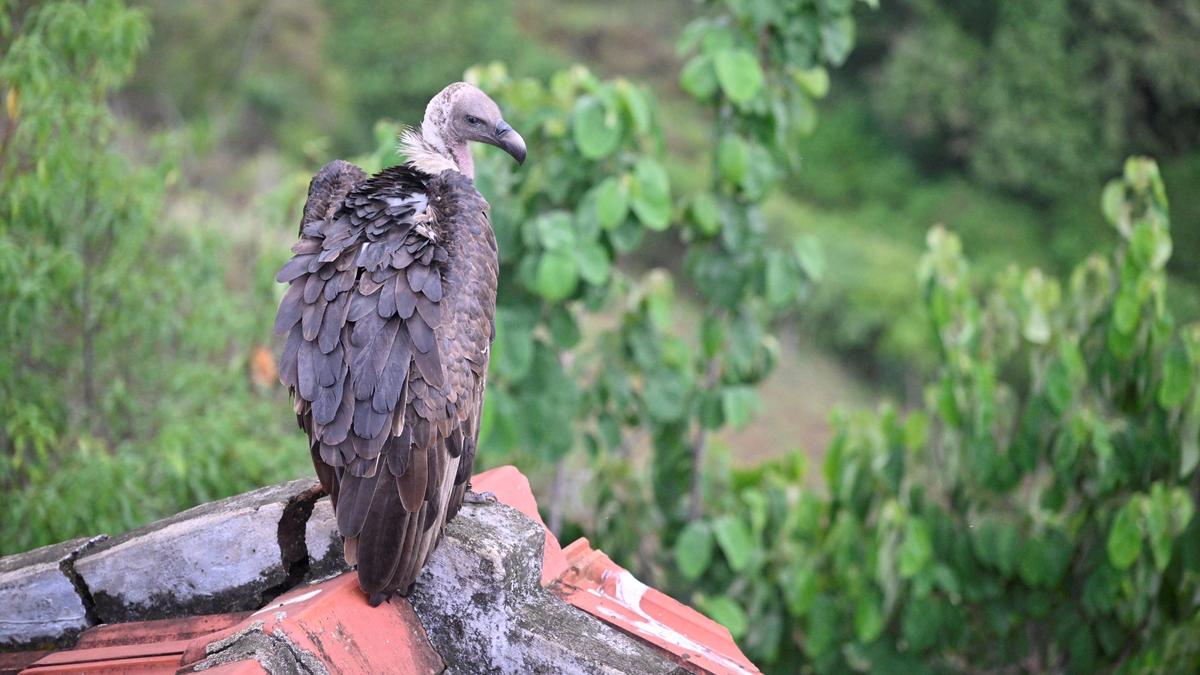
A captive-bred, radio-tagged White-Rumped Vulture (Gyps bengalensis), released earlier this year in the Mudumalai Tiger Reserve (Tamil Nadu), recently died due to electrocution, highlighting the persistent threats faced by one of India's most critically endangered scavenger birds.
About White-Rumped Vulture
The White-Rumped Vulture (Gyps bengalensis) is a species of Old World vulture native to South and Southeast Asia. It is one of the three resident Gyps vultures that suffered a catastrophic population decline in the Indian subcontinent due to the veterinary use of the anti-inflammatory drug Diclofenac.
The species is also commonly known as the Indian White-backed Vulture or Oriental White-backed Vulture and plays a crucial ecological role by rapidly disposing of animal carcasses, thereby preventing the spread of diseases.
Habitat and Distribution
- The White-Rumped Vulture is primarily found in plains, though it may occasionally occur in hilly regions. It commonly inhabits villages, agricultural landscapes, and urban fringes, where livestock carcasses are readily available.
- Its geographical distribution extends across:India, Pakistan, Bangladesh, Nepal, Bhutan, Myanmar, Thailand, Laos, Cambodia, and Southern Vietnam.
Physical Characteristics
The species possesses several adaptations suited for scavenging:
- Bare, unfeathered head and neck that remain clean while feeding.
- Broad wings adapted for soaring flight.
- Short tail.
- Adults have dark blackish plumage, a white neck ruff, and a distinctive white patch on the lower back and upper tail, giving the species its name.
- Males and females are almost equal in size.
Food Habits
The White-Rumped Vulture is an obligate scavenger, feeding almost exclusively on the carcasses of dead animals, particularly livestock. By efficiently removing carcasses from the environment, it performs an important ecosystem service in maintaining environmental sanitation and reducing the risk of zoonotic diseases.
Major Threats
The species continues to face several conservation challenges:
- Veterinary use of Diclofenac, which causes fatal kidney failure in vultures.
- Electrocution and collision with power transmission lines.
- Habitat degradation and loss of nesting sites.
- Decline in food availability.
- Accidental poisoning and environmental contamination.
Conservation Status
- IUCN Red List: Critically Endangered (CR)
- Wildlife (Protection) Act, 1972: Schedule I (Highest level of legal protection)
Conservation Measures
India has undertaken several initiatives for vulture conservation, including:
- Ban on veterinary use of Diclofenac.
- Promotion of the safer alternative drug Meloxicam.
- Establishment of Vulture Conservation Breeding Centres.
- Creation of Vulture Safe Zones.
- Monitoring through radio-tagging and satellite telemetry.
- Awareness programmes to reduce anthropogenic threats.