
National Action for Mechanised Sanitation Ecosystem (NAMASTE) Scheme
- 25 Apr 2026
In News:
The National Action for Mechanised Sanitation Ecosystem (NAMASTE) scheme represents a pivotal shift in India’s approach to sanitation, moving from a traditional welfare model toward a comprehensive, rights-based social reform. Launched to address the systemic vulnerabilities of Sewer and Septic Tank Sanitation Workers (SSWs), the scheme seeks to eliminate hazardous manual cleaning practices through mechanization, safety protocols, and economic empowerment.
Institutional Framework and Vision
The NAMASTE scheme is a collaborative inter-ministerial initiative jointly implemented by the Ministry of Social Justice and Empowerment (MoSJE) and the Ministry of Housing and Urban Affairs (MoHUA). The National Safai Karmacharis Finance Development Corporation (NSKFDC) serves as the primary implementing agency.
Initially scheduled for a three-year duration from FY 2023-24 to FY 2025-26, the scheme aims to achieve a "Zero Fatality" ecosystem. Its core objectives include:
- Total elimination of direct contact with human faecal matter.
- Mandatory use of safety devices and PPE by skilled workers.
- Strengthening Emergency Response Sanitation Units (ERSUs) within municipal bodies.
- Transforming workers into "Sanipreneurs" through Self-Help Groups (SHGs) and entrepreneurship.
Expanding the Horizon: Inclusion of Waste Pickers
In a significant policy expansion starting June 2024, the scheme's scope was broadened to include waste pickers involved in solid waste management in both urban and rural sectors. This inclusivity recognizes the shared vulnerabilities of all informal workers within the sanitation value chain.
Current data highlights the scale of this outreach:
- Profiling and Validation: Over 3.78 lakh waste pickers have been profiled, with 2.52 lakh already validated through e-KYC.
- Social Security: Ayushman Cards are being generated for over 1.24 lakh waste pickers, ensuring they have access to critical healthcare services.
- Protection: More than 1.31 lakh waste pickers have been equipped with Personal Protective Equipment (PPE) kits.
Strategic Enhancements for FY 2025-26
To accelerate the pace of mechanization, the government introduced key enhancements to the scheme’s financial components during the 2025-26 fiscal year:
- Increased Subsidy Ceilings: Under the Swachhata Udyami Yojana (SUY), the capital subsidy for individual projects has been raised from ?5.00 lakh to ?7.50 lakh. For group projects (up to five beneficiaries), the ceiling increased from ?18.75 lakh to ?25.00 lakh.
- Private Sector Engagement: A new component now provides a 25% capital subsidy to Private Sanitation Service Organisations (PSSOs) and private contractors. This encourages the private sector to invest in and deploy mechanized cleaning equipment, further reducing the reliance on manual labor.
- Growth of Sanipreneurs: The number of beneficiaries transitioning into entrepreneurship (Sanipreneurs) has grown significantly, with ?14.84 crore released to 320 beneficiaries in the current cycle.
India–Sri Lanka Diving Exercise (DIVEX) 2026

- 25 Apr 2026
In News:
INS Nireekshak, the Indian Navy’s Diving Support and Submarine Rescue Vessel, arrived in Colombo to participate in the fourth edition of the India–Sri Lanka Diving Exercise (DIVEX 2026).
DIVEX 2026: Enhancing Underwater Interoperability
The 2026 edition of DIVEX is designed as a high-intensity engagement focusing on specialized underwater operations. The primary objectives include:
- Operational Cohesion: Synchronizing complex diving procedures between the two navies.
- Interoperability: Sharing best practices in salvage, underwater repair, and search-and-rescue protocols.
- Maritime Security: Strengthening the collective capacity to secure vital sea lanes in the IOR.
INS Nireekshak: The Vanguard of Deep-Sea Operations
A pivotal asset in this exercise, INS Nireekshak is a sophisticated Dive Support and Submarine Rescue Vessel. Built by Mazagon Shipbuilders and operational since 1989, it holds the prestigious national record for the deepest dive at 257 metres. Its presence in Colombo highlights India’s advanced technical capabilities in submarine rescue and deep-sea intervention.
Medical Diplomacy: The BHISM Initiative
In a move that aligns with India’s ‘Neighbourhood First’ policy and the Aarogya Maitriprogramme, the mission includes the handover of two BHISM (Bharat Health Initiative for Sahyog Hita & Maitri) cubes to Sri Lanka.
- Capabilities: These are portable, integrated medical units equipped to manage up to 200 emergency cases autonomously.
- Strategic Intent: By gifting these "mini-hospitals," India reinforces its role as a "First Responder" in the region, significantly enhancing Sri Lanka's Disaster Management and Humanitarian Assistance and Disaster Relief (HADR) capabilities.
Evolution of India-Sri Lanka Defence Ties
The exercise takes place against the backdrop of a landmark 5-year Memorandum of Understanding (MoU) signed in April 2025. This agreement has institutionalized military engagement across several pillars:
- Strategic Trust: Sri Lanka has reiterated its commitment to ensuring its territory is not utilized for activities detrimental to India’s security interests.
- Institutionalized Drills: Regular engagements like SLINEX (Naval) and Mitra Shakti (Army) have become cornerstones of the bilateral relationship.
- Proven Reliability: India’s proactive role during previous crises, such as the MV X-Press Pearl maritime disaster (2021) and Operation Sagar Bandhu, has cemented its reputation as a reliable security partner.
Sustainable Aviation Fuel

- 25 Apr 2026
In News:
Recently, the Government of India notified an amendment to the Aviation Turbine Fuel (ATF) (Regulation of Marketing) Order, 2001. This administrative measure formally brings ATF blended with Sustainable Aviation Fuel (SAF) under the regulatory ambit of the ATF Control Order, aligning India’s energy policy with global environmental standards.
The Core of the Amendment: Redefining ATF
Previously, Aviation Turbine Fuel was defined strictly as a petroleum-based product meeting Bureau of Indian Standards (BIS) specifications. The 2026 amendment expands this definition to include:
- Co-processed SAF: Sustainable fuel produced alongside traditional ATF in petroleum refineries.
- Blended SAF: SAF conforming to IS 17081 which is blended with traditional ATF meeting IS 1571 standards.
This regulatory shift is essential for operationalizing India’s blending targets and ensuring the domestic aviation industry remains integrated with the global supply chain.
Understanding Sustainable Aviation Fuel (SAF)
SAF is a "drop-in" biofuel, meaning it is chemically similar to conventional jet fuel derived from crude oil. It consists of specially processed aviation-grade hydrocarbons that are fully compatible with existing aircraft engines and infrastructure.
Key Characteristics and Sources:
- Performance: It does not alter the safety, fundamental nature, or performance of the fuel, requiring no modifications to aircraft engines.
- Feedstock: SAF is produced from renewable biomass and waste resources, including waste oils and fats, municipal solid waste, green waste, and non-food crops.
- Synthetic Production: It can also be produced synthetically by capturing carbon directly from the atmosphere.
- Rigorous Testing: To ensure safety, SAF undergoes International Civil Aviation Organization (ICAO) recognized testing as per ASTM International standards before being cleared for use.
The Global Context: CORSIA and Emission Mandates
The primary driver for SAF adoption is the Carbon Offsetting and Reduction Scheme for International Aviation (CORSIA), implemented by ICAO.
- CORSIA Compliance: Starting in 2027, the mandatory phase of CORSIA requires international flights to offset CO2 emissions that exceed a specific baseline.
- Strategic Advantage: Utilizing SAF reduces the "offsetting" requirements for airlines, as it significantly lowers life-cycle greenhouse gas (GHG) emissions compared to fossil fuels.
India’s Blending Roadmap and International Comparison
Recognizing the global shift, India has announced ambitious indicative blending targets for international flights:
- 1% SAF blend by 2027
- 2% SAF blend by 2028
- 5% SAF blend by 2030
These targets place India among other leading economies taking proactive climate action:
- European Union: Mandates 2% SAF by 2025, scaling to 70% by 2050.
- United Kingdom: Targeting 10% by 2030.
- Japan: Aiming for a 10% SAF mandate by 2030.
- Singapore: Requiring 1% SAF usage starting in 2026.
Dolphin Friends Initiative
- 25 Apr 2026
In News:
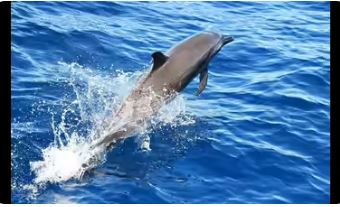
In a significant push toward community-led conservation, the Forest Department in Prayagraj has operationalized the "Dolphin Friends" (Dolphin Mitras) volunteer network. This initiative aims to safeguard the endangered Gangetic River Dolphin (Platanista gangetica) by integrating grassroots participation with formal ecological monitoring.
The "Dolphin Friends" Framework
The initiative is designed as a participatory conservation model that bridges the gap between policymakers and the local populace. By leveraging the traditional knowledge of those who live and work along the river, the project ensures a 24/7 "eyes-on-the-water" approach.
- Core Stakeholders: The network primarily recruits fishermen and boatmen, as their daily proximity to the river makes them the most effective first responders and monitors of dolphin movement.
- Academic Integration: To ensure scientific rigor, the network also includes research scholars and teachers who assist in data documentation and lead awareness campaigns regarding the river's ecological health.
- Geographic Focus: Intensive surveillance is concentrated in recognized "hotspots" across the Ganga belt, including Phaphamau, Chhatnag, Meja, and stretching toward Fatehpur.
Strategic Objectives and Seasonal Monitoring
A primary goal of the Dolphin Friends network is to provide protection during the monsoon season, which is the critical breeding period for the species. During these months, surveillance is intensified to prevent human interference and ensure a safe environment for reproduction.
Beyond physical protection, the initiative focuses on:
- Habitat Assessment: Monitoring changes in water levels and flow patterns that affect dolphin navigation.
- Breeding Documentation: Recording sightings of calves to track the population's growth rate.
- Public Awareness: Educating riverside communities on the importance of reducing plastic pollution and avoiding harmful fishing nets (such as monofilament nets) that lead to accidental entanglements.
New Species of Dragonflies
- 25 Apr 2026
In News:
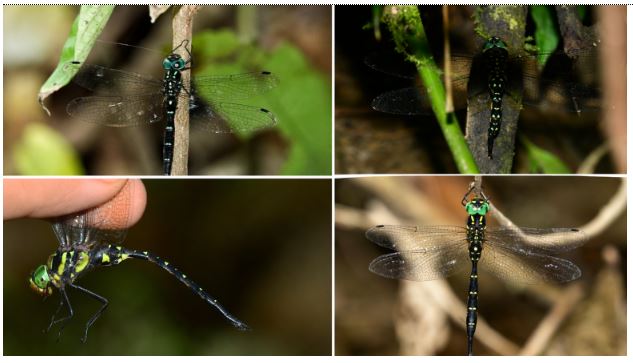
The recent discovery of three new dragonfly species in Northeast India marks a significant milestone for Indian entomology and underscores the region's status as a global biodiversity hotspot. Published in the journal Zootaxa, the study by researchers from the National Centre for Biological Sciences (NCBS) and local naturalists highlights the "micro-endemic" nature of species in the Siang Valley and Assam’s forest fringes.
The New Additions to India’s Odonate Fauna
The discoveries belong to the rare genus Sarasaeschna (commonly called Boghawkers), which are known for their preference for shaded, high-altitude forest ponds and wetlands.
- Clouded Boghawker (Sarasaeschna nuboides)
- Location: Discovered in the Siang Valley of Arunachal Pradesh, near the periphery of Mouling National Park.
- Characteristics: It is named for the distinctive "cloudy" or nebulous wing markings. It was observed flying rapidly over shallow, shaded forest ponds.
- Siang Boghawker (Sarasaeschna sigotaayo)
- Location: Also found in the Siang Valley, Arunachal Pradesh.
- Etymology: The name "Sigotaayo" is derived from the local Adi language, where ‘Siang’ refers to the big river. It possesses bolder thoracic stripes compared to its relatives.
- Long-tailed Boghawker (Sarasaeschna dosdewaensis)
- Location: Discovered in the Karimganj district of Assam (specifically the Dosdewa forest village).
- Background: This area is increasingly recognized as an "Odonate Diversity Hotspot." The species is characterized by its exceptionally elongated male caudal appendages (tail structures).
Ecological and Biological Significance
Dragonflies belong to the order Odonata and are among the oldest living insect lineages, predating dinosaurs by over 100 million years. Their role as bio-indicators is crucial:
- Environmental Health: Dragonflies are sensitive to changes in water quality and habitat structure. Their presence indicates healthy, oxygen-rich freshwater ecosystems.
- Apex Predators of the Insect World: Equipped with nearly 360-degree vision, they are voracious predators of mosquitoes and flies, acting as natural biological control agents.
- Taxonomic Milestone: Along with the three new species, the researchers also rediscovered the Khasi Boghawker (Sarasaeschna khasiana) in Meghalaya after a gap of 58 years, confirming its persistence in the Khasi Hills.
Dragonflies vs. Damselflies: Key Distinctions
While both belong to the order Odonata and share similar life cycles, they can be differentiated by their morphology and behavior:
- Resting Posture: This is the most visible difference. Dragonflies hold their wings horizontally (spread out) when at rest. In contrast, damselflies typically fold their wings together, holding them straight up above their bodies.
- Physical Build: Dragonflies are generally larger and more robust with powerful flight capabilities. Damselflies are smaller, more slender, and appear "delicate" in flight.
- Eye Position: Dragonfly eyes are very large and often touch at the top of the head. Damselfly eyes are separated, resembling dumbbells on either side of the head.