
E-PRAAPTI Portal
- 30 Apr 2026
In News:
In a significant move toward financial inclusion and digital transparency, the Employees’ Provident Fund Organisation (EPFO) is launching E-PRAAPTI (EPF Aadhaar-Based Access Portal for Tracking Inoperative Accounts). This specialized digital platform is designed to help millions of workers reclaim funds lying dormant in inoperative accounts, effectively bridging the gap between old records and the modern Universal Account Number (UAN) system.
Understanding Inoperative EPF Accounts
An EPF account is officially classified as "inoperative" under two primary conditions:
- Cessation of Contributions: When no new contributions have been made to the account for 36 consecutive months after an individual leaves their job.
- Fragmentation: When old PF records from previous employers are not linked to the current, active UAN of the member.
Since 2014, the EPFO has utilized the 12-digit UAN to ensure portability of benefits; however, a vast amount of capital remains stuck in older accounts created prior to this system or accounts that were abandoned during job transitions.
The E-PRAAPTI Mechanism: Aadhaar-Based Reclamation
The E-PRAAPTI portal serves as a dedicated "track and link" engine. It simplifies a previously cumbersome manual process through a streamlined, secure digital interface:
- Aadhaar-Based Authentication: The portal uses Aadhaar to verify the identity of the member, ensuring that the rightful owner is accessing the funds.
- Identification and Tracking: It allows members to securely search for and identify old accounts that are currently detached from their UAN.
- Profile Updating and Activation: Once identified, members can initiate a process to update their profiles and link these old accounts to their current UAN, thereby "activating" the dormant funds.
Phased Rollout Strategy
To ensure security and administrative efficiency, the EPFO has planned a tiered launch for E-PRAAPTI:
- Initial Phase (Member ID-Based): In the first stage, the portal will cater to members who possess their Old Member IDs. This allows for a swift rollout for the segment of the workforce that has retained their previous employment documentation.
- Expansion Phase: The scope will eventually be broadened to assist members who have lost or cannot recall their old member IDs. This phase will likely utilize advanced search parameters based on demographic data and Aadhaar history.
UAE to exit OPEC and OPEC
- 30 Apr 2026
In News:
In a move that has sent ripples through international energy markets, the United Arab Emirates (UAE) formally withdrew from the Organization of the Petroleum Exporting Countries (OPEC) and the broader OPEC alliance on May 1, 2026. This departure marks a significant turning point for the Middle East’s third-largest producer, signaling a shift from collective production constraints toward individual strategic autonomy and long-term economic diversification.
Understanding OPEC: The Core of Oil Diplomacy
OPEC is a permanent intergovernmental organization established during the Baghdad Conference (September 1960). Its foundational mission was to ensure that oil-producing nations could exercise permanent sovereignty over their natural resources—a principle solidified in its 1968 Declaratory Statement.
- Founding Members: Iran, Iraq, Kuwait, Saudi Arabia, and Venezuela.
- Organizational Structure: While headquartered in Vienna, Austria (since 1965), its influence is global. It seeks to unify petroleum policies to secure stable pricing for producers and a regular supply for consuming nations.
- Fluctuating Membership: The UAE joins a growing list of nations—including Qatar, Ecuador, and Angola—that have recently exited the group to pursue independent production targets.
The Rise of OPEC : Expanding the Coalition
Formed in December 2016 via the Declaration of Cooperation (DoC), OPEC expanded the original group to include 10 non-OPEC countries, most notably Russia, Mexico, and Kazakhstan.
- The Aim: To provide a more robust mechanism for market stabilization, especially during crises like the COVID-19 pandemic, where the alliance coordinated massive voluntary production cuts to prevent a total collapse in prices.
- The Mechanism: The group relies heavily on countries with "Spare Capacity"—the ability to rapidly adjust production levels—to act as market "swing producers."
- The 2019 Charter: This established a long-term platform for dialogue and information exchange among the 23 member nations.
Strategic Rationale: Why the UAE Withdrew
The UAE’s decision to exit is rooted in its long-term vision to maximize the value of its hydrocarbon assets before the global energy transition reduces demand.
- Production Disparities: The UAE has invested billions in expanding its production capacity to over 5 million barrels per day. Under OPEC quotas, much of this capacity remained "shut-in" or unused, hindering the country's return on investment.
- Economic Diversification: Under its "We the UAE 2031" vision, the country seeks to fund its transition to a non-oil economy. Independent control over its oil revenues allows for more aggressive funding of renewable energy and technology sectors.
- Geopolitical Divergence: The exit reflects a growing strategic divergence from the Saudi-led "price-over-volume" strategy, as the UAE prioritizes capturing market share in a rapidly evolving energy landscape.
Implications for Global Markets and India
The UAE’s exit significantly weakens the collective bargaining power of OPEC , as the group loses one of its few members with genuine spare capacity.
- Market Volatility: The immediate aftermath may see increased price volatility as the UAE ramps up production, potentially leading to a "market share war" similar to those seen in the past.
- India’s Energy Security: For India, the UAE is a primary strategic partner and a reliable supplier. An independent UAE may offer more flexible, long-term supply contracts, aiding India's efforts to manage its Current Account Deficit (CAD) and inflation.
- Investments: The shift might open new avenues for Indian public sector undertakings (PSUs) to invest in UAE’s upstream sectors, which are now free from the constraints of multinational production caps.
Multilateral Exercise Pragati
- 30 Apr 2026
In News:
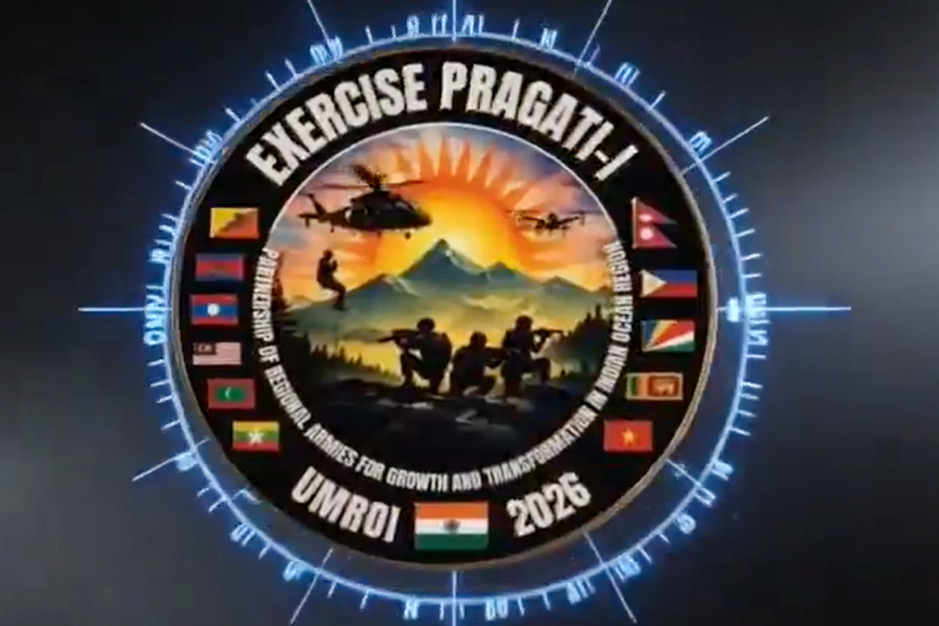
In a significant stride toward regional security and military cooperation, the Indian Army has launched the inaugural edition of its new multilateral military engagement, Exercise PRAGATI. Conducted at the Foreign Training Node in Umroi, Meghalaya, this platform marks a transformative chapter in India’s "Neighborhood First" and "SAGAR" (Security and Growth for All in the Region) initiatives.
Decoding PRAGATI: Scope and Scale
The name PRAGATI stands for "Partnership of Regional Armies for Growth and Transformation in the Indian Ocean." This acronym underscores the exercise's specific focus on the Indian Ocean Region (IOR), a strategically vital maritime corridor that handles a massive share of global trade.
- Host and Location: The exercise is hosted by the Indian Army at the specialized Foreign Training Node in Umroi. This location is renowned for providing a world-class environment for tactical maneuvers and joint planning.
- Participants: Military delegations from 11 friendly countries are participating alongside India, representing a diverse coalition of regional forces.
Core Objectives and Tactical Focus
Exercise PRAGATI is designed to move beyond traditional bilateral drills, focusing instead on Collective Security and the seamless integration of diverse military protocols.
- Interoperability: A primary goal is to enhance the ability of different armies to operate together effectively. This involves standardizing communication, tactical procedures, and joint command structures.
- Mutual Trust: By bringing together 11 nations, the exercise seeks to build a shared commitment to regional stability and foster trust among ground forces that may need to respond to shared threats.
- Growth and Transformation: As the name suggests, the drills focus on modernizing regional armies through the exchange of best practices, technological insights, and innovative combat strategies.
Strategic Significance for India
The launch of Exercise PRAGATI positions the Indian Army as a central pillar of cooperative security in the IOR.
- Defense Diplomacy: This inaugural edition signals India's intent to lead regional security discourse, moving from a passive observer to a proactive facilitator of multilateral defense partnerships.
- Indian Ocean Primacy: While much focus is often on naval cooperation in the IOR, PRAGATI highlights the critical role of land forces in maintaining regional stability, disaster response, and counter-terrorism.
- Geopolitical Balancing: By engaging 11 nations simultaneously, India strengthens its strategic ties and creates a unified front against non-traditional threats like piracy, smuggling, and regional insurgency.
TheridionHimalayana
- 30 Apr 2026
In News:
In a significant addition to India’s Himalayan biodiversity, a team of scientists, including experts from Odisha, has discovered a new species of spider named Theridionhimalayana. Found in the high-altitude landscapes of the Western Himalayas, this discovery highlights the ecological richness of the region and the complex evolutionary traits of the Theridiidae family.
Classification and Distinctive Features
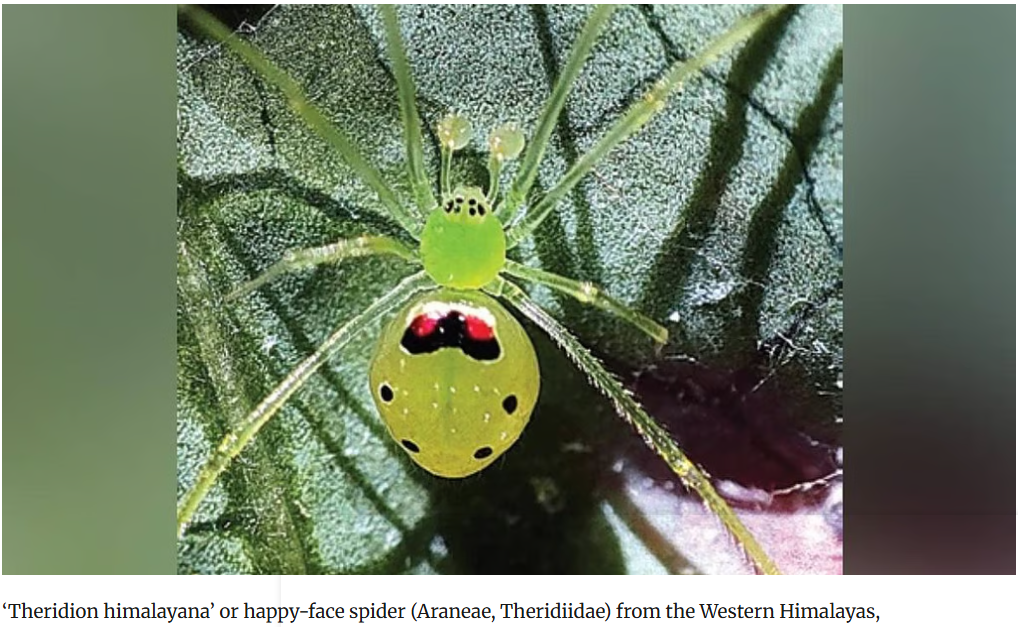
Theridionhimalayana is categorized as a "happy-face spider" due to the striking patterns on its abdomen that resemble a smiling human face. It belongs to the Theridiidae family, commonly known as cobweb spiders or tangle-web spiders.
1. Extreme Polymorphism
One of the most remarkable characteristics of this species is its polymorphism. Both males and females exhibit a vast array of physical variations.
- 32 Different Morphs: Scientists have identified 32 distinct color variations (morphs).
- Facial Patterns: These patterns consist of dots in shades of red, black, and white, arranged in different configurations to mimic a "smiling" appearance.
2. Unique Reproductive Anatomy
The species is distinguished from its relatives by its specialized reproductive structures:
- Copulatory Ducts: These are notably long and strongly curved. They project forward and run nearly parallel before bending downward at their distal ends.
- Fertilization Ducts: In contrast, these are short and thin, pointing upward and spreading apart in a characteristic V-shape.
Ecological Role and Importance
The discovery of Theridionhimalayana is not just a taxonomic milestone but also an indicator of forest health.
- Biological Pest Control: The species preys primarily on small flies and various forest insects. By maintaining the balance of these populations, it plays a vital role in natural insect control within the Himalayan ecosystem.
- Potential Pollinator: Preliminary observations suggest that the species may serve as a crucial pollinator for specific high-altitude plants, a role that is relatively rare among spiders and requires further research.
DPI@2047: NITI Aayog’s Strategic Blueprint for a Developed India
- 30 Apr 2026
In News:
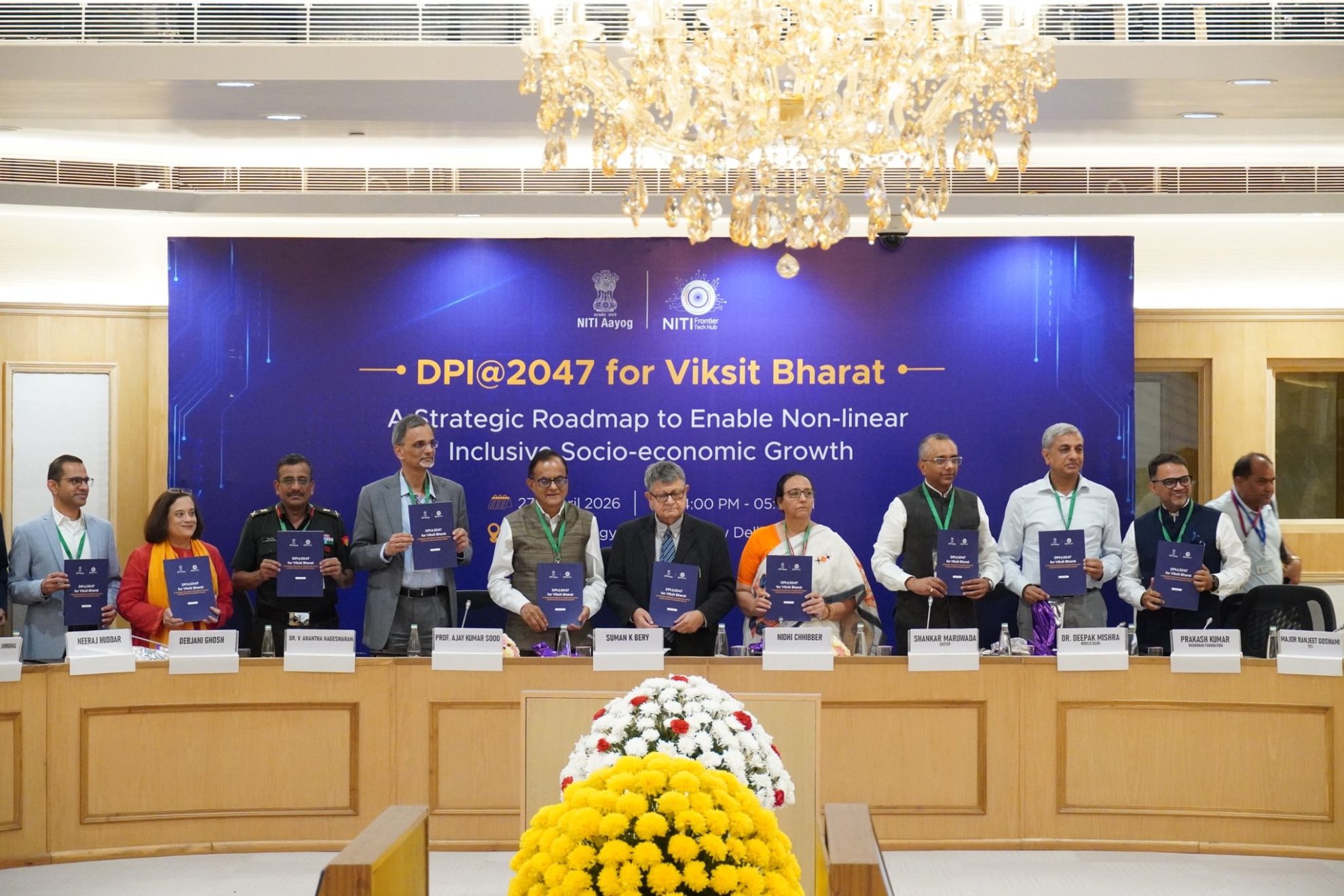
In a major step toward achieving the "Viksit Bharat" vision, NITI Aayog has launched the DPI@2047 Roadmap. Developed by the NITI Frontier Tech Hub (FTH) in collaboration with the EkStep Foundation and Deloitte, this strategic framework marks the evolution of India’s Digital Public Infrastructure (DPI).
The roadmap seeks to transition India from foundational digital inclusion (identity and payments) to a high-productivity, livelihood-led growth trajectory, aiming for a $30 trillion economy with a per capita income of $18,000 by 2047.
The Evolutionary Phasing: DPI 2.0 and 3.0
The roadmap adopts a two-phased approach to ensure non-linear, inclusive socio-economic growth:
Phase 1: DPI 2.0 (2025–2035) – "Realising Aspirations": This phase focuses on building a broad base of capable citizens by empowering livelihoods at scale. The objective is to move beyond mere welfare delivery and drive productivity in core sectors like MSMEs, agriculture, education, and healthcare. It aims to establish the mass inclusion required for a high-income society.
Phase 2: DPI 3.0 (2035–2047) – "Achieving Prosperity": The final phase envisions a compounding effect where grassroots innovation leads to sustained, high-value local economic growth across all regions. This phase will culminate in the realization of a developed India characterized by inclusive and widespread prosperity.
Core Pillars of the Roadmap
The DPI@2047 initiative rests on several strategic pillars designed to unlock economic potential:
- Mass Inclusion and Livelihoods: Expanding market access for MSMEs, improving job discovery for local talent, and enhancing the income of smallholder farmers.
- Human Capability Foundations: Achieving universal health coverage and implementing learner-centric education that utilizes local languages to eliminate learning inequities.
- Systemic Enablers: Democratizing access to credit through asset tokenization, enabling decentralized energy markets, and ensuring proactive, automated benefit delivery.
- AI-DPI Convergence: Integrating Artificial Intelligence as a "first-response assistant" to provide personalized, vernacular guidance to citizens, such as farmers and small business owners.
Economic Impact and Execution Imperatives
NITI Aayog projects that these DPI initiatives could contribute up to 4% of India’s GDP by 2030. To achieve this, the roadmap identifies four execution imperatives:
- Aggregating Demand: Using district-level programs to create a predictable pipeline for digital solutions.
- Scaling Entrepreneurship: Fostering a local ecosystem of tech entrepreneurs.
- Leveraging AI: Using AI to bridge knowledge gaps and language barriers.
- Strategic Unlocks: Utilizing open networks to expand digital transactions and unlocking data for actionable insights.
Addressing Structural Bottlenecks
Despite the potential, the roadmap identifies several challenges that must be navigated:
- Fragmented Ecosystems: A shortage of local entrepreneurs ready to meet new digital demands.
- Implementation Sinks: The risk of creating "technology looking for a problem" rather than market-driven solutions.
- Platform Dependency: Walled-garden models that exclude small providers from larger value chains.
- Knowledge Gaps: The difficulty for citizens to navigate complex digital procedures in their native languages.
Strategic Recommendations for Implementation
To ensure the success of the roadmap, NITI Aayog recommends a decentralized, state-led execution model. Solutions should be hyper-localized and context-specific, driven by states and districts.
The Aayog suggests two-year iterative transformation cycles, beginning with MSMEs and Agriculture in 2026-2027. Furthermore, India aims to establish a neutral global body by 2027 to lead international collaboration and showcase its successful DPI models to the world.