
Hubble Tension

- 17 Apr 2026
In News:
The quest to determine the rate at which our universe is expanding is currently facing a significant scientific bottleneck known as the Hubble Tension. Recent high-precision observations have narrowed the local expansion rate to approximately 73.5 km/s/Mpc, further intensifying a debate that suggests our standard model of cosmology may be incomplete.
Historical Context: Hubble’s Law
In 1929, Edwin Hubble revolutionized our understanding of the cosmos by establishing a quantitative relationship between a galaxy’s distance and its recessional velocity. This principle, known as Hubble’s Law, provided the foundational evidence that the universe is not static but is continuously expanding. The rate of this expansion is captured by a value called the Hubble Constant (H0).
The Core Conflict: Two Paths, Two Results
The "tension" arises because the two primary methods used to calculate the Hubble Constant yield results that are statistically incompatible, despite both being highly precise.
1. The Local Measurement (Late Universe)
This approach utilizes the Cosmic Distance Ladder. Astronomers observe "standard candles"—objects with known luminosity such as pulsating Cepheid stars and Type Ia supernovae. These measurements of the "nearby" universe indicate a faster expansion rate of roughly 73 to 73.5 km/s/Mpc. Recent data from April 2026 has confirmed these figures using multiple cross-validation methods, making the data incredibly robust.
2. The Early Universe Measurement
Scientists analyze the Cosmic Microwave Background (CMB), which is the relic radiation left over from the Big Bang. By applying mathematical models of the early universe's physics, they project this ancient data forward to the present day. This "top-down" approach predicts a significantly slower expansion rate of approximately 67 km/s/Mpc.
Key Discrepancies at a Glance
- The Gap: The difference between the 73.5 km/s/Mpc (Local) and 67 km/s/Mpc (Early Universe) values is what physicists call the Tension.
- Data Source Differences: The Local method relies on direct observation of nearby stars and explosions, while the Early Universe method relies on radiation from the dawn of time projected through mathematical modeling.
- Inference vs. Observation: The local rate is an observation of how the universe behaves now, whereas the CMB rate is an inference of how it should behave based on its state 13.8 billion years ago.
Significance
The persistence of this gap is not merely a mathematical quirk; it represents a potential "crisis in cosmology." If neither side has made a measurement error, the discrepancy implies deep challenges for our current scientific framework:
- Incomplete Physics: The current Standard Model of Cosmology may be missing critical components that explain how the expansion rate changed over time.
- New Physics: There might be undiscovered properties of Dark Energy or Dark Matter driving expansion differently than predicted by current Einsteinian gravity.
- Evolution of Gravity: Our understanding of how gravity operates over cosmic timescales and vast distances may require a fundamental revision.
Physicists are currently investigating whether this mismatch is the result of a subtle systematic error or the first hint of a "new physics" that could reshape our understanding of the origin and ultimate fate of the universe.
Memristors
- 17 Apr 2026
In News:
In a significant leap for Neuromorphic Computing, researchers from the University of Cambridge have developed a new type of nanodevice—a hafnium-oxide memristor. Published in Science Advances (2026), this innovation promises to slash the energy consumption of Artificial Intelligence (AI) by over 70%, addressing one of the most critical sustainability challenges of the digital age.
What is a Memristor?
The term ‘Memristor’ is a portmanteau of “memory” and “resistor.” It is the fourth fundamental circuit element (alongside the resistor, capacitor, and inductor), first theorized by Leon Chua in 1971 and physically realized by HP Labs in 2008.
- Core Function: Unlike a standard resistor which has a fixed resistance, a memristor has a variable resistance that depends on the history of the electric current that has passed through it.
- The "Memory" Aspect: Even when the power is turned off, the memristor "remembers" its last resistance state. This makes it a non-volatile device, meaning it retains information without needing a continuous power supply.
The Cambridge Breakthrough: Hafnium-Oxide Memristors
While memristors traditionally used titanium dioxide (TiO2), the Cambridge team utilized Hafnium Oxide (HfO2), a material already common in the semiconductor industry.
Key Innovations:
- Shift from Filaments to Interfaces: Older memristors relied on "conductive filaments" that were often unpredictable and unstable. The new device uses p-n junctions (electronic gates) created by adding strontium and titanium. This allows for smooth, uniform resistance changes.
- Ultra-Low Power: It operates at switching currents nearly a million times lower than conventional oxide-based devices.
- Analogue Capability: Unlike binary systems (0 and 1), these memristors can achieve hundreds of distinct conductance levels, allowing for analogue "in-memory" computing.
Why is this relevant for AI?
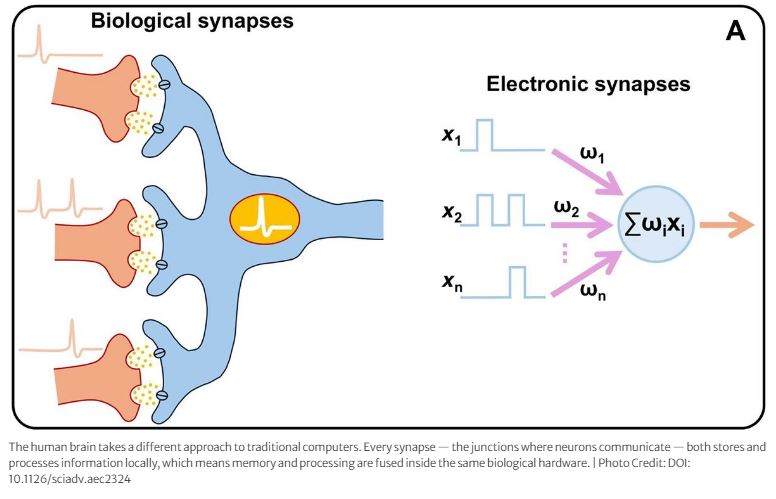
Current computer architecture (Von Neumann architecture) separates the Processing Unit (CPU) from the Memory (RAM). In AI tasks, moving massive amounts of data back and forth between these two units creates a "bottleneck" that consumes enormous energy.
- Mimicking the Brain: In the human brain, neurons and synapses both process and store information in the same place.
- Synaptic Plasticity: The new memristor replicates Spike-Timing-Dependent Plasticity (STDP)—the mechanism where biological connections strengthen or weaken based on the timing of signals.
- Efficiency: By performing "In-Memory Computing," memristors eliminate the energy-intensive data shuffling, making AI hardware significantly more efficient.
Applications and Significance
- Sustainable AI: As global demand for AI (like ChatGPT and Large Language Models) explodes, memristors can prevent an energy crisis in data centers.
- Edge Computing: Their small size and low power demand make them ideal for "Edge devices" like smartphones, sensors, and wearable medical tech that need to process AI locally without draining batteries.
- Internet of Things (IoT): Enables smart devices to "learn" and adapt to user patterns autonomously.
- Industrial Automation: Reliable Non-Volatile RAM (NVRAM) for systems that cannot afford data loss during power failures.
Challenges to Overcome
Despite the promise, commercialization faces hurdles:
- Thermal Constraints: Current fabrication requires temperatures of 700°C, which is higher than what standard silicon chip manufacturing (CMOS) can typically tolerate.
- Scalability: Moving from laboratory prototypes to mass-produced integrated circuits (ICs) requires further refinement of the material layers.
CAR-T Cell Therapy
- 17 Apr 2026
In News:
In a landmark medical achievement reported in early 2026, scientists successfully utilized Chimeric Antigen Receptor (CAR) T-cell therapy to treat a patient suffering from three concurrent, life-threatening autoimmune diseases. This patient, who had remained resistant to traditional treatments for years, entered remission, marking a paradigm shift in how "living drugs" can be used beyond oncology.
What is CAR-T Cell Therapy?
CAR-T cell therapy is an advanced form of immunotherapy and gene therapy that re-engineers a patient’s own immune system to target specific diseased cells.
- The Component Cells: It focuses on T-lymphocytes (T cells), a type of white blood cell responsible for identifying and destroying foreign pathogens and abnormal cells.
- The "Chimeric" Aspect: In a laboratory, these T cells are genetically modified to produce synthetic proteins called Chimeric Antigen Receptors (CARs). These receptors act like "navigation systems," allowing T cells to recognize and bind to specific antigens (proteins) on the surface of target cells.
Mechanism of Action: The Step-by-Step Process
The production and administration of CAR-T cells involve a highly sophisticated multi-step process:
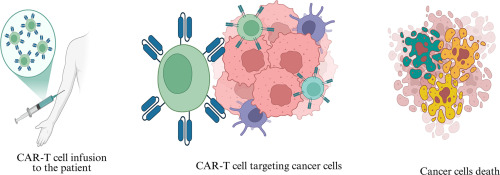
- Leukapheresis: T cells are extracted from the patient’s blood through a specialized filtering process.
- Genetic Engineering: Using viral vectors, the gene for the synthetic CAR receptor is inserted into the T cells.
- Expansion: The modified CAR-T cells are grown in large quantities in a laboratory setting.
- Infusion: The "supercharged" cells are infused back into the patient’s bloodstream.
- Targeted Destruction: The CAR-T cells identify the target antigens, bind to them, and trigger a lethal immune response against the diseased cells. Unlike traditional drugs, these cells can continue to multiply in the body, providing long-term surveillance.
Expanding Horizons: From Oncology to Autoimmunity
Traditionally, CAR-T therapy has been the last line of defense for specific B-cell malignancies (blood cancers), including:
- B-cell Acute Lymphoblastic Leukemia (ALL)
- Multiple Myeloma
- Various types of Lymphoma (Follicular, Mantle cell, and Diffuse large B-cell).
The 2026 Breakthrough:
Autoimmune diseases occur when the immune system mistakenly attacks healthy tissues. By programming CAR-T cells to eliminate the specific B-cells producing "auto-antibodies," doctors have successfully induced remission in patients with multiple systemic autoimmune conditions simultaneously. This offers hope for treating diseases like Lupus, Scleroderma, and Myositis where standard immunosuppressants fail.
Challenges and Adverse Effects
Despite its revolutionary potential, CAR-T therapy is associated with significant clinical risks that require intensive monitoring:
- Cytokine Release Syndrome (CRS): A severe immune overreaction leading to hyperinflammation, high fever, and potential organ damage. Clinical data indicates this occurs in approximately 12% of cases.
- Hematological Toxicity: * Neutropenia: Low neutrophil count (seen in 96% of participants), which drastically increases the risk of life-threatening infections.
- Thrombocytopenia: Low platelet count (reported in 65% of patients), raising the risk of internal bleeding.
- Anemia: Low red blood cell count (reported in 61% of participants), causing extreme fatigue.
- Cost and Accessibility: As a personalized "living drug," the therapy remains prohibitively expensive and requires specialized infrastructure found only in advanced tertiary care centers.
Significance for India
India has recently entered the CAR-T space with the indigenous NexCAR19 (developed by IIT Bombay and Tata Memorial Hospital). The expansion of this technology into autoimmune treatment is significant for India’s healthcare landscape, as it could eventually provide a one-time "cure" for chronic conditions that currently require lifelong, expensive medication.
First Semiconductor Fab in India

- 17 Apr 2026
In News:
In a historic milestone for India’s technological sovereignty, the Government officially notified the establishment of the country’s first semiconductor fabrication plant (Fab) at Dholera, Gujarat. This facility, spearheaded by Tata Semiconductor Manufacturing Private Limited (TSMPL), is situated within a newly designated Special Economic Zone (SEZ). This move transitions India from the "back-end" of the value chain (assembly and testing) to the "front-end" of core chip manufacturing, marking a decisive shift toward Aatmanirbhar Bharat in electronics.
Understanding Semiconductor Fabrication ("The Fab")
A semiconductor "Fab" is among the most complex and capital-intensive manufacturing environments globally.
- The Process: It involves producing integrated circuits (microchips) on ultra-pure silicon wafers. Key stages include photolithography (etching circuits), doping (altering electrical properties), and metallization (interconnecting transistors).
- Environment: Fabrication occurs inside Class 1 Cleanrooms, where air is thousands of times cleaner than a hospital operating room to prevent even a speck of dust from ruining a circuit.
- Utility: These chips power everything from basic consumer electronics and automobiles to advanced AI systems, defense hardware, and telecommunications.
Strategic Significance: India Semiconductor Mission (ISM) 2.0
The Dholera Fab is a centerpiece of the India Semiconductor Mission 2.0, which aims to build a comprehensive, full-stack domestic ecosystem.
- Investment & Employment: With a proposed investment of approximately ?91,000 crore, the project is expected to generate 21,000 high-skilled jobs in electronic hardware, software, and IT/ITeS.
- Reducing Import Dependence: Currently, India’s semiconductor market is projected to reach $100–110 billion by 2030. Domestic fabrication is essential to reduce the $20 billion annual import bill for chips.
- Technological Sovereignty: ISM 2.0 focuses on advancing toward 3nm and 2nm technology nodes by 2035, ensuring India is not just a consumer but a global supplier.
Policy Enablers: 2025 SEZ Rule Amendments
To attract the multi-billion dollar investments required for semiconductors, the Ministry of Commerce and Industry introduced landmark amendments to the SEZ Rules, 2006 in June 2025.
|
Reform Feature |
Previous Provision |
Amended Provision (2025) |
|
Minimum Land |
50 Hectares |
Reduced to 10 Hectares (for semiconductor/electronics SEZs). |
|
NFE Calculations |
Restricted inputs |
Inclusion of free-of-cost supplies in Net Foreign Exchange (NFE) calculations. |
|
Domestic Sales |
Restricted/Complex |
Permitted sales in the Domestic Tariff Area (DTA) upon payment of duties. |
|
Encumbrance Norms |
Strict "encumbrance-free" |
Flexibility allowed if land is mortgaged/leased to Government agencies. |
The Dholera Special Investment Region (SIR) Advantage
Dholera was chosen due to its "plug-and-play" infrastructure, essential for the high-precision requirements of a Fab:
- Utilities: Dedicated supply of ultra-pure water and uninterrupted high-voltage power.
- Logistics: Proximity to the Dholera International Airport and the Delhi-Mumbai Industrial Corridor (DMIC).
- Cluster Effect: The SEZ spans 66.166 hectares, creating a hub for ancillary industries like chemicals, gases, and specialized machinery manufacturing.
State of India’s Bats Report
- 17 Apr 2026
In News:
The first-ever national assessment, "State of India’s Bats (2024–25)," was recently released by experts from the Nature Conservation Foundation and Bat Conservation International. The report paints a concerning picture of declining populations and "data dark spots," urging a policy shift to protect these nocturnal mammals that are vital for both environmental stability and public health.
Biodiversity and Endemism
India serves as a significant hub for chiropteran (bat) diversity in the Global South.
- Species Count: India is home to approximately 135 bat species.
- Endemism: Out of these, 16 species are endemic to the region, meaning they are found nowhere else in the world.
- Conservation Status:
- 7 species are currently classified as "Threatened" by the IUCN.
- 35 species remain "Data Deficient" or unassessed, highlighting a critical knowledge gap that hinders effective conservation planning.
- A specific concern was raised regarding the Khasian Leaf-nosed bat, which faces severe pressure from mining and hunting but remains under-classified in terms of protection.
Ecological Functions: The "Silent Providers"
- Pollination: Many bats are primary pollinators for economically significant plants, including durian, agave, and various wild fruit trees.
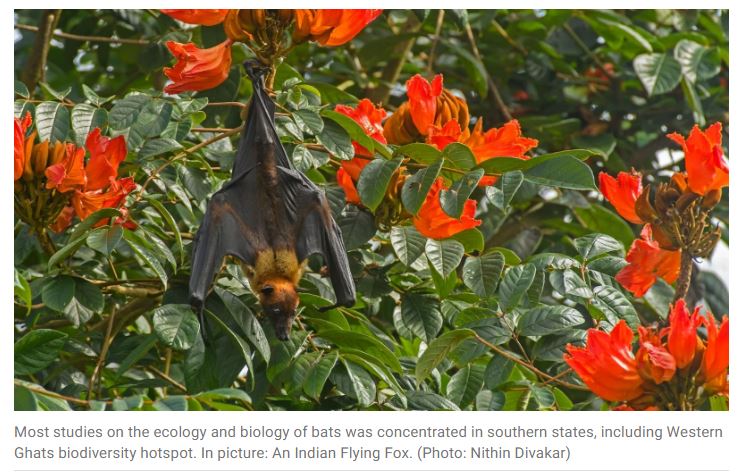
- Seed Dispersal: Fruit bats (Megachiroptera) play a pivotal role in "reforesting" degraded lands by dispersing seeds over vast distances.
- Pest Control: Insectivorous bats act as natural biopesticides, consuming massive quantities of insects that would otherwise destroy crops, thereby reducing the need for chemical fertilizers.
- Nutrient Cycling: Bat droppings, or guano, are rich in nitrogen and phosphorus, serving as high-quality natural fertilizer for cave and forest ecosystems.
Critical Habitats and Roosting Patterns
Bats are highly selective about their roosting sites, which provide stable microclimates and safety from predators.
- Types of Roosts: Caves, old-growth trees, and historical man-made structures like abandoned buildings and monuments.
- Significant Sites: The report identifies Robber’s Cave in Mahabaleshwar as a site of national importance, hosting one of the largest known roosts of Phillip’s long-fingered bat.
- Threats to Habitats: Urbanization, the demolition of old structures, and mining in karst (limestone) landscapes are destroying these sensitive micro-environments.
Challenges and "Data Dark Spots"
The assessment highlights that the biggest hurdle to bat conservation in India is not just habitat loss, but a lack of scientific data.
- Bureaucratic Hurdles: Researchers often face significant delays in obtaining permissions for field studies, contributing to the "data deficiency" of over 35 species.
- The "Stigma" Factor: Post-COVID-19, bats have been unfairly demonized. While they are linked to certain zoonotic diseases, the report emphasizes that the risk of spillover increases only when humans encroach upon bat habitats, not through the bats' natural existence.
- Anthropogenic Pressures: Land-use changes, deforestation, and the impacts of climate change are altering the migration and hibernation patterns of several species.