
Mount Semeru
- 09 Apr 2026
In News:
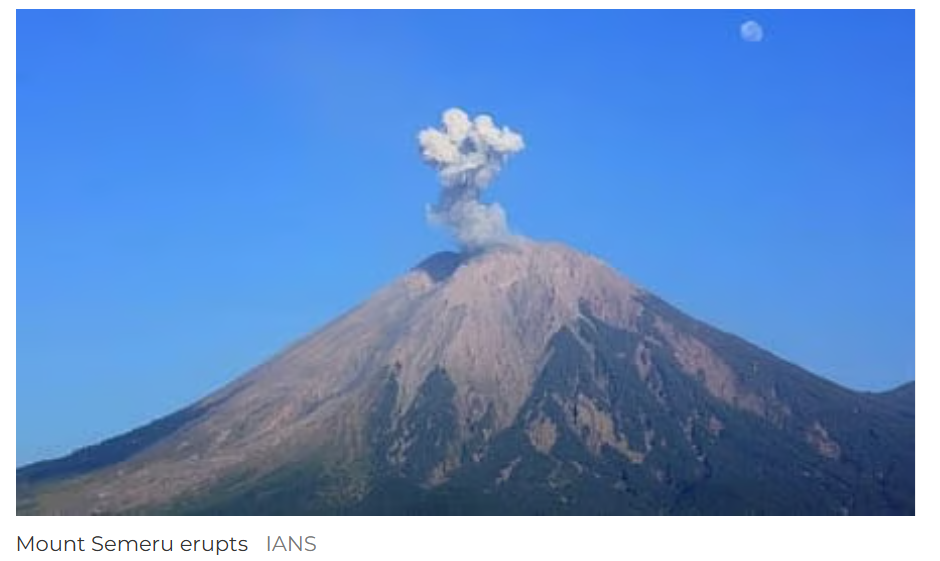
In early 2026, Mount Semeru, one of Indonesia’s most volatile volcanoes, underscored its reputation by erupting repeatedly, propelling thick ash columns up to 1,100 metres above its summit. This recent activity is a stark reminder of the geological instability inherent in the Indonesian archipelago, a region that sits at the crossroads of major tectonic movements.
Geographical and Topographical Profile
Mount Semeru, affectionately known as Mahameru ("The Great Mountain"), is a landmark of the Indonesian landscape.
- Location: It is situated in East Java, Indonesia.
- Peak Altitude: Standing at 3,676 metres (12,060 feet), it holds the title of the highest peak on Java Island.
- Morphology: It is a stratovolcano located at the southern terminus of a volcanic massif that extends northward to the Tengger caldera. Its summit is characterized by complex topography due to the historical shifting of craters from the Northwest (NW) to the Southeast (SE).
The Tectonic Engine: Why It Erupts
Semeru’s frequent activity is the result of its position in one of the world's most active geological zones.
- Subduction Dynamics: The volcano is positioned within a subduction zone, where the Indo-Australian Plate is being forced beneath the Eurasian Plate. This process generates intense heat and pressure, melting the mantle and creating magma that rises to the surface.
- Pacific Ring of Fire:Semeru is a critical link in the Pacific Ring of Fire, a horseshoe-shaped belt in the Pacific Ocean basin where a large majority of the world's earthquakes and volcanic eruptions occur due to the continuous movement of continental and oceanic plates.
Eruption Patterns and Historical Context
Semeru is classified as one of Indonesia’s most active volcanoes, with a documented history of eruptions spanning over 200 years.
- Frequent Activity: It is famous for its "Strombolian" style of regular ash explosions, which historically occur at frequent intervals of 10 to 30 minutes.
- Hazards: Beyond ash fall, Semeru is notorious for producing Lahars (volcanic mudflows) and pyroclastic flows (fast-moving clouds of hot gas and volcanic matter), which pose significant risks to the densely populated agricultural plains of East Java.
Arogya Van Initiative
- 09 Apr 2026
In News:
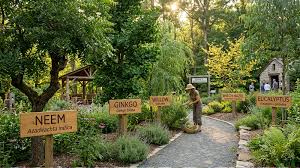
In a significant move toward ecological sustainability and environmental health, the National Highways Authority of India (NHAI), under the aegis of the Ministry of Road Transport & Highways (MoRTH), has launched the ‘Arogya Van’ initiative. This program seeks to utilize vacant land parcels along National Highways (NH) for the development of thematic medicinal tree plantations, moving beyond traditional landscaping to functional, biodiversity-rich green belts.
Core Objectives and Vision
The Arogya Van initiative is designed to create "Health Forests" along the country's transit arteries. Its primary goals include:
- Biodiversity Enrichment: By introducing diverse medicinal tree species, the initiative aims to create habitats for pollinators (bees, butterflies), birds, and microfauna.
- Ecosystem Resilience: The systematic planting of native and medicinal species strengthens the local environment's ability to withstand climate stressors and pollution.
- Productive Land Use: It transforms idle or vacant government land into productive ecological assets.
Implementation Strategy: Phase-I
The NHAI has formulated a structured action plan for the inaugural phase of the project, focusing on geographical diversity and scientific selection.
- Geographic Coverage: The first phase targets 17 land parcels across several states, including:
- North & West: Delhi-NCR, Haryana, Rajasthan, Gujarat, and Maharashtra.
- Central: Madhya Pradesh and Chhattisgarh.
- South & East: Andhra Pradesh, Karnataka, Tamil Nadu, and Odisha.
- Site Selection: Priority is given to high-visibility and strategic locations such as toll plazas, wayside amenities, cloverleaf junctions, interchanges, and prominent highway stretches.
- Agro-Climatic Customization: Tree species are not chosen randomly; they are identified based on their established medicinal properties and their suitability to the specific agro-climatic zone of the site to ensure high survival rates.
Exercise Cyclone-IV

- 09 Apr 2026
In News:
The 4th edition of the joint military exercise Cyclone-IV is being conducted between the Indian Army and the Egyptian Army. Taking place at Anshas, Egypt, this exercise marks a critical milestone in the bilateral defense cooperation between the two ancient civilizations, specifically focusing on the capabilities of their elite Special Forces.
Evolution and Operational Scope
Exercise Cyclone is a relatively young but high-impact bilateral maneuver that began in 2023. It is designed to alternate annually between India and Egypt to ensure familiarity with diverse geographical terrains.
- The 2026 Contingent: The Indian Army is represented by its premier Special Forces units, training alongside their counterparts from the Egyptian Special Forces.
- Core Philosophy: The exercise is built on the exchange of Tactics, Techniques, and Procedures (TTPs), moving beyond basic drills to complex, high-stakes joint planning.
Strategic Objectives and Training Focus
The curriculum of Cyclone-IV is tailored to address modern unconventional security threats:
- Counter-Terrorism (CT): Rehearsing the neutralization of terrorist threats within dense urban and semi-urban environments, a shared security concern for both nations.
- Specialized Combat Skills: The drills include sniper-based operations, long-range reconnaissance, and Tactical Combat Casualty Care (TCCC) to ensure medical resilience during active firefights.
- Arid Terrain Expertise: Given the vast desert landscapes of Egypt and Northern India, a primary focus remains on Desert Warfare, including survival, navigation, and combat in extreme heat and sandy conditions.
The Broader Strategic Context
The military synergy between New Delhi and Cairo is not an isolated event but a key pillar of the India-Egypt Strategic Partnership signed in January 2023.
- Geopolitics: Egypt is a "swing state" in the Arab world and a gateway to both Africa and Europe via the Suez Canal. Strengthening ties aligns with India’s West Asia Policy and its desire to be a "Net Security Provider" in the Indian Ocean Region and beyond.
- Other Joint Engagements:
- Exercise Desert Warrior: A bilateral exercise involving the Air Forces of both nations.
- Exercise Bright Star: A multilateral tri-service exercise hosted by Egypt, in which India has become a regular high-profile participant.
New Archaeological Discoveries at Elephanta Island
- 09 Apr 2026
In News:
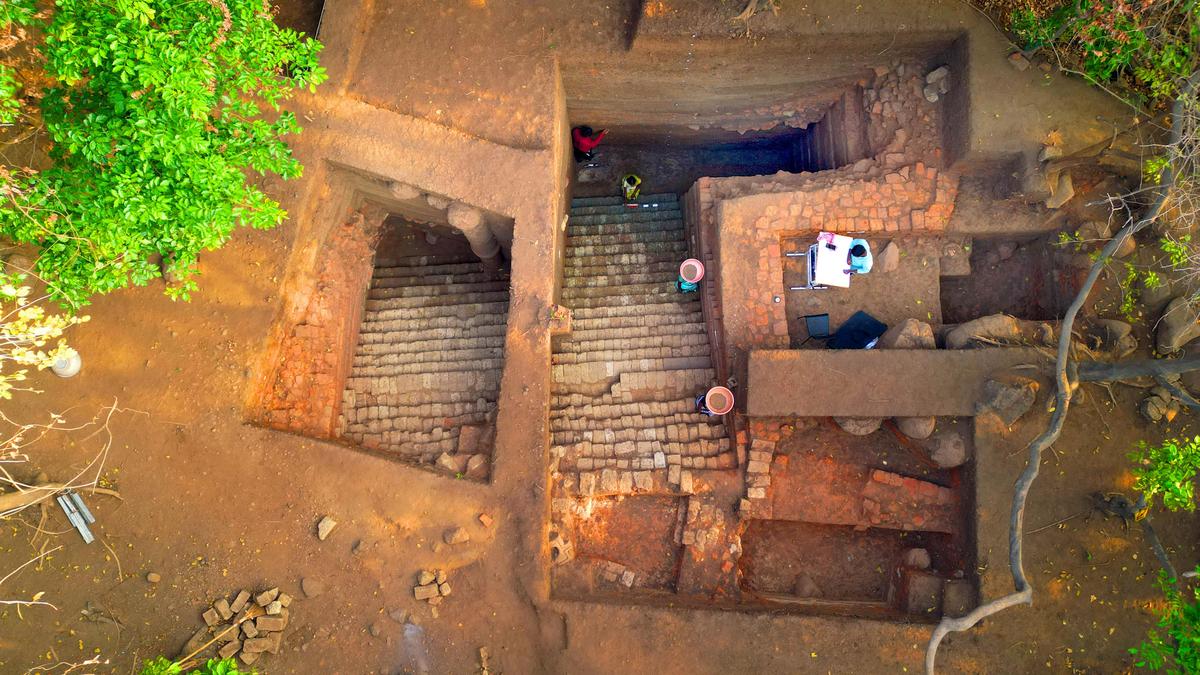
Recent excavations by the Archaeological Survey of India (ASI) have unearthed a sophisticated 1,500-year-old stepped reservoir on Elephanta Island (historically known as Gharapuri).
Advanced Water Management: The Stepped Reservoir
The centerpiece of the discovery is a massive T-shaped stepped reservoir dating back approximately 1,500 years.
- Engineering Excellence: The structure features 20 precisely aligned stone steps. Remarkably, the basalt blocks used for construction were not native to the island; they were transported from the mainland, indicating a highly organized labor and logistics system.
- Functional Design: The reservoir was engineered to capture and store monsoon runoff on the island’s naturally rocky and sloped terrain, ensuring a year-round water supply for a growing settlement or a busy port.
Numismatic Evidence and Chronology
The excavation yielded approximately 60 coins made of copper, lead, and silver, providing a clear chronological framework for the site.
- The Kalachuri Connection: Several copper coins belong to King Krishnaraja of the Kalachuri dynasty (6th century CE).
- Iconography: These coins feature a distinctive seated bull motif (Nandi) on the obverse and a temple symbol with the legend "Sri Krishnaraja" on the reverse. This confirms the political influence of the Kalachuris over the Konkan coast during this period.
A Global Maritime Hub
The findings firmly establish Elephanta Island as a crucial node in the Ancient Indian Ocean Trade.
- Mediterranean Links: Archaeologists discovered nearly 3,000 amphorae sherds (pottery used for transporting wine or oil) of Mediterranean origin, indicating direct or indirect trade links with the Roman Empire.
- West Asian Ties: The presence of torpedo jars from West Asia (Mesopotamia/Persia) suggests the island functioned as a transshipment point for goods moving between the Gulf and the Indian hinterland as early as the 2nd century CE.
- The Port Triad: Historically, the island operated through three distinct port localities: Morabandar, Rajbandar, and Shethbandar, each likely serving different mercantile functions.
Industrial and Cultural Landscape
Beyond trade, the island was a center of production and sophisticated lifestyle:
- Textile Industry: The discovery of a brick structure, identified as a possible dyeing vat, suggests that the island was involved in textile processing—a major export commodity for ancient India.
- Material Culture: Recoveries of carnelian and quartz beads, glass and stone bangles, and terracotta figurines reflect a vibrant local craft tradition and an affluent resident population.
Designated Repositories
- 09 Apr 2026
In News:
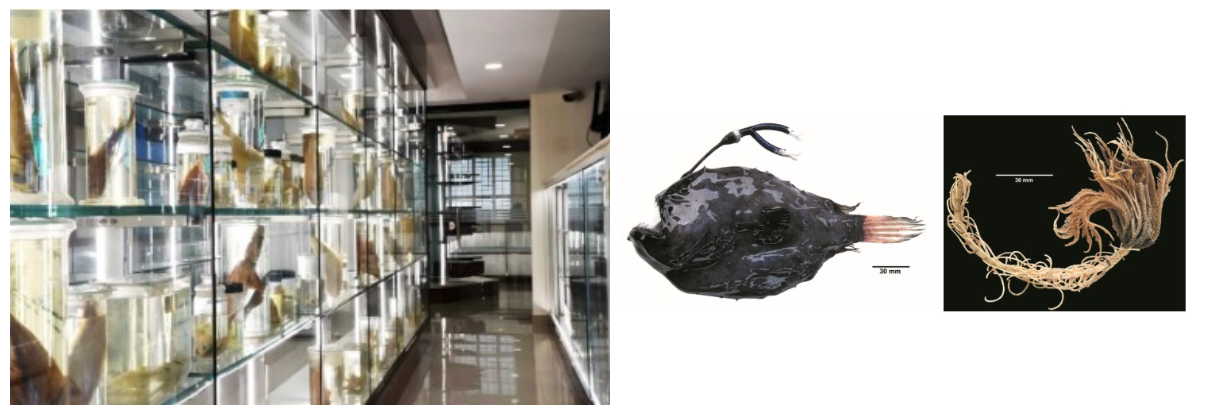
In a strategic move to bolster India’s conservation framework, the National Biodiversity Authority (NBA), in collaboration with the Ministry of Environment, Forest and Climate Change (MoEFCC), has notified two new institutions as Designated Repositories. This expansion under the Biological Diversity Act (BDA), 2002, reflects India's commitment to the systematic documentation and safe custody of its vast genetic and biological wealth.
The New Additions to the National Network
The notification brings two specialized research centers into the national fold, taking the total number of designated repositories in India to 20.
- Referral Centre Bhavasagara (CMLRE, Kochi): Located at the Centre for Marine Living Resources and Ecology, this center specializes in marine biological resources, critical for India's "Blue Economy" ambitions.
- MACS Collection of Microorganisms & National Fungal Culture Collection (ARI, Pune): Housed at the Agharkar Research Institute, this repository focuses on microbial and fungal diversity, essential for biotechnological and agricultural innovation.
Statutory Framework: Repositories under Section 39
Under Section 39 of the Biological Diversity Act, 2002, the Central Government is empowered to designate specific institutions as repositories for different categories of biological resources.
- Mandate: These institutions are entrusted with the safe custody of biological materials. They ensure that samples are preserved under rigorous scientific conditions.
- Legal Obligation for Discovery: A key provision of the Act requires any person discovering a new taxon (a new species or group) to notify and deposit samples with the designated repository.
- Accessibility: Beyond preservation, these centers act as libraries of life, making biological materials accessible for legitimate research, innovation, and intellectual property claims.
The National Biodiversity Authority (NBA): An Overview
The NBA serves as the apex body overseeing the implementation of the BDA, 2002.
- Nature: A statutory and autonomous body established in 2003, headquartered in Chennai.
- Core Functions: It performs advisory, regulatory, and facilitative roles regarding the conservation of biological diversity, sustainable use of its components, and the Fair and Equitable Sharing of Benefits (ABS) arising from the use of biological resources.
- Three-Tier Structure: The Act mandates a decentralized decentralization model to ensure grassroots participation:
- National Level: National Biodiversity Authority (NBA).
- State Level: State Biodiversity Boards (SBBs).
- Local Level: Biodiversity Management Committees (BMCs) at the village/local body level.