
Dhvani Hypersonic Missile
- 03 Nov 2025
In News:
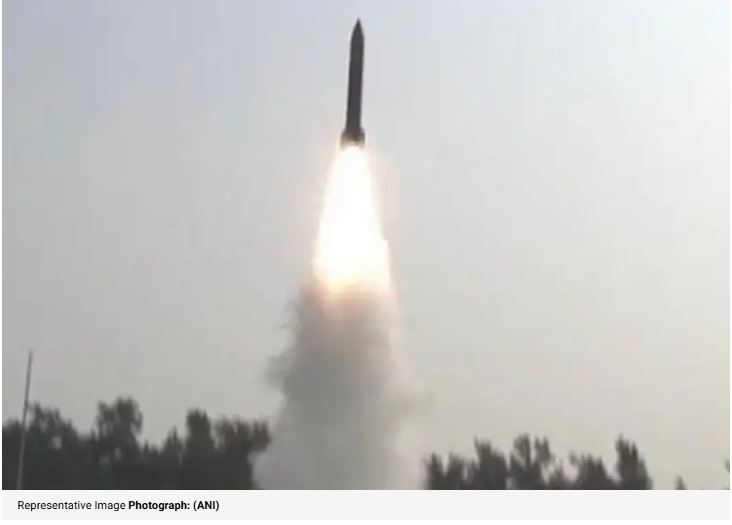
The Defence Research and Development Organisation (DRDO) is preparing for the first test of Dhvani, India’s next-generation hypersonic missile system. Its development marks a major advancement in India’s indigenous strategic and aerospace capabilities, placing the country among a select group working on Hypersonic Glide Vehicle (HGV) technology.
What is Dhvani?
- Dhvani is an upcoming hypersonic missile being developed by DRDO.
- It is designed as a Hypersonic Glide Vehicle (HGV), enabling high-speed, maneuverable flight at hypersonic speed (greater than Mach 5 or approx. 7,400 km/h).
- The system departs from conventional ballistic or cruise missile trajectories by:
- Being launched to very high altitudes, and
- Then gliding at hypersonic speeds toward the target with significant maneuvering capability.
This flight profile complicates detection and interception by most existing missile defence systems.
Key Technical Features
1. Speed & Range
- Expected to fly at Mach 5–6+.
- Estimated operating range: 6,000–10,000 km (long-range strategic class).
2. Hypersonic Glide Vehicle Design
- Blended wing–body configuration
- Approx. 9 m length
- Approx. 2.5 m width
- Optimized for lift generation and maneuverability during hypersonic glide.
3. Thermal Protection System
- Uses ultra-high-temperature ceramic composites.
- Can withstand 2,000–3,000°C generated during atmospheric re-entry and sustained hypersonic flight.
4. Stealth Features
- Stealth-shaped geometry with:
- Angled surfaces
- Smooth contours
- Intended to reduce radar cross-section (RCS) and enhance survivability against surveillance systems.
5. Guidance & Precision: Designed to strike both land and maritime targets with high accuracy.
Technology Background
- Dhvani builds on technologies proven in the Hypersonic Technology Demonstrator Vehicle (HSTDV), including:
- Scramjet propulsion research
- Thermal shielding systems
- High-temperature material development
The success of HSTDV provided DRDO the platform to develop operational HGV systems such as Dhvani.
Exercise MILAN
- 03 Nov 2025
In News:
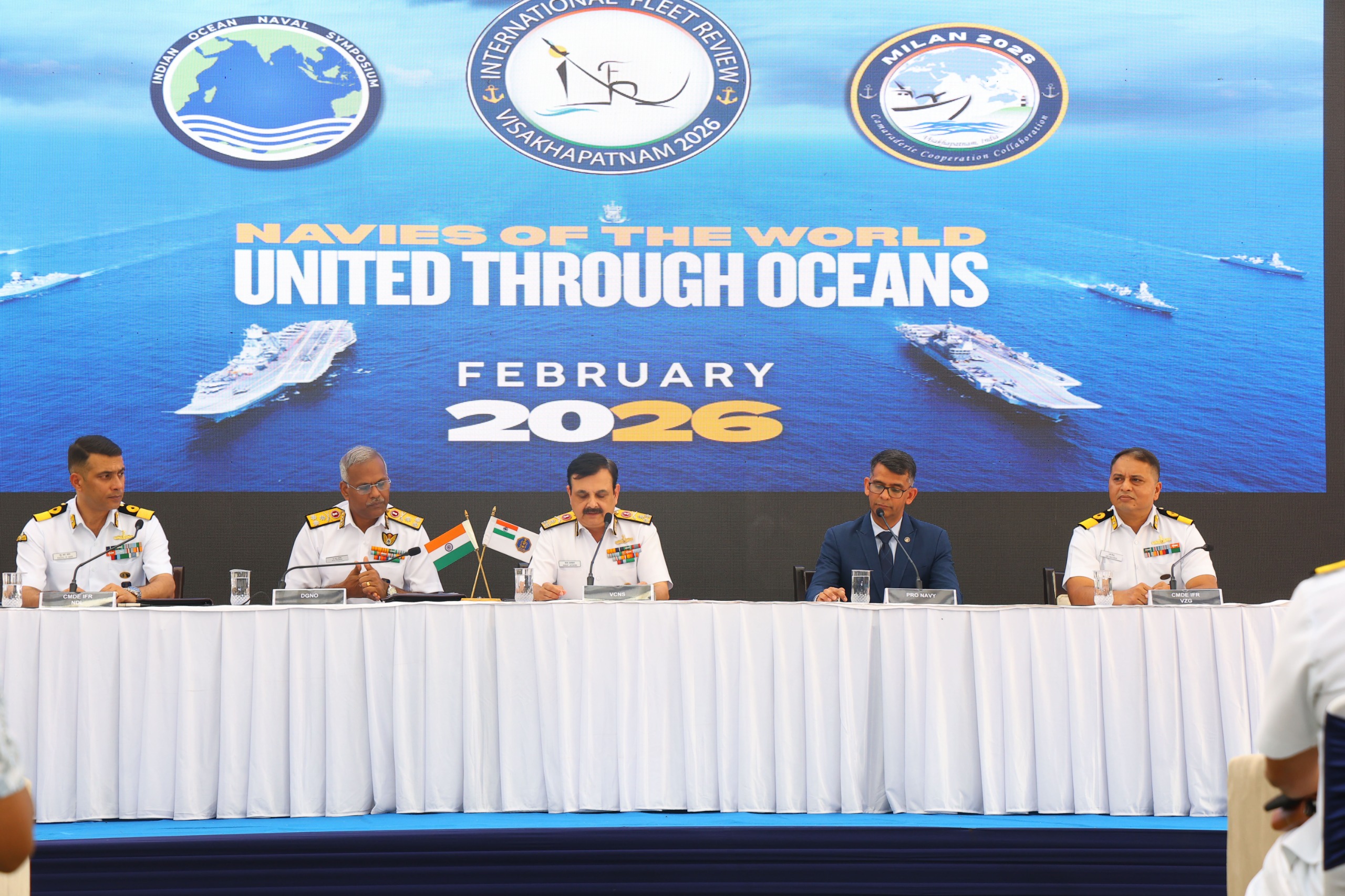
India will host a historic maritime convergence from 15–25 February 2026 at Visakhapatnam, featuring three major international naval events conducted simultaneously for the first time:
- International Fleet Review (IFR) 2026
- Exercise MILAN 2026
- IONS Conclave of Chiefs (2025–27 Chairmanship)
The event operationalises the MAHASAGAR vision (Mutual and Holistic Advancement for Security and Growth Across Regions), announced in 2025, extending India's SAGAR doctrine from the Indian Ocean to wider maritime regions.
About Exercise MILAN
Background
- Biennial multilateral naval exercise launched in 1995 at Port Blair.
- Started with four participants — Indonesia, Singapore, Sri Lanka & Thailand.
- Has evolved into India’s largest naval exercise, reflecting the Act East Policy and SAGAR/MAHASAGAR frameworks.
Objectives
- Strengthen interoperability, maritime domain awareness, and naval diplomacy.
- Promote cooperation on maritime security, HADR, and regional stability.
MILAN 2026 Features
- Dual-phase format:
- Harbour Phase: Briefings, professional exchanges, cultural events.
- Sea Phase:
- Anti-submarine warfare (ASW)
- Air defence drills
- Search and rescue (SAR)
- Maritime domain awareness operations
- International City Parade at RK Beach with contingents from:
- Participating navies
- Indian Army & Indian Air Force
International Fleet Review (IFR) 2026
- A Presidential Fleet Review at sea showcasing India’s indigenous naval platforms, including:
- INS Vikrant (India’s first indigenously built aircraft carrier)
- Visakhapatnam-class destroyers
- Nilgiri-class stealth frigates
- Arnala-class ASW corvettes
- Participation expected from navies across the globe, alongside ships from:
- Indian Navy
- Indian Coast Guard
- Merchant Marine
- Demonstrates India’s transformation into a “Builder’s Navy”.
IONS Conclave of Chiefs (2026)
Overview
- Platform under the Indian Ocean Naval Symposium (IONS) for promoting:
- Maritime cooperation
- Information sharing
- HADR coordination
- Regional security
- India will hold the IONS Chairmanship (2025–27) for the second time.
The Conclave will deliberate on maritime security, operational synergy, and emerging threats.
MAHASAGAR Vision
- Announced in 2025.
- Expands the earlier SAGAR doctrine to emphasise:
- Sustainability
- Collective regional responsibility
- Secure, open and inclusive maritime commons
- Supports India’s role as a Preferred Security Partner in the Indo-Pacific and beyond.
Significance of the 2026 Maritime Convergence
- First time India is hosting IFR, MILAN & IONS together.
- Strengthens India’s position as a responsible maritime power.
- Enhances India's role in Indo-Pacific cooperation through frameworks such as:
- Act East Policy
- MAHASAGAR
- SAGAR
- Indo-Pacific Oceans Initiative (IPOI)
- IONS
- Showcases India’s indigenous shipbuilding capacity and India’s Navy as a driver of regional security architecture.
- Expected to generate significant economic benefits for Visakhapatnam through tourism and services.
Kerala Declare Free from Extreme Poverty

- 03 Nov 2025
In News:
On Kerala Piravi Day (1 November 2025), Kerala declared itself free from extreme poverty, becoming the first Indian state to achieve this milestone. The achievement is the outcome of a four-year Extreme Poverty Eradication Programme (EPEP) led by the state government and marks a key step toward SDG-1 (No Poverty).
What is Extreme Poverty?
Global Definition
- As per the World Bank’s 2025 revision, extreme poverty refers to living on less than $3/day (2021 PPP).
- Earlier benchmark: $2.15/day (2017 PPP).
- Additional poverty lines:
- Lower-middle-income countries: $4.20/day
- Upper-middle-income countries: $8.30/day
Difference Between Poverty & Extreme Poverty
- Individuals between $3–$4.20/day are poor but not extremely poor.
- Extreme poverty captures severe deprivation in food, health, shelter, and education.
India in the Global Context
- 838 million people lived in extreme poverty globally in 2022 (World Bank).
- In India, extreme poverty fell from 16.2% (2011–12) to 2.3% (2022–23).
- Around 171 million Indians moved out of extreme poverty over the decade.
- Improvements were driven by rising employment, urbanisation, and economic recovery.
- Persistent issues include:
- Youth unemployment: 13.3% (29% among graduates)
- Female labour force participation: 31%
- Informal employment: 77% of non-farm jobs
Measuring Poverty in India – The MPI Framework
NITI Aayog’s Multidimensional Poverty Index (MPI) uses the Alkire–Foster method, covering:
- Health: nutrition, maternal health, child mortality
- Education: years of schooling, attendance
- Living Standards: sanitation, housing, fuel, drinking water, bank accounts, assets
Kerala already had India’s lowest poverty rate (0.7%) in NITI Aayog’s 2021 MPI.
Kerala’s Approach: Extreme Poverty Eradication Programme (EPEP)
Launch & Implementation
- Launched in 2021 under the Local Self-Government Department (LSGD).
- 4 lakh personnel (officials, elected representatives, volunteers) trained for implementation.
- Aimed at family-specific micro-interventions rather than income-only metrics.
Kerala’s Local Definition of Extreme Poverty
Unlike World Bank or MPI, Kerala used four local indicators:
- Food insecurity
- Poor access to healthcare
- Lack of housing
- Absence of income and livelihood security
Identification of Beneficiaries
- Initial survey: 1.18 lakh families identified.
- Verification and migration checks narrowed it to 59,000 families.
- Conducted through a bottom-up, participatory exercise by local bodies.
Key Interventions
- Food and Nutrition Security: 20,600+ families ensured regular meals through Kudumbashree community kitchens and LSGD support.
- Housing for the Homeless: Of 4,677 homeless families, 4,005 received houses under the LIFE Mission.
- Access to Essential Services – Avakasam Athivegam (Rights Fast): Ensured:
- Aadhaar, voter ID
- Bank accounts, social pensions
- MGNREGS job cards
- Electricity & LPG connections
- Micro-Plans for Every Household: Customized plans addressing food, shelter, health, education, and income security.
- Institutional Convergence: Collaboration among local governments, Kudumbashree, health services, and welfare departments.
Significance of the Achievement
- India’s first state to officially eliminate extreme poverty.
- Demonstrates effectiveness of localized targeting, data-driven governance, and micro-level planning.
- Reinforces Kerala’s long-standing strengths in education, health, and social welfare.
- Provides a replicable model aligned with SDG-1 targets.
Alfvén Waves

- 03 Nov 2025
In News:
- A major advancement in solar physics has been achieved with the first direct detection of small-scale torsional Alfvén waves in the Sun’s corona.
- The discovery, enabled by the Daniel K. Inouye Solar Telescope (DKIST) and its Cryogenic Near Infrared Spectropolarimeter (Cryo-NIRSP), provides crucial evidence toward solving a long-standing mystery: why the solar corona is millions of degrees hotter than the Sun’s surface.
Understanding Alfvén Waves
- Alfvén waves are low-frequency, transverse electromagnetic waves that travel along magnetic field lines in a plasma.
- They arise from the interaction between electric currents and magnetic fields within conducting plasma.
- First proposed by Hannes Alfvén (1942), after whom they are named.
- Previously, only large, sporadic Alfvén waves linked to solar flares were observed; detection of subtle, continuous coronal waves had remained elusive.
Solar Heating Problem
- Photosphere temperature: ~5,500°C (10,000°F).
- Coronal temperature: ~1.1 million°C (2 million°F).
- The mechanism by which energy moves from the relatively cooler surface to the super-heated corona has been unclear for decades.
- Proposed contributors include:
- Magnetic reconnection
- Alfvén wave heating
Breakthrough Observations Using DKIST
- DKIST in Hawaii is the world’s largest ground-based solar telescope (4-m mirror).
- Its Cryo-NIRSP instrument enables imaging of coronal plasma motions using Doppler shift signatures.
- Researchers identified distinct red and blue Doppler shifts, confirming twisting, torsional Alfvén waves in the corona.
- These observations provide:
- First direct evidence of small-scale, persistent Alfvén waves.
- Proof that such waves are pervasive across the solar atmosphere.
Significance of the Findings
- Coronal Heating Mechanism
- The study suggests Alfvén waves may supply at least 50% of the energy required to heat the corona.
- Their energy transport is now supported by direct observational data rather than assumptions.
- Role of Magnetic Reconnection
- DKIST findings indicate that magnetic reconnection and Alfvén wave activity frequently occur together. Both mechanisms likely contribute to:
- Coronal heating
- Solar wind acceleration (>1 million mph)
- DKIST findings indicate that magnetic reconnection and Alfvén wave activity frequently occur together. Both mechanisms likely contribute to:
- Scientific and Predictive Implications: Improved understanding of:
- Solar atmospheric dynamics
- Short-term solar wind behaviour
- Long-term stellar evolution
- Enhances ability to forecast solar activity with implications for space weather and planetary environments.
UNESCO’s Creative Cities Network
- 03 Nov 2025
In News:
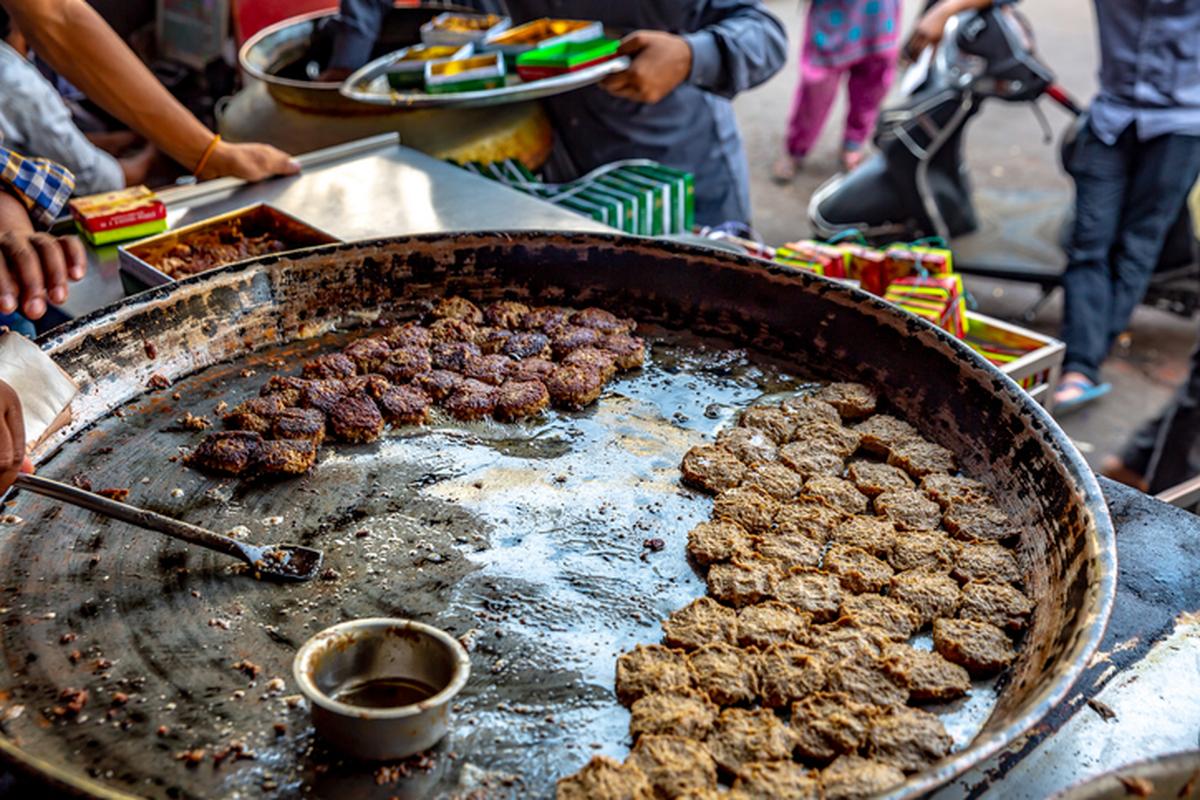
At the 43rd Session of the UNESCO General Conference held in Samarkand, Uzbekistan, Lucknow was officially inducted into the UCCN under the Gastronomy category, recognising its historic culinary heritage—especially Awadhi cuisine.
Cultural Basis of Selection
The nomination emphasised:
- Classical Awadhi dishes: galouti kebab, nihari-kulcha, tokri chaat, puri-kachori.
- Renowned desserts: malai gilori, makhan malai.
- The city’s unique Ganga-Jamuni tehzeeb, reflecting harmonious Hindu-Muslim cultural fusion.
Significance of the Recognition
- Enhances international visibility of Lucknow’s culinary heritage.
- Supports sustainable tourism and preservation of traditional recipes.
- Boosts local livelihoods of chefs, artisans, and food entrepreneurs.
- Strengthens India’s soft-power diplomacy using culture and cuisine.
About UNESCO Creative Cities Network (UCCN)
The UNESCO Creative Cities Network (UCCN), established in 2004, aims to promote cooperation among cities that identify creativity and cultural industries as drivers of sustainable urban development. The network strengthens cultural diversity and enhances resilience to global challenges such as climate change, inequality, and rapid urbanisation.
UCCN currently includes 350+ cities worldwide, classified into seven creative fields:
- Crafts & Folk Arts
- Media Arts
- Film
- Design
- Gastronomy
- Literature
- Music
Objectives of UCCN
- Mainstream creativity as a strategic component of urban planning and development.
- Foster public-private-civil society partnerships in cultural sectors.
- Promote innovation hubs and expand opportunities for artists, professionals, and cultural enterprises.
- Support cities in advancing the UN Sustainable Development Agenda through culture-led growth.
India and the UCCN
Before 2025, India had eight member cities. With Lucknow’s addition, the total now stands at nine.
Indian Cities in UCCN
|
City |
Category |
Year |
|
Jaipur |
Crafts & Folk Arts |
2015 |
|
Varanasi |
Music |
2015 |
|
Chennai |
Music |
2017 |
|
Mumbai |
Film |
2019 |
|
Hyderabad |
Gastronomy |
2019 |
|
Srinagar |
Crafts & Folk Arts |
2021 |
|
Gwalior |
Music |
2023 |
|
Kozhikode |
Literature |
2023 |
|
Lucknow |
Gastronomy |
2025 |