
Global TB Report 2025

- 14 Nov 2025
In News:
The WHO Global Tuberculosis (TB) Report 2025presents a mixed picture of global TB control. While the world has begun to recover from the disruptions caused by the COVID-19 pandemic, tuberculosis continues to remain the deadliest infectious disease globally. India, despite registering significant progress, continues to bear the highest TB burden, accounting for about 25% of global cases.
About the Global TB Report 2025
- The Global TB Report is the annual flagship assessment published by the World Health Organization.
- It tracks TB trends in terms of incidence, mortality, diagnosis, treatment, and financing at global, regional, and national levels.
- Its primary objective is to monitor progress under the End TB Strategy (2015–2035), which aims to achieve a 90% reduction in TB deaths and an 80% reduction in TB incidence by 2030 compared to 2015 levels.
Global TB Trends
- At the global level, TB incidence declined by 1.7% between 2023 and 2024, reaching 131 cases per 100,000 population, signalling a recovery from pandemic-era setbacks. Region-wise, declines were recorded in Africa, South-East Asia, Eastern Mediterranean, and Europe, while the Americas witnessed a fourth consecutive rise, largely attributed to under-detection and reporting gaps.
- In terms of burden, South-East Asia (34%), Western Pacific (27%), and Africa (25%) together account for the majority of TB cases. Eight countries contribute 67% of global TB cases, led by India (25%), followed by Indonesia (10%) and the Philippines (6.8%).
- A persistent global concern remains multidrug-resistant TB (MDR-TB), where progress in detection and treatment remains modest. Compounding the challenge, international TB financing has stagnated since 2020, with donor cuts expected from 2025 posing serious risks to national TB programmes.
TB Situation in India
- India has recorded notable gains over the past decade. TB incidence declined from 195 per 100,000 in 2023 to 187 per 100,000 in 2024, marking a 21% reduction since 2015, compared to a global decline of around 12%.
- In 2024, India diagnosed 2.61 million cases out of an estimated 2.7 million, substantially narrowing the gap of “missing cases”. TB mortality also fell from 28 per 100,000 in 2015 to 21 per 100,000 in 2024, though this remains far above the national elimination target of 3 per 100,000 by 2025.
- India continues to shoulder a disproportionate share of MDR-TB cases (about 32% globally), even though incidence is gradually declining. Government initiatives such as Ni-kshay 2.0, Pradhan Mantri TB Mukt Bharat Abhiyan, and expanded use of molecular diagnostics (CBNAAT and Truenat) have improved treatment coverage to around 92%.
Initiatives and Challenges
- Globally, efforts are anchored in the End TB Strategy, UN High-Level Meetings (2018, 2023), and support from mechanisms like the Global Fund and Stop TB Partnership, alongside updated WHO guidelines on MDR-TB and TB-diabetes comorbidity.
- However, major constraints persist: undernutrition, which weakens immunity; the complexity and cost of MDR-TB treatment; funding stagnation; weak surveillance in rural and private sectors; and the absence of a widely deployed new TB vaccine.
Export Promotion Mission
- 14 Nov 2025
In News:
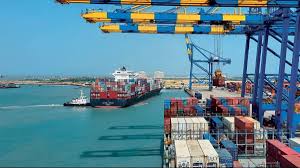
The Export Promotion Mission (EPM) is a flagship export-boosting initiative approved by the Union Cabinet and announced in the Union Budget 2025–26. It aims to strengthen India’s export ecosystem by improving competitiveness, especially for MSMEs, first-time exporters, and labour-intensive sectors, amid evolving global trade challenges.
What is the Export Promotion Mission (EPM)?
- EPM is a comprehensive, outcome-oriented and digitally driven framework for export promotion.
- It represents a strategic shift from multiple fragmented schemes to a single, adaptive mission-mode approach.
- Time period & outlay: ?25,060 crore from FY 2025-26 to FY 2030-31.
Objectives
- Enhance export competitiveness of Indian products.
- Improve access to affordable trade finance for MSMEs.
- Reduce compliance and logistics bottlenecks.
- Expand market access and branding for Indian exporters.
- Boost exports from non-traditional districts and regions.
- Support employment generation in manufacturing, logistics, and allied sectors.
Institutional Framework
- Anchored in a collaborative mechanism involving:
- Department of Commerce
- Ministry of MSME
- Ministry of Finance
- Financial institutions, Export Promotion Councils, Commodity Boards, industry bodies, and State governments
- Implementing agency:Directorate General of Foreign Trade (DGFT).
- All processesfrom application to fund disbursalwill be managed through a dedicated digital platform integrated with existing trade systems.
Key Features
- Consolidation of schemes: Integrates existing export support measures such as:
- Interest Equalisation Scheme (IES)
- Market Access Initiative (MAI)
- Outcome-based design: Focus on measurable export performance and responsiveness to global trade disruptions.
- Priority sector support: Special emphasis on sectors affected by recent global tariff escalations, including:Textiles, Leather, Gems &Jewellery, Engineering goods, and Marine products.
Sub-schemes under EPM
1. NIRYAT PROTSAHAN (Financial Support)
- Aims to improve access to affordable trade finance, especially for MSMEs.
- Key instruments include:
- Interest subvention
- Export factoring
- Collateral and credit guarantees
- Credit cards for e-commerce exporters
- Credit enhancement for market diversification
2. NIRYAT DISHA (Non-financial Enablers)
- Focuses on improving market readiness and competitiveness.
- Support areas include:
- Export quality and compliance assistance
- International branding and packaging
- Participation in trade fairs
- Export warehousing and logistics support
- Inland transport reimbursements
- Trade intelligence and capacity-building initiatives
Significance
- Addresses structural constraints such as costly finance, high compliance costs, fragmented market access, and logistical disadvantages.
- Encourages inclusive export growth, particularly from MSMEs and interior regions.
- Aligns with India’s long-term vision of Viksit Bharat @2047 by making exports more technology-enabled, resilient, and globally competitive.
Vanadium Redox Flow Battery (VRFB)
- 14 Nov 2025
In News:
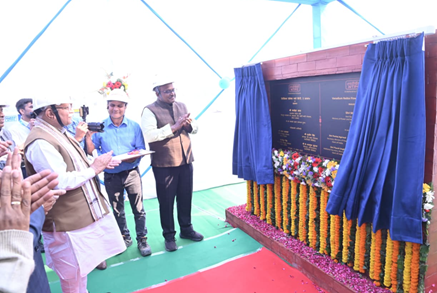
India has taken a significant step in long-duration energy storage with the inauguration of the country’s first megawatt-hour (MWh) scale Vanadium Redox Flow Battery (VRFB) at NTPC’s NETRA facility in Noida. The project was inaugurated by the Union Minister for Power, highlighting India’s growing focus on grid resilience, renewable energy integration, and clean energy technologies.
What is Vanadium?
- Vanadium (V) is a chemical element with atomic number 23.
- It is a silver-grey, ductile, and malleable metal.
- Exhibits high strength, corrosion resistance, and stability against alkalis and acids.
Occurrence and Distribution
- Vanadium is the 22nd most abundant element in Earth’s crust.
- Occurs combined in over 60 minerals, including:
- Vanadinite
- Carnotite
- Roscoelite
- Patronite
- Also found in coal and petroleum deposits.
- Major reserves: South Africa and Russia.
- Leading producers: China, Russia, and South Africa.
Applications of Vanadium
- Metallurgy:Used as an alloying element in steel to improve strength, durability, and resistance to wear.
- Energy Storage:Core material in Vanadium Redox Flow Batteries (VFBs/VRFBs) for large-scale and long-duration energy storage.
- Chemical Industry:Vanadium compounds act as catalysts, notably in sulphuric acid production.
- Nuclear Sector:Used in certain reactors as structural material and neutron moderator.
- Medical Research:Studied for potential roles in managing diabetes, cardiovascular diseases, and cholesterol (experimental/therapeutic research).
What are Vanadium Redox Flow Batteries (VRFBs)?
- VRFBs are electrochemical energy storage systems where energy is stored in liquid vanadium electrolytes held in external tanks.
- Both the positive and negative electrolytes use different oxidation states of vanadium, reducing cross-contamination risks.
Advantages of VRFBs
- Long-duration storage: Suitable for grid-scale applications (hours to days).
- High safety: Non-flammable electrolytes reduce fire risk.
- Long life cycle: Can endure tens of thousands of charge–discharge cycles.
- Scalability: Energy capacity can be increased by enlarging electrolyte tanks.
- Grid stability: Ideal for balancing intermittent renewable sources like solar and wind.
India’s First MWh-scale VRFB at NTPC NETRA
- Installed at NETRA (National Energy Technology Research Alliance), Noida, a premier R&D centre of NTPC.
- Capacity: 3 MWh.
- Significance:
- Demonstrates India’s capability in advanced energy storage technologies.
- Supports renewable energy integration and grid reliability.
- Aligns with national goals on energy transition and energy security.
Rare Earth Hypothesis

- 14 Nov 2025
In News:
The Rare Earth Hypothesis has re-emerged in scientific and public discourse following rapid advances in exoplanet discovery and characterisation. New findings suggest that while Earth-sized planets may be relatively common, the conditions required for complex, multicellular life could still be exceptionally rare.
What is the Rare Earth Hypothesis?
- Proposed in 2000 by Peter Ward and Donald Brownlee.
- It argues that:
- Simple microbial life may be widespread in the universe.
- Complex life (plants, animals, intelligent beings) requires a highly specific and unlikely combination of conditions.
- This challenges the principle of mediocrity, which assumes Earth is not special and that similar life-supporting planets should be common.
Key Conditions Highlighted by the Hypothesis
The emergence and persistence of complex life depend on multiple astronomical, planetary, and biological factors, including:
- Location in a stable region of the galaxy.
- A suitable star (long-lived, stable radiation output).
- Proper placement in the habitable zone.
- A rocky planet of the right size and mass.
- Long-term atmosphere retention and surface water.
- Climate stabilisation mechanisms (e.g., carbon cycling).
- Geological activity such as tectonics.
- Presence of a large moon (for axial stability).
- A favourableplanetary system architecture.
Insights from Exoplanet Discoveries
Data from the Kepler Space Telescope has transformed understanding of planetary abundance:
- A non-negligible fraction of Sun-like (GK dwarf) stars host Earth-sized planets in their habitable zones.
- This weakens the claim that Earth’s size and orbital position are extremely rare.
However, recent studies indicate that “Earth-sized” is not the same as “Earth-like.”
Atmospheres: A Major Bottleneck
- Many potentially habitable planets orbit M-dwarf stars, which are:
- Smaller and longer-lived,
- But prone to strong flares and intense radiation.
- Such radiation can strip atmospheres and water, producing false oxygen signals that mimic life.
- Retaining an atmosphere over billions of years requires:
- Strong planetary magnetic fields,
- Adequate mass,
- Optimal distance from the star,
- Low stellar activity.
Observations using the James Webb Space Telescope (JWST) show that:
- Planets like TRAPPIST-1b and TRAPPIST-1c lack thick atmospheres.
- This reinforces the idea that habitable surface conditions may be uncommon, even when planets are Earth-sized.
Climate Stability and Plate Tectonics
- On Earth, long-term climate stability is aided by:Carbon cycling between the atmosphere, oceans, and interior.
- Plate tectonics may support this stability, but:Some models suggest alternative mechanisms (volcanism-weathering balance).
- There is no consensus yet on whether plate tectonics is essential for life, adding uncertainty to the hypothesis.
Role of Giant Planets
- Earlier views held that Jupiter-like planets shield inner planets from impacts.
- New studies show their role is context-dependent:They can either reduce or increase asteroid impacts.
- Thus, a giant planet is not a universal prerequisite for complex life.
Link to the Fermi Paradox
The Rare Earth Hypothesis offers one explanation for the Fermi Paradox:
- If complex and intelligent life is rare, then the absence of extraterrestrial contact is not surprising.
- Searches for technosignatures (e.g., radio signals) by projects like Breakthrough Listen have so far found no confirmed evidence.
Current Status
- The hypothesis is plausible but unproven.
- Future clarity may come from:
- Detection of atmospheres on temperate rocky planets,
- Better understanding of exoplanet tectonics and climate cycles,
- Discovery of biosignatures or technosignatures.
DRISHTI System
- 14 Nov 2025
In News:
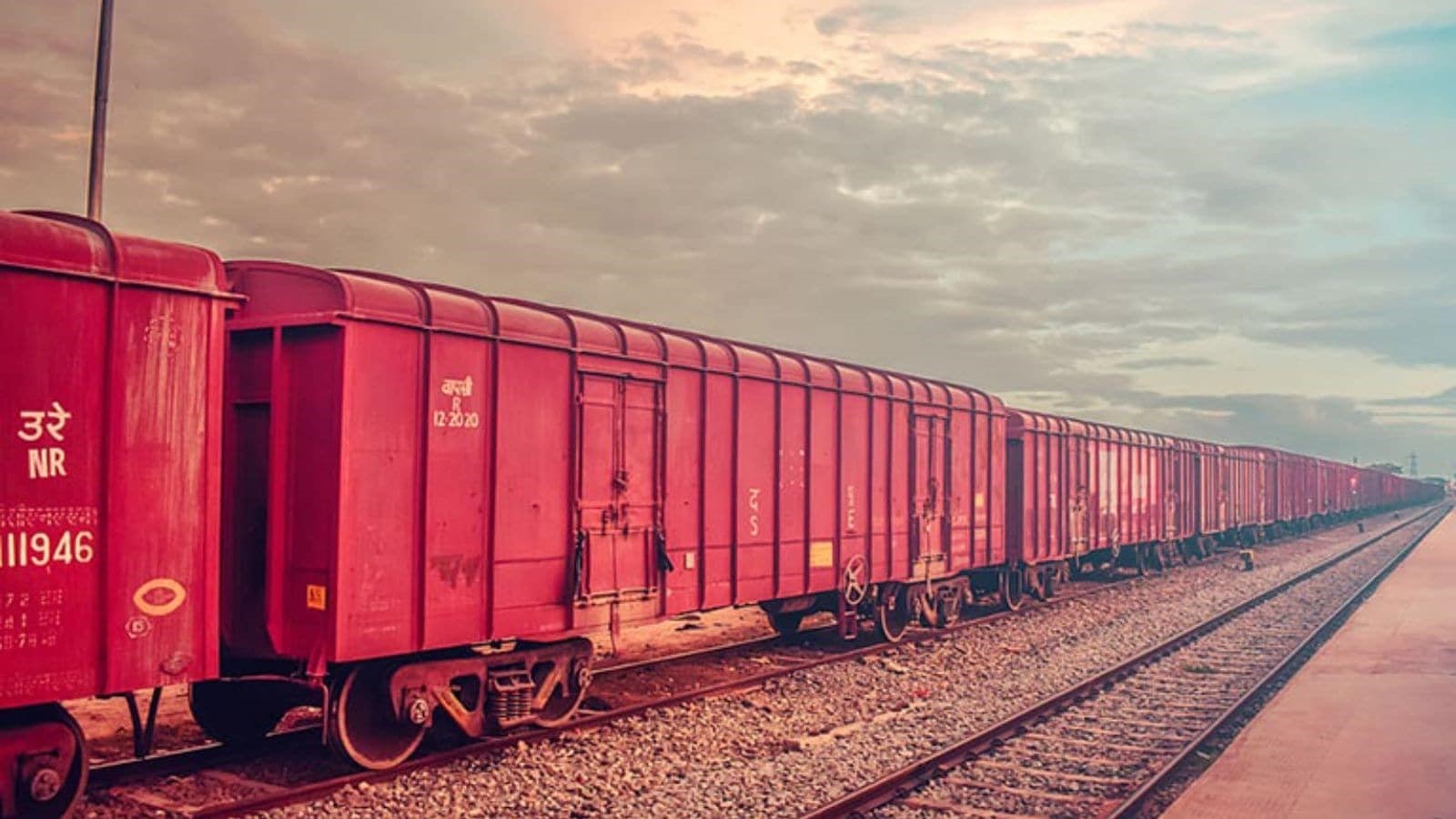
The DRISHTI System is a new AI-enabled safety and security initiative of Indian Railways, aimed at strengthening freight train operations by addressing a long-standing challenge-detecting unlocked or tampered wagon doors during transit. The system represents a significant step towardstechnology-driven rail logistics and asset security.
What is the DRISHTI System?
- DRISHTI is an AI-based Freight Wagon Locking Monitoring System.
- It has been developed through a collaboration between Northeast Frontier Railway (NFR) and the IIT Guwahati Technology Innovation and Development Foundation (IITG TIDF).
- The system focuses on real-time monitoring of door locking mechanisms on moving freight wagons.
Why was DRISHTI Needed?
- Freight wagons often face security risks due to unlocked or tampered doors, leading to:
- Theft and pilferage
- Safety hazards during train movement
- Traditional manual inspection methods are:
- Time-consuming
- Impractical for long-haul trains
- Ineffective under dynamic, high-speed conditions
DRISHTI provides an automated, continuous, and non-intrusive solution to this problem.
Key Features
- AI-powered cameras and sensors mounted at strategic locations to capture door positions.
- Use of computer vision and machine learning algorithms to:
- Analyse locking conditions
- Detect anomalies or tampering in real time
- Automated alerts generated instantly without disrupting train operations.
- Continuous surveillance during transit, unlike point-based manual checks.
How the System Works
- Cameras capture live visual data of wagon doors.
- AI algorithms process images to determine whether doors are:
- Properly locked
- Unlocked
- Tampered with
- Any abnormality triggers a data-driven alert, enabling swift corrective action.
Benefits and Significance
- Enhances freight security and reduces pilferage.
- Improves wagon sealing integrity and overall rolling stock reliability.
- Minimises human intervention, lowering operational risks and costs.
- Brings greater transparency and technological assurance to freight operations.
- Supports India’s broader push towards digitalisation and indigenous innovation in transport infrastructure.