
SAHI and BODH Initiative
- 18 Feb 2026
In News:
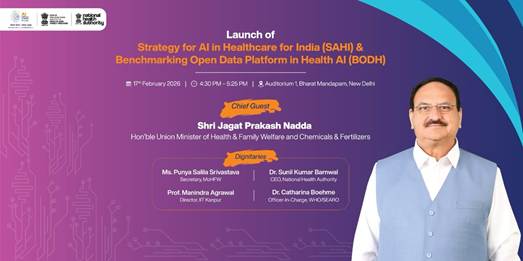
At the India AI Summit held at Bharat Mandapam, the Union Minister of Health and Family Welfare launched two key national initiatives - the Strategy for Artificial Intelligence in Healthcare for India (SAHI) and the Benchmarking Open Data Platform for Health AI (BODH). Together, these initiatives seek to establish a structured, ethical, and technology-driven framework for integrating Artificial Intelligence (AI) into India’s healthcare ecosystem, aligning innovation with public health priorities.
Rationale: The Need for Governance in Health AI
Artificial Intelligence holds transformative potential in areas such as diagnostics, disease surveillance, medical imaging, predictive analytics, and health system management. However, its deployment raises critical concerns related to:
- Data privacy and security
- Algorithmic bias and accountability
- Clinical validation and safety
- Ethical use and regulatory oversight
In a country with diverse health challenges and socio-economic disparities, the integration of AI must be inclusive, evidence-based, and aligned with public welfare objectives. SAHI and BODH aim to address these systemic gaps.
SAHI: Strategy for Artificial Intelligence in Healthcare for India
SAHI serves as a national guidance framework for the responsible adoption of AI in healthcare.
Core Objectives:
- Safe and Ethical Deployment – Establishes principles for transparency, accountability, and fairness in AI systems.
- Evidence-Based Validation – Emphasises scientific testing and performance benchmarking before large-scale adoption.
- Data Stewardship and Governance – Provides direction on responsible data use, storage, and sharing.
- Monitoring and Evaluation – Ensures continuous oversight of AI solutions in real-world settings.
- Support to States and Institutions – Aligns AI adoption with local health priorities and public health objectives.
By offering strategic direction on governance, validation, and deployment, SAHI aims to mainstream AI within India’s health infrastructure while preventing misuse or premature adoption.
BODH: Benchmarking Open Data Platform for Health AI
Complementing SAHI, BODH is a privacy-preserving benchmarking platform developed by the Indian Institute of Technology (IIT) Kanpur in collaboration with the National Health Authority.
Key Features:
- Enables rigorous evaluation of AI models using diverse, real-world health data.
- Operates without sharing underlying datasets, thereby preserving patient privacy.
- Functions as a digital public good under the Ayushman Bharat Digital Mission (ABDM).
- Strengthens transparency and quality assurance in AI-based health solutions.
By creating a standardised benchmarking environment, BODH promotes trust and reliability in AI systems used for clinical or administrative purposes.
Significance
- Institutionalising AI Governance – Moves beyond pilot projects to structured regulation.
- Enhancing Trust – Ensures accountability and public confidence in AI tools.
- Promoting Interoperability – Aligns with ABDM’s digital health ecosystem.
- Global Competitiveness – Positions India as a responsible innovator in health AI.
- Equity in Healthcare Delivery – Supports inclusive and evidence-based adoption across regions.
Seva Teerth
- 18 Feb 2026
In News:
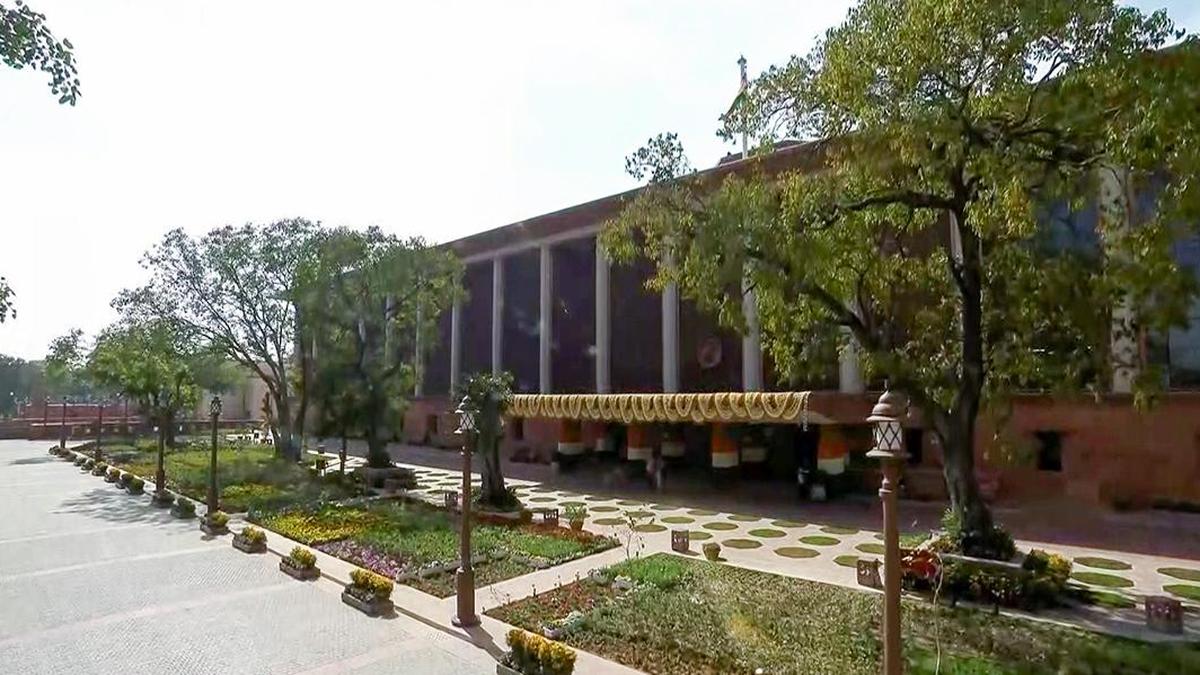
The inauguration of ‘Seva Teerth’, the new integrated administrative complex housing the Prime Minister’s Office (PMO), National Security Council Secretariat (NSCS), and Cabinet Secretariat, marks a significant institutional and symbolic transition in India’s governance framework. The relocation ends nearly eight decades of the PMO’s functioning from South Block and forms a central component of the Central Vista redevelopment project.
Historical Context and Symbolism
The move coincided with the 95th anniversary (13 February 1931) of New Delhi’s formal inauguration as India’s modern capital. South Block, long associated with executive authority, is now part of the Yuge Yugeen Bharat National Museum, reflecting a shift from colonial-era administrative spaces to a contemporary governance infrastructure.
The name ‘Seva Teerth’ is derived from Sanskrit:
- Seva – service or selfless dedication
- Teerth (Tirtha) – a sacred place or crossing point that helps overcome obstacles
The complex bears the inion “Nagrik Devo Bhava” (Citizen is akin to God), signalling a governance philosophy rooted in citizen-centric service and accountability.
Architectural and Design Features
- Designed by architect Dr. Bimal Patel, Seva Teerth integrates traditional Indian architectural motifs with modern infrastructure.
Key Architectural Elements:
- Stone screen-work inspired by 11th–13th century Chalukyan temples
- Floral stone motifs derived from geometric temple patterns
- Metal-clad domes influenced by Buddhist stupas
- Cladding in white and red sandstone, maintaining aesthetic continuity with Lutyens’ Delhi
The design balances civilisational symbolism with contemporary functionality.
Functional and Technological Features
Seva Teerth is conceived as an integrated administrative hub bringing together key executive institutions under one complex to improve coordination and efficiency.
Notable Features:
- Modern open-plan workspaces
- High-tech ‘India House’ for hosting international summits
- Advanced security and digital infrastructure
- 4-star green building rating, reflecting environmental sustainability standards
The integration of the PMO, NSCS, and Cabinet Secretariat within a single complex enhances policy coherence, inter-departmental coordination, and crisis-response capability.
Governance Implications
The relocation signifies:
- Administrative Modernisation – Transition from colonial-era spaces to purpose-built, technology-enabled governance infrastructure.
- Institutional Integration – Greater synergy between executive decision-making bodies.
- Symbolic Reorientation – Emphasis on service-oriented governance through its nomenclature and inion.
- Urban Redevelopment – Reinforcement of the Central Vista project as a long-term reconfiguration of India’s power corridor.
First Official Decision
In a symbolic assertion of its citizen-first ethos, the first major decision taken at Seva Teerth was the launch of the PM RAHAT Scheme, aimed at providing assured hospitalization and treatment to road accident victims. This move underscored the emphasis on public welfare and responsive governance.
Ol Chiki at 100
- 18 Feb 2026
In News:
The centenary of the Ol Chiki (1925–2025) is being commemorated by the Ministry of Culture, with the inaugural function held in New Delhi. The occasion is marked by the release of a ?100 commemorative coin and a special postage stamp, symbolising national recognition of a that transformed the Santhali language from an oral tradition into a structured written medium. The milestone reflects not merely a linguistic achievement but a broader assertion of tribal identity and cultural dignity.
Historical Background and Genesis
For centuries, Santhali—belonging to the Austroasiatic (Munda) language family—was sustained through rich oral traditions of folklore, songs, rituals, and storytelling. However, the absence of a dedicated limited formal documentation, education, and literary standardisation. Prior to the 20th century, Santhali was transcribed using borrowed s such as Roman, Bengali, Odia, and Devanagari, which inadequately represented its distinctive phonetic features, including glottal stops and unique vowel patterns.
Recognising this gap, Pandit Raghunath Murmu (1905–1982) developed the Ol Chiki in 1925. Revered as Guru Gomke (Great Teacher), he sought to provide Santhali with a scientifically designed and culturally rooted writing system. His seminal literary work, High Serena (1936), was among the first books written in Ol Chiki, followed by other influential writings that strengthened linguistic awareness and literacy.
Linguistic Features of Ol Chiki
Ol Chiki is distinguished by its phonetic precision and indigenous design:
- 30 letters, representing vowels and consonants
- One symbol corresponds to one sound (direct phonetic mapping)
- Accurately captures glottal stops and unique phonetic elements
- No conjunct letters, ensuring structural simplicity
- Not derived from Brahmi or Roman s
Unlike adapted s, Ol Chiki was created exclusively for Santhali phonology, enabling accurate recording of vocabulary, grammar, and pronunciation. It facilitated standardisation in education, translation, and publication.
Constitutional and Institutional Recognition
A major milestone came in 2003 when Santhali was included in the Eighth Schedule of the Constitution through the 92nd Constitutional Amendment Act. This inclusion institutionalised the language within India’s formal linguistic framework, enabling its use in education, public administration, competitive examinations, and literary promotion.
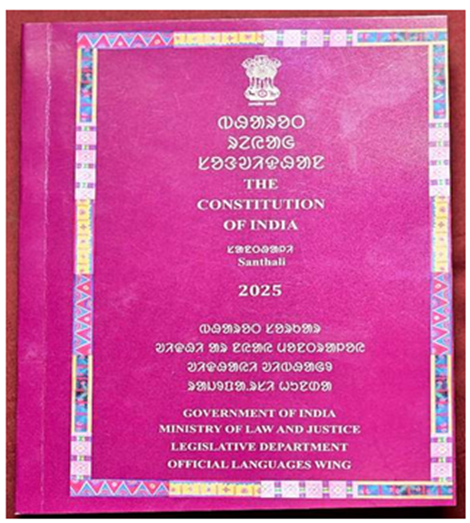
In December 2025, the Constitution of India was officially translated into Santhali using Ol Chiki. This initiative enhanced democratic accessibility by enabling Santhali-speaking citizens to engage directly with constitutional provisions, including tribal safeguards under the Fifth and Sixth Schedules. It marked a step toward linguistic justice and participatory governance.
National Commemoration
To mark 100 years of Ol Chiki, the Government of India has issued:
- A ?100 commemorative coin, featuring the Lion Capital of Ashoka on the obverse and a portrait of Pandit Raghunath Murmu alongside Ol Chiki characters on the reverse.
- A commemorative postage stamp, reinforcing philatelic recognition of cultural milestones.
These symbolic gestures affirm the ’s role in preserving indigenous heritage within India’s pluralistic framework.
Loggerhead Turtle

- 18 Feb 2026
In News:
Recent scientific observations indicate that rising ocean temperatures and declining food availability are significantly affecting the reproductive cycles, migratory behavior, and even body size of the loggerhead turtle. These developments underline the far-reaching ecological consequences of climate change on marine megafauna and highlight emerging conservation challenges.
About the Loggerhead Turtle
The loggerhead turtle (Caretta caretta) is an oceanic turtle belonging to the family Cheloniidae. It derives its name from its disproportionately large head, which houses powerful jaw muscles adapted for crushing hard-shelled prey.
Key Characteristics
- Size:
- World’s largest hard-shelled turtle
- Second-largest extant turtle after the leatherback sea turtle
- Lifespan: Can live for 80 years or more
- Navigation: Uses Earth’s geomagnetic field to navigate vast oceanic distances
- Diet: Omnivorous; primarily consumes bottom-dwelling invertebrates such as gastropods, bivalves, and decapods
- Habitat: Found both in open oceans and inshore ecosystems like bays, lagoons, salt marshes, and creeks
- Distribution: Atlantic, Indian, and Pacific Oceans, and the Mediterranean Sea
- Conservation Status: IUCN Red List – Vulnerable
Climate Change and Emerging Ecological Impacts
1. Altered Reproductive Patterns
- Loggerhead turtles exhibit temperature-dependent sex determination, where warmer sand temperatures produce more female hatchlings. Rising global temperatures are skewing sex ratios, potentially threatening long-term population stability.
- Additionally, warming seas are disrupting nesting timelines and hatchling survival rates, affecting recruitment into adult populations.
2. Changes in Migration Routes
- Loggerheads rely on geomagnetic cues to navigate across ocean basins. However, changing ocean currents and temperature gradients are altering traditional migratory pathways. Shifts in feeding grounds may force turtles to travel longer distances, increasing energy expenditure and exposure to threats such as fishing gear and marine pollution.
3. Impact on Body Size and Growth
- Studies suggest that declining prey availability linked to ocean warming and ecosystem shifts may be affecting growth rates and adult body size. Reduced food intake can influence reproductive success, as larger females generally produce more eggs.
Four-Pronged Threats
Climate change intensifies existing anthropogenic pressures:
- Rising Ocean Temperatures: Affect physiology, nesting, and food webs.
- Habitat Loss and Degradation: Coastal development and erosion reduce nesting beaches.
- Marine Pollution: Plastic debris and oil spills cause ingestion and entanglement.
- Bycatch in Fishing Gear: Accidental capture remains a major mortality factor.
Direct harvesting of turtles and eggs in some regions further compounds population decline.
Ecological Significance
- Loggerhead turtles play a crucial role in marine ecosystems by regulating populations of invertebrates and maintaining healthy benthic communities. Their decline can disrupt trophic balance and impact overall ocean biodiversity.
Conservation Imperatives
Addressing the challenges faced by loggerhead turtles requires:
- Strengthening marine protected areas
- Regulating coastal development
- Promoting climate mitigation strategies
- Reducing bycatch through turtle-excluder devices
- Enhancing global cooperation under marine conservation frameworks
LHS 1903 Planetary System

- 18 Feb 2026
In News:
Astronomers using the European Space Agency’s Cheops (Characterising Exoplanet Satellite) telescope have discovered an unusual four-planet system orbiting the red dwarf star LHS 1903, located approximately 117 light-years from Earth. The system’s planetary arrangement contradicts conventional models of planet formation, offering fresh insights into the dynamics of exoplanetary systems.
System Overview
The LHS 1903 system consists of four planets:
- Two rocky Super-Earths
- Two gaseous mini-Neptunes
These planets orbit a relatively small and dim red dwarf (M-dwarf) star.
Characteristics of the Host Star
- Mass: ~50% of the Sun’s mass
- Luminosity: ~5% of the Sun’s brightness
- Cooler and less luminous than the Sun
- Red dwarfs are the most common type of star in the Milky Way
Given their abundance and longevity, red dwarfs are important targets in the search for potentially habitable exoplanets.
Planetary Composition
- Super-Earths (Rocky Planets)
- Similar composition to Earth
- Mass between 2 to 10 times that of Earth
- Solid surfaces
- Mini-Neptunes (Gaseous Planets)
- Larger than Earth but smaller than Neptune
- Possess thick gaseous envelopes
- Often rich in hydrogen and helium
The sequence of planets from the star outward is as follows:
- Innermost: Rocky (Super-Earth)
- Middle two: Gaseous (Mini-Neptunes)
- Outermost (Fourth planet): Rocky (Super-Earth)
The Formation Paradox
Traditional models of planetary formation suggest that:
- Rocky planets form closer to the host star, where high temperatures prevent gas accumulation.
- Gas giants and gaseous planets form farther out, where volatile compounds can condense.
However, in the LHS 1903 system, the outermost planet is rocky, even though it lies beyond two gaseous planets. According to classical theory, it should have retained a substantial gaseous envelope.
Possible Explanations
Researchers propose two leading hypotheses:
- Sequential Formation Model: The planets may not have formed simultaneously. Instead, the inner planets could have formed first, consuming much of the available gas in the protoplanetary disk. By the time the fourth planet formed, insufficient gas remained for it to develop a thick atmosphere.
- Atmospheric Loss Hypothesis: The outer rocky planet may originally have possessed a gaseous envelope but later lost it due to a catastrophic event such as stellar radiation, atmospheric stripping, or collision, leaving behind a dense rocky core.
Both possibilities challenge the simplicity of existing models and suggest that planet formation may be more dynamic and episodic than previously understood.
Habitability Potential
The outer rocky planet has an estimated surface temperature of approximately 60°C. While relatively warm, this temperature falls within a theoretical range that does not automatically preclude habitability, especially if atmospheric or geological conditions are favorable.
Given the long lifespans of red dwarf stars, such systems are considered promising in the search for habitable exoplanets.
Scientific Significance
The LHS 1903 system provides:
- A test case for refining planet formation theories
- Insights into atmospheric evolution and planetary migration
- Evidence that planetary architectures may be more diverse than predicted
As observational capabilities improve, discoveries like this will deepen understanding of how planetary systems evolve and expand the scope of astrobiological exploration.