
UMEED Portal and Digitisation of Waqf Properties
- 15 Dec 2025
In News:
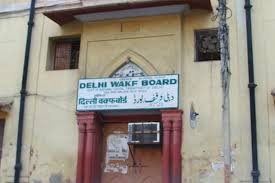
The Ministry of Minority Affairs has operationalised the Unified Waqf Management, Empowerment, Efficiency and Development (UMEED) Portal to create an authenticated, transparent digital record of Waqf properties across India.
What is Waqf?
A Waqf is a permanent charitable endowment under Islamic law, where a person dedicates property for religious or public welfare purposes. Once declared Waqf, the property:
- Cannot be sold, inherited, or transferred
- Is managed by a Mutawalli (caretaker)
- Is meant to benefit the community in perpetuity
About the UMEED Portal
Launched on 6 June 2025, the UMEED Portal is a centralised digital platform for registration and regulation of Waqf properties. A six-month window, ending on 6 December 2025, was provided to upload authenticated data of existing Waqf properties.
The portal replaces the earlier Waqf Management System of India (WAMSI), which had long been criticised for inaccurate, inconsistent, and duplicate data. WAMSI was officially disabled on 8 May 2025.
Key Features of the UMEED Portal
- Digital registration with precise measurements and geolocation mapping
- Maker–checker–approver workflow to ensure data verification
- Mandatory documentary evidence at each stage of entry
- Legal awareness provisions clarifying rights of beneficiaries
- Unregistered properties after the deadline to be treated as disputed and referred to Waqf Tribunals
- Ensures compliance with updated legal provisions while protecting the rights of women, children, and economically weaker beneficiaries
Capacity Building and Implementation
To facilitate smooth adoption:
- Seven zonal review-cum-training meetings were conducted with States/UTs
- Around ?10 crore was released in tranches for capacity building
- Helplines, virtual training sessions, and master trainer workshops were organised
Despite these efforts, many Waqf Boards were slow initially and became active only close to the deadline.
Upload Performance and Data Trends
The data upload showed a late surge pattern:
- Minimal uploads in June–August
- Gradual increase in September and October
- Massive surge in November and early December, with over 2.4 lakh properties initiated in the final days
In total, over 5.17 lakh properties were initiated on the portal within the six-month window. The system reportedly handled heavy traffic smoothly, supported by round-the-clock technical assistance.
Several large States recorded substantial verified uploads, including Uttar Pradesh, Maharashtra, Karnataka, Telangana, Gujarat, Punjab, Bihar, Haryana, and Jammu & Kashmir, indicating improved compliance in the final phase.
Why Old WAMSI Data Is Not Comparable
Claims that only a small percentage of Waqf properties have been uploaded stem from comparisons with outdated WAMSI figures. However, WAMSI had:
- Duplicate entries
- Incorrect land measurements
- Zero-area listings
- Inflated or unverifiable records
Because of these inconsistencies, WAMSI was discontinued. In contrast, UMEED uses fresh, verified, document-backed data, making comparisons between the two systems misleading.
Governance Significance
The UMEED Portal represents a major step toward:
- Digitisation of religious endowments governance
- Transparency and accountability in Waqf property management
- Reducing disputes through authenticated land records
- Strengthening institutional oversight and legal clarity
- Promoting good governance through technology (e-Governance reform)
It also improves dispute resolution by directing unresolved cases to Waqf Tribunals, ensuring legal recourse.
India’s First Indigenous Hydrogen Fuel Cell Vessel
- 15 Dec 2025
In News:
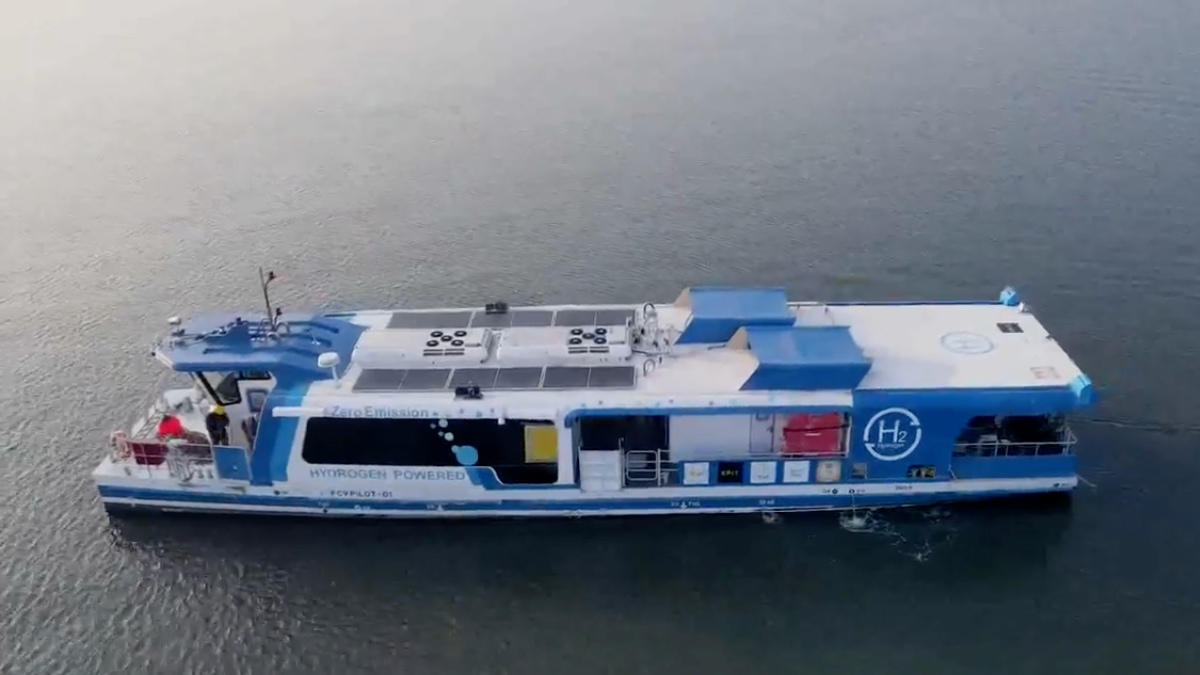
India has launched its first fully indigenous hydrogen fuel cell passenger vessel in Varanasi, marking a major milestone in the country’s transition to clean and sustainable inland water transport. The vessel was flagged off at Namo Ghat by the Union Minister for Ports, Shipping and Waterways, Sarbananda Sonowal, symbolising India’s commitment to green mobility and low-carbon infrastructure.
Technological Features of the Vessel
- The vessel has been designed and built indigenously by Cochin Shipyard Limited in collaboration with the Inland Waterways Authority of India (IWAI), which also owns the vessel.
- At its core is a Low-Temperature Proton Exchange Membrane (LT-PEM) fuel cell system. A Proton Exchange Membrane Fuel Cell (PEMFC) generates electricity through an electrochemical reaction between hydrogen and oxygen, without combustion. The only by-product of this process is water vapour, making it a near-zero emission technology.
- The vessel operates through a hybrid energy system, integrating:
- Hydrogen fuel cells
- Battery storage
- Solar power support
This design ensures energy efficiency, operational reliability, and reduced dependence on fossil fuels.
Strategic Policy Alignment
The launch aligns with India’s long-term maritime and climate strategies, including:
- Maritime India Vision 2030 (MIV 2030) – Focuses on sustainable port and waterways infrastructure, digitalisation, and alternative fuels.
- Maritime Amrit Kaal Vision 2047 (MAKV 2047) – Envisions India as a global maritime leader with green and smart transport systems.
It also contributes to India’s broader commitment to achieve net-zero emissions by 2070 by promoting clean energy in transport.
Significance for Inland Water Transport
The introduction of a hydrogen-powered vessel positions Varanasi at the forefront of India’s green waterways initiative. Inland waterways are being promoted as an energy-efficient and cost-effective mode of transport, and this step adds a sustainability dimension.
Key impacts include:
- Reduction in carbon emissions and air pollution in river cities
- Noise-free and pollution-free passenger travel
- Improved connectivity for pilgrims and tourists along the ghats
- Contribution to decongesting roads and lowering logistics costs
- Demonstration of indigenous clean technology leadership
Wider Environmental and Economic Implications
Hydrogen fuel cell technology is emerging as a critical pillar in India’s clean energy transition. Its use in inland waterways demonstrates sectoral decarbonisation beyond road and rail transport.
The project showcases:
- Growth of green shipbuilding capability in India
- Promotion of innovation-driven infrastructure
- Integration of renewable energy with mobility solutions
It also strengthens India’s position in the evolving global market for green maritime technology.
Diving Support Craft (DSC) A20
- 15 Dec 2025
In News:
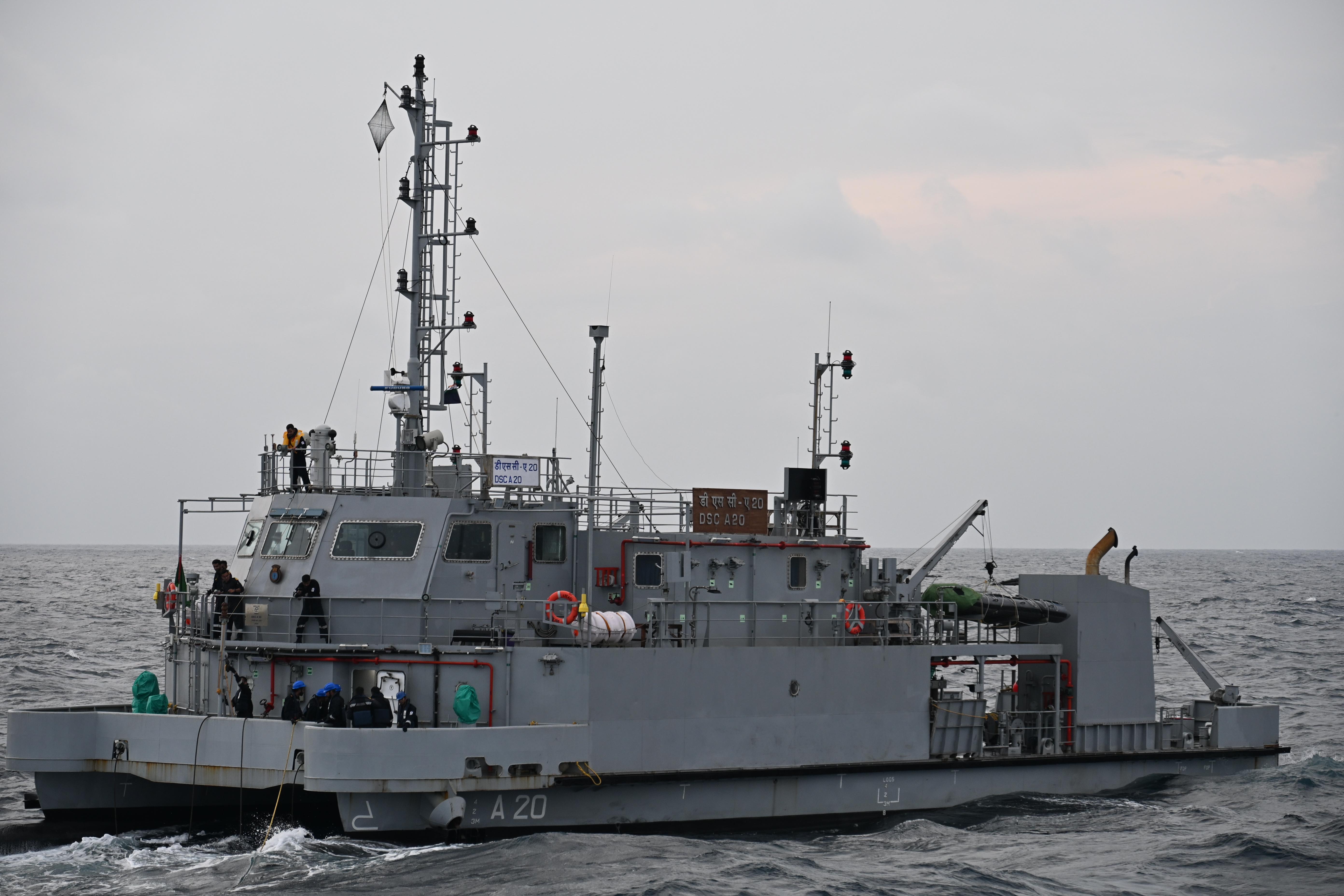
The Indian Navy is set to commission Diving Support Craft (DSC) A20 at Kochi under the aegis of the Southern Naval Command. The vessel marks a significant step in enhancing India’s underwater operational preparedness and advancing indigenisation in specialised naval platforms.
About DSC A20
- DSC A20 is the first indigenously designed and constructed Diving Support Craft and serves as the lead ship in a series of five vessels being built by Titagarh Rail Systems Limited (TRSL), Kolkata.
- It is purpose-built to undertake a wide spectrum of diving and underwater missions in coastal waters, supporting naval operations that require specialised diving assistance and underwater technical intervention.
Key Features
- The vessel features a catamaran hull design, which provides superior stability, larger deck space, and improved seakeeping capabilities compared to conventional hull forms.
- It is equipped with advanced, state-of-the-art diving systems, ensuring high standards of operational efficiency and diver safety.
- DSC A20 has an approximate displacement of 390 tonnes, making it suitable for sustained coastal support roles.
- The ship has been designed and constructed in accordance with the Naval Rules and Regulations of the Indian Register of Shipping (IRS).
- Extensive hydrodynamic analysis and model testing were conducted at the Naval Science and Technological Laboratory (NSTL), Visakhapatnam, to ensure optimal performance and reliability.
Operational Role
DSC A20 is intended to support:
- Diving operations for underwater repairs and maintenance
- Underwater inspection of hulls, harbours, and maritime structures
- Salvage and recovery assistance
- Coastal operational deployment, including emergency response
Once commissioned, the vessel will be based at Kochi and operate under the Southern Naval Command, a key formation responsible for training and operational readiness in the southern maritime theatre.
Strategic and Policy Significance
The induction of DSC A20 reflects India’s progress in maritime self-reliance (Aatmanirbharta) and the success of the Make in India initiative in defence manufacturing. The project represents close collaboration between the Navy, domestic shipbuilding industry, and national research institutions.
By enhancing underwater operational capability, the vessel strengthens India’s preparedness for naval maintenance, search and rescue, disaster response, and maritime security operations in coastal regions.
Supreme Court on Narco-Analysis Tests

- 15 Dec 2025
In News:
The Supreme Court of India has reaffirmed that involuntary narco-analysis tests are unconstitutional, setting aside a decision of the Patna High Court that had permitted such a test. The ruling strengthens the protection of fundamental rights of the accused and underscores that investigative efficiency cannot override constitutional liberties.
What is a Narco Test?
Narco-analysis is an investigative technique in which a person is administered sedatives such as Sodium Pentothal (a barbiturate) to lower inhibitions. In a semi-conscious state, the subject is expected to reveal concealed or suppressed information.
It is often clubbed with other so-called scientific techniques such as:
- Polygraph (lie detector) tests
- Brain mapping / BEAP tests
Although described as “non-violent,” these methods interfere with a person’s mental processes, bodily integrity, and decisional autonomy.
Constitutional Protections Involved
- Article 20(3) - Protection Against Self-Incrimination: This Article states that no accused person can be compelled to be a witness against themselves. Forced narco-analysis extracts responses directly from the mind, amounting to compelled testimony. In Selvi v. State of Karnataka (2010), the Court held that narco, polygraph, and brain-mapping tests cannot be conducted without voluntary consent.
- Article 21 – Right to Life, Privacy, and Dignity: Forcible narco tests violate bodily integrity, mental privacy, and personal liberty. The Court linked this protection with the “Golden Triangle” doctrine flowing from Maneka Gandhi v. Union of India (1978), which requires all State procedures to be just, fair, and reasonable.
Recent Case: Supreme Court Overturns Forced Test
In Amlesh Kumar v. State of Bihar, the Patna High Court had allowed an involuntary narco test during investigation. The Supreme Court struck this down, reiterating that compulsory administration of such tests violates Articles 20(3) and 21, regardless of investigative objectives.
The judgment sends a clear message that constitutional rights cannot be diluted in the name of solving crimes.
Evidentiary Value of Narco Tests
The Court has consistently clarified that narco-analysis results:
- Do not amount to confessions
- Are not admissible as substantive evidence
- Can only provide investigative leads
- Must be corroborated by independent evidence
This position was reiterated in Manoj Kumar Saini v. State of MP and Vinobhai v. State of Kerala, where courts held that narco findings alone cannot establish guilt.
When Can Narco Tests Be Conducted?
The Supreme Court permits narco tests only under strict safeguards and voluntary consent:
- Consent must be informed, voluntary, and recorded before a Judicial Magistrate
- The accused must understand the legal and medical implications
- The test must be conducted by qualified medical professionals
- Legal counsel should be accessible
- Statements made during the test cannot be treated as confessions
Even if an accused volunteers under procedural law such as the Bharatiya Nagarik Suraksha Sanhita (BNSS), courts are not obligated to allow the test automatically.
Why This Judgment Matters
The ruling is significant because it reasserts that rule of law prevails over investigative shortcuts. It protects the dignity and mental privacy of individuals, even when they are accused of crimes. The judgment also reinforces the idea that criminal justice must be guided by due process and fairness, not coercion.
It further highlights the need for better forensic capacity, scientific investigation, and police reforms instead of reliance on ethically and legally questionable techniques.
Concerns Associated with Narco Tests
Narco-analysis raises serious concerns:
- Statements made under sedation may be unreliable, mixing fact and fantasy
- There is a high risk of coerced or influenced consent in custody
- It represents State intrusion into an individual’s thought processes
- There are medical and psychological risks involved
The Supreme Court’s ruling reinforces that constitutional morality and human dignity must guide criminal investigations. While scientific tools may assist policing, they cannot replace voluntariness, fairness, and respect for fundamental rights. The judgment strengthens India’s commitment to a justice system where liberty and due process remain non-negotiable, even in the pursuit of truth.
Champions of the Earth Award
- 15 Dec 2025
In News:
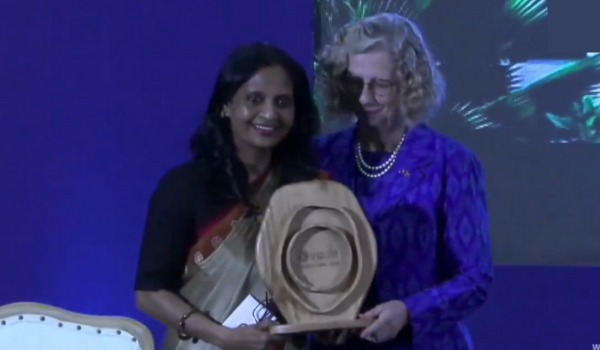
Environmental governance is increasingly central to global sustainable development discourse, particularly amid the escalating triple planetary crisis- climate change, biodiversity loss, and pollution. In this context, the Champions of the Earth Award by the United Nations Environment Programme (UNEP) stands as the world’s highest environmental honour. The 2025 award to Supriya Sahu, Additional Chief Secretary of Environment, Climate Change and Forests, Tamil Nadu, highlights India’s growing role in innovative and inclusive climate action.
About the Champions of the Earth Award
Instituted in 2005 by UNEP, the award recognises individuals and organisations demonstrating transformative environmental leadership. It honours trailblazers working on sustainable solutions to address global ecological challenges.
Award Categories include:
- Policy Leadership – Government leaders shaping environmental governance
- Inspiration and Action – Individuals mobilising people and driving behavioural change (Category of Supriya Sahu)
- Entrepreneurial Vision – Innovators creating sustainable systems and technologies
- Science and Innovation – Scientific and technological pioneers
- Lifetime Achievement – Long-term contribution to environmental protection
Why Supriya Sahu Was Honoured
UNEP recognised her under “Inspiration and Action” for demonstrating how integrated governance, nature-based solutions, and low-cost climate innovations can protect vulnerable communities while reducing greenhouse gas emissions.
Her work bridges climate mitigation, adaptation, biodiversity conservation, and livelihood creation — aligning local development with global climate goals.
Key Environmental Initiatives
1. Operation Blue Mountain (2000)
- Early campaign to eliminate single-use plastics in the Nilgiris
- One of India’s pioneering local anti-plastic movements
2. Cool Roof Project
- School rooftops painted white to reflect sunlight
- Reduced indoor temperatures and improved learning conditions
- A low-cost climate adaptation model now studied globally
3. Ecosystem Restoration
- Large-scale restoration of mangroves and wetlands
- Strengthens coastal resilience against cyclones and sea-level rise
- Enhances carbon sequestration and biodiversity
4. Expansion of Forest Cover
- Creation of 65 new reserve forests
- Combines conservation with community participation
5. Green Livelihoods
- Nature-based initiatives reportedly generated ~2.5 million green jobs
- Demonstrates how climate action can drive inclusive economic growth
Global and National Context
India has previously been recognised under this award, reflecting growing global acknowledgement of its environmental leadership. Notable past recipients include:
- Madhav Gadgil (2024)
- Narendra Modi (2018)
- Cochin International Airport (2018) – For solar-powered airport model
- Afroz Shah (2016) – For beach clean-up movement
This pattern indicates India’s expanding soft power in environmental diplomacy.