
Coastal Security Exercise ‘Sagar Kavach’
- 24 Nov 2025
In News:
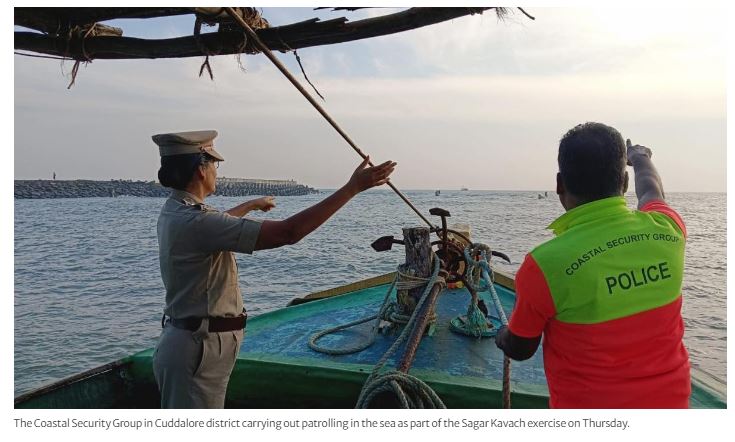
The biannual coastal security exercise ‘Sagar Kavach’ has commenced along the Tamil Nadu coast, covering Cuddalore and Villupuram districts, to test multi-agency preparedness against maritime security threats.
About ‘Sagar Kavach’
- Nature:‘Sagar Kavach’ is a biannual, multi-agency coastal security exercise conducted along India’s coastline.
- Conducted by:Indian Coast Guard (ICG)
Key Objectives
- Validate and refine Standard Operating Procedures (SOPs) for coastal security
- Identify vulnerabilities in coastal surveillance and response mechanisms
- Strengthen inter-agency coordination among maritime, security, and civil authorities
- Enhance readiness of coastal police and local administration
Key Features
- Frequency: Conducted twice a year across coastal States and island territories
- Threat Simulation:
- Deployment of ‘Red Force’ dummy intruders
- Mock infiltration and sabotage scenarios
- Operational Activities:
- Sea and coastal patrolling
- Boat and vessel inspections
- Harbour and port security checks
- Surveillance of vulnerable coastal stretches
- Coverage:
- Coastal villages
- Fishing harbours and ports
- Vital installations
- Railways, bus stations, and sensitive public infrastructure
- Capacity Building:
- Trains coastal police in intelligence gathering, interception, interrogation, and patrolling
- Tests response time and communication efficiency
- Integrated Approach:
- Combines surface assets, aerial surveillance, and communication networks
- Involves coordination between defence forces, paramilitary units, State police, intelligence agencies, and civil administration
Significance
- Strengthens India’s layered coastal security architecture, especially after lessons from past maritime attacks
- Enhances preparedness against non-traditional security threats such as terrorism and smuggling
- Builds local-level resilience by integrating coastal communities and police into national security efforts
- Reinforces India’s commitment to maritime security and coastal surveillance
Supreme Court Clarifies Governor’s Powers on Assent to State Bills
- 24 Nov 2025
In News:
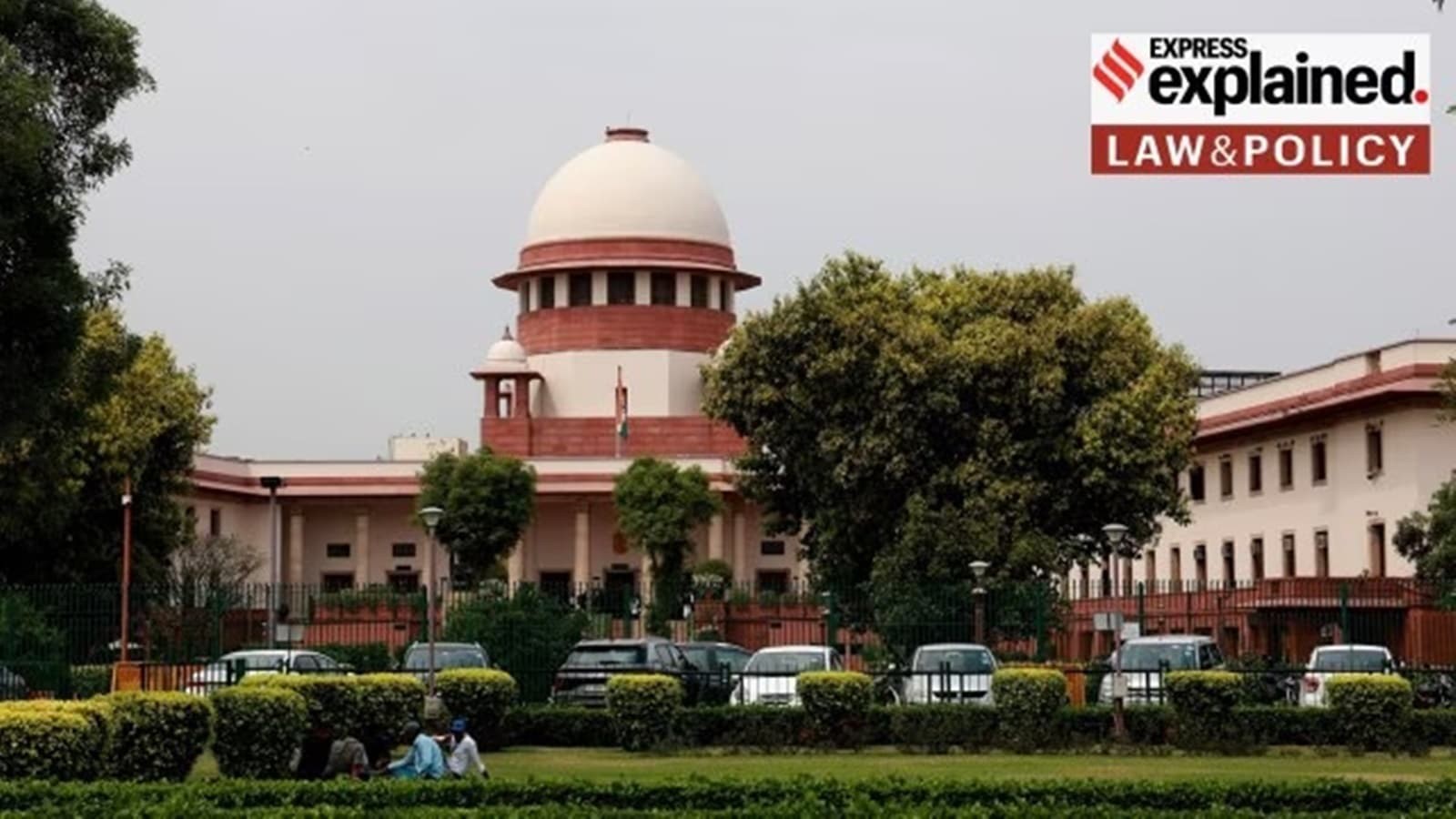
In a landmark constitutional opinion, a five-judge Constitution Bench of the Supreme Court clarified the scope and limits of the powers of Governors and the President regarding assent to State Bills under Articles 200 and 201 of the Constitution. The opinion was delivered in response to a Presidential Reference under Article 143, addressing 14 questions of law, amid complaints by several States that Governors were delaying or withholding assent, causing legislative paralysis.
Constitutional Framework
Article 200 – Governor and State Bills
When a Bill passed by a State Legislature is presented, the Governor has only three constitutionally permissible options:
- Grant assent to the Bill.
- Withhold assent and return the Bill (except Money Bills) to the Legislature with recommendations for reconsideration.
- Reserve the Bill for the President’s consideration.
The Court categorically held that there is no power to “withhold assent simpliciter”. A Governor cannot sit indefinitely on a Bill without taking one of the three actions.
Article 201 – President and Reserved Bills
When a Bill is reserved, the President may:
- Grant assent, or
- Withhold assent.
The President’s discretion here is similar to that of the Governor, but operates only after reservation.
Key Clarifications by the Supreme Court
- No indefinite delay permitted:“Prolonged, unexplained, and indefinite inaction” by a Governor is unconstitutional and subject to judicial review.
- Discretion, but not arbitrariness:Governors are not bound by the aid and advice of the Council of Ministers while exercising powers under Article 200, as this discretion is constitutionally envisaged. However, this discretion cannot be used to obstruct the legislative will of an elected government.
- Judicial review limited to inaction:Courts cannot review the merits or wisdom of a Governor’s or President’s decision to grant or withhold assent. Judicial scrutiny is limited only to cases of constitutional inaction or procedural violation.
- No judicially imposed timelines:The Court held that it cannot prescribe rigid deadlines (such as 1–3 months) for Governors or the President. The phrase “as soon as possible” in Articles 200 and 201 allows flexibility and cannot be judicially converted into fixed timelines.
- Rejection of ‘deemed assent’:The Court firmly rejected the idea that a Bill automatically becomes law if assent is delayed. Article 142 (complete justice) cannot be used to bypass the constitutional requirement of assent.
- Article 361 is not an absolute shield:While Governors and the President enjoy personal immunity, the office itself is not immune from judicial scrutiny where constitutional duties are not discharged.
- Courts cannot examine Bills:Judicial review applies only to laws in force, not to Bills awaiting assent. Courts cannot examine the constitutionality of proposed legislation.
Broader Constitutional Significance
- Reinforces constitutional morality and federal balance.
- Prevents misuse of gubernatorial discretion while respecting constitutional design.
- Protects legislative supremacy of elected assemblies without eroding the discretionary role of constitutional authorities.
- Clarifies limits of Article 142, ensuring it does not override substantive constitutional provisions.
Ultra-Processed Foods (UPFs) in India

- 24 Nov 2025
In News:
A recent series published in The Lancet highlights that India is witnessing the fastest global growth in sales of Ultra-Processed Foods (UPFs)from USD 0.9 billion (2006) to nearly USD 38 billion (2019), representing a ~40-fold increase. This rapid dietary transition is strongly associated with rising obesity, diabetes, and cardiovascular diseases in the country.
What are Ultra-Processed Foods (UPFs)?
- Definition: Industrial formulations designed for convenience, long shelf life, and mass consumption, made largely from manufactured ingredients rather than whole foods.
- Typical Components: Refined starches, protein isolates, added sugars, unhealthy fats, flavour enhancers, colourants, stabilisers, emulsifiers, and preservatives.
- Examples: Soft drinks, chips, chocolates, ice creams, sweetened breakfast cereals, packaged soups, instant noodles, ready-to-heat meals.
Processed vs Ultra-Processed Foods
- Processed foods: Minimally altered (e.g., cooking, fermenting, canning) and retain basic food structure (e.g., pickles, jam, cheese).
- Ultra-processed foods: Contain industrial additives; the presence of emulsifiers or artificial flavours classifies a product as UPF.
Why is UPF Consumption Rising in India?
- Aggressive Marketing: Celebrity endorsements, sports sponsorships, targeted ads (especially for children), discount offers.
- Lifestyle Changes:Urbanisation, time constraints, and preference for ready-to-eat foods.
- Dietary Transition: Shift towards Western-style diets rich in fast foods and sugary snacks.
- Perceived Convenience: Seen as time-saving substitutes for traditional meals.
Health and Nutrition Impacts
- Poor Nutritional Quality: UPFs are high in fat, sugar, and salt (HFSS) but low in fibre and micronutrients.
- Disease Burden: Linked to higher risks of obesity, Type 2 diabetes, hypertension, heart disease, kidney and gastrointestinal disorders, mental health issues, and premature mortality.
- India-Specific Risk: Genetic predisposition to visceral obesity and metabolic disorders amplifies harms.
- Children at High Risk: Childhood obesity increased from 2.1% to 3.4% (NFHS 2016 → 2019–21). Long-term effects include addictive eating behaviours, gut microbiome imbalance, impaired brain development, and early-onset diabetes.
Regulatory and Awareness Gaps
- Weak Regulation: Heavy reliance on self-regulation; absence of mandatory front-of-pack (FOP) warning labels.
- Misleading Packaging: Health claims (e.g., “high protein”) obscure high sugar, salt, or fat content.
- Identification Challenge: Public confusion between processed foods and UPFs.
- The Economic Survey 2024–25 underlines the need for stronger regulatory action.
Existing Indian Initiatives for Healthy Diets
- Eat Right India Movement
- State Food Safety Index
- RUCO (Repurpose Used Cooking Oil)
- Food Safety Mitra
- World Food Safety Day observances
What Measures are Needed?
- Stronger Regulations:
- Mandatory FOP warning labels (“High in Sugar/Salt/Fats”).
- Restrictions on marketing to children.
- Healthy Food Environments:
- UPF-free school canteens; promotion of minimally processed foods (Brazilian model).
- Increased availability of healthy alternatives in public spaces.
- Public Awareness Campaigns:
- Avoid foods with >10% sugar or fat; sodium >1 mg/kcal.
- Prefer whole foods like fruits, vegetables, milk, nuts.
- Monitoring & Research:
- Measure UPF share in diets (especially children and youth).
- Identify consumption patterns to support targeted regulation.
- Global & National Coordination:
- Align with forthcoming World Health Organization guidelines on UPFs.
- Involve FSSAI, health and education sectors, industry, and civil society.
WHO Recommendation: Free sugar intake should be <10% of daily energy, ideally <5% (~25 g/day).
COP30, Belém (Brazil)
- 24 Nov 2025
In News:
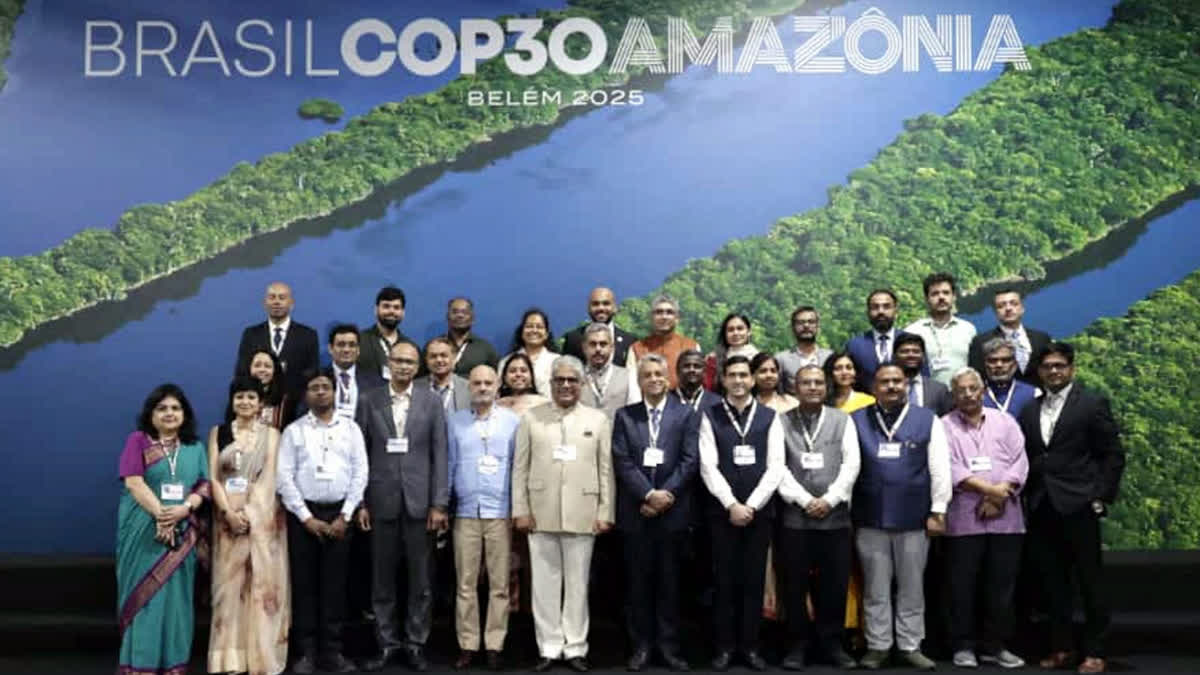
The 30th Conference of the Parties (COP30) to the United Nations Framework Convention on Climate Change (UNFCCC) concluded in Belém, Brazil, with the formal adoption of the Belém Package, marking a shift in global climate negotiations from ambition-setting to implementation and delivery.
Key Outcomes of COP30
1. Belém Package
- A set of 29 negotiated decisions focusing on implementation, not new binding targets.
- Emphasises climate finance, adaptation tracking, just transition, gender inclusion, and cooperative action to advance the Paris Agreement goals.
2. Global Mutirão Agreement & Platform
- Prioritises cooperation, collective action and deliverability over additional mandatory targets.
- Brazil launched the Global Mutirão Platform, a digital tool to narrow the gap between climate commitments and on-ground implementation, especially in energy, finance and trade.
3. Just Transition Mechanism (Belém Action Mechanism – BAM)
- Supports cooperation and capacity-building for workers and economies transitioning away from fossil fuels.
- Limitation: No assured or new financial commitments.
4. Tracking & Implementation Architecture
- Global Implementation Tracker and Belém Mission to 1.5°C launched to assess whether national actions and NDCs align with pathways limiting warming to 1.5°C.
- Signals a growing focus on monitoring delivery rather than announcing fresh pledges.
5. Adaptation-Focused Decisions
- National Adaptation Plan (NAP) Implementation Alliance launched to accelerate adaptation planning.
- Countries agreed to triple adaptation finance by 2030 (from 2025 levels), though sources and obligations remain unclear.
- Global Goal on Adaptation (GGA):Finalised the Baku Adaptation Roadmap with 59 voluntary indicators to track adaptation progress.
6. Sectoral & Thematic Initiatives
- Belém Health Action Plan: Strengthens climate-resilient health systems based on equity, climate justice and community participation.
- Tropical Forests Forever Facility (TFFF): A payment-for-performance mechanism using satellite monitoring to reward forest conservation; aims to mobiliseUSD 125 billion (Brazil committed USD 1 billion).
- Belém 4x Pledge: Quadrupling sustainable fuel use by 2035 (hydrogen, biofuels, biogas, e-fuels); progress to be monitored annually by the IEA.
- Belém Declaration on Hunger, Poverty & People-Centred Climate Action: Signed by 43 countries + EU, prioritising vulnerable communities, adaptation, and social protection.
- Belém Gender Action Plan (GAP): Strengthens gender-responsive climate governance and women’s participation.
India’s Position at COP30
Climate Finance as a Legal Obligation
- India, along with BASIC and LMDC groups, demanded predictable, grant-based climate finance under Article 9.1 of the Paris Agreement.
- Called for a universally accepted definition of climate finance and mobilisation of the USD 1.3 trillion goal under the Baku-to-Belém Roadmap (COP29).
- Highlighted the Adaptation Gap: Developing countries may need USD 310–365 billion annually by 2035, while current flows remain around USD 26 billion.
Equity & Climate Justice
- Reaffirmed CBDR–RC (Common But Differentiated Responsibilities and Respective Capabilities).
- Opposed trade-restrictive climate measures like the EU’s CBAM, calling them discriminatory.
Adaptation Priority
- Stressed that adaptation must receive equal priority with mitigation, especially for vulnerable countries.
Major Shortcomings of COP30
- No clear fossil fuel phase-out roadmap.
- Weak progress on climate finance, with no clarity on obligations or sources.
- Ambition gap persists due to delayed NDC submissions by major emitters.
- Implementation gap remains, with limited enforcement and accountability.
- Just Transition mechanism lacks dedicated funding.
COP30 (Belém) marked a transition from pledges to implementation, strengthened adaptation tracking and thematic actions, but fell short on finance clarity and fossil fuel transitionreinforcing India’s stance on equity, climate justice, and legally binding finance commitments.
Pharmacogenomics: Towards Precision Medicine
- 24 Nov 2025
In News:
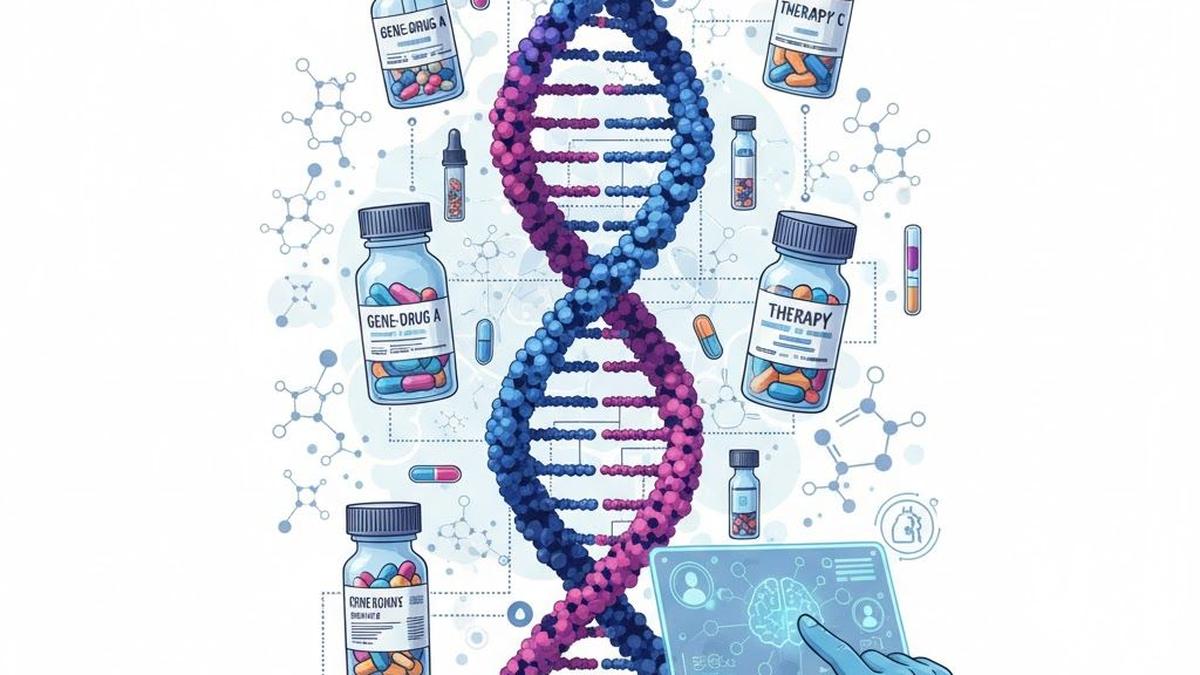
Pharmacogenomics is increasingly being highlighted as a transformative approach in healthcare, enabling personalised drug prescriptions based on an individual’s genetic makeup and moving away from the traditional “one-size-fits-all” model of treatment.
What is Pharmacogenomics?
Pharmacogenomics is the study of how genetic variations influence an individual’s response to medicines. It combines pharmacology (study of drugs) with genomics (study of genes) to determine whether a drug will be effective, ineffective, or potentially harmful for a specific person. This approach replaces trial-and-error prescribing with precision medication.
Scientific Basis
- Genetic differences, especially in drug-metabolising enzymes such as the cytochrome P450 (CYP) family, significantly affect drug absorption, metabolism, and clearance.
- Nearly 75% of commonly prescribed drugs are metabolised by CYP enzymes.
- Variations create different metaboliser types:
- Poor metabolisers → drug accumulation and toxicity
- Ultrarapidmetabolisers → reduced drug efficacy
- Studies show that ~90% of individuals carry at least one actionable pharmacogenetic variant, making this clinically relevant at the population level.
Clinical Applications
- Cardiovascular Medicine:
- Warfarin: Variants in CYP2C9 and VKORC1 explain ~50% of dose variability. Genotype-guided dosing reduces bleeding risk and stabilises therapy faster.
- Clopidogrel: Loss-of-function variants in CYP2C19 reduce drug activation, increasing risk of stent thrombosis; guidelines now recommend alternative drugs for poor metabolisers.
- Psychiatry:Antidepressants and antipsychotics metabolised by CYP2D6/CYP2C19 show improved outcomes and fewer side effects with genetic-guided prescribing.
- Oncology:Screening for DPYD variants before using 5-fluorouracil prevents severe, life-threatening toxicity.
- Immunology & Neurology:Testing for HLA-B*57:01 (Abacavir) and HLA-B*15:02 (Carbamazepine) prevents fatal drug reactions such as Stevens–Johnson syndrome.
Economic Relevance
- Cost of genetic testing has declined sharply to USD 200–500 per panel.
- Pharmacogenomics is most cost-effective in chronic diseases requiring long-term medication.
- Preventing even a single serious adverse drug reaction can offset testing costs for multiple patients.
- Pre-emptive panel testing offers lifetime utility, guiding prescriptions for dozens of drugs.
Key Challenges
- Knowledge Gaps: Limited pharmacogenomics training among doctors and pharmacists.
- Infrastructure: Lack of electronic health record–based decision-support systems.
- Regulatory & Reimbursement Issues: Inconsistent insurance coverage and evolving regulatory guidance.
- Research Complexity: Millions of SNPs must be linked accurately to drug response, and drug development for small genetic subgroups can be costly.
Way Forward
- Promote pre-emptive genetic testing integrated with electronic health records.
- Strengthen medical education and clinical guidelines on pharmacogenomics.
- Expand digital clinical decision-support systems.
- Encourage public–private investment to lower costs and widen access.