
INS Aridhaman

- 06 Apr 2026
In News:
In a milestone for India’s strategic autonomy, the Indian Navy has officially inducted INS Aridhaman, the nation’s third nuclear-powered ballistic missile submarine (SSBN). This induction marks a significant expansion of the Arihant-class fleet and cements India's position as one of the few nations capable of designing, building, and operating a credible underwater nuclear deterrent.
Strategic Significance: Completing the Nuclear Triad
The induction of INS Aridhaman is a critical component of India’s "No First Use" (NFU) nuclear doctrine. For a credible NFU policy, a robust survivable second-strike capability is essential.
- Nuclear Triad: With land-based missiles (Agni series) and air-launched weapons (Mirage/Rafale), the SSBN represents the third and most survivable leg of the triad.
- Undetectability: Unlike land silos or aircraft, nuclear submarines can remain submerged for months, making them nearly impossible to track or neutralize in a preemptive strike.
Technical Profile of INS Aridhaman
Developed under the secretive Advanced Technology Vessel (ATV) project at the Ship Building Centre in Visakhapatnam, INS Aridhaman is an evolutionary step forward from its predecessors, INS Arihant and INS Arighaat.
1. Design and Propulsion
- Classification: Submersible Ship Ballistic Nuclear (SSBN).
- Displacement: Approximately 6,000 tonnes on the surface, increasing to 7,000 tonnes when submerged.
- Power Plant: Driven by an indigenous 83 MW pressurized water reactor (PWR), developed by the Bhabha Atomic Research Centre (BARC) using enriched uranium.
2. Enhanced Survivability
- Acoustic Stealth: The submarine is equipped with anechoic tiles for acoustic damping, which absorb sonar waves and minimize the vessel's noise signature.
- Advanced Sensors: It features state-of-the-art indigenous sonar suites and electronic warfare systems to detect and evade enemy anti-submarine warfare (ASW) assets.
Armament and Strike Range
INS Aridhaman boasts a superior missile configuration compared to the lead ship of the class, allowing for more flexible strategic deployments.
- Vertical Launch System: It features eight vertical launch tubes, doubling the capacity of the earlier Arihant-class design.
- Missile Variants:
- K-15 (Sagarika): Short-to-medium range missiles with a reach of 750 km. The submarine can carry up to 24 of these.
- K-4 Missiles: Intermediate-range ballistic missiles with a strike range of 3,500 km. This enables the submarine to target deep inland targets from a safe distance in the Indian Ocean.
- Strategic Reach: The inclusion of the K-4 effectively gives India an intercontinental strike capability from the sea, providing a shield against regional adversaries.
The Evolution of the Arihant Class
|
Feature |
INS Arihant |
INS Arighaat |
INS Aridhaman |
|
Status |
Commissioned (2016) |
Commissioned (2024) |
Inducted (2026) |
|
Launch Tubes |
4 |
4 |
8 |
|
Primary Role |
Technology Demonstrator |
Operational SSBN |
Enhanced Strategic Deterrent |
Rongali Bihu

- 06 Apr 2026
In News:
In April 2026, the state of Assam is once again enveloped in the vibrant spirit of Rongali Bihu, also known as Bohag Bihu. As the premier festival of the Assamese people, it marks the beginning of the Assamese New Year and the arrival of the spring season. This festival is a quintessential representation of Assam's syncretic culture, transcending barriers of caste, creed, and religion.
The Three Dimensions of Bihu
To understand Rongali Bihu, one must place it within the annual cycle of the three Bihu festivals that dictate the rhythm of life in the Brahmaputra Valley:
|
Festival Name |
Alternative Name |
Month (Approx.) |
Significance |
|
Rongali Bihu |
Bohag Bihu |
April |
Celebrates the New Year, Spring, and the sowing season. |
|
Kati Bihu |
Kongali Bihu |
October |
A solemn occasion marking the growing season; prayers for crop protection. |
|
Magh Bihu |
Bhogali Bihu |
January |
The harvest festival; characterized by community feasting and bonfires. |
Significance of Rongali (Bohag) Bihu
The term ‘Rongali’ is derived from the Assamese word 'Rong', meaning joy or celebration. Unlike the thriftiness of Kati Bihu or the feast-centric Magh Bihu, Rongali Bihu is a week-long celebration of life, fertility, and nature’s renewal.
- Agricultural Link: It signals the commencement of the seeding time. Farmers seek blessings for a bountiful harvest.
- Cultural Identity: It serves as a platform for the display of traditional folk music and the world-renowned Bihu Dance, which was recently featured in the Guinness World Records for the largest performance.
- Social Cohesion: It is a secular festival where indigenous communities and various ethnic groups (Tibeto-Burman and Tai origins) unite to celebrate a shared Assamese identity.
Rituals and Traditions: The Seven Days of Bihu
While celebrations can last for a month, the first few days carry specific ritualistic weight:
- Goru Bihu (First Day): Dedicated to the welfare of livestock. Cattle are taken to rivers, bathed with turmeric and pulse paste (Maah-Halodhi), and stroked with sprigs of Makhiyati and Dighaloti to ward off insects.
- Manuh Bihu (Second Day): The "Bihu of the People." This is the official New Year's Day. People wear new clothes, seek blessings from elders, and exchange gifts.
- Huçori: Groups of elders and youth visit households to perform traditional carols and dances, offering blessings in exchange for small tokens of appreciation.
Material Culture and Attire
The festival is a showcase of Assam's rich textile heritage:
- The Attire: Women wear the Mekhela Chador, a two-piece traditional dress made from Pat (mulberry silk), Muga (golden silk), or cotton. Men typically wear Dhoti-Gamosa.
- The Gamocha (Bihuwaan): A hand-woven rectangular cotton cloth with red borders and floral motifs. During Bihu, it is gifted as a 'Bihuwaan'—a symbol of respect, love, and hospitality. The Gamocha has also been granted a Geographical Indication (GI) Tag.
- Traditional Delicacies: The celebration is incomplete without Larous (sweet balls) and Pithas (rice cakes) made of glutinous rice, coconut, and jaggery.
Musical Heritage
The atmosphere of Assam during Rongali Bihu is defined by the rhythmic beats of traditional instruments:
- Dhol: A barrel-shaped drum.
- Pepa: A hornpipe made from a buffalo horn.
- Gogona: A bamboo mouth organ.
- Toka: A bamboo clapper.
- Xutuli: A clay or bamboo whistle.
Kar Saathi

- 06 Apr 2026
In News:
In a significant step toward Digital India and "Minimum Government, Maximum Governance," the Income Tax Department has launched ‘Kar Saathi’. This initiative features a newly revamped website and an advanced AI-powered chatbot designed to simplify tax processes, enhance transparency, and foster a taxpayer-friendly environment.
The launch is particularly relevant as India transitions into the fiscal framework governed by the Income Tax Act, 2025, which aims to modernize direct tax administration.
What is Kar Saathi?
Kar Saathi (meaning "Tax Friend") is the Income Tax Department's dedicated AI Chatbot and virtual assistant. It is integrated directly into the department's official portal to provide seamless, round-the-clock assistance to millions of taxpayers across the country.
- Platform: A digital assistant embedded within the revamped income tax website.
- Availability: Accessible 24x7, ensuring that taxpayers can resolve queries outside of traditional office hours.
- Target Audience: Individual taxpayers, businesses, and professionals seeking clarity on direct tax compliance.
Core Objectives and Purpose
The primary philosophy behind Kar Saathi is to shift the tax department's role from a mere enforcement agency to a service-oriented facilitator.
- Simplifying Compliance: Navigating the complexities of the Income Tax Act, 2025 can be daunting; Kar Saathi breaks down legal jargon into actionable steps.
- Streamlining Procedures: It provides real-time guidance on critical tasks such as filing Income Tax Returns (ITR) and verifying tax status.
- Real-Time Query Resolution: Instead of waiting for manual support or navigating lengthy FAQ pages, users receive automated, instant responses to specific inquiries.
Key Features of the Kar Saathi Ecosystem
- Virtual Tax Assistant: Acts as a "one-stop solution" for taxpayers, covering the entire lifecycle of tax compliance—from registration to final filing.
- Step-by-Step Guidance: The tool can walk users through the selection of correct tax forms and the interpretation of updated tax provisions.
- Navigation Support: It assists users in finding specific tools, calculators, and links within the newly designed website, reducing the "drop-off" rate for digital filings.
- Direct Tax Focus: While primarily an ITR assistant, it is equipped to handle broader queries regarding direct tax rules and compliance mandates.
Significance for India’s Tax Administration
1. Promoting Voluntary Compliance
By reducing the "cost of compliance" (time and effort spent understanding rules), the government encourages more citizens to enter the formal tax net.
2. Reduction in Litigation
Misinterpretation of tax laws often leads to errors in filing and subsequent legal disputes. Kar Saathi provides standardized information, which can help minimize errors at the source.
3. Leveraging Emerging Technology
The use of Artificial Intelligence (AI) in Kar Saathi aligns with the National Strategy on AI. It demonstrates how the government can use Machine Learning to handle massive datasets and varied user queries efficiently.
Raja Ravi Varma
- 06 Apr 2026
In News:
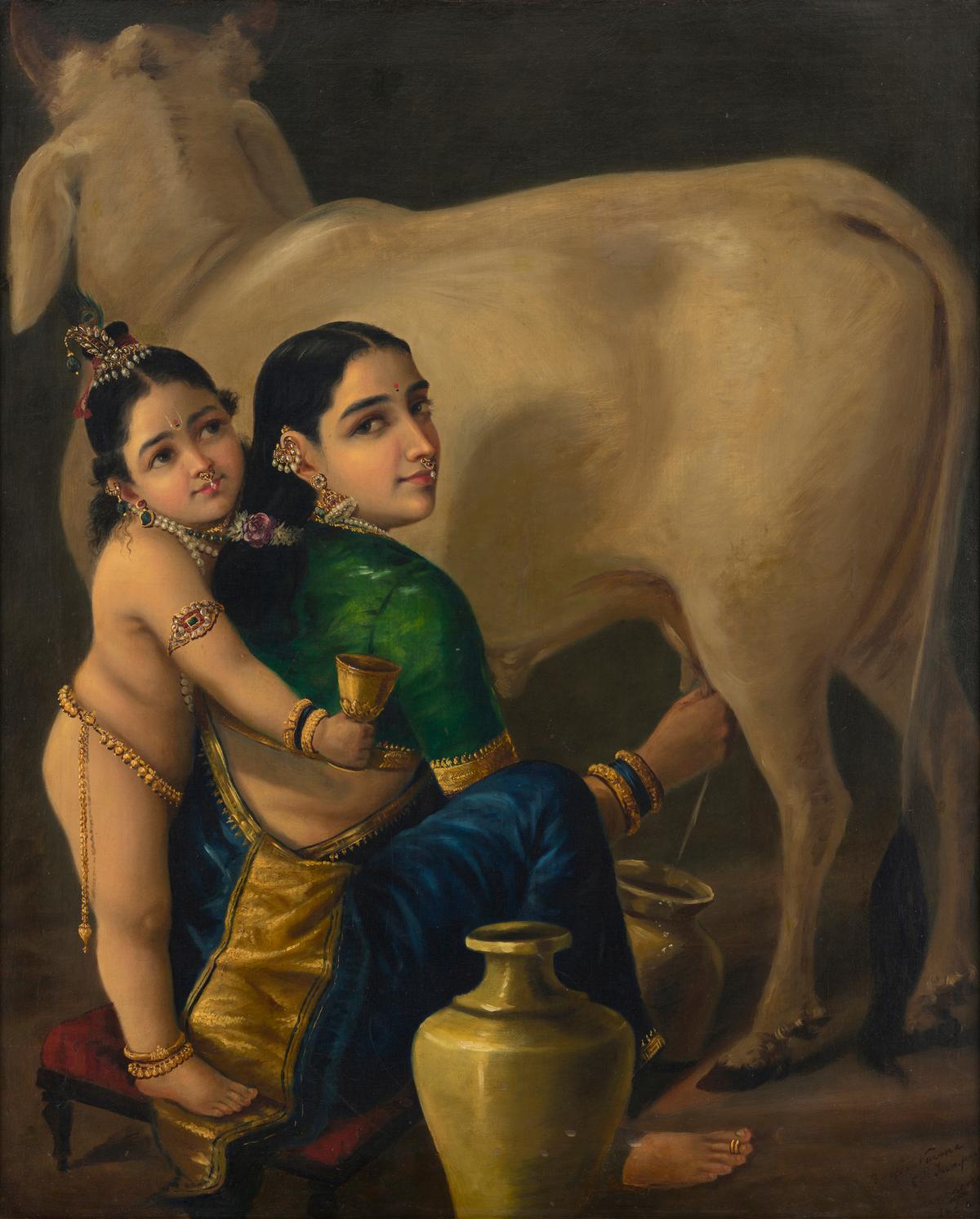
In April 2026, the Indian art market witnessed a watershed moment when Raja Ravi Varma’s iconic oil painting, "Yashoda and Krishna," was sold for a record-breaking ?167.2 crore ($17.9 million) at a Saffronart auction in Mumbai.
- Significance: This sale established a new global benchmark, making it the most expensive work of Indian art ever sold at auction, surpassing the previous record held by M.F. Husain’s Untitled (Gram Yatra).
- The Work: Painted in the 1890s, the canvas depicts an intimate, domestic scene from the Shrimad Bhagavatam where an infant Krishna approaches his mother, Yashoda, as she milks a cow. It is celebrated for its mastery of chiaroscuro (the treatment of light and shade) and its ability to render the divine through a human lens.
About Raja Ravi Varma (1848–1906)
Born on April 29, 1848, in the village of Kilimanoor, Kerala, Raja Ravi Varma belonged to the family of the Koil Thampurans (chieftains). His artistic journey revolutionized Indian art by bridging the gap between traditional Indian aesthetics and Western academic techniques.
Artistic Style and Contribution
- Synthesis of Traditions: He is renowned for blending Hindu mythological themes with European Realism and Naturalism. This style is often referred to as "Academic Realism."
- Pioneer of Oil Painting: Varma was among the first Indian artists to adopt oil paints, a medium previously dominated by European artists in India.
- The "Mona Lisa of Indian Art": His works are characterized by their "everyday divinity," where gods and goddesses are depicted with human emotions, draped in rich silks and adorned with intricate jewelry.
Democratization of Art: The Lithographic Press
Ravi Varma’s greatest legacy lies in making art accessible to the masses:
- In 1894, he established the Ravi Varma Fine Arts Lithographic Press in Maharashtra (initially in Ghatkopar and later moved to Lonavala).
- By producing affordable oleographs (lithographic prints), he ensured that depictions of Hindu deities reached ordinary households, fundamentally shaping the visual imagination of modern India.
Notable Works
- Shakuntala Writing a Love Letter to Dushyanta
- Shri Rama Vanquishing the Sea
- Nair Lady Adorning Her Hair (Won the Governor’s Gold Medal in Madras, 1873, and a Certificate of Merit in Vienna).
Awards and Recognition
- Kaiser-i-Hind Gold Medal (1904): Awarded by Viceroy Lord Curzon on behalf of the British King Emperor for his contribution to the arts. It was during this time that he became popularly known as "Raja."
- International Acclaim: He won prestigious awards at exhibitions in Vienna (1873) and the World’s Columbian Exposition in Chicago (1893).
Legal and Heritage Status: "National Art Treasure"
Under the Antiquities and Art Treasures Act of 1972, Raja Ravi Varma is one of nine designated "National Treasure" artists.
- Implication: His works are considered "non-exportable." While they can be sold within India, they cannot be taken out of the country, ensuring that India’s cultural heritage remains within its borders.
RBI’s Crackdown on NDDs and Related Party Transactions
- 06 Apr 2026
In News:
In a strategic move to insulate the Indian Rupee (INR) from offshore speculative pressures and enhance corporate governance, the Reserve Bank of India (RBI) has introduced stringent restrictions on Non-Deliverable Derivative (NDD) contracts and Related Party Transactions (RPTs). These measures, effective from April 2026 (with immediate impacts on currency markets), aim to reinforce the primacy of the onshore market and ensure that financial instruments are used for genuine hedging rather than pure speculation.
Following the announcement, the Rupee exhibited a sharp recovery, rallying from historic lows below 95 to 93.10 against the US Dollar, demonstrating the market's positive reception to reduced volatility.
Understanding Non-Deliverable Derivatives (NDDs)
Definition: An NDD is a foreign exchange derivative contract used to hedge or speculate on currencies that are non-convertible or subject to capital controls (like the INR). Unlike standard derivatives, there is no physical exchange of the underlying currency.
Working Mechanism:
- Settlement: Contracts are settled strictly in a freely convertible currency, typically the US Dollar (USD).
- The "Fixing" Process: Parties agree on a "contract rate" and a "fixing date." On the fixing date, the difference between the agreed rate and the prevailing spot market rate is calculated.
- Cash Settlement: No "principal" is exchanged. The "loser" simply pays the "winner" the net difference in USD.
Key Features:
- Offshore Nature: Historically traded in global hubs like Singapore, London, Dubai, and Hong Kong to bypass domestic Indian regulations.
- Regulatory Arbitrage: These markets often operate outside the direct jurisdiction of the RBI, allowing offshore sentiment to diverge from domestic economic fundamentals.
Why has the RBI restricted NDDs?
The RBI’s intervention is prompted by several systemic risks identified in the offshore market:
- Curbing Currency Manipulation: Large offshore traders often take massive "short" positions against the Rupee during geopolitical tensions (e.g., the West Asia conflict), creating artificial downward pressure that spills over into the Indian onshore market.
- Distortion of Price Discovery: Offshore NDD markets frequently act as a "lead" indicator, influencing the opening rates of the INR before Indian markets even open, thus undermining the RBI's control over domestic exchange rates.
- Speculative Misuse: Many participants were found cancelling and re-entering contracts to exploit short-term price swings. By banning the rebooking of cancelled contracts, the RBI ensures these tools are used for their intended purpose: Hedging risk, not gambling on volatility.
- Stabilizing the Rupee: By restricting banks (Authorised Dealers) from offering NDDs to residents and non-residents alike, the RBI reduces the "leakage" of liquidity into unregulated speculative pools.
Restriction on Related Party Transactions (RPTs)
Parallel to the currency measures, the RBI has overhauled the framework for Related Party Transactions (effective April 1, 2026). This is a critical pillar of corporate governance in the banking and NBFC sectors.
- Objective: To prevent intra-group dealings from being used to hide true risk exposure, shift profits across jurisdictions, or engage in "circular financing."
- Broadened Definition: The RBI has expanded the definition of "Related Parties" to include promoters, directors, KMPs (Key Managerial Personnel), and shareholders with 10% or more equity, aligning with Ind AS 24 and global accounting standards.
- Materiality Thresholds: For the first time, specific monetary thresholds have been set (ranging from ?5 crore to ?50 crore depending on the bank’s asset size). Any transaction exceeding these limits requires approval from a high-level Board Committee.
- Governance Impact: By mandating that interested directors recuse themselves from decision-making, the RBI aims to boost investor confidence and ensure "arm's length" transparency.