
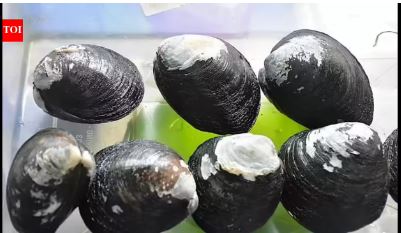
Mangrove clam (Geloina erosa)
- 10 Feb 2026
The ICAR–Central Marine Fisheries Research Institute (CMFRI) has achieved a rare global scientific feat by successfully inducing captive breeding of the mangrove clam (Geloina erosa). This breakthrough enables controlled hatchery production of the species, offering a sustainable pathway for conservation, aquaculture, and ecosystem restoration.
About Mangrove Clam (Geloina erosa)
- Scientific name: Geloina erosa (also referred to in some literature as Polymesoda erosa)
- Common name: Mangrove clam / Mud clam
- Local name: “Kandal Kakka” (Northern Kerala)
- Type: Ecologically significant bivalve mollusc
Habitat and Distribution
- Found in organic-rich muddy substrates of intertidal mangrove and estuarine ecosystems
- Distributed across South and Southeast Asia
- Tolerates a wide salinity range, from brackish to near-freshwater conditions
- Deep-burrowing, semi-infaunal species; juveniles are more tide-independent
Key Ecological Characteristics
- Large Size:
- One of the world’s largest mangrove clams
- Reaches up to 10 cm shell width, making it valuable as a food resource
- Efficient Filter Feeder:
- Filters suspended particles and plankton
- Improves estuarine water quality through nutrient recycling
- Ecosystem Stabiliser:
- Burrowing behaviour stabilises sediments
- Enhances nutrient cycling
- Strengthens resilience of mangrove ecosystems
- Reproductive Biology:
- Sex differentiation based on gonad colour and structure (not external organs)
- Facilitates broodstock identification and reproductive studies
Scientific Breakthrough: Induced Breeding
CMFRI has achieved:
- Controlled spawning under captive conditions, reducing dependence on wild seed collection
- Complete life-cycle closure, successfully rearing the clam from embryo to larval stages and eventually to spat (around the 18th day)
- Hatchery-scale seed production feasibility
This represents a global first for this species and marks a major step in sustainable marine resource management.
Conservation and Aquaculture Applications
The hatchery-produced seeds can be utilised for:
- Grow-out farming:
- Suitable for estuarine aquaculture
- Requires minimal external feed and infrastructure
- Mangrove ranching:
- Release of juvenile clams into degraded mangrove habitats
- Aids ecological restoration
- Stock enhancement:
- Replenishes overexploited natural clam beds
- Reduces harvesting pressure on wild populations
Form 7 and the Electoral Roll Revision Controversy
- 10 Feb 2026
In News:
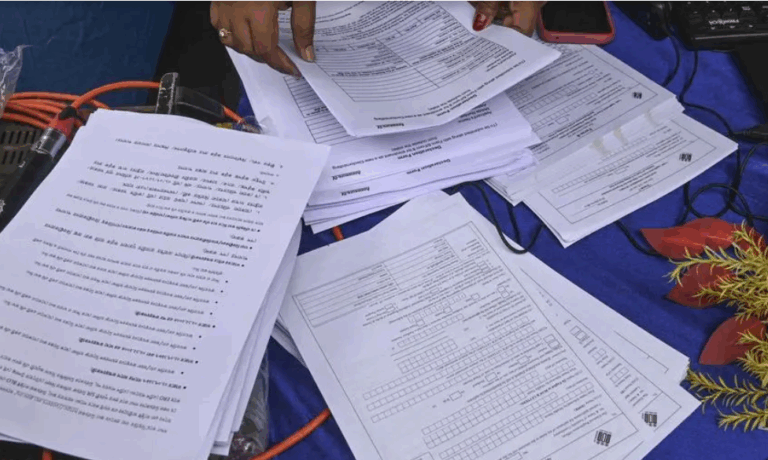
The bulk submission of Form 7 applications during the ongoing Special Intensive Revision (SIR) of electoral rolls has triggered controversy, with allegations of fraudulent or anonymous deletion requests targeting eligible voters. The issue has brought attention to the legal framework governing voter deletion and the safeguards built into the system.
What is Form 7?
Form 7 is a statutory form used to object to the inclusion of a name in the electoral roll. It can be used:
- To seek deletion of another person’s name
- To request deletion of one’s own name
Grounds for Objection
Deletion can be sought on specific legally recognised grounds:
- Death of the voter
- Duplicate entry
- Shifting of residence
- Ineligibility due to age
- Non-citizenship
- Misrepresentation
Legal Basis
Form 7 is governed by:
- Representation of the People Act, 1950
- Registration of Electors Rules, 1960
Under Section 13(2) of the Registration of Electors Rules, objections must be filed in Form 7 by a person whose name is already included in the electoral roll. Booth Level Agents (BLAs), appointed by political parties, are also authorised to file objections.
The process is administered by the Election Commission of India.
2022 Amendment: Expanded Scope
In 2022, the Election Commission amended the rules to allow any registered voter within a constituency (not just from the same polling booth) to file objections. This widened the scope of Form 7 and was aimed at improving electoral roll accuracy.
Verification and Safeguards
To ensure due process and prevent arbitrary deletions, the following steps are mandatory:
- Physical Verification by Booth Level Officers (BLOs).
- In case of death:
- Death certificate verification
- Confirmation by three neighbours
- If the voter is absent: BLO must make three visits to verify shifting of residence
- Notice and Hearing: The concerned voter is issued a notice and given an opportunity to be heard before the Electoral Registration Officer (ERO).
- Appeal Mechanism: Appeals against the ERO’s decision can be filed before the District Magistrate within 15 days.
Penal Provision: Under Section 32 of the Representation of the People Act, 1950, filing a false declaration is punishable with imprisonment up to one year, or fine, or both
PRIYA Trial and Vitamin B12

- 10 Feb 2026
In News:
Recent follow-up findings from the Pune Rural Intervention in Young Adolescents (PRIYA) trial have highlighted the long-term benefits of vitamin B12 supplementation during adolescence on neonatal health outcomes. The study is particularly significant for India, where vitamin B12 deficiency is widespread and contributes to intergenerational cycles of poor health.
About the PRIYA Trial
The PRIYA trial was conducted between 2012 and 2020 as part of the larger Pune Maternal Nutrition Study (PMNS). It was designed to examine whether improving vitamin B12 status among adolescents could reduce intergenerational metabolic and nutritional risks in a population with high prevalence of micronutrient deficiency.
The trial focused on adolescents prior to conception, recognising adolescence as a critical window for nutritional interventions that can influence future maternal and neonatal outcomes.
Key Findings
- Improved neonatal outcomes: Adolescents who received physiological doses of vitamin B12 gave birth to babies with a higher neonatal ponderal index (weight relative to length), an indicator of healthier foetal growth.
- Epigenetic mechanism: The findings suggest that vitamin B12 may act as a “regulator of regulators” by influencing enzymes involved in gene expression and epigenetic programming, thereby affecting long-term health outcomes in offspring.
- Intergenerational impact: Adequate adolescent nutrition can positively influence pregnancy outcomes years later, supporting the concept of a life-course approach to public health nutrition.
Vitamin B12: Biological Importance
- Nature: Vitamin B12 (cyanocobalamin) is a water-soluble vitamin that the human body cannot synthesise. It is produced by microorganisms and obtained mainly from animal-based foods such as milk, eggs, meat, and fish.
- Functions:
- Red blood cell formation
- DNA synthesis
- Proper functioning of the brain and nervous system
- Deficiency in India: Vitamin B12 deficiency is highly prevalent in India, largely due to low intake of animal-source foods.
- Health consequences:
- Anaemia
- Neurological and cognitive disorders
- In rare cases, malabsorption due to intrinsic factor deficiency
Policy Significance
The PRIYA trial findings reinforce the need to:
- Include vitamin B12 supplementation along with iron and folic acid in national programmes targeting adolescents and women of reproductive age.
- Strengthen existing nutrition initiatives to address hidden hunger and micronutrient deficiencies.
- View adolescent nutrition as an investment in future population health and human capital.
India–US Trade Pact

- 10 Feb 2026
In News:
The interim trade agreement between India and the United States marks a significant shift in bilateral technology and electronics cooperation. Under the new framework, both countries have committed to significantly increase trade in technology products, including Graphics Processing Units (GPUs) and other equipment critical for data centres, while also expanding joint technology cooperation. This development assumes importance amid India’s growing ambitions in artificial intelligence (AI), electronics manufacturing, and digital infrastructure.
GPU Access and India’s AI Ecosystem
GPUs form the backbone of modern AI development, powering large language models, data analytics, and advanced computing applications. India currently lacks domestic GPU manufacturing capacity and relies heavily on imports, with US-based firms, particularly NVIDIA-dominating the global market.
India’s IndiaAI Mission, with a total outlay of ?10,370 crore, aims to subsidise compute access for startups and researchers. Around 40,000 GPUs have been installed under the mission so far, but this is widely regarded as insufficient compared to the massive compute capacity available to leading global AI firms. Concerns were further raised after the Union Budget reduced the allocation for the mission from ?2,000 crore to ?1,000 crore for 2026–27.
Against this backdrop, the India–US agreement offers an alternative pathway by improving access to imported GPUs. Importantly, it marks a departure from earlier US export controls imposed during the administration of former President Joe Biden, which had placed quantitative restrictions on GPU exports to India. These controls were set aside after President Donald Trump took office, allowing India to secure more favourable terms and avoid stringent technology restrictions similar to those imposed on China.
Boost to Data Centre Investments
Data centres represent the second major pillar of cooperation. To attract foreign investment, India has announced a tax holiday until 2047 for foreign companies setting up data centres. This move addresses long-standing US demands for greater market access, including tax incentives, duty exemptions, and affordable access to land, power, and water.
Several US technology giants have announced large investments:
- Google: $15 billion investment for a 1 GW data centre in partnership with the Adani Group
- Microsoft: $17.5 billion, primarily for AI-focused data centres
- Amazon: $35 billion investment over five years
Union IT Minister Ashwini Vaishnaw has indicated that recent policy measures could spur up to $200 billion in data centre investments.
India’s data centre market is currently valued at $10 billion, with revenues of about $1.2 billion in FY24. According to industry estimates, India may add 795 MW of capacity by 2027, taking total installed capacity to 1.8 GW.
Electronics Manufacturing and Trade Expansion
The easing of tariffs, cutting US duties on Indian goods from 50% to 18%, is expected to significantly boost the electronics sector. Bilateral electronics trade is projected to reach $100 billion in the coming years. Electronics exports stood at ?3.27 lakh crore (≈$38 billion) in 2024–25, with the US as the largest destination.
The sector, concentrated in states such as Tamil Nadu, Karnataka, Uttar Pradesh, and Maharashtra, employs over two million workers directly. Companies like Apple, supported by India’s Production-Linked Incentive (PLI) scheme, have built extensive supply chains in India. India now accounts for nearly 25% of global iPhone production, second only to China.
Thwaites Glacier
- 10 Feb 2026
In News:
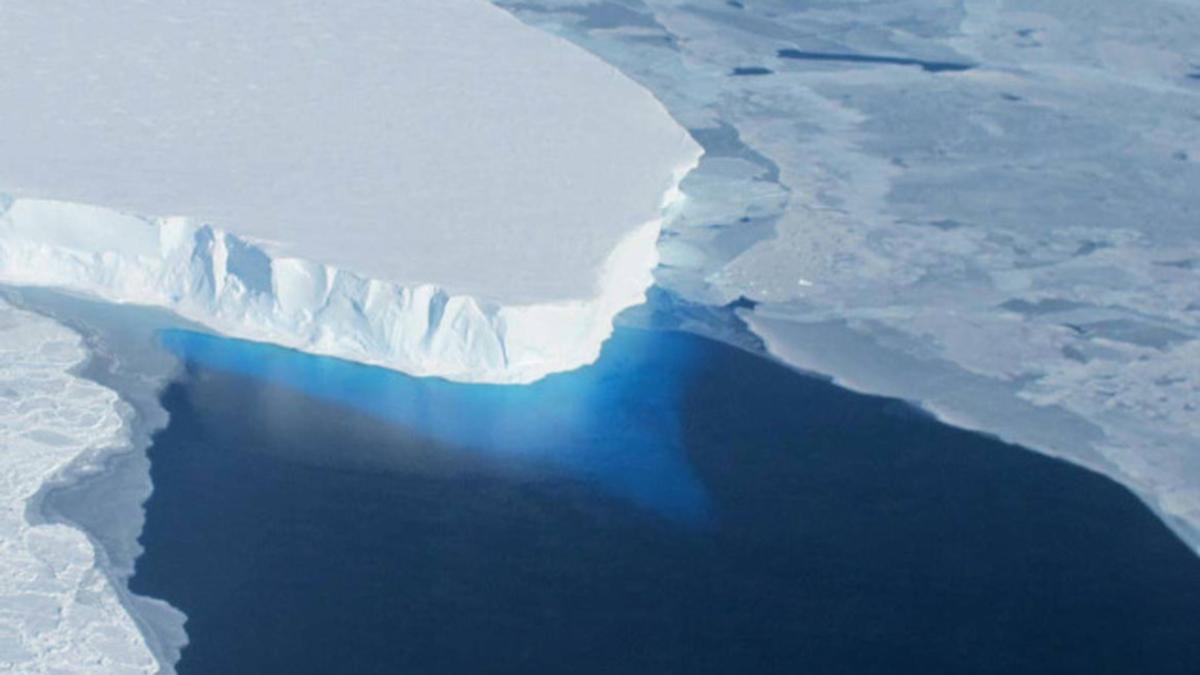
The Thwaites Glacier, often referred to in popular media as the “Doomsday Glacier”, is one of the most crucial glaciers in the world for understanding future sea-level rise. Located in West Antarctica, it is an outflow glacier of the West Antarctic Ice Sheet (WAIS) and drains into the Amundsen Sea.
Why is Thwaites Glacier Important?
- Mass and Size: Thwaites is among the largest glaciers in Antarctica, covering an area comparable to a large country.
- Climate Sensitivity: The WAIS, of which Thwaites is a key component, is recognised as one of the planet’s climate tipping elements, meaning its destabilisation could trigger irreversible changes.
Unique Physical Characteristics
A defining feature of Thwaites Glacier is its retrograde bed slope, the land beneath it slopes downward as one moves inland and lies below sea level. This makes the glacier highly vulnerable to warm ocean water intrusion.
- Warm seawater flows beneath the glacier’s floating ice shelf, melting it from below.
- The ice shelf currently acts as a buttress or brace, slowing the flow of ice into the ocean.
- As the ice shelf thins or fractures, this restraining effect weakens, causing the glacier to accelerate and lose ice more rapidly.
Current Scientific Observations
Scientific studies have confirmed that Thwaites Glacier is:
- Thinning steadily
- Retreating inland
- Already contributing to global sea-level rise
The rapid melting is strongly linked to human-induced climate change, particularly rising ocean temperatures.
Potential Global Impacts
- Sea-Level Rise: A complete collapse of Thwaites over a long period could raise global sea levels by around 0.5 metres.
- Cascade Effect: Thwaites acts as a barrier holding back neighbouring glaciers in the WAIS. Its weakening could destabilise adjacent ice masses, further accelerating sea-level rise.
- Coastal Risks: Higher sea levels would increase coastal flooding, shoreline erosion, storm surges, and threaten:
- Coastal cities
- Low-lying islands
- Ports and critical infrastructure
Why It Matters for the World
Although Thwaites Glacier is geographically remote and far from human settlements, its evolution has global consequences. Changes in this single glacier have the potential to reshape coastlines worldwide, making it a key focus area for climate science, global risk assessment, and international climate policy.