
Taragiri
- 07 Mar 2026
In News:
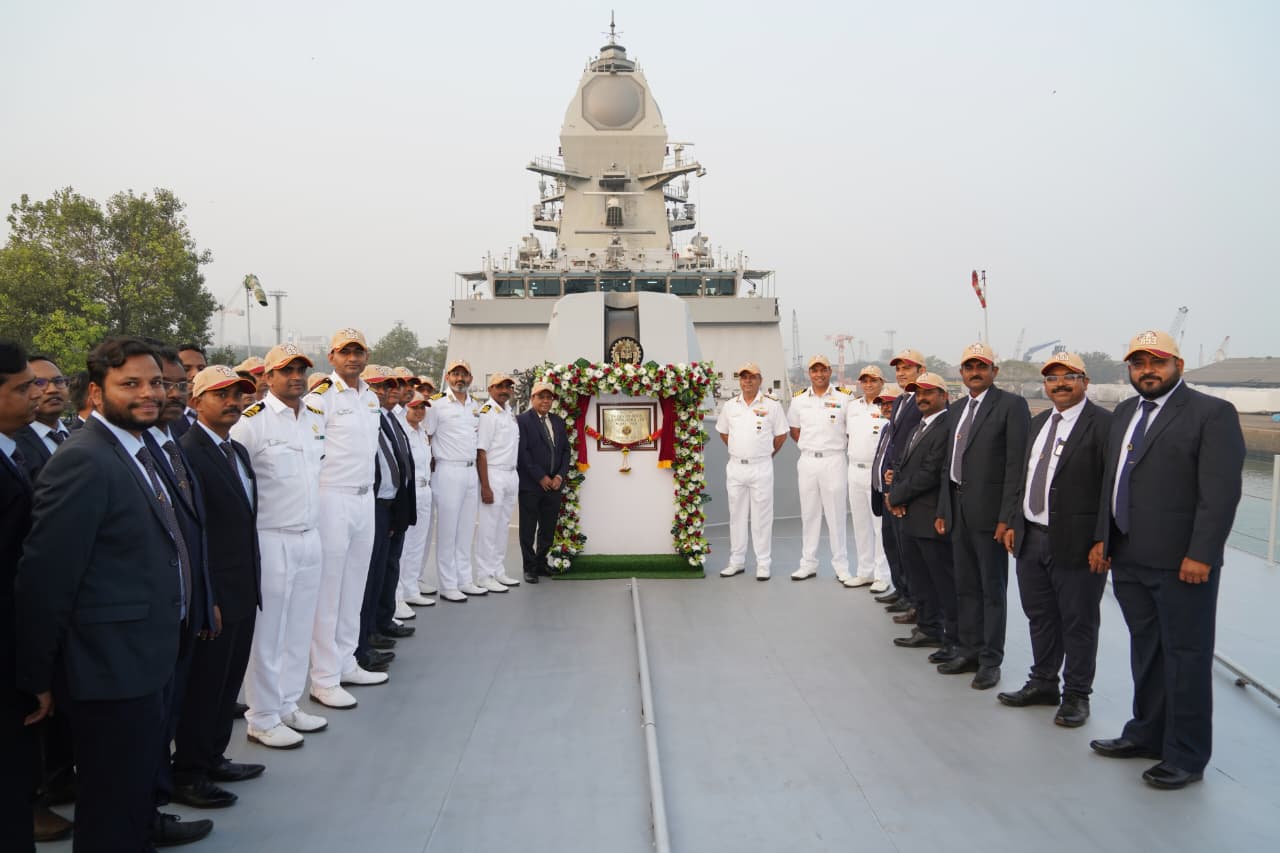
The induction of INS Taragiri (Yard 12653), the fourth Nilgiri-class (Project 17A) stealth frigate, marks a significant milestone in India’s efforts to strengthen indigenous warship building and maritime security. The vessel has been delivered to the Indian Navy by Mazagon Dock Shipbuilders Limited (MDL) and represents the third Project 17A ship constructed by the shipyard. The induction highlights India’s progress in advanced naval shipbuilding and self-reliance in defence production.
Legacy of INS Taragiri
- The new frigate continues the legacy of the earlier INS Taragiri, a Leander-class frigate that served in the Indian Navy for 33 years (1980–2013). Carrying forward the same name symbolises continuity in naval tradition while representing a new generation of technologically advanced warships.
- The ship has been designed by the Warship Design Bureau (WDB) of the Indian Navy and constructed using the Integrated Construction approach, a modern shipbuilding technique that enables simultaneous fabrication of different blocks of the vessel, thereby reducing construction time and improving efficiency.
Project 17A: India’s Stealth Frigate Programme
Project 17A is an ambitious Indian naval programme aimed at building seven Nilgiri-class stealth frigates as upgraded successors to the Shivalik-class frigates. These ships are designed for enhanced stealth, survivability, and combat capabilities.
The construction of the seven frigates is distributed between two major Indian shipyards:
- Four ships — Nilgiri, Udaygiri, Taragiri, and Mahendragiri — are being built by Mazagon Dock Shipbuilders Limited in Mumbai.
- Three ships — Himgiri, Dunagiri, and Vindhyagiri — are being constructed by Garden Reach Shipbuilders and Engineers (GRSE) in Kolkata.
The ships are being built through the Integrated Construction methodology, which allows for pre-outfitting during block fabrication, thereby reducing build time and improving production efficiency.
An important aspect of the project is indigenisation, with approximately 75% of the systems and equipment sourced from Indian industries, aligning with the government’s ‘Atmanirbhar Bharat’ initiative in defence manufacturing.
Key Features and Capabilities
The Nilgiri-class frigates are designed for blue-water operations, enabling the Indian Navy to operate effectively across distant maritime regions. These ships are versatile frontline assets capable of performing multiple combat roles.
1. Propulsion System: The ships are powered by a Combined Diesel or Gas (CODOG) propulsion system, which integrates diesel engines and gas turbines, each connected to a Controllable Pitch Propeller (CPP). This configuration provides both high speed and fuel efficiency.
2. Advanced Weapons Systems: Project 17A frigates are equipped with a range of modern weapons, including:
- **BrahMos supersonic cruise missiles
- Long Range Surface-to-Air Missile (LRSAM) / Barak-8 system
- Lightweight anti-submarine torpedoes
- Indigenous Rocket Launchers (IRL)
These weapons enable the ships to effectively engage surface, aerial, and underwater threats.
3. Sensors and Electronic Systems: The frigates are fitted with sophisticated surveillance and combat management systems, including:
- Multi-mission radar and surface-surveillance radar
- Airborne early-warning radar integration
- Shakti Electronic Warfare Suite
- HUMSA-NG Sonar for anti-submarine warfare
Additionally, the vessels incorporate an Integrated Platform Management System (IPMS) for efficient monitoring and control of onboard machinery and systems.
Project HANUMAN
- 07 Mar 2026
In News:
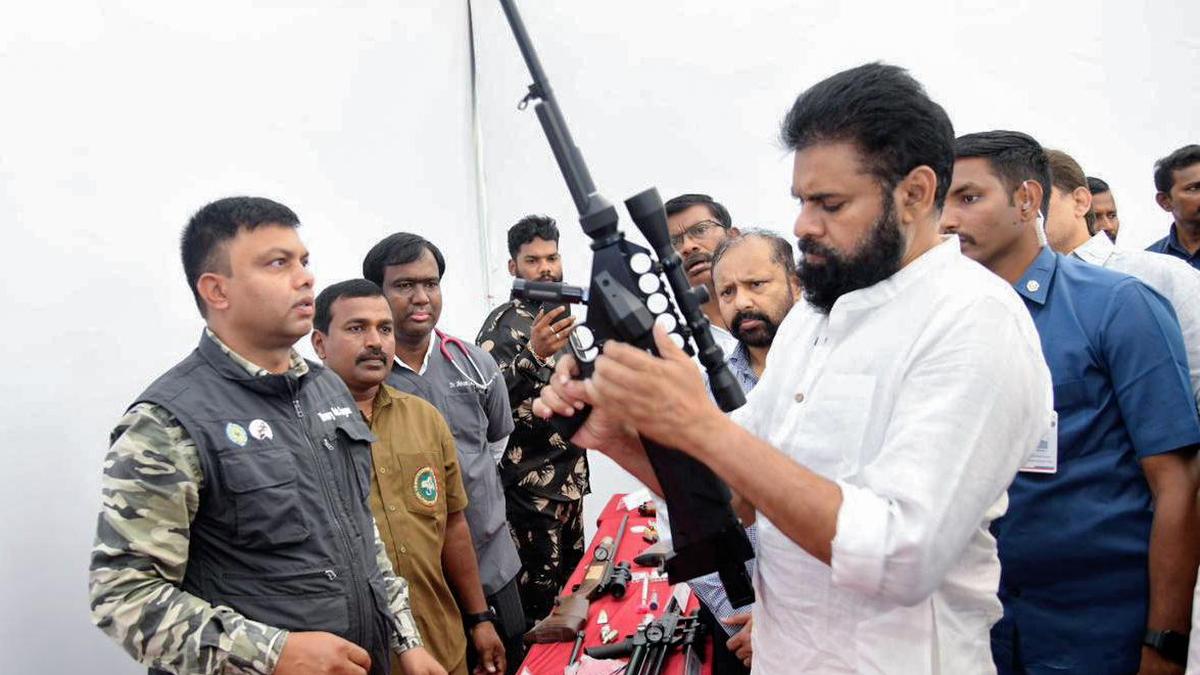
Human–wildlife conflict has emerged as a major environmental and socio-economic challenge in India, particularly in forest-fringe regions where expanding human settlements intersect with wildlife habitats. To address this issue, the Government of Andhra Pradesh has launched Project HANUMAN, an innovative programme aimed at strengthening wildlife rescue, monitoring, and community protection mechanisms while promoting coexistence between humans and wildlife.
About Project HANUMAN
Project HANUMAN stands for Healing and Nurturing Units for Monitoring, Aid and Nursing of Wildlife. The initiative is designed to mitigate conflicts in forest-bordering villages where incidents such as elephant raids, crop damage, and snake bites are common. By combining modern technology, rapid response mechanisms, and community participation, the programme aims to ensure both human safety and wildlife conservation.
The project focuses particularly on forest-fringe areas that frequently experience wildlife incursions, thereby seeking to reduce casualties, prevent retaliatory killings of animals, and improve wildlife rescue operations.
Key Features of the Project
1. Rapid Response and Rescue Infrastructure: The initiative includes a strong emergency response network comprising:
- 100 GPS-enabled vehicles for field monitoring and quick deployment.
- 93 Rapid Response Units to address wildlife emergencies.
- 7 specialised wildlife ambulances equipped for rescue and medical aid.
2. Wildlife Rescue Centres: Four dedicated rescue centres have been established in key locations:
- Visakhapatnam
- Rajamahendravaram
- Tirupati
- Byrluti
These centres will provide facilities for treatment, rehabilitation, and temporary shelter of rescued wildlife.
3. Community Participation through ‘Vajra’ Teams: The project encourages local participation through “Vajra” volunteer teams at the village level. These teams assist forest officials in handling minor incidents such as snake rescues and early reporting of wildlife movement, thereby reducing panic and preventing escalation.
4. Technology-based Monitoring: Advanced technologies form a key component of the programme:
- Artificial Intelligence (AI) systems to track wildlife movements and generate early warning alerts for nearby settlements.
- A dedicated HANUMAN mobile application that allows citizens to report wildlife sightings, conflict incidents, and emergencies, improving coordination between communities and forest authorities.
5. Improved Compensation Mechanism: To support affected communities and reduce hostility towards wildlife, the government has enhanced compensation provisions:
- ?10 lakh compensation for human deaths caused by wildlife.
- ?2 lakh for injuries.
- Market-value compensation for livestock losses.
UNCLOS and Maritime Security
- 07 Mar 2026
In News:
Recent reports of the sinking of the Iranian frigate IRIS Dena off the south-western coast of Sri Lanka, allegedly following a torpedo strike by a United States Navy submarine amid escalating tensions in the Middle East, have renewed attention on the legal regime governing maritime spaces. Such incidents highlight the importance of international maritime law, particularly the United Nations Convention on the Law of the Sea (UNCLOS), which regulates state rights and responsibilities in the world’s oceans.
United Nations Convention on the Law of the Sea (UNCLOS)
UNCLOS is a comprehensive international treaty that establishes the legal framework for the governance and use of oceans and seas. Adopted in 1982 at Montego Bay, Jamaica, the convention entered into force in 1994. Due to its wide scope and significance, it is often described as the “Constitution of the Oceans.”
The convention defines maritime boundaries of coastal states, regulates navigation rights, governs exploitation of marine resources, and establishes obligations for environmental protection and dispute settlement. It thus provides a structured legal order for activities such as shipping, fishing, seabed mining, and naval operations.
Currently, 168 parties, including the European Union, are members of the convention. Countries such as India, Japan, and China are parties to UNCLOS. The United States has signed the convention but has not ratified it, although many of its provisions are followed as customary international law.
Maritime Zones under UNCLOS
UNCLOS divides the oceans into several legal zones, each conferring different rights and responsibilities to coastal and other states.
- Territorial Sea (up to 12 nautical miles): A coastal state exercises full sovereignty over this zone, similar to its land territory. However, foreign ships are allowed the right of innocent passage, meaning they may pass through the waters as long as they do not threaten the security or laws of the coastal state.
- Contiguous Zone (12–24 nautical miles): In this zone, the coastal state does not enjoy complete sovereignty but can enforce laws relating to customs, immigration, fiscal regulations, sanitation, and security to prevent violations within its territory or territorial sea.
- Exclusive Economic Zone (EEZ) (up to 200 nautical miles): Within the EEZ, the coastal state has sovereign rights for exploring, exploiting, conserving, and managing natural resources, including fisheries, oil, and gas. However, other states retain freedoms of navigation and overflight, as well as the laying of submarine cables and pipelines.
- High Seas (International Waters): Areas beyond national jurisdiction are classified as the high seas. No state can claim sovereignty over these waters, and they are governed by international law and the principles of UNCLOS, ensuring freedoms such as navigation, fishing, and scientific research.
Relevance to the Recent Incident
The alleged strike on the Iranian warship near Sri Lanka highlights the strategic significance of international waters and the legal complexities surrounding naval operations. While states retain freedom of navigation and military presence in international waters, such actions can raise questions regarding maritime security, use of force, and adherence to international law.
Golestan Palace
- 07 Mar 2026
In News:
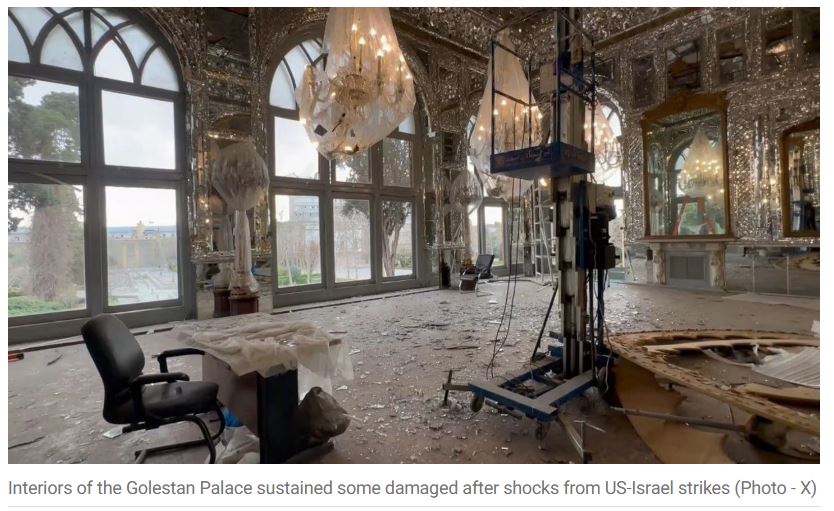
The historic Golestan Palace in Tehran, Iran, recently attracted international attention after reports indicated that the palace complex suffered structural damage due to shockwaves and debris from airstrikes amid escalating tensions in the Middle East. The site, recognised as a UNESCO World Heritage Site, represents one of the most important symbols of Persian royal heritage and architecture. The incident has raised concerns about the vulnerability of cultural heritage sites during armed conflicts.
Historical Background
- Golestan Palace is one of the oldest historic monuments in Tehran and has served as a major centre of political and royal power for centuries. The origins of the complex date back to the 16th century during the Safavid Dynasty, when Tehran began to emerge as an important political centre. Initially constructed as a fortified citadel for Safavid rulers, the site gradually evolved into an extensive royal complex with gardens, palatial buildings, and ceremonial halls.
- The palace gained greater prominence during the rule of the Qajar dynasty, which came to power in 1779 and declared Tehran the capital of Iran. During this period, Golestan Palace became the official seat of government and royal residence. Later, the Pahlavi dynasty also used the complex for important state ceremonies. Reflecting its historical significance and architectural value, UNESCO inscribed the palace complex on the World Heritage List in 2013.
Architectural and Cultural Features
- Golestan Palace is widely admired for its unique architectural style that blends traditional Persian aesthetics with European influences introduced during the 19th century. This synthesis reflects the cultural exchanges and modernization efforts of the Qajar rulers.
- The palace complex is particularly renowned for its vibrant tile work, which features intricate floral motifs, geometric patterns, and calligraphic inions. Rich colours such as turquoise, cobalt blue, yellow, pink, and white are used extensively, reflecting the Persian artistic tradition that emphasises symmetry, detail, and storytelling through design.
- In addition to decorative art, the complex also preserves valuable cultural archives, including early Iranian photography, historical documents, and royal artefacts from the Qajar period.
Important Structures within the Complex
The Golestan Palace complex comprises several important buildings and ceremonial halls:
- Shams-ol-Emareh (Edifice of the Sun): Built in the 1860s by Naser al-Din Shah Qajar, it is one of the most iconic structures in the complex and symbolises the influence of European architectural styles on Persian royal architecture.
- Marble Throne Hall (Takht-e-Marmar): A historically significant hall used for royal coronations and official state ceremonies.
- Mirror Hall: Famous for its elaborate mirror mosaics and luxurious interior decoration, representing the refinement of Persian decorative art.
- Other ceremonial halls: The complex also includes halls such as the Salam Hall, Brilliant Hall, Ivory Hall, and Reception Hall, which were used for diplomatic gatherings and royal functions.
- Museum buildings: Several museums within the palace display Qajar-era paintings, royal gifts, manus, and historical artefacts.
Significance of the Site
Golestan Palace represents the artistic, political, and cultural evolution of Iran over several centuries. It illustrates the transition of Persian architecture during the Qajar period, when exposure to European ideas led to new forms of artistic expression while retaining traditional Persian elements. The site also reflects Iran’s royal traditions, including coronations and diplomatic ceremonies.
World Obesity Atlas 2026
- 07 Mar 2026
In News:
- Childhood obesity has emerged as a significant public health challenge globally, with developing countries increasingly witnessing a rapid rise in overweight children due to changing lifestyles, dietary patterns, and urbanisation.
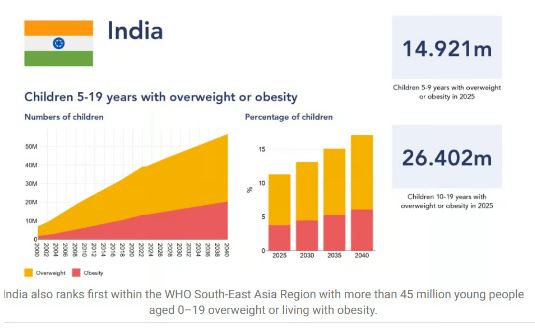
- The World Obesity Atlas 2026, released by the World Obesity Federation on World Obesity Day (4 March), highlights the alarming scale of the problem. The report reveals that India ranks second globally in the number of children living with overweight and obesity, underscoring the urgent need for policy interventions and preventive strategies.
Global Scenario
Globally, childhood obesity has increased sharply in the past decade. The report estimates that more than one in five children (20.7%) aged 5–19 years are overweight or obese, compared to 14.6% in 2010. If current trends continue, around 507 million children worldwide could be overweight or obese by 2040.
A large proportion of children with high Body Mass Index (BMI) is concentrated in a few countries. China, India and the United States together account for over 10 million children each living with obesity, making them the major contributors to the global burden.
Childhood obesity also significantly increases the risk of early onset of non-communicable diseases (NCDs). By 2040, it is projected that:
- 57 million children could show early signs of cardiovascular disease, particularly elevated triglycerides.
- 43 million children may develop hypertension.
These projections highlight the long-term health implications of obesity during childhood.
India’s Obesity Scenario
India faces a dual burden of undernutrition and rising obesity, especially among children and adolescents. According to the World Obesity Atlas 2026, India ranks second after China in the number of children with high BMI.
Key estimates for 2025 include:
- 41 million children with high BMI
- 14 million children living with obesity
The health consequences are expected to worsen between 2025 and 2040:
- Hypertension cases: 2.99 million → 4.21 million
- Hyperglycaemia: 1.39 million → 1.91 million
- High triglycerides: 4.39 million → 6.07 million
- Metabolic dysfunction-associated steatotic liver disease (MASLD) (earlier known as NAFLD): 8.39 million → 11.88 million
Lifestyle and nutrition patterns further aggravate the issue:
- 74% of adolescents (11–17 years) fail to meet recommended physical activity levels.
- Only 35.5% of school-age children receive school meals regularly.
- 32.6% of infants (1–5 months) experience sub-optimal breastfeeding practices.
Key Challenges
1. Rising Burden of Non-Communicable Diseases (NCDs): Obesity significantly increases the risk of chronic illnesses such as diabetes, hypertension, and cardiovascular diseases. NCDs already account for over 43 million deaths globally each year.
2. Economic and Productivity Loss: Obesity also imposes a large economic burden. In 2019, the cost of overweight and obesity in India was estimated at $28.95 billion, equivalent to 1.02% of GDP (around ?1,800 per capita). Without adequate interventions, this burden may rise to ?4,700 per capita by 2030, or 1.57% of GDP.
3. Urbanisation and Lifestyle Changes: Urban exposure increases obesity risk significantly:
- 1.91 times higher for those living in urban areas up to 5 years
- 2.05 times higher for 6–10 years
- 2.40 times higher for more than 10 years
Sedentary lifestyles, increased consumption of processed foods, and reduced physical activity are major contributing factors.
Government Initiatives
The Government of India has introduced several initiatives to tackle malnutrition and promote healthier lifestyles:
- POSHAN Abhiyaan (National Nutrition Mission): Focuses on improving nutritional outcomes among children, adolescents, and women through convergence of nutrition programmes.
- Fit India Movement: Encourages citizens to adopt active lifestyles and regular physical activity.
- Eat Right India: Led by the Food Safety and Standards Authority of India, it promotes healthy diets, food safety, and reduction of unhealthy food consumption.
- School Health and Wellness Programme: Aims to promote health awareness, physical fitness, and behavioural change among school students.