
23rd Foundation Day of National Commission for Scheduled Tribes
- 22 Feb 2026
In News:
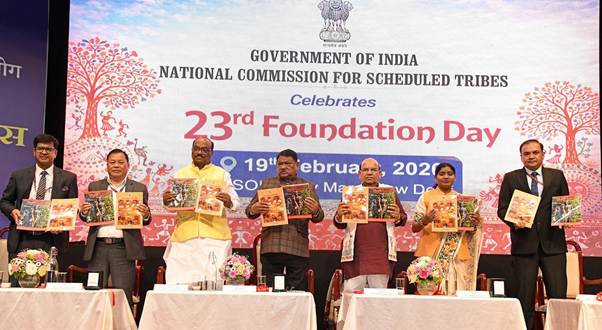
The 23rd Foundation Day of the National Commission for Scheduled Tribes (NCST) was celebrated in New Delhi by the Ministry of Tribal Affairs.
- Union Tribal Affairs Minister Jual Oram released the NCST Handbook detailing the Commission’s mandate and functioning.
- The event highlighted:
- NCST’s constitutional responsibilities
- Policy recommendations
- Grievance redressal initiatives
- Field visits to Scheduled Areas
- The Commission reiterated focus areas such as education, forest rights, land issues, infrastructure, and livelihood generation for tribal communities.
About National Commission for Scheduled Tribes (NCST)
Constitutional Status
- Established under Article 338-A of the Constitution.
- Created by the 89th Constitutional Amendment Act, 2003, which bifurcated the earlier National Commission for SCs and STs.
- Aims to provide focused attention to the distinct problems of Scheduled Tribes (STs).
Composition
- Chairperson
- Vice-Chairperson
- Three other Members (at least one woman)
- Appointed by the President by warrant under his hand and seal.
Tenure & Status
- Tenure: 3 years.
- Not eligible for more than two terms.
- Chairperson: Rank of Union Cabinet Minister.
- Vice-Chairperson: Rank of Minister of State.
- Members: Rank of Secretary to Government of India.
Core Functions
- Investigate and monitor safeguards for STs under the Constitution and laws.
- Inquire into complaints regarding deprivation of tribal rights.
- Participate in socio-economic development planning.
- Evaluate development progress of STs.
- Submit annual/periodic reports to the President.
- Recommend measures to Union and State Governments.
Additional Functions (Specified in 2005)
- Ownership rights over Minor Forest Produce (MFP).
- Safeguarding rights over mineral and water resources.
- Preventing land alienation of tribals.
- Monitoring implementation of the Panchayats (Extension to Scheduled Areas) Act (PESA), 1996.
- Relief and rehabilitation of displaced tribals.
- Addressing shifting cultivation issues.
Powers of NCST
- Powers of a civil court during investigations:
- Summon persons
- Require production of documents
- Receive affidavits
- Requisition public records
- Can regulate its own procedure.
- Mandatory consultation: Central and State Governments must consult NCST on major policy matters affecting STs.
Reporting Mechanism
- Submits reports to the President.
- Reports laid before Parliament with Action Taken Memorandum.
- State-specific reports forwarded to Governor for placement before State Legislature.
Constitutional Provisions Related to Scheduled Tribes (STs)
Identification of STs
- Article 366(25): defines Scheduled Tribes (STs) as tribes or tribal communities, or parts thereof, that are deemed under Article 342 to be STs for the purposes of the Constitution.
- Article 342(1) empowers the President to specify tribes as STs in consultation with the Governor for states.
Administrative Provisions
- Fifth Schedule: Applies to Scheduled Areas in states other than Sixth Schedule states.
- Sixth Schedule: Provides Autonomous District Councils in: Assam, Meghalaya, Tripura, and Mizoram
Key Legislations for ST Protection
- Protection of Civil Rights Act, 1955
- SC/ST (Prevention of Atrocities) Act, 1989
- PESA Act, 1996
- Forest Rights Act, 2006
Gaganyaan Drogue Parachute
- 22 Feb 2026
In News:
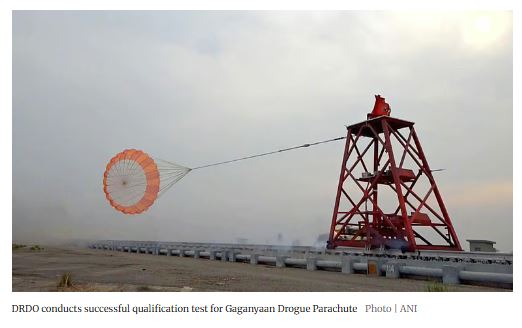
India achieved a significant milestone in its human spaceflight programme as the Defence Research and Development Organisation (DRDO) successfully conducted a qualification-level load test of the Drogue Parachute for the Gaganyaan mission.
- Test conducted at the Terminal Ballistics Research Laboratory (TBRL), Chandigarh.
- Utilised the Rail Track Rocket Sled (RTRS) facility to simulate dynamic flight conditions.
- The parachute was tested under loads higher than expected flight loads to validate safety and reliability.
What is the Gaganyaan Drogue Parachute?
- A crucial component of the Crew Module deceleration system.
- Deployed during atmospheric re-entry.
- Functions to:
- Stabilize the Crew Module.
- Reduce velocity before main parachutes deploy.
- Ensure safe splashdown/landing of astronauts.
Developed collaboratively by:
- Indian Space Research Organisation (ISRO)
- DRDO
Gaganyaan Deceleration System
The Crew Module recovery system consists of 10 parachutes (4 types):
- Apex Cover Separation Parachutes (2): Remove protective apex cover.
- Drogue Parachutes (2): Stabilize module at high altitude, Reduce velocity during transition phase.
- Pilot Parachutes (3): Extract main parachutes.
- Main Parachutes (3): Provide final deceleration for safe landing.
The drogue parachutes serve as the critical transition stage, ensuring controlled descent before deployment of main canopies.
Key Technical Features
- High-strength ribbon parachute design
- Ribbon-type structure allows controlled airflow.
- Reduces shock loads.
- Ensures high tensile strength during high-speed descent.
- Qualification-level testing
- Tested beyond maximum expected flight loads.
- Enhances mission safety margins.
- Designed for extreme conditions
- Capable of functioning under:
- Rapid velocity changes
- Turbulence
- Variable atmospheric pressures
- Capable of functioning under:
- Dynamic validation: High-speed testing using RTRS facility simulates near-real re-entry conditions.
Significance for India’s Human Spaceflight Programme
- Strengthens safety architecture of Gaganyaan.
- Demonstrates indigenous capability in complex recovery systems.
- Enhances collaboration between ISRO and DRDO.
- Critical for safe astronaut recovery after orbital mission.
India assumes chairmanship of Indian Ocean Naval Symposium (IONS)
- 22 Feb 2026
In News:
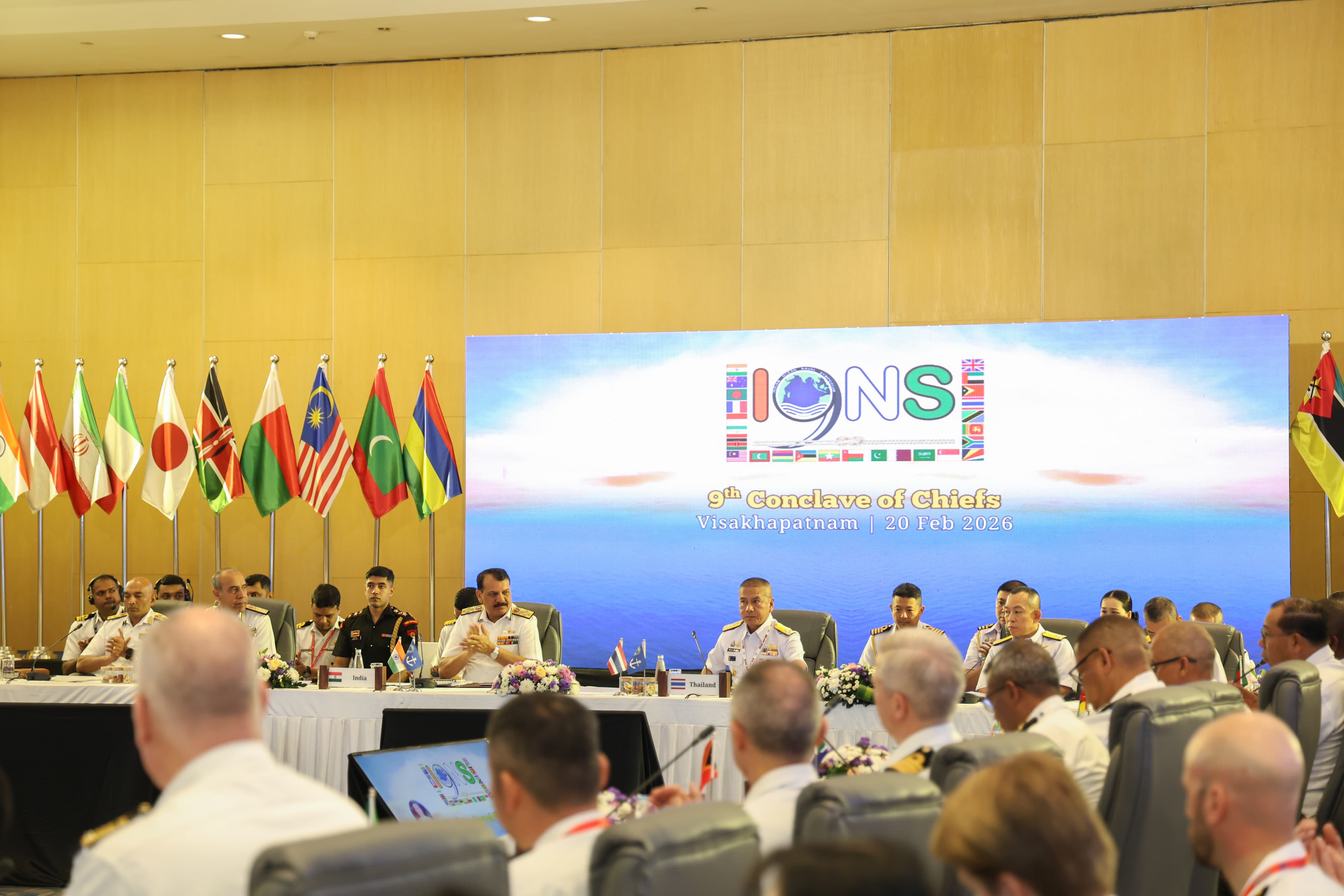
- India assumed the Chairmanship of the Indian Ocean Naval Symposium (IONS) from Royal Thai Navy.
- The 9th Conclave of Chiefs was held at Visakhapatnam.
- Participation included Chiefs of Navies and Heads of Maritime Security Agencies from 33 countries (Members, Observers, and Indian Ocean littoral states).
- India had earlier held the inaugural Chairmanship (2008–2010).
About Indian Ocean Naval Symposium (IONS)
- Launched in 2008 by the Indian Navy.
- A voluntary naval forum aimed at enhancing maritime cooperation among Indian Ocean littoral states.
- No permanent headquarters.
- Features a rotating chairmanship.
Membership Structure
- 25 Member States, divided into four sub-regions:
- South Asian
- West Asian
- Southeast Asian & Australian
- East African
- 9 Observer countries.
- In 2026:
- The Philippines was inducted as an Observer.
- Oman joined the Working Group on HADR.
Core Objectives of IONS
IONS promotes:
- Maritime security cooperation (including anti-piracy efforts).
- Humanitarian Assistance and Disaster Relief (HADR).
- Maritime information sharing.
- Capacity building among navies.
- Professional exchange through exercises, workshops, and biennial conclaves.
Key Focus Areas (Working Groups)
Under India’s Chairmanship, emphasis will be placed on strengthening:
- Maritime Security
- Humanitarian Assistance and Disaster Relief (HADR)
- Information Sharing and Interoperability
Initiatives Announced During India’s Tenure
- Conduct of IONS Maritime Exercise (IMEX).
- Continued deployment of IOS SAGAR missions to IONS member countries with multinational participation.
- Structured Maritime Information Sharing Workshops.
- Upgrade of the IONS website to enhance:
- Institutional continuity
- Secure engagement
- Usability among member navies
Strategic Significance for India
- Reinforces India’s role as a net security provider in the Indian Ocean Region.
- Strengthens maritime diplomacy and defence cooperation.
- Enhances collective response capability against: Piracy, Maritime terrorism, and Natural disasters
- Promotes interoperability among like-minded navies.
- Reflects India’s vision of SAGAR (Security and Growth for All in the Region).
INS Krishna
- 22 Feb 2026
In News:
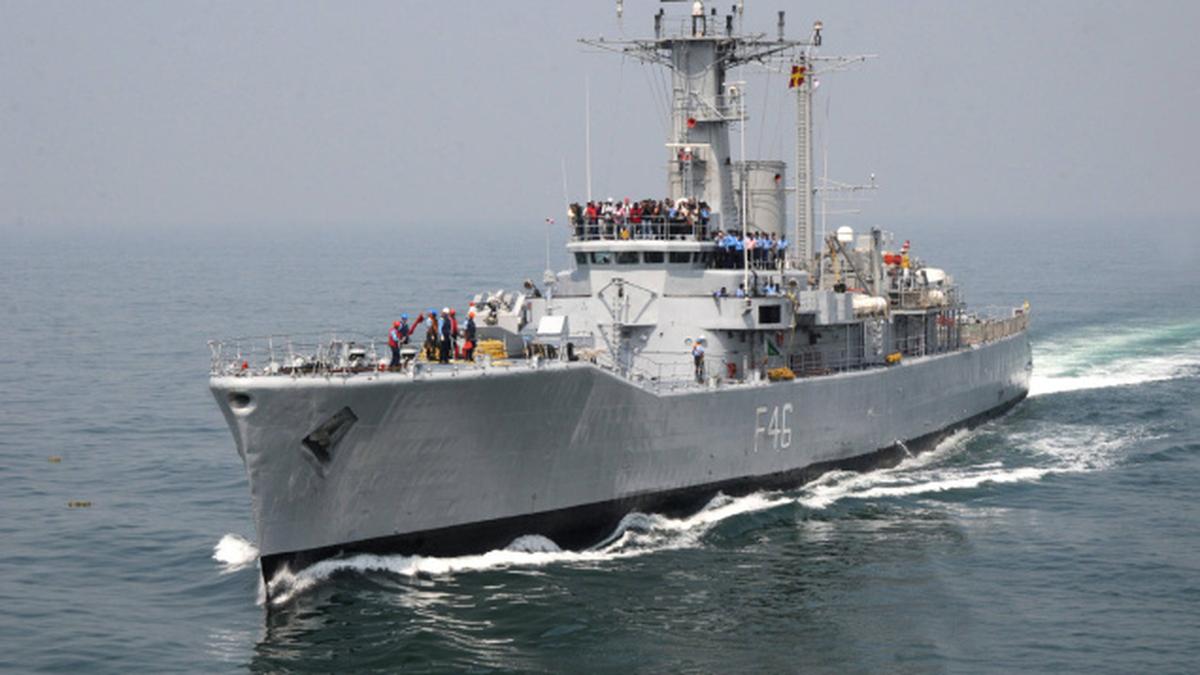
The Indian Navy has commissioned INS Krishna, the first of three indigenously built Cadet Training Ships (CTS), marking a significant step in strengthening sea-based training infrastructure for future naval officers.
About INS Krishna
- First of three Cadet Training Ships (CTS) for the Indian Navy.
- Constructed at Larsen & Toubro (L&T) Shipyard, Kattupalli (near Chennai).
- Designated as Yard 18003 during construction.
- Entirely indigenously built, supporting Aatmanirbhar Bharat in defence manufacturing.
Purpose and Role
- Training Platform
- Functions as a “floating classroom” and “living laboratory.”
- Used for training:
- Officer cadets (including women)
- Cadets from friendly foreign countries
- Training areas include:
- Navigation
- Seamanship
- Watch-keeping
- Practical maritime operations under real sea conditions
Technical Specifications
- Displacement: ~4,700 tonnes
- Maximum speed: 20 knots
- Endurance: 60 days at sea
- Multi-role capability beyond training
Secondary Operational Roles
Apart from training, INS Krishna is designed for:
- Non-Combatant Evacuation Operations (NEO)
- Humanitarian Assistance and Disaster Relief (HADR)
- Search and Rescue (SAR) missions
This enhances operational flexibility and supports India’s role as a net security provider in the Indian Ocean Region (IOR).
Strategic Significance
- Strengthens sea-based officer training capacity of the Indian Navy.
- Enhances practical exposure for cadets under real maritime conditions.
- Supports indigenous defence shipbuilding capability.
- Promotes defence diplomacy through training of foreign cadets.
- Augments India’s capability in HADR and evacuation missions.
Tetanus and Adult Diphtheria (Td) Vaccine
- 22 Feb 2026
In News:
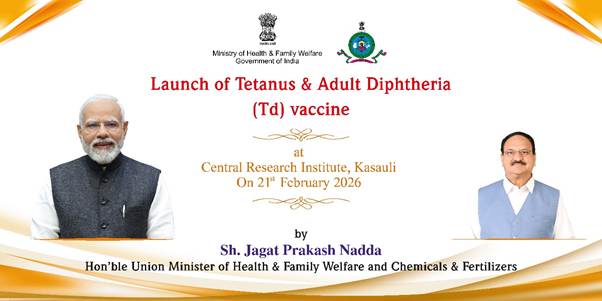
- Recently, the Td vaccine was launched by Union Health Minister J. P. Nadda.
- Manufactured by the Central Research Institute (CRI), Kasauli, Himachal Pradesh.
- CRI functions under the Directorate General of Health Services, Ministry of Health & Family Welfare.
- The vaccine will be supplied under India’s Universal Immunization Programme (UIP).
- CRI plans to supply 55 lakh doses by April 2026, with progressive scaling in subsequent years.
Why the Shift from TT to Td?
- Extensive childhood immunization using DPT vaccines significantly reduced tetanus and diphtheria.
- However, diphtheria antibody levels decline over time, necessitating booster doses.
- In 2006, the World Health Organization (WHO) recommended transitioning from Tetanus Toxoid (TT) to Td vaccine.
- Recommendation reaffirmed in:
- WHO Tetanus Vaccine Position Paper (2017)
- Strategic Advisory Group of Experts (SAGE) deliberations (2002 & 2016)
- India’s National Technical Advisory Group on Immunization (NTAGI) recommended replacing TT with Td for: All age groups and Pregnant women
Objective: Sustain maternal & neonatal tetanus elimination while expanding protection against diphtheria.
About Td Vaccine
- Full Form: Tetanus and adult Diphtheria Vaccine (Adsorbed, Reduced D-Antigen Content).
- Provides protection against: Tetanus and Diphtheria
- Composition:
- Purified diphtheria toxoid
- Purified tetanus toxoid
- Adjuvant: Aluminum phosphate
- Preservative: Thiomersal
- Storage: Freeze- and heat-sensitive vaccine
- Target group: Adolescents, Adults and Pregnant women
About Tetanus
- Caused by: Clostridium tetani (toxigenic strains).
- Nature: Acute infectious disease.
- Transmission: Not spread person-to-person (enters through contaminated wounds).
- Symptoms:
- Painful muscle stiffness
- Lockjaw (inability to open mouth)
- Difficulty swallowing and breathing
- High case-fatality rate, even with intensive care.
About Diphtheria
- Caused by: Corynebacterium diphtheriae.
- Spread: Person-to-person via respiratory droplets.
- Symptoms:
- Breathing difficulty
- Heart failure
- Paralysis
- Can be life-threatening.
- South-East Asia region has been a major contributor to global diphtheria incidence since 2005.
Regulatory and Manufacturing Milestones
The Central Research Institute:
- Completed developmental studies.
- Obtained Test License.
- Secured waivers for:
- Preclinical studies
- Phase I, II, and III trials.
- Received:
- Marketing Authorization
- License for manufacture and sale
- Release approval from Central Drugs Laboratory, Kasauli.