
Italy Recognises Femicide as a Crime

- 03 Dec 2025
In News:
Recently, Italy passed a landmark law formally recognisingfemicide as a separate criminal offence, making life imprisonment the mandatory punishment for gender-motivated killings of women.
Femicide: Concept, Legal Recognition & Global Context
Femicide refers to the intentional killing of women and girls because of their gender. It is regarded as one of the most extreme forms of gender-based violence (GBV) and reflects deep-rooted patriarchal discrimination and control over women.
What is Femicide?
According to UN frameworks, femicide includes gender-related killings committed by:
- Intimate partners (current or former)
- Family members (including relatives by marriage or adoption)
- Other perpetrators, where gender is a primary motive
Femicide is distinct from general homicide because the victim’s gender is central to the motive, often linked to control, honour, jealousy, or refusal to accept autonomy.
Why Recognise Femicide as a Separate Crime?
Countries that legislate specifically on femicide argue that:
- It highlights systemic gender discrimination
- Helps improve data collection and crime classification
- Enables targeted policy and prevention strategies
- Signals stronger state acknowledgment of gender-based violence
Without separate recognition, such crimes may be treated as ordinary homicide, masking the structural gender dimension.
Italy’s Femicide Law
- Italy recently amended its criminal law to explicitly recognise femicide
- Life imprisonment is mandated for killings proven to be gender-motivated
- The law was passed with broad political support
- It follows public outrage over high-profile murders of women, particularly cases involving:
- Former partners
- Patterns of harassment and coercive control
Italy joins a small group of countries with dedicated femicide laws.
Countries with Specific Femicide Laws
- Examples include:Mexico, Chile, Cyprus, Morocco, North Macedonia, Türkiye, Gabon, and Italy (latest addition)
- Many other countries do not define femicide separately but may treat gender as an aggravating factor during sentencing.
Global Situation
- UN reports indicate that tens of thousands of women each year are killed by intimate partners or family members
- However, data gaps remain because many countries do not classify or report femicide separately
- Researchers link femicide to:
- Patriarchal norms
- Gender inequality
- Weak protection mechanisms
- Social tolerance of domestic violence
Debates Around Femicide Laws
Some legal experts argue that:
- Broad definitions may create challenges in proving gender motive
- Laws must be supported by:
- Strong policing and investigation
- Victim protection systems
- Social awareness campaigns
Legal reform alone may not be sufficient without institutional and cultural change.
India’s Position
India does not recognise femicide as a separate legal category, but has several laws addressing gender-based violence and harmful practices:
- Protection of Women from Domestic Violence Act, 2005
- Dowry Prohibition Act, 1961
- Prohibition of Child Marriage Act, 2006
- National Commission for Women Act, 1990
- Specific provisions under IPC/CrPC related to dowry death, cruelty, and sexual offences
In India, gender may act as a contextual or aggravating factor, but homicide laws are not separately classified as femicide.
Related International Observance
International Day for the Elimination of Violence Against Women
- Observed on 25 November
- Designated by the United Nations General Assembly in 1999
- Aims to raise awareness about violence against women and girls (VAWG)
Great Nicobar Crake

- 03 Dec 2025
In News:
Great Nicobar Island, the southernmost island of India in the Andaman & Nicobar archipelago, is emerging as a major hotspot of biological discoveries. Recent scientific studies from the area identified for a mega infrastructure development project have highlighted the island’s exceptional biodiversity and high endemism.
Since 2021, researchers have reported nearly 40 new species from Great Nicobar, with a significant number formally described only in the last few years. These findings underline the island’s ecological sensitivity.
Key Recent Discoveries
1. New Wolf Snake – Lycodonirwini
- Recently described species of wolf snake
- Known from only four records so far
- Named in honour of Steve Irwin
- Found in a very restricted range on Great Nicobar’s east coast
- Scientists recommend listing it as Endangered under IUCN Red List criteria due to:
- Rarity
- Limited distribution
- Habitat vulnerability
2. Great Nicobar Crake (Genus: Rallina)
A rare forest rail photographed only a handful of times over more than a decade.
Taxonomic Status
- Belongs to the genus Rallina (crakes/forest rails)
- May represent a new species to science based on distinct morphological traits
- Very little known about its distribution, population size, or ecology
Habitat
- Dense tropical rainforest undergrowth
- Associated with wet forest floors, streams, bamboo, cane, and vine thickets
Behaviour
- Ground-dwelling, shy and elusive
- Rarely flies; moves swiftly through vegetation
- Feeds on insects and small invertebrates
Conservation Note
- Not yet officially assessed by IUCN
- Likely to fall under Data Deficient or a threatened category if found to be endemic with a small range
Ecological & Conservation Significance
- Presence of range-restricted species indicates fragile ecosystems
- Frequent discoveries suggest large gaps in scientific knowledge
- Highlights the importance of:
- Long-term ecological monitoring
- Rigorous Environmental Impact Assessments (EIA)
- Habitat protection in the face of large infrastructure projects
Great Nicobar is considered one of the last extensive undisturbed tropical rainforest regions in India, making it critical for biodiversity conservation.
Ellora Caves
- 03 Dec 2025
In News:
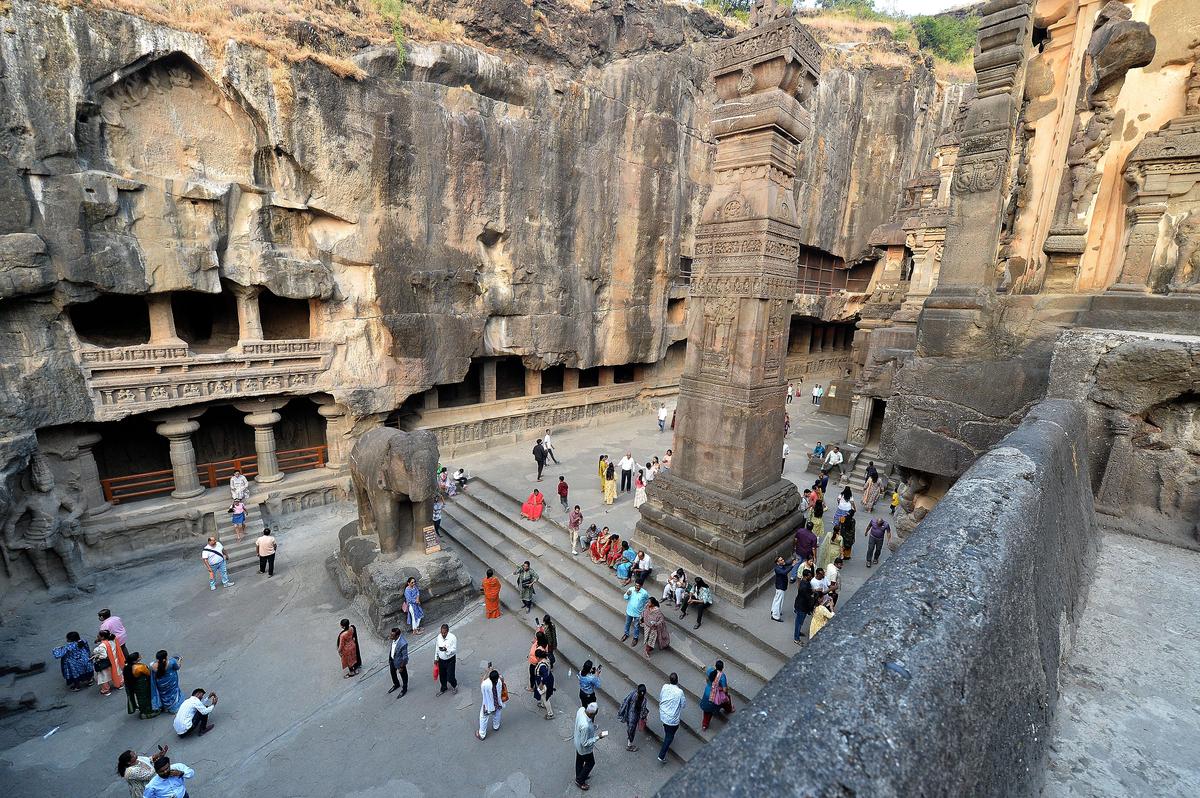
The Ellora Caves, located in Chhatrapati Sambhajinagar (Maharashtra), are among India’s earliest UNESCO World Heritage Sites (inscribed in 1983) and represent one of the largest rock-cut cave complexes in the world. While the caves themselves are globally renowned, the wider Ellora–Khultabad heritage zone contains several historically important but lesser-known monuments that remain under-promoted.
Ellora Caves: Core Facts
Chronology
Constructed between 6th and 10th centuries CE, Ellora reflects continuous religious activity over centuries.
|
Group |
Cave Numbers |
Period |
Features |
|
Buddhist |
1–12 |
c. 600–800 CE |
Viharas (monasteries), chaitya halls, meditation cells |
|
Hindu |
13–29 |
c. 600–900 CE |
Grand sculptural programs, mythological panels |
|
Jain |
30–34 |
c. 800–1000 CE |
Intricate carvings, emphasis on asceticism and detail |
Architectural & Cultural Significance
1. Kailasa Temple (Cave 16)
- Largest monolithic rock-cut structure in the world
- Dedicated to Lord Shiva
- Excavated top-down from a single basalt rock mass
- Estimated 1.5–2 lakh tonnes of rock removed
- Notable features:
- Nandi Mandapa
- Life-size elephant sculptures
- Panels like Ravana shaking Mount Kailasa
- Highly developed Dravidian temple architecture in rock-cut form
2. Multi-Religious Coexistence
- Rare site where Buddhist, Hindu, and Jain monuments coexist
- Demonstrates religious tolerance and artistic continuity in early medieval India
3. Rock-Cut Engineering
- Multi-storeyed structures carved from solid basalt
- Includes pillars, halls, stairways, windows, and elaborate façades
Wider Ellora–Khultabad Heritage Zone
Beyond the caves, the surrounding regionespecially Khultabad, located on the hill above Ellora—contains monuments reflecting layered religious and political history.
1. Malik Ambar’s Tomb
- Mausoleum of Malik Ambar, the Ethiopian-origin military leader and statesman of the Ahmadnagar Sultanate
- Known for administrative reforms and resistance against the Mughals
- Represents Deccan Sultanate architecture
2. Tomb of the First Peshwa
- Refers to an early holder of the Peshwa title (used before and during the Maratha period)
- Highlights the region’s pre-Maratha and Maratha-era political history
3. Empty Tomb of the Last Ottoman Caliph
- Memorial structure linked to the last Ottoman Caliph, Abdulmejid II
- Built by his daughter, who was married into the Hyderabad Nizam’s family
- SymbolisesIndia’s historical connections with West Asia and the Ottoman world
4. Khultabad’s Religious Traditions
- Known for Sufi shrines and long-standing Islamic spiritual traditions
- Also associated with earlier local cults and Naga veneration, indicating continuity of sacred geography
Tourism & Heritage Significance
- Ellora is part of a major heritage circuit including:
- Ajanta Caves
- Daulatabad Fort
- Khultabad monuments
- Together, these sites form a dense cultural landscape spanning:
- Ancient Buddhist heritage
- Early medieval Hindu and Jain architecture
- Deccan Sultanate history
- Maratha-era legacy
- Indo-Islamic and trans-regional Islamic connections
Durand Line
- 03 Dec 2025
In News:
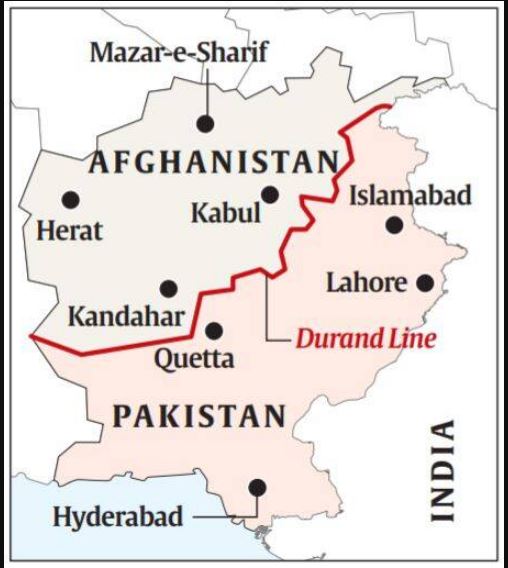
The Durand Line is the 2,600-km boundary separating Pakistan and Afghanistan, running from the Iran border in the west to China’s border in the east, traversing rugged terrain including the Karakoram range and the Registan desert. It remains one of South Asia’s most disputed international borders and a recurring flashpoint in regional geopolitics.
Historical Background
1. The Great Game Context
- During the 19th century, Afghanistan became strategically crucial in the rivalry between the British Empire and Tsarist Russia, known as the Great Game.
- Britain sought to create Afghanistan as a buffer state to protect British India from Russian expansion.
2. Anglo-Afghan Wars
|
War |
Period |
Outcome |
|
First Anglo-Afghan War |
1839–42 |
British forces retreated after strong Afghan resistance |
|
Second Anglo-Afghan War |
1878–80 |
British victory; led to the Treaty of Gandamak (1879) giving Britain control over Afghan foreign policy |
|
Third Anglo-Afghan War |
1919 |
Ended with the Treaty of Rawalpindi, restoring Afghanistan’s foreign policy independence |
Creation of the Durand Line (1893)
- Negotiated between Sir Henry Mortimer Durand, Foreign Secretary of British India, and Emir Abdur Rahman Khan of Afghanistan.
- Formally demarcated between 1894 and 1896 by joint commissions.
- Key consequences:
- Divided Pashtun tribal territories between Afghanistan and British India
- Brought Balochistan under British India
- Recognised the Wakhan Corridor as a buffer between Russian and British spheres of influence
Post-Independence Dispute
Pakistan’s Position
- After Partition in 1947, Pakistan inherited the Durand Line as its western international boundary.
- Pakistan treats it as a legally valid international border under the principle of state succession.
Afghanistan’s Position
- Afghanistan has never formally recognised the Durand Line as an international border.
- It argues that the agreement was:
- A colonial imposition
- Signed under unequal conditions
- Successive Afghan governments including the Taliban regime have maintained this position.
Pashtunistan Issue
- The Durand Line splits the Pashtun ethnic homeland.
- Post-1947, demands emerged for an independent “Pashtunistan”, straining Pakistan–Afghanistan relations.
- Afghanistan was the only country to oppose Pakistan’s admission to the UN (1947), partly over this issue.
Security and Contemporary Relevance
- The border region has long been marked by:
- Militant safe havens
- Cross-border insurgency
- Smuggling and illegal movement
- Pakistan began fencing the border in 2017, which Afghanistan opposed, leading to clashes.
- Recent tensions include allegations of cross-border air strikes and skirmishes, highlighting the border’s volatility.
- The dispute complicates counter-terror cooperation, refugee management, and regional connectivity.
Why the Durand Line Matters for India & the Region
- Affects regional stability in South Asia and Central Asia
- Impacts terror networks operating in the Af-Pak region
- Influences geopolitical alignments involving Pakistan, Afghanistan, China, and the US
- Important for understanding ethnic geopolitics and colonial legacy borders
Bioremediation
- 03 Dec 2025
In News:
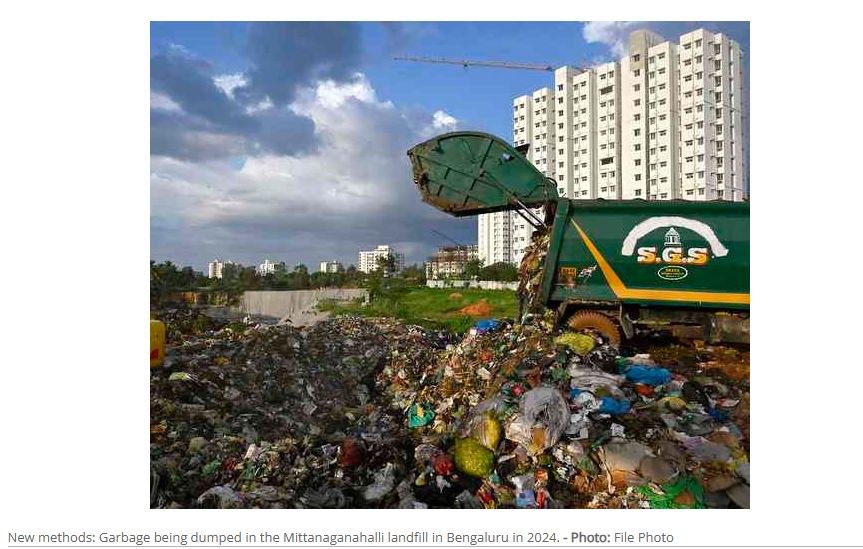
Human waste is leading to a world where access to clean air, water and soil is becoming increasingly difficult. The solution is two-pronged — reduce waste and clean up the waste already made.
What is bioremediation?
Bioremediation refers to the use of living organisms to clean up environmental pollution. The term literally means “restoring life through biology.” It involves harnessing microorganisms such as bacteria, fungi, algae, and plants to degrade, transform, or neutralise harmful contaminants in soil, water, and air.
These organisms use pollutants like oil, pesticides, plastics, and some heavy metals as sources of energy or nutrients. Through natural metabolic processes, they break down toxic substances into less harmful by-products such as water, carbon dioxide, and organic acids. In certain cases, microbes can also convert toxic metals into less mobile or less bioavailable forms, reducing their environmental impact.
Types of Bioremediation
Bioremediation is broadly classified into two types:
- In situ bioremediation involves treating contamination at the original site without removing soil or water. For example, oil-degrading bacteria may be applied directly to an oil spill.
- Ex situ bioremediation involves removing contaminated material to a controlled environment for treatment and returning it once cleaned. This is often used for heavily polluted soil or wastewater.
The effectiveness of bioremediation depends on factors such as temperature, pH, oxygen availability, and nutrient levels, which influence microbial growth and activity.
Modern Advances
Modern bioremediation combines traditional microbiology with advanced biotechnology. Scientists now use genetic and molecular tools to identify microbes with specific pollutant-degrading abilities. In some cases, genetically modified (GM) microorganisms are being designed to break down persistent pollutants like certain plastics or petroleum residues that natural microbes struggle to degrade.
Nanotechnology is also being explored, such as absorbent materials that help collect oil or pollutants before microbial treatment.
Why Bioremediation is important for India
India faces severe environmental challenges due to rapid industrialisation, urbanisation, and poor waste management. Many rivers receive untreated sewage and industrial effluents, while agricultural soils are affected by pesticide residues and heavy metals. Oil spills, landfill leachates, and industrial waste further degrade ecosystems and threaten public health.
Traditional remediation methods are often expensive, energy-intensive, and may generate secondary pollution. Bioremediation offers a cost-effective, scalable, and environmentally friendly alternative, especially for a country with vast contaminated areas and limited remediation resources.
India’s rich biodiversity provides an advantage, as indigenous microbes adapted to local climatic conditions can be more effective than imported strains.
Status of Bioremediation in India
Bioremediation is gradually gaining ground in India, though largely at pilot and project levels. Government-supported research institutions and universities are working on microbial solutions for treating sewage, industrial effluents, oil spills, and contaminated soils.
The Department of Biotechnology (DBT) has supported clean technology initiatives, and research organisations such as CSIR laboratories and IITs have developed microbial formulations and innovative materials for environmental cleanup. Start-ups are also entering the sector with products for wastewater and soil treatment.
Bioremediation aligns with national initiatives such as NamamiGange, Swachh Bharat Mission, and sustainable waste management efforts.
Advantages
Bioremediation is considered environmentally friendly because it relies on natural biological processes rather than harsh chemicals. It is generally cost-effective, requires less heavy infrastructure, and can offer a long-term solution, as pollutants are broken down rather than merely transferred elsewhere. It is particularly useful for treating oil contamination and organic pollutants.
Limitations and Risks
Bioremediation is not universally applicable. It works best for biodegradable pollutants, and some contaminants, particularly certain heavy metals and synthetic chemicals, may not be fully removed. The process can also be slow, sometimes taking months or years.
The use of genetically modified microorganisms raises biosafety concerns. If not properly regulated, their release into open environments could have unintended ecological impacts. There is also a need for site-specific knowledge, regulatory standards, and skilled personnel for large-scale adoption.