
Regional Connectivity Scheme – Modified UDAN
- 28 Mar 2026
In News:
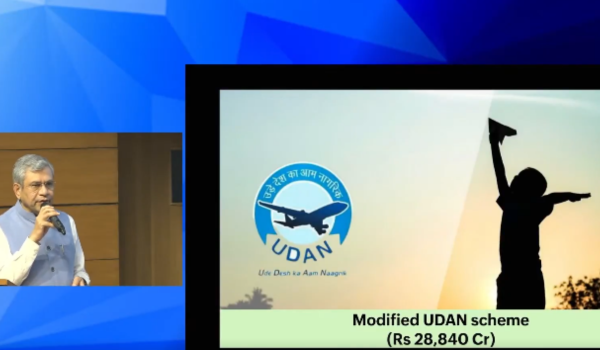
The Union Cabinet has approved the Regional Connectivity Scheme – Modified UDAN with a financial outlay of ?28,840 crore for the period 2026–2036, aiming to expand regional air connectivity and strengthen India’s aviation ecosystem.
About UDAN Scheme
- UDAN (Ude Desh ka Aam Nagrik) is India’s flagship regional connectivity programme launched in 2016 to make air travel affordable and accessible.
- The Modified UDAN represents its next phase, focusing on sustainability, infrastructure expansion, and deeper regional integration.
Objectives
- Enhance connectivity to underserved and unserved regions
- Make air travel affordable for the common citizen
- Promote balanced regional development
- Support the vision of Viksit Bharat @2047
- Develop a globally competitive aviation sector
Key Features
1. Infrastructure Expansion (CAPEX)
- Development of 100 new airports from existing airstrips
- Investment of around ?12,159 crore
2. Helipad Network Development
- Construction of 200 modern helipads
- Each costing approximately ?15 crore
- Focus on hilly, remote, and island regions
3. Viability Gap Funding (VGF)
- Allocation of ?10,043 crore
- Financial support to airlines to ensure route viability
- Helps maintain affordable fares
4. Operation & Maintenance (O&M) Support
- Support for around 441 aerodromes
- Provided for 3 years (up to ?3.06 crore per airport annually)
5. Promotion of Indigenous Aviation
- Procurement of aircraft from Hindustan Aeronautics Limited
- HAL Dhruv helicopters
- HAL Dornier aircraft
- Deployment by state-run carriers like Alliance Air and Pawan Hans
PRISM-SG
- 28 Mar 2026
In News:
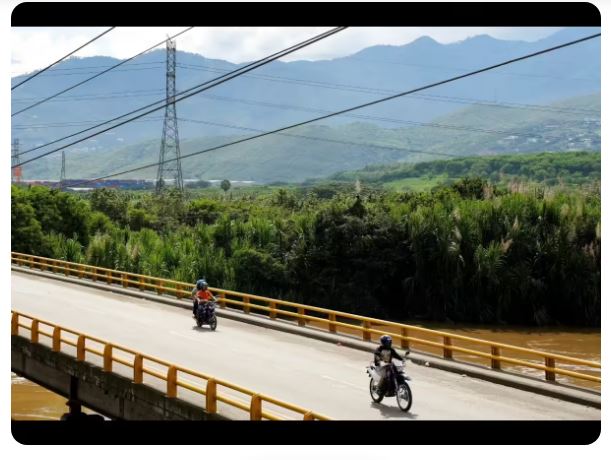
The Minister for Road Transport and Highways recently launched the PRISM-SG (Portal for Rail-Road Inspection & Stages Management – Steel Girders) in New Delhi to streamline approvals and inspections related to critical transport infrastructure.
About PRISM-SG Portal
- The PRISM-SG Portal is a technology-driven digital platform designed to enhance efficiency, transparency, and coordination in the construction of Road Over Bridges (ROBs) and railway-related bridge infrastructure.
- It integrates multiple stakeholders and processes into a single-window system, enabling seamless project execution.
Objectives
- Digitise approval and inspection processes for bridge construction
- Improve inter-agency coordination between road and rail authorities
- Ensure quality assurance and compliance in infrastructure projects
- Reduce delays and enhance project execution efficiency
Key Features
1. End-to-End Digital Workflow
- Online submission of documents
- Automated scrutiny and query resolution
- Digital approvals and inspection scheduling
2. Quality Assurance Integration
- Incorporates:
- Quality Assurance Plan (QAP)
- Welding Procedure Specification Sheet (WPSS)
- Fabrication stage inspections of steel girders
3. Real-Time Monitoring & Audit
- Uploading of inspection reports, test results, and photographs
- Complete digital audit trail
- Real-time tracking of project progress
4. Multi-Stakeholder Integration
- Brings together:
- Road Owning Departments
- Indian Railways
- Contractors and fabricators
- Inspection agencies
Immigration, Visa, Foreigners Registration & Tracking (lVFRT) Scheme

- 28 Mar 2026
In News:
The Union Cabinet has approved the continuation of the Immigration, Visa, Foreigners Registration & Tracking (IVFRT) Scheme for the period 2026–2031, in line with evolving immigration needs and the recently enacted Immigration and Foreigners Act, 2025.
About IVFRT Scheme
The IVFRT Scheme is a technology-driven platform aimed at integrating and streamlining:
- Immigration processes
- Visa issuance
- Registration and tracking of foreigners in India
It was initially approved in 2010 and has undergone multiple phases of expansion to enhance efficiency and security.
Current Phase
- Duration: 1 April 2026 – 31 March 2031
- Budget Outlay: ?1800 crore
Objectives
- Create a secure, integrated immigration ecosystem
- Facilitate legitimate international travel
- Strengthen national security and foreigner tracking mechanisms
- Improve ease of doing business and tourism flows
Key Features
1. Emerging Technology Integration
- Adoption of mobile-based immigration services
- Deployment of self-service kiosks and e-gates
- Use of advanced digital platforms for seamless passenger movement
2. Transformation of Core Infrastructure
- Upgradation of:
- Immigration Check Posts (ICPs)
- Foreigners Regional Registration Offices (FRROs)
- Data centres and backend systems
- Development of a resilient and scalable nationwide system
3. Technology & Service Optimization
- Introduction of unified digital platforms
- Revamping of core application architecture
- Strengthening of network systems for faster and efficient service delivery
Achievements of IVFRT System
- 100% faceless and contactless visa processing system
- Around 91% of e-Visas processed within 72 hours
- Reduction in immigration clearance time:
o From5–6 minutes to 2.5–3 minutes
- Introduction of Fast Track Immigration–Trusted TravellerProgramme (FTI-TTP):
o Clearance time reduced to ~30 seconds at e-gates
- Coverage:
o 117 Immigration Posts
o 15 FRROs
o 850 Foreigners Registration Offices (FROs)
India’s Nationally Determined Contribution (2031-2035)
- 28 Mar 2026
In News:
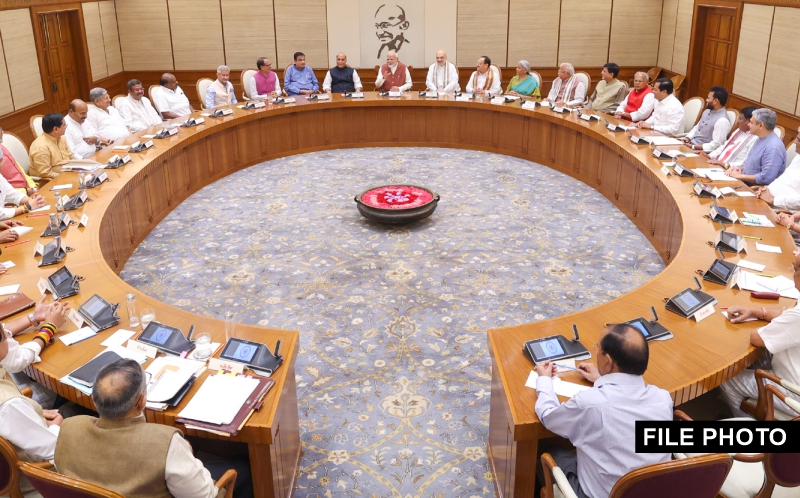
The Union Cabinet has approved India’s updated Nationally Determined Contribution (NDC) for the period 2031–2035, to be submitted under the United Nations Framework Convention on Climate Change in line with the Paris Agreement.
About Nationally Determined Contributions (NDCs)
NDCs are national climate action plans through which countries outline:
- Targets for reducing greenhouse gas emissions (mitigation)
- Measures for adapting to climate change impacts
The 2031–2035 NDC builds upon India’s earlier commitments for 2030 and reflects enhanced ambition aligned with development goals.
Objectives of India’s NDC (2031–2035)
- Align economic growth with environmental sustainability
- Support the vision of Viksit Bharat @2047
- Progress towards net-zero emissions by 2070
- Ensure climate justice and equity under CBDR-RC principles
Key Targets
1. Emissions Intensity Reduction: Reduce emissions intensity of GDP by 47% from 2005 levels by 2035
2. Non-Fossil Fuel Capacity: Achieve 60% of installed electric power capacity from non-fossil sources
3. Carbon Sink Creation: Create an additional 3.5–4.0 billion tonnes of CO? equivalent through forest and tree cover
India’s Climate Performance: A Strong Track Record
- Achieved 33–35% emissions intensity reduction target well before 2030
- Reached over 52% non-fossil fuel capacity (2026), ahead of schedule
- Created 2.29 billion tonnes of CO? equivalent carbon sink by 2021
This early achievement enhances India’s global credibility in climate governance.
Key Features of the Updated NDC
1. Whole-of-Government Approach
- Developed through 10 working groups under NITI Aayog
- Involves ministries, industry, experts, and civil society
2. Clean Energy and Green Growth
- Expansion of renewable energy and green infrastructure
- Key initiatives:
- Green Hydrogen Mission
- PM Surya Ghar: Muft Bijli Yojana
- PM-KUSUM Scheme
- Carbon Capture, Utilization and Storage (CCUS)
3. Focus on Climate Adaptation
- Coastal protection via mangrove restoration (MISHTI)
- Glacier monitoring and Himalayan ecosystem protection
- Heat Action Plans and disaster-resilient infrastructure
4. Institutional Framework
- Implemented through:
- National Action Plan on Climate Change (NAPCC)
- State Action Plans (SAPCCs)
5. People-Centric Approach
- Promotion of Lifestyle for Environment (LiFE)
- Campaigns like Ek Ped Maa Ke Naam to encourage mass participation
6. Global Climate Leadership
- Active role in:
- International Solar Alliance
- Global Biofuel Alliance
- Coalition for Disaster Resilient Infrastructure (CDRI)
Operation Urja Suraksha
- 28 Mar 2026
In News:
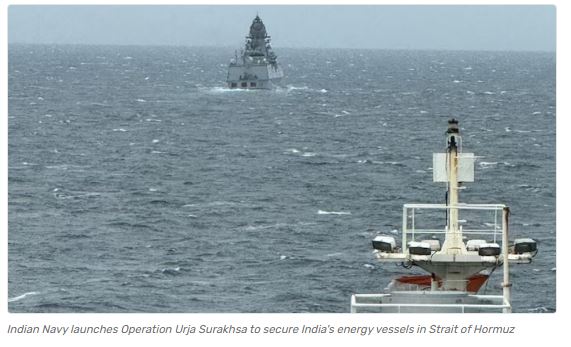
Amid escalating geopolitical tensions in West Asia, particularly around the Strait of Hormuz, India has launched Operation Urja Suraksha to safeguard its critical energy supply routes.
About Operation Urja Suraksha
Operation Urja Suraksha is a strategic maritime security mission initiated by the Indian Navy to ensure the safe transit of India-bound energy cargo vessels from the Persian Gulf region.
Key Objectives
- Ensure uninterrupted supply of crude oil, LNG, and LPG to India
- Provide secure navigation and escort services in conflict-prone waters
- Prevent disruptions from threats such as piracy, sea mines, and regional hostilities
Key Features of the Operation
1. Naval Escort Mechanism
- Deployment of Indian naval warships to escort merchant vessels
- Escort begins after ships exit the Strait of Hormuz and continues into the Arabian Sea
2. Layered Maritime Security
- Use of destroyers and stealth frigates equipped with advanced surveillance and communication systems
- Real-time coordination between naval assets for threat detection and response
3. Safe Route Navigation
- Identification of secure maritime corridors
- Avoidance of high-risk zones prone to mines, drone threats, or electronic warfare
Strategic Significance
1. Energy Security
- India imports nearly 80–85% of its crude oil, a significant portion of which passes through the Strait of Hormuz
- The operation reduces vulnerability to supply shocks and price volatility
2. Geopolitical Relevance
- Demonstrates India’s proactive role in securing Sea Lines of Communication (SLOCs)
- Enhances India’s credibility as a net security provider in the Indian Ocean Region (IOR)
3. Maritime Capability Enhancement
- Showcases India’s blue-water naval capabilities
- Strengthens deterrence and rapid-response capacity in crisis situations