
Rare Sighting of Striped Hyena in Kali Tiger Reserve

- 06 Feb 2026
In News:
A rare sighting of the striped hyena (Hyaena hyaena) has been reported from the Kali Tiger Reserve, located in the Uttara Kannada district of Karnataka. The sighting is ecologically significant as it highlights the presence of elusive carnivores beyond core forest habitats and reflects improving habitat connectivity within protected landscapes of the Western Ghats region.
About the Striped Hyena
The striped hyena is a medium-sized carnivorous mammal belonging to the Hyaenidae family, which comprises four extant species—striped hyena, spotted hyena, brown hyena, and aardwolf (the latter is insectivorous and not a true wolf).
Key characteristics:
- Appearance: Smaller than the spotted hyena, with a sloping back, erect mane, and distinctive dark vertical stripes along the body and legs.
- Distribution: Found across South Asia (India, Nepal, Afghanistan), North Africa, Sub-Saharan Africa, West Asia, and Central Asia.
- Habitat: Prefers open savannas, grasslands, scrub forests, and semi-arid landscapes, often living close to human settlements.
Behaviour and Ecology
- Feeding habit: Primarily a scavenger, feeding on carrion, animal remains, and occasionally human refuse, thereby playing a crucial role in ecosystem sanitation.
- Social structure: Generally solitary, though it exhibits limited social organisation.
- Territoriality: Uses scent marking to demarcate territories and deter rivals.
- Sexual hierarchy: Adult females dominate males and may display aggression toward other females.
Conservation Status
- IUCN Red List: Near Threatened
- Wildlife (Protection) Act, 1972: Schedule I, providing the highest level of legal protection in India
Despite its wide range, the species faces population decline due to habitat loss, persecution driven by myths, road mortality, and depletion of natural carrion.
VAIBHAV Fellowship Programme
- 06 Feb 2026
In News:
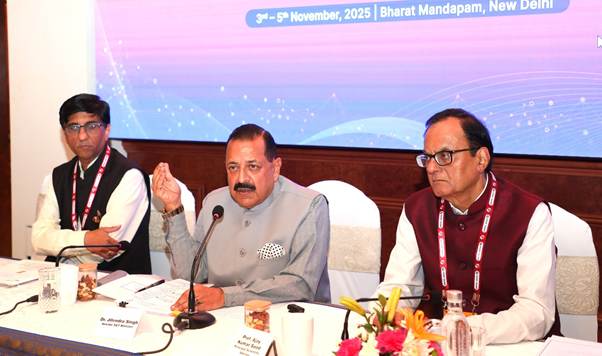
India has taken a strategic step to institutionalise engagement with its global scientific diaspora through the Vaishvik Bhartiya Vaigyanik (VAIBHAV) Fellowship Programme, aimed at strengthening the country’s research, innovation, and higher education ecosystem. The programme recently gained prominence when the Union Minister of State for Science and Technology interacted with VAIBHAV Fellows from across the world and outlined its role in India’s long-term development vision.
Overview of the VAIBHAV Fellowship Programme
The VAIBHAV Fellowship is designed to attract outstanding scientists and technologists of Indian origin including NRI, OCI, and PIO researchers who are actively engaged in advanced research abroad.
Key features include:
- Objective: To enhance India’s research ecosystem by facilitating structured academic and research collaboration between Indian institutions and leading global universities.
- Eligibility:
- PhD/MD/MS from a recognised university
- Affiliation with institutions ranked within the top 500 QS World University Rankings
- Duration: Up to 2 months per year, for a maximum of 3 years
- Financial Support: ?4 lakh per month for the entire fellowship period
- Scale and Scope:
- 75 fellows selected
- Engagement across 18 identified knowledge verticals, including quantum technologies, health, pharmaceuticals, electronics, agriculture, energy, computer sciences, and materials science
- Nodal Ministry: Department of Science and Technology, Ministry of Science and Technology
The fellowship seeks to lower collaboration barriers by simplifying travel, supporting structured student mobility, and enabling long-term institutional linkages.
VAIBHAV and the Shift from Brain Drain to Brain Exchange
Addressing NRI scientists at the Emerging Science, Technology and Innovation Conclave (ESTIC) 2025, Jitendra Singh emphasised that India’s engagement with its scientific diaspora must evolve from the traditional narrative of “brain drain” to “brain exchange” or “reverse brain drain”.
The vision underlying VAIBHAV is not merely physical relocation but continuous circulation of ideas, expertise, and innovation, enabled by digital technologies and collaborative research frameworks.
Institutional and Policy Significance
The programme reflects India’s broader strategy to:
- Internationalise its higher education and research ecosystem
- Integrate global best practices with indigenous problem-solving
- Strengthen science diplomacy and soft power
- Align diaspora expertise with national priorities such as Viksit Bharat @2047
VAIBHAV Fellows from countries including the United States, Canada, Sweden, and Australia have highlighted the need for:
- More structured student mobility frameworks
- Simplified travel and conference approval mechanisms
- Longer fellowship tenures to ensure sustainable research outcomes
Suggestions such as extending the fellowship duration from three to five years and creating pre-approved faculty lists for faster clearances were discussed.
Contribution to India’s Innovation Ecosystem
The discussions also underlined the importance of developing “systems for India”, focusing on indigenous technological solutions in emerging areas such as 5G/6G technologies, advanced manufacturing, and frontier sciences.
India’s improving innovation capacity was highlighted through indicators such as:
- A majority share of resident Indian patent filings in recent years
- Successful translation of research into outcomes, including indigenous vaccines, gene therapy, and space missions
The programme also complements efforts to promote public–private partnerships and cross-border research collaborations, enabling the translation of academic research into industrial and societal applications.
AI-Led Disruption of the Global Software Industry

- 06 Feb 2026
In News:
Global technology markets witnessed sharp volatility following the launch of a new AI-powered workplace automation suite by Anthropic, a San Francisco–based artificial intelligence firm known for developing the Claude large language model. The announcement triggered a reassessment of the long-term viability of traditional software and IT service business models, giving rise to fears of a so-called “SaaSpocalypse”—a potential existential crisis for Software-as-a-Service (SaaS) companies.
What is Anthropic’s AI Workplace Suite?
Anthropic’s new offering is a suite of autonomous AI agent–based tools designed to automate end-to-end white-collar workflows, moving beyond assistive AI towards action-taking AI.
Key characteristics include:
- Claude Cowork agents with 11 specialised plug-ins for tasks such as contract review, NDA analysis, compliance monitoring, sales tracking, and data analytics.
- Platform bypass capability, allowing AI agents to execute tasks directly without relying on conventional enterprise software interfaces such as CRM or IT service management tools.
- Autonomous execution, where AI agents can make decisions and complete workflows with minimal human intervention.
The stated objective is to reduce dependence on traditional SaaS platforms and human intermediaries, thereby fundamentally altering how enterprise work is organised and delivered.
Understanding the “SaaSpocalypse”
The term “SaaSpocalypse”, popularised by analysts including Jefferies, refers to a scenario in which AI agents disintermediate software firms entirely, rather than merely enhancing their products.
Unlike earlier AI tools that complemented existing software, autonomous AI agents threaten to replace entire layers of enterprise software and IT services, undermining subscription-based revenue models.
Impact on Global and Indian Markets
The announcement triggered a broad sell-off in technology stocks:
- In the United States, the S&P 500 fell about 0.8%, while the Nasdaq Composite declined over 1.4%.
- Major technology companies such as Microsoft, Meta Platforms, and Nvidia registered significant losses.
- Enterprise software firms like Salesforce and ServiceNow saw sharp valuation corrections.
The shockwaves were equally visible in India:
- The Nifty IT plunged around 3%.
- Major IT firms such as Infosys, Tata Consultancy Services, HCLTech, Tech Mahindra, and Wipro recorded steep declines, erasing billions in market capitalisation.
Why India’s IT Sector is Particularly Vulnerable
India’s IT industry has historically relied on services such as data processing, compliance monitoring, contract analysis, and customer support, exactly the functions targeted by Anthropic’s AI agents.
The Economic Survey 2025-26 had already warned that:
- Control over AI data and compute is highly concentrated, raising concerns over market power and technological dependence.
- Failure to adapt could “hollow out” India’s core value proposition in global IT services.
The Survey emphasised that sustaining competitiveness would require structural evolution, not incremental adoption of AI tools.
From Opportunity to Threat: A Shift in AI Narrative
Until recently, AI was widely viewed as a productivity enhancer and growth driver for technology firms. Heavy investments were made in AI upskilling and AI-enabled service offerings.
However, the emergence of autonomous AI agents capable of bypassing traditional software platforms has altered investor sentiment. The very technology that firms sought to monetise is now perceived as a direct threat to their core business models.
NDMA’s First-Ever Guidelines on Disaster Victim Identification (DVI)
- 06 Feb 2026
In News:
- India has taken a major institutional step in disaster governance with the release of its first national guidelines and Standard Operating Procedures (SOPs) for Disaster Victim Identification (DVI) by the National Disaster Management Authority (NDMA).
- Titled “National Disaster Management Guidelines on Comprehensive Disaster Victim Identification and Management”, the document was released on Republic Day, marking 25 years of the 2001 Gujarat earthquake, one of India’s worst mass fatality disasters.
Rationale and Context
The guidelines were necessitated by a series of mass fatality incidents in 2025, which exposed serious gaps in India’s ability to scientifically identify victims and ensure dignified management of human remains. These included:
- Air India aircraft crash, Ahmedabad
- Chemical factory explosion, Sangareddy (Telangana)
- Gambhira bridge collapse, Vadodara (Gujarat)
- Flash floods, Dharali (Uttarakhand)
- Delhi car bomb blast (near Red Fort)
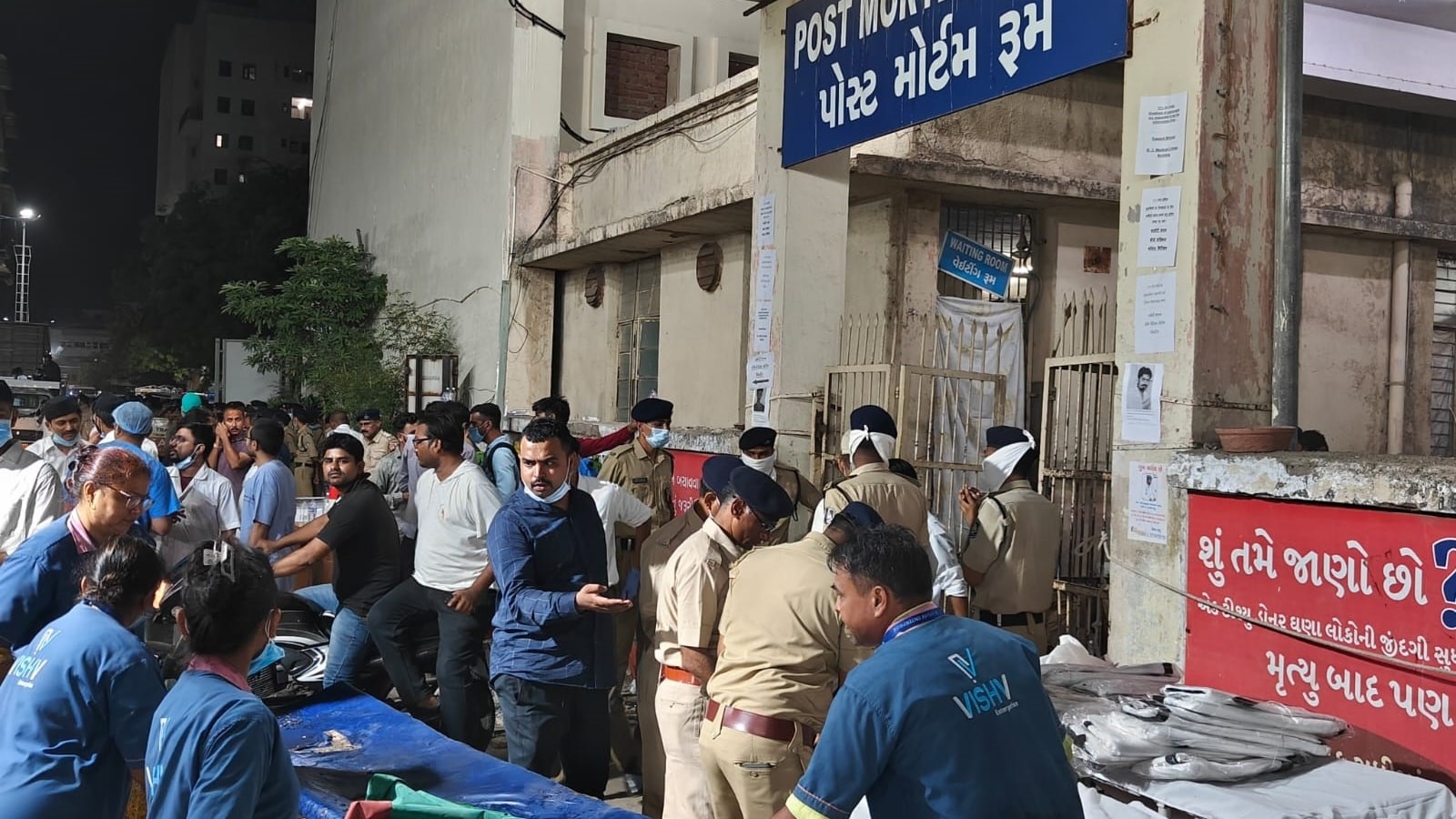
In several of these incidents, victims remained unidentified or were identified after long delays, aggravating emotional trauma for families and creating legal and administrative complications. The absence of standard protocols, trained forensic manpower, and modern infrastructure highlighted the urgent need for a comprehensive national framework.
Objectives of the Guidelines
The DVI guidelines aim to:
- Ensure scientific, accurate and coordinated identification of disaster victims
- Enable dignified handling and handover of human remains
- Address forensic, logistical and institutional lacunae
- Standardise roles of multiple agencies across local, state and central levels
- Integrate humanitarian sensitivity with forensic science
Four-Stage Disaster Victim Identification Process
The guidelines prescribe a globally accepted four-stage identification protocol:
- Systematic Recovery – Careful retrieval of human remains from disaster sites
- Post-Mortem Data Collection – Collection of fingerprints, DNA, dental data and physical markers
- Ante-Mortem Data Collection – Gathering medical records, dental history and identifying features from families
- Reconciliation – Scientific matching of ante-mortem and post-mortem data before release of remains
This structured approach minimises errors, duplication, and misidentification.
Key Innovations and Forensic Advances
A landmark recommendation is the creation of a National Dental Data Registry, recognising that teeth and jaws often survive fires, explosions and decomposition, making dental records a reliable identification tool. The guidelines also formally incorporate:
- Forensic odontology (dental identification)
- Forensic archaeology, enabling identification of remains months or years after disasters, especially in landslides and buried sites
The framework draws from INTERPOL Disaster Victim Identification (DVI) standards, suitably adapted to Indian conditions.
Humanitarian Forensics Approach
The guidelines consciously move beyond a purely procedural mindset to adopt a “humanitarian forensics” approach:
- Discourages mass physical autopsies in large-scale disasters
- Emphasises cultural and religious sensitivity
- Mandates emotional support and counselling for families
- Focuses on the dignity of the dead, timely legal closure, and emotional closure for survivors
Institutional and Operational Framework
The document clearly outlines:
- Composition of DVI teams
- Coordination among police, medical, forensic, administrative and disaster-response agencies
- Command and leadership structures at multi-agency disaster sites
It realistically acknowledges challenges arising from overlapping jurisdictions and the presence of hundreds of responders during major disasters.
Challenges Highlighted
The guidelines identify multiple India-specific constraints:
- Rapid decomposition due to hot and humid climate
- Fragmentation, charring and commingling of remains
- Displacement of bodies during floods and landslides
- Severe shortage of mortuary spaces and cold-chain infrastructure
- Lack of trained forensic manpower
- Absence of reliable manifests or centralized data systems
Implementation Roadmap
NDMA has proposed:
- Establishing organisational DVI structures nationwide
- Training experts across forensic disciplines
- Creating specialised state-level DVI teams
- Fast-tracking implementation on a “war footing”
Way Forward and Value Addition
To strengthen the framework further:
- Linking Ayushman Bharat Health Account (ABHA) with optional dental or implant data can make the Dental Registry operational
- Use of digital forensics (smart devices, biometric locks, cloud health data) for rapid preliminary identification
- Deployment of portable Rapid DNA labs at disaster sites to reduce delays
- Adoption of blockchain-based chain-of-custody systems for tamper-proof forensic records
- Development of international DVI cooperation mechanisms for cross-border disasters
Conclusion
NDMA’s first-ever DVI guidelines mark a paradigm shift from ad hoc responses to an institutionalised, scientific and humane disaster response framework. By integrating advanced forensic science with ethical sensitivity and global best practices, the guidelines significantly strengthen India’s disaster governance architecture.
Their success, however, will depend on effective implementation, sustained capacity-building, and technological integration, ensuring dignity for victims and closure for families during future mass fatality events.
Miniratna Category-I Status to Yantra India Limited
- 06 Feb 2026
In News:
The Union Defence Minister Rajnath Singh has approved the grant of Miniratna Category-I status to Yantra India Limited (YIL), recognising its rapid transformation into a profit-making Defence Public Sector Undertaking (DPSU) within a short span of about four years.
Background
Yantra India Limited was established on 1 October 2021 following the corporatisation of the erstwhile Ordnance Factory Board (OFB) into seven new DPSUs. The reform aimed to enhance functional autonomy, efficiency, competitiveness, and innovation in India’s defence manufacturing ecosystem.
YIL is a Schedule ‘A’ DPSU functioning under the administrative control of the Department of Defence Production.
Performance Highlights
Since its inception, YIL has demonstrated strong operational and financial performance:
- Sales growth: From ?956.32 crore in FY 2021-22 (H2) to ?3,108.79 crore in FY 2024-25.
- Export growth: From nil in FY 2021-22 (H2) to ?321.77 crore in FY 2024-25, reflecting growing global competitiveness.
Key Products
Yantra India Limited operates in critical defence production segments, manufacturing:
- Carbon fibre composites
- Glass composites
- Aluminium alloys
- Assembly products for medium and large calibre ammunition
- Assembly products for armoured vehicles, artillery guns, and main battle tanks (MBTs)
Significance of Miniratna Category-I Status
The Miniratna-I status empowers YIL’s Board of Directors to:
- Incur capital expenditure up to ?500 crore
- Undertake new projects, modernisation, and equipment procurement
- Make faster commercial and investment decisions without prior government approval
This enhanced autonomy is expected to accelerate growth, modernisation, and export capacity.
Broader Policy Context
The decision aligns with India’s defence sector reforms and the vision of Aatmanirbhar Bharat, which seeks to:
- Reduce import dependence in defence equipment
- Promote indigenous defence production and R&D
- Encourage participation of Indian industry
- Position India as a global defence manufacturing and export hub
Notably, in May 2025, Miniratna-I status was also granted to Munitions India Limited, Armoured Vehicles Nigam Limited, and India Optel Limited, reflecting the government’s phased approach to empowering corporatised DPSUs.