
Basic Animal Husbandry Statistics 2025
- 30 Nov 2025
In News:
The Ministry of Fisheries, Animal Husbandry and Dairying, in coordination with the Ministry of Panchayati Raj, released the annual publication Basic Animal Husbandry Statistics (BAHS) 2025 on National Milk Day (26 November 2025). The report presents comprehensive, state-wise data on production and per-capita availability of milk, eggs, meat and wool, based on the Integrated Sample Survey (ISS) conducted from 1 March 2024 to 29 February 2025 across three seasons—summer, rainy and winter.
Key Findings
Milk Production
- Global Rank: 1st
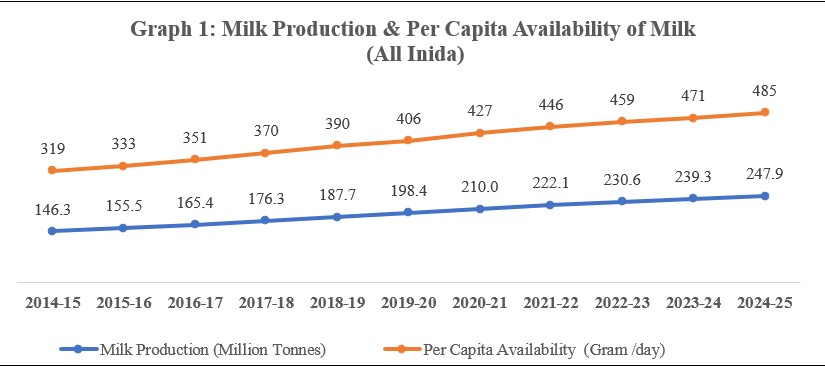
- Output (2024–25): 247.87 million tonnes, a 3.58% increase over 2023–24.
- Per Capita Availability: 485 g/day (up from 319 g/day in 2014–15).
- Top Producers: Uttar Pradesh (15.66%), Rajasthan (14.82%), Madhya Pradesh (9.12%), Gujarat (7.78%), Maharashtra (6.71%)—54.09% combined share.
- Growth by Source: Crossbred cattle (+4.97%), Indigenous cattle (+3.51%), Buffaloes (+2.45%).
Egg Production
- Global Rank: 2nd
- Output (2024–25): 149.11 billion eggs, 4.44% growth.
- Per Capita Availability: 106 eggs/year (up from 62 in 2014–15).
- Major Contributors: Andhra Pradesh (18.37%), Tamil Nadu (15.63%), Telangana (12.98%), West Bengal (10.72%), Karnataka (6.67%)—64.37% combined.
- Production Mix: Commercial poultry 84.49%; Backyard poultry 15.51%.
Meat Production
- Global Rank: 4th
- Output (2024–25): 10.50 million tonnes, 2.46% growth.
- Poultry Share: ~50% (5.18 million tonnes).
- Top States: West Bengal, Uttar Pradesh, Maharashtra, Andhra Pradesh, Telangana—57.55% combined.
Wool Production
- Output (2024–25): 34.57 million kg, 2.63% growth.
- Leading States: Rajasthan (47.85%), Jammu & Kashmir (22.88%), Gujarat, Maharashtra, Himachal Pradesh—85.98% combined.
3rd India-Indonesia Defence Ministers’ Dialogue
- 30 Nov 2025
In News:
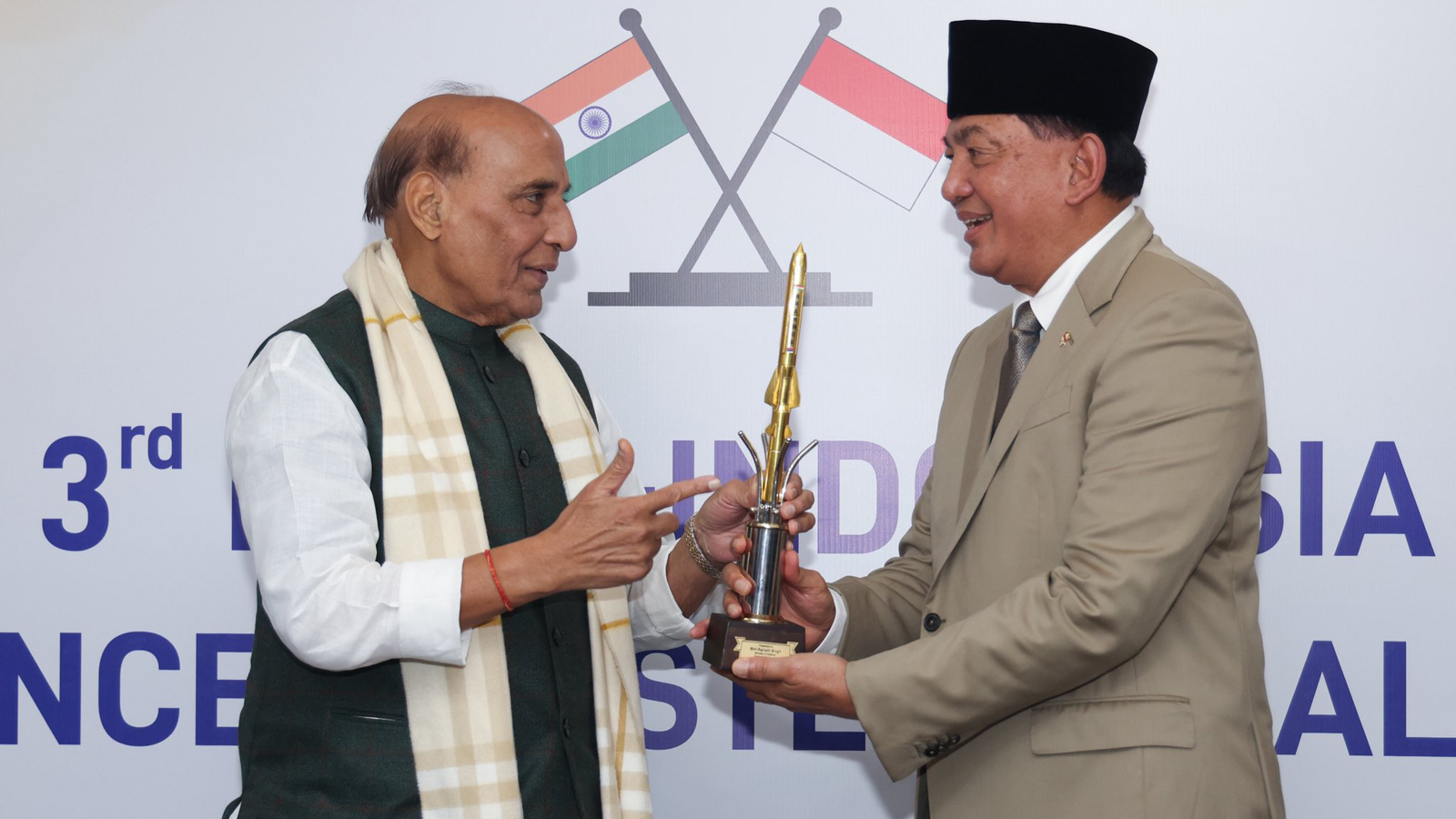
India and Indonesia held the third India–Indonesia Defence Ministers’ Dialogue in New Delhi, co-chaired by Rajnath Singh, India’s Defence Minister, and Sjafrie Sjamsoeddin, the Defence Minister of Indonesia. The dialogue marked another step in deepening bilateral defence ties amid evolving regional security dynamics in the Indo-Pacific.
Context and Significance
The Indonesian Defence Minister’s visit reflects growing momentum in India–Indonesia defence engagement. It followed high-level interactions earlier in the year, including the Indonesian President’s visit to India, underscoring the strategic importance both countries attach to defence and security cooperation.
Key Areas of Discussion
1. Regional and Multilateral Security: The two sides reviewed regional security developments and discussed multilateral issues affecting the Indo-Pacific. They reaffirmed commitment to a free, open, inclusive, and rules-based Indo-Pacific, noting convergence between the ASEAN Outlook on the Indo-Pacific and India’s Indo-Pacific Oceans Initiative (IPOI).
2. Maritime Cooperation: Given Indonesia’s strategic geography overseeing key sea lanes such as the Malacca, Sunda, and Lombok Straits both sides agreed to enhance cooperation in maritime domain awareness, naval coordination, and regional maritime security. They also highlighted collaboration through multilateral forums like the Indian Ocean Rim Association.
3. Defence Industry and Technology Collaboration: Indonesia welcomed India’s proposal to establish a Joint Defence Industry Cooperation Committee. This mechanism aims to strengthen technology transfer, joint research and development, harmonisation of certification standards, and defence supply-chain linkages. Prospects such as the BrahMos missile deal and broader defence manufacturing collaboration were also noted.
4. Military-to-Military Engagements: The dialogue reviewed progress in joint exercises across the three services. Key engagements include Super Garuda Shield, Exercise Garuda Shakti (Army), Exercise Samudra Shakti (Navy), participation in MILAN naval exercises, and proposed air manoeuvre exercises, reflecting expanding operational interoperability.
Broader India–Indonesia Relations
Beyond defence, India and Indonesia share strong economic ties, with bilateral trade reaching USD 38.8 billion in 2022–23. Defence cooperation is increasingly viewed as a pillar supporting wider strategic, economic, and people-to-people relations.
Operation Sagar Bandhu
- 30 Nov 2025
In News:
India has launched Operation Sagar Bandhu, a rapid Humanitarian Assistance and Disaster Relief (HADR) mission, to support Sri Lanka in the aftermath of Cyclone Ditwah, which triggered severe floods and landslides across the island nation, causing over 80 deaths and large-scale displacement.
Background and Launch
Cyclone Ditwah brought intense rainfall from mid-November, leading to riverine flooding particularly in Sri Lanka’s Western Province and widespread damage to homes and infrastructure. In response, India initiated Operation Sagar Bandhu as part of its Neighbourhood First Policy and Vision MAHASAGAR, underscoring its commitment to regional solidarity and maritime cooperation.
Relief Deployment and Coordination
The operation is coordinated by the Ministry of External Affairs, with operational support from the Indian Navy and the Indian Air Force.
- Sea-based relief: India’s aircraft carrier INS Vikrant and frontline warship INS Udaigiri reached Colombo carrying emergency supplies and HADR equipment.
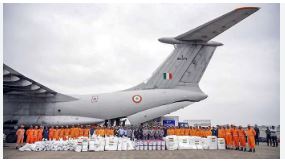
- Air-based relief: An IAF C-130J transport aircraft delivered approximately 12 tonnes of humanitarian aid, including tents, tarpaulins, blankets, hygiene kits, and ready-to-eat food.
This sea–air integrated logistics ensured swift delivery to affected areas and flexibility to scale assistance as conditions evolved.
Humanitarian Impact
Sri Lanka’s Disaster Management Centre reported extensive flooding across multiple provinces, thousands of affected families, and damage to hundreds of homes. Heavy rainfall warnings exceeding 150–200 mm in several districts raised concerns of further inundation. India’s relief supplies were handed over to Sri Lankan authorities to support immediate shelter, sanitation, and food needs.
Diplomatic Significance
India’s leadership highlighted solidarity with its “closest maritime neighbour.” The mission demonstrates India’s readiness to act as a first responder in the Indian Ocean Region, reinforcing trust and cooperation during crises. It also showcases India’s growing HADR capability, combining naval reach, airlift capacity, and inter-ministerial coordination.
Sujalam Bharat Summit 2025
- 30 Nov 2025
In News:
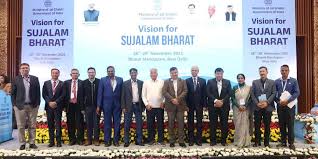
The Ministry of Jal Shakti will host the Vision for Sujalam Bharat Summit 2025 at Bharat Mandapam, New Delhi, marking a major national initiative to build a coherent, practical and cooperative water security framework for India. The Summit forms part of NITI Aayog’s six thematic Departmental Summits, envisaged by the Prime Minister to bring together Central and State governments along with junior and field-level cadres for solution-oriented governance.
Objectives and Approach
The Summit aims to accelerate water sustainability through:
- Evidence-based policymaking
- Sectoral reforms
- Cooperative federalism in water governance
It adopts a whole-of-government approach, bridging the gap between policy formulation and on-ground implementation, and aligning national priorities with State- and community-level action.
Thematic Areas Covered
The Vision for Sujalam Bharat process encompasses six critical thematic areas:
- Rejuvenation of Rivers and Springs: Focus on Aviral (continuous) and Nirmal (clean) Dhara through spring-shed management, catchment protection, wetland restoration, riverfront development, and community-led river stewardship.
- Greywater Management and Reuse: Promotion of circular water use via pricing and financing models, nature-based solutions, septage management, and reuse in domestic, industrial and urban sectors.
- Technology-driven Water Management: Deployment of AI-based monitoring, micro-irrigation, leak detection, loss reduction, and precision agriculture to enhance demand-side efficiency.
- Water Conservation and Groundwater Recharge: Managed aquifer recharge, revival of traditional water systems, community-led groundwater governance, and behavioural change aligned with the LiFE (Lifestyle for Environment) initiative.
- Sustainable Drinking Water Supply: Emphasis on source sustainability planning, climate-resilient infrastructure, community-based operations and maintenance (O&M), and digital governance tools.
- Community & Institutional Engagement: Empowerment of Panchayati Raj Institutions (PRIs), Self-Help Groups (SHGs), frontline workers, and local bodies, alongside stronger inter-departmental convergence.
Consultative Process and Key Outcomes
Between September and October 2025, the Ministry conducted six thematic workshops, engaging over 2,800 participants from across States/UTs, Central ministries, technical institutions, PRIs, NGOs, SHGs and field-level officials.
Based on these consultations, five national priorities were identified:
- Strengthening source sustainability
- Scaling groundwater recharge
- Expanding modern and nature-based solutions
- Revitalising community institutions
- Enhancing inter-departmental convergence
Significance
- Provides a national roadmap for water-secure and climate-resilient India
- Integrates rural–urban water management, sanitation, irrigation efficiency and drinking water security
- Encourages community ownership of water assets for long-term sustainability
- Strengthens alignment between strategy and execution through cooperative federalism
Indian names approved for Martian Landforms
- 30 Nov 2025
In News:
The International Astronomical Union (IAU) has approved seven new Indian names proposed by Kerala-based researchers for geological features on Mars, marking a significant recognition of India’s scientific and cultural contributions in planetary science. These names include Martian craters, valleys and plains inspired by Indian geographers, scientists and locations with geological or space-science relevance.
Martian Landforms named after Indian Places and Personalities
Among the newly approved names, several are inspired by Kerala’s geography and India’s space and scientific legacy:
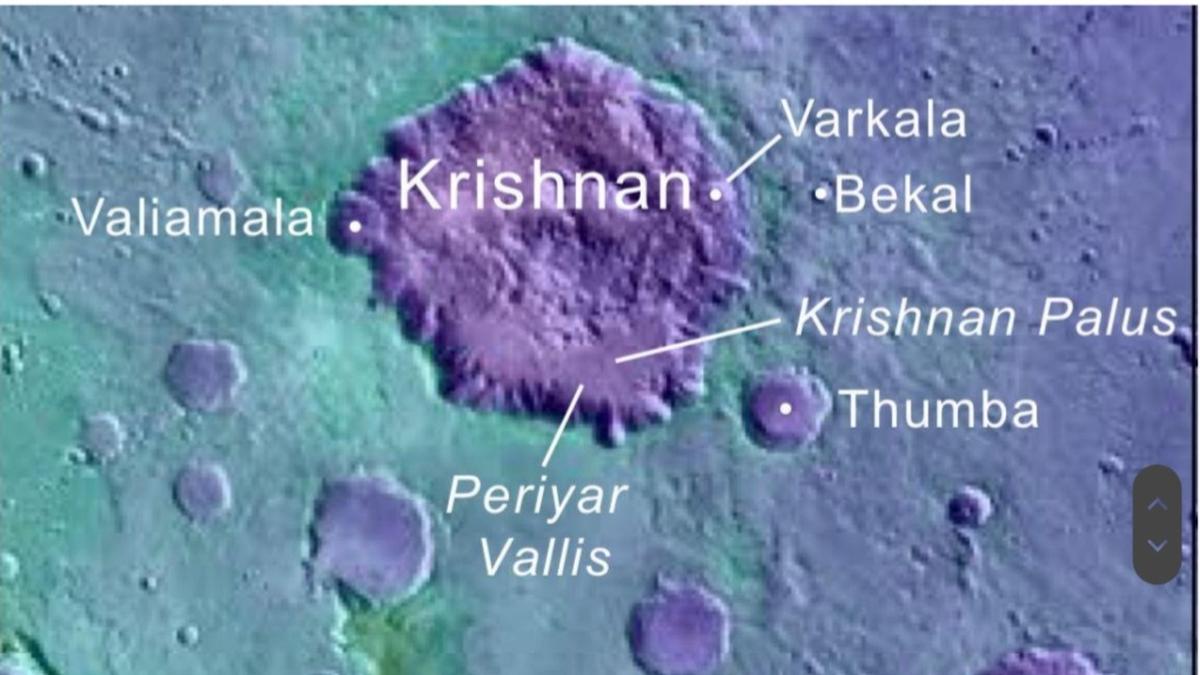
- Periyar Vallis: A Martian valley named after the Periyar River, Kerala’s longest river, highlighting similarities between fluvial landforms on Earth and Mars.
- Varkala Crater: Named after Varkala beach, known for its laterite cliffs rich in jarosite, a mineral also detected on Mars, making it a key terrestrial analogue site.
- Bekal Crater: Named after Bekal Fort in Kasaragod, a historic coastal fort associated with the Keladi Nayaka dynasty, Mysore rulers and the British.
- Thumba Crater: Named after Thumba, the birthplace of India’s space programme and home to the Thumba Equatorial Rocket Launching Centre (1962), where Indian Space Research Organisation (ISRO) began its early rocket launches.
- Valiamala Crater: Named after Valiamala, which hosts the Indian Institute of Space Science and Technology (IIST), India’s premier space education institution.
- Krishnan Crater: Named in honour of M. S. Krishnan, India’s pioneering geologist and first Indian Director of the Geological Survey of India (GSI). Located in the Xanthe Terra region, the crater is about 3.5 billion years old and preserves evidence of ancient glacial and fluvial activity.
- Krishnan Planus: A plain southeast of the Krishnan Crater, also named after M. S. Krishnan and geologically associated with the crater system.
Note: In 2024, the IAU had approved three Indian-proposed names from Ahmedabad-based Physical Research Laboratory (PRL), including Lal Crater (after geophysicist Devendra Lal) and Mursan and Hilsa craters (named after towns in Uttar Pradesh and Bihar).
How are Martian surface features named?
The IAU is the global authority responsible for naming celestial bodies and planetary features. Proposals are evaluated by its Working Group for Planetary System Nomenclature (WGPSN).
Key guidelines include:
- Large craters (>50 km): Named after deceased scientists with foundational contributions.
- Small craters: Named after towns or villages with populations below 100,000.
- Names must be unique, culturally relevant, non-political, non-offensive, and easy to pronounce.
- Each proposal must include the name’s origin, coordinates, imagery, feature type and scientific justification.