
Malabar Pied Hornbill
- 19 Feb 2026
In News:
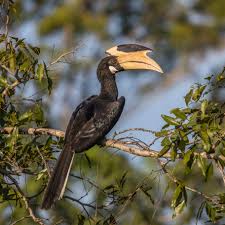
The Forest Department of Chhattisgarh has initiated the establishment of six “hornbill restaurants” in the Udanti Sitanadi Tiger Reserve (USTR) to support the rare Malabar Pied Hornbill and promote natural forest regeneration.
What are “Hornbill Restaurants”?
- Specially developed fruit-rich plantation zones inside forest areas.
- Designed to provide continuous food sources (especially native fruit-bearing trees).
- Aim to:
- Attract hornbills.
- Support breeding and nesting.
- Aid in natural seed dispersal and forest expansion.
The initiative uses hornbills’ natural seed-dispersal behaviour to promote forest regeneration while conserving a Near Threatened species.
Malabar Pied Hornbill
- Scientific Name: Anthracoceros coronatus
- Common Name: Lesser Pied Hornbill
- Medium-sized hornbill.
- Distinctive black and white plumage.
- Prominent curved bill with a casque on top.
- Habitat:
- Evergreen forests.
- Moist and dry deciduous forests.
- Often found near human settlements.
- Distribution:
- Western Ghats
- North-eastern Himalayan foothills (India and Nepal)
- Satpura Hills
- Sri Lanka
- Diet:
- Primarily frugivorous (fruit-eating).
- Becomes partly omnivorous during breeding season.
- Ecological Role:
- Acts as a key seed disperser.
- Indicator species of forest health and ecological stability.
Conservation Status
- IUCN Red List: Near Threatened
- Major Threats:
- Habitat loss
- Forest degradation
- Fragmentation
Udanti Sitanadi Tiger Reserve (USTR)
- Location: Located in Chhattisgarh.
- Formation: Created by merging Udanti Wildlife Sanctuary and Sitanadi Wildlife Sanctuary.
- Drainage System
- Major river: Mahanadi
- Tributaries: Udanti, Sitanadi, Indravan, Pairi
- Topography
- 19 named mountains.
- Deo Dongri – Highest peak.
- At?nga Dongar – Most prominent mountain.
- Vegetation: Predominantly tropical dry and moist deciduous forests.
Tidal Flooding
- 19 Feb 2026
In News:
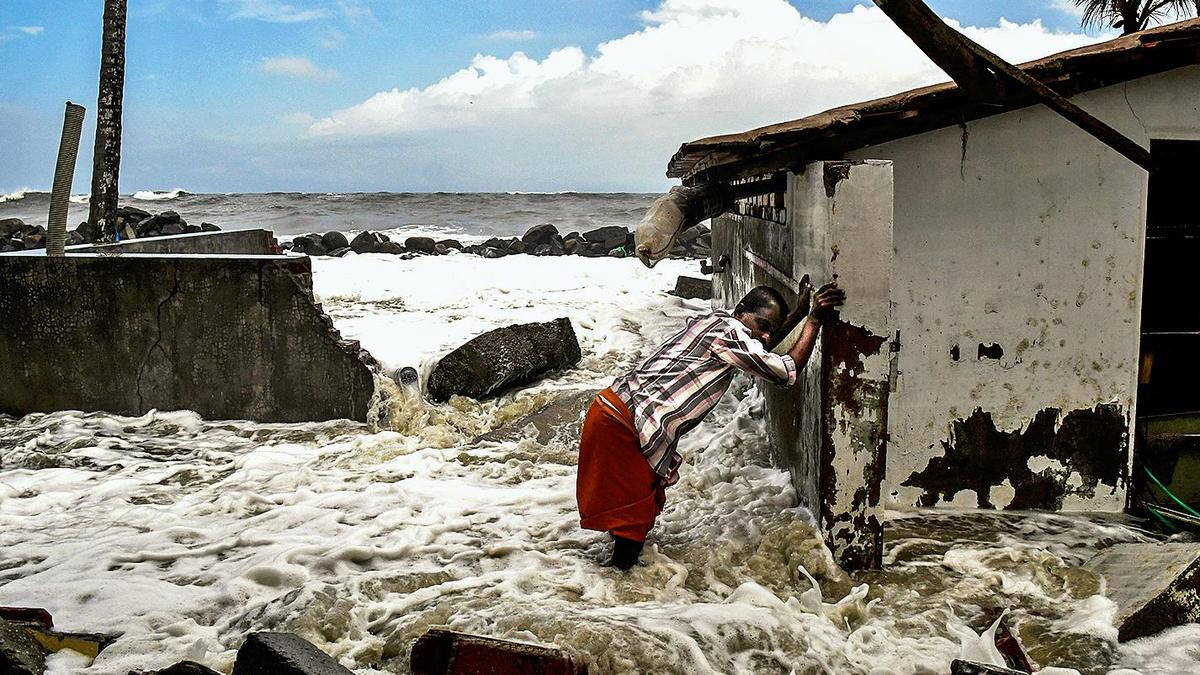
The Government of Kerala has declared tidal flooding as a State-specific disaster. It is the first time in India that a State has accorded such status to tidal flooding.
What is Tidal Flooding?
- Also known as:
- Sunny day flooding
- King tide flooding
- Nuisance flooding
- Definition: Temporary inundation of low-lying coastal areas due to unusually high tides, without heavy rainfall or cyclonic activity.
Causes
- Combination of:
- High tide cycles
- Full moon and new moon phases
- Offshore storms
- Strong coastal winds
- Occurs twice daily with tidal cycles.
- More severe during spring tides (full moon and new moon).
- Unlike cyclone-induced storm surges, it is periodic and predictable, though intensifying due to sea-level rise.
Impact on Kerala Coast
- Common along Kerala’s coastline bordering the Arabian Sea.
- Temporary rise in sea level above identified thresholds.
- Inundates low-lying coastal settlements and agricultural lands.
- Affects fisheries, livelihoods, housing, and infrastructure.
Kerala Government’s Decision
Kerala became the first State in India to declare tidal flooding as a State-specific disaster, enabling financial assistance under SDRF norms.
- Victims will receive financial assistance similar to other notified natural disasters.
- Relief to be provided through the State Disaster Response Fund (SDRF) framework.
Other State-Specific Disasters in Kerala
Kerala has also notified the following as State-specific disasters:
- Coastal erosion
- Lightning
- Strong winds
- Soil piping
- Heatwave / Sunstroke / Sunburn
- Human–wildlife conflict
Significance
Disaster Management Perspective
- Recognises climate-linked coastal risks beyond cyclones.
- Enhances institutional preparedness and targeted relief.
Climate Change Link
- Sea-level rise and coastal vulnerability are increasing frequency and severity.
- Highlights need for coastal zone management and adaptation planning.
Bharat VISTAAR Scheme (Phase–I)
- 19 Feb 2026
In News:
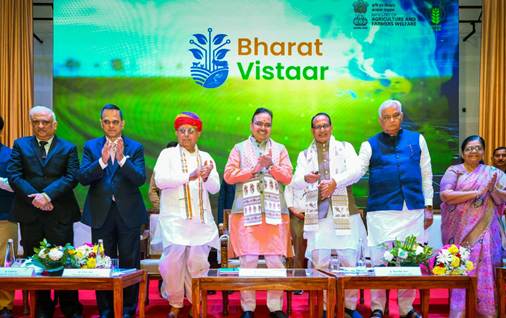
Phase–I of ‘Bharat VISTAAR’ was launched in Jaipur, Rajasthan by the Ministry of Agriculture and Farmers’ Welfare during the AI Summit. The initiative aims to digitally empower farmers through Artificial Intelligence (AI)-based advisory services.
About Bharat VISTAAR
- Full Form: AI-powered, multilingual conversational advisory system for farmers.
- Nature: AI-based digital public infrastructure for agriculture.
- Objective:
- Provide instant, technology-driven agricultural guidance.
- Improve productivity and reduce risks.
- Strengthen farmer self-reliance through personalised advisory.
It integrates multiple agricultural databases into a single AI-enabled platform accessible via helpline number 155261.
Key Features
1. Helpline-Based AI Advisory
- Farmers can dial 155261 from mobile or smartphone.
- Provides instant responses in local language.
- Currently available in Hindi and English; planned expansion to 11 languages.
- Real-time mandi prices accessible through the same helpline.
2. Integrated Digital Platform
Bharat VISTAAR consolidates multiple agricultural systems into one interface:
- AgriStack (farmer database architecture)
- Indian Council of Agricultural Research (ICAR) knowledge systems
- India Meteorological Department (IMD) weather inputs
- Market price databases
- Central and State Government agricultural schemes
3. Farmer Identity (Farmer ID)
- Creation of a digital Farmer Identity Card.
- Stores comprehensive farmer data.
- Integrates schemes such as:
- Pradhan Mantri Fasal Bima Yojana
- Soil Health Card Scheme
- Future integration of all agricultural schemes under one system.
4. Advisory Services Provided
- Soil testing guidance
- Seed and fertiliser recommendations
- Irrigation management
- Weather-based advisories
- Loans and insurance information
- Government scheme benefits
5. Associated Initiatives
- Farmer-centric AI Hackathon to promote agri-tech innovation.
- Agri Kosh AI Strategy Roadmap unveiled for long-term AI integration in agriculture.
Significance
Technological Significance
- Promotes AI-driven personalised agricultural advisory.
- Strengthens Digital Public Infrastructure (DPI) in agriculture.
Economic Significance
- Helps farmers access real-time market and insurance information.
- Aims to enhance productivity and reduce crop-related risks.
Governance Significance
- Brings multiple agricultural databases under a single unified digital platform.
- Supports goal of Viksit Kisan for achieving Viksit Bharat 2047.
Bee Corridor
- 19 Feb 2026
In News:
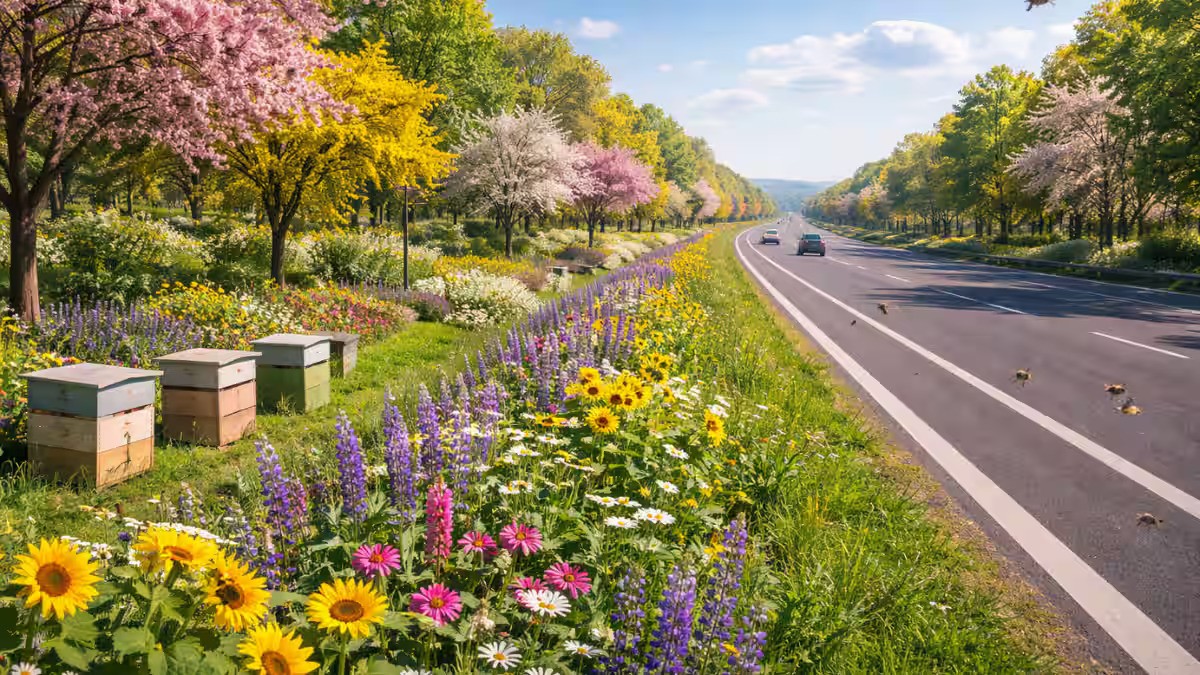
The National Highways Authority of India (NHAI) has launched India’s first dedicated ‘Bee Corridors’ along National Highways as part of sustainable and ecological infrastructure development.
What are Bee Corridors?
- Definition: Continuous linear stretches of pollinator-friendly vegetation developed along National Highways.
- Composition: Flowering trees, shrubs, herbs and grasses providing year-round nectar and pollen.
- Design Principle: Staggered seasonal flowering to ensure near-continuous bloom cycles.
- Shift in Approach: From ornamental roadside plantations to biodiversity-supportive ecological plantations.
Objectives
To reduce ecological stress on honeybees and other pollinators by ensuring sustained nectar sources, thereby strengthening agricultural productivity and ecological balance.
- Promote pollinator conservation.
- Integrate biodiversity into highway infrastructure.
- Support climate-sensitive and sustainable plantation planning.
Key Features
1. Native, Nectar-Rich Species
Plantation will include native species such as: Neem, Karanj, Mahua, Palash, Bottle Brush, Jamun and Siris. These species support biodiversity and pollinator habitats.
2. Staggered Blooming Cycle
- Species selected to flower in different seasons.
- Ensures continuous food supply for honeybees and wild pollinators.
3. Habitat Support Measures
- Retention of flowering weeds.
- Preservation of dead wood and hollow trunks beneficial for pollinators.
4. Strategic Spacing
- Flowering clusters planted every 500 metres to 1 kilometre.
- Based on the average foraging distance of honeybees.
- Corridors to be developed along suitable NH stretches and vacant NHAI land parcels depending on agro-climatic conditions.
Implementation Plan (2026–27)
- Total Plantation Target: ~40 lakh trees along National Highways.
- Under Bee Corridor Initiative: ~60% of total plantation.
- Initial Phase: At least three dedicated pollinator corridors to be developed.
- NHAI field offices to identify suitable highway sections.
Significance
Ecological Significance
- Enhances pollination services essential for agriculture and horticulture.
- Helps counter declining pollinator populations.
- Strengthens ecosystem resilience and biodiversity.
Economic Significance
- Improved pollination boosts crop productivity.
- Supports rural livelihoods dependent on agriculture and apiculture.
Infrastructure Significance
- Integrates environmental sustainability into highway development.
- Aligns infrastructure expansion with climate and biodiversity goals.
AI-Preneurs of India
- 19 Feb 2026
In News:
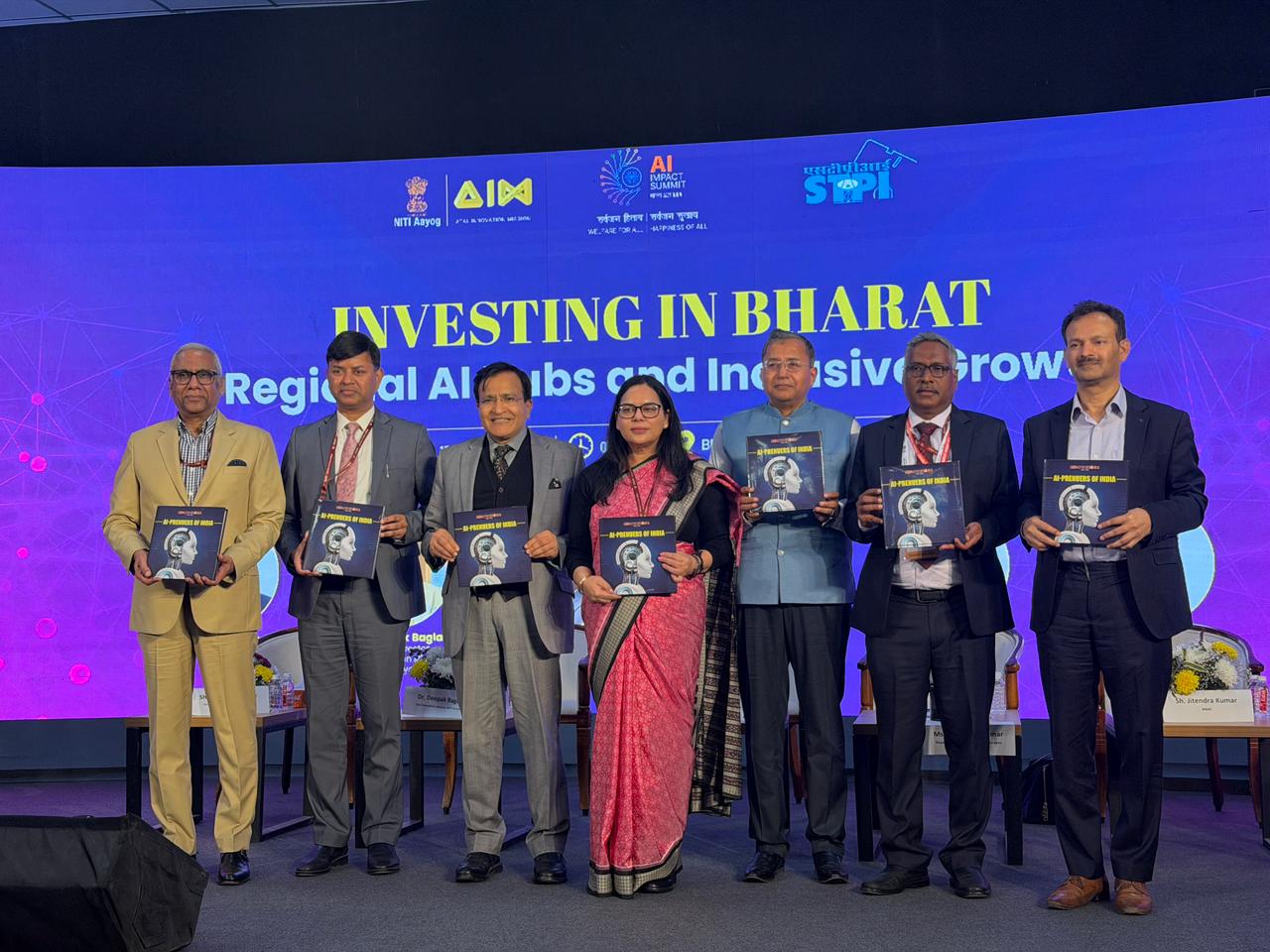
The Atal Innovation Mission (AIM) under NITI Aayog launched AI-Preneurs of India at the India AI Impact Summit 2026 held at Bharat Mandapam.
About AI-Preneurs of India
- Nature: Flagship coffee table book.
- Edition: 7th edition of AIM’s Innovations For You series.
- Coverage: Chronicles journeys of 45 AI startups.
- Source Base: Selected from nationwide network of Atal Incubation Centres (AICs).
- Focus: AI solutions addressing real-world problems across India.
Key Features
- Founder-First Storytelling Approach
- Highlights motivations, challenges, perseverance and impact of entrepreneurs.
- Moves beyond technical achievements to human-centered innovation narratives.
- Sectoral Diversity (30 Domains): AI applications showcased in sectors such as:
- Healthcare
- Education
- Sustainability
- Mobility
- Sports analytics
- Deep-tech
- Governance and social impact
- Nationwide Representation
- Reflects geographic diversity beyond metro tech hubs.
- Demonstrates innovation emerging from Tier 2/3 cities and underserved regions.
- Purpose-Driven AI Ecosystem
- Emphasizes inclusive, ethical, and socially responsible AI.
- Aligns AI development with national development priorities.
Significance for India
Positions India as a global contributor to responsible and inclusive Artificial Intelligence, not merely a consumer of frontier technologies.
- Strengthens credibility of India’s public innovation infrastructure.
- Showcases synergy between government incubation platforms and private AI startups.
- Reinforces AI for social good and mission-led governance.
- Supports India’s emergence as a deep-tech and AI innovation hub.
Atal Innovation Mission (AIM)
About
- Launched in 2016 by NITI Aayog.
- Flagship initiative of the Government of India to promote innovation and entrepreneurship.
- Builds a problem-solving mindset among students and supports startup ecosystems.
Key Programs under AIM
|
Program |
Target Group |
Objective |
|
Atal Tinkering Labs (ATLs) |
School students (Classes 6–12) |
Foster innovation using tools like robotics, 3D printing, electronics |
|
Atal Incubation Centres (AICs) |
Startups & entrepreneurs |
Provide incubation, mentorship, funding, infrastructure |
|
Atal Community Innovation Centres (ACICs) |
Underserved regions |
Promote innovation in Tier 2/3 cities, tribal & remote areas |
|
Atal New India Challenges (ANIC) |
Technology innovators |
Support innovations addressing national priority challenges |
|
Mentor India |
Entrepreneurs & innovators |
Network of 6,200 mentors guiding startups |