
ASI Excavations in Tamil Nadu

- 21 Mar 2026
In News:
- The Archaeological Survey of India (ASI), under the provisions of the Ancient Monuments and Archaeological Sites and Remains Rules, 1959, has approved excavations at eight significant archaeological sites in Tamil Nadu.
- These excavations are expected to provide a continuous cultural sequence from the Iron Age to early historic urbanisation, offering crucial insights into South India’s socio-economic evolution and its linkages with global trade networks.
Significance of the Excavation Initiative
The identified sites collectively represent:
- Transition from Iron Age societies to urban settlements
- Emergence of early Tamil civilisation and literacy (Tamil-Brahmi )
- Integration of South India into Indian Ocean and trans-regional trade networks
This initiative may help bridge historical gaps between indigenous urbanisation processes and external commercial interactions, including links with the Mediterranean and Southeast Asia.
Key Archaeological Sites and Their Importance
Urban and Cultural Centres
- Keeladi: Located in the Vaigai basin, it reveals an advanced urban settlement, with evidence of Tamil-Brahmi , planned habitation, and drainage systems, indicating a literate and organised society.
Burial and Iron Age Sites
- Adichanallur and Karivalamvanthanallur: Prominent burial sites that shed light on mortuary practices, social stratification, and Iron Age material culture.
- Thelunganur: Suggests early iron technology, pointing to technological advancement and early metallurgical knowledge.
Trade and Economic Centres
- Vellalore: Indicates trade links with the Roman Empire, supported by findings such as coins and ornaments.
- Nagapattinam and Pattinamarudur: Associated with Chola-period maritime activity, Buddhist influence, and participation in Indian Ocean trade networks.
- Manikollai: A centre for glass bead production, connected to long-distance trade with Southeast Asia.
Scientific Methods in Archaeology
The excavation process incorporates advanced scientific techniques:
DNA Analysis (Ancient DNA Studies)
- Helps trace genetic lineage, migration patterns, and ancestry
- Enables reconstruction of population history and biological relationships
Optically Stimulated Luminescence (OSL) Dating
- Determines the last exposure of mineral grains to sunlight
- Useful for dating soil layers and artefacts where organic material is absent
Role of the State Government
The Government of Tamil Nadu has demonstrated proactive commitment by allocating ?7 crore in the 2025–26 budget for archaeological research.
The emphasis is on integrating modern scientific tools with traditional excavation methods to ensure more accurate historical reconstruction.
Pradhan Mantri Jan Arogya Yojana
- 21 Mar 2026
In News:
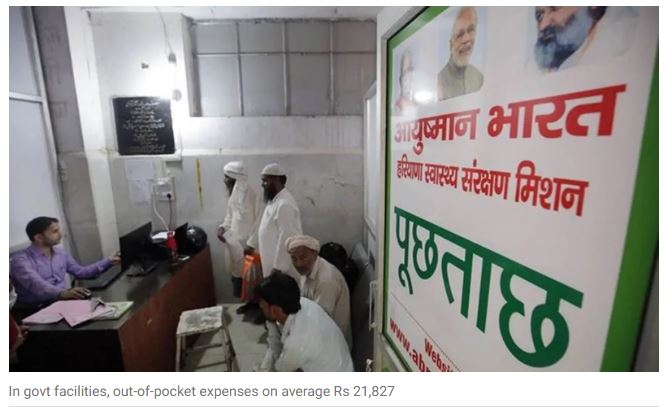
An evaluation study commissioned by NITI Aayog and submitted to its Development Monitoring and Evaluation Office (DMEO) has highlighted that beneficiaries of Pradhan Mantri Jan Arogya Yojana continue to incur significant out-of-pocket expenditure (OOPE), especially in private hospitals. This raises concerns regarding the scheme’s effectiveness in delivering financial protection.
About PM-JAY
- Launched in 2018 under the Ayushman Bharat initiative, PM-JAY is the world’s largest government-funded health assurance programme, aimed at advancing Universal Health Coverage (UHC) and reducing catastrophic health expenditure.
- It is implemented by the National Health Authority in coordination with State Health Agencies.
Salient Features
- Provides ?5 lakh per family per year for secondary and tertiary care hospitalization
- Covers pre- and post-hospitalisation expenses (3 days prior, 15 days after)
- Includes all pre-existing diseases from Day 1
- Based on SECC 2011 criteria, with no cap on family size, age, or gender
- Ensures cashless, paperless treatment and national portability across empanelled hospitals
- Expanded in 2024 to include all citizens aged 70 (Ayushman Vay Vandana Card) and frontline workers
The scheme follows a cost-sharing model between Centre and States (60:40; 90:10 for special category states).
Key Findings of the Evaluation Study
The study reveals structural gaps in financial protection:
Persistent Out-of-Pocket Expenditure
- Average OOPE in private hospitals: ~?53,965 per hospitalization
- Average OOPE in public hospitals: ~?21,827
- Private care costs are more than twice that of public facilities
Limited Cashless Access
- Only 35% beneficiaries experienced fully cashless treatment
- Around 65% incurred direct expenditure, contradicting the scheme’s core promise
Marginal Financial Relief
- Average OOPE under PM-JAY: ~?34,790
- Uninsured patients: ~?38,084
- Indicates limited reduction in financial burden
Major Cost Drivers
- Medicines and diagnostics
- Transportation (explicitly not covered under the scheme)
Achievements of PM-JAY
Despite challenges, PM-JAY has significantly expanded healthcare access:
- 42 crore Ayushman Cards issued
- ~11 crore hospital admissions recorded by 2025
- Improved healthcare access for vulnerable populations
- Promoted gender inclusion, with women accounting for nearly half of beneficiaries
- Strengthened digital health ecosystem through platforms like Ayushman App
Infrastructure Financing in India
- 21 Mar 2026
In News:
India’s approach to infrastructure financing has evolved from a state-dominated model to a diversified and market-linked system. This transition is critical for sustaining high economic growth and achieving the ambition of becoming a USD 7 trillion economy by 2030.
Changing Nature of Infrastructure Financing
In the past, infrastructure development in India depended largely on government budgetary allocations, which limited expansion due to fiscal constraints. Over time, the financing architecture has broadened to include public-private partnerships, institutional funding mechanisms, and innovative financial instruments.
Despite this diversification, the government continues to act as a key driver, evident from the substantial rise in capital expenditure—from about ?2 lakh crore in 2014–15 to ?12.2 lakh crore in 2026–27 (BE)—thereby stimulating investment and economic activity.
Drivers of the Transformation
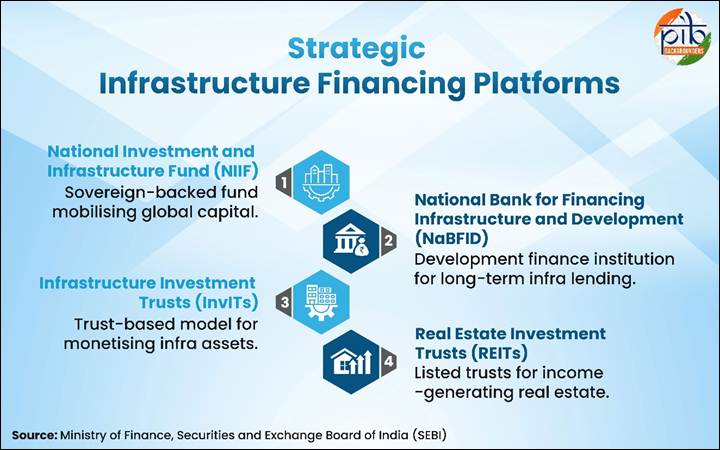
A major factor behind this shift has been the creation of dedicated financial institutions. Bodies such as the National Investment and Infrastructure Fund and the National Bank for Financing Infrastructure and Development have facilitated long-term funding and attracted global investors, while the Indian Railway Finance Corporation has strengthened sector-specific financing.
Parallelly, mechanisms like Infrastructure Investment Trusts (InvITs) and Real Estate Investment Trusts (REITs) have enabled monetisation of existing assets, freeing up capital for new investments. The development of green bonds and credit enhancement tools has further deepened financial markets and aligned infrastructure growth with sustainability goals.
Additionally, initiatives such as City Economic Regions (CERs) reflect a shift towards region-based development, especially in emerging urban centres.
Current Status of Infrastructure Development
The impact of these reforms is visible across multiple sectors. India has significantly expanded its road network, alongside improvements in construction speed and connectivity. The railway system has progressed towards complete electrification and introduced modern services like the Vande Bharat Express, with plans for high-speed corridors.
The aviation sector has witnessed rapid growth in airport infrastructure under schemes such as the UDAN Scheme, enhancing regional access. Similarly, port capacity and inland waterways have been strengthened to support trade.
Emerging sectors like data centres and energy storage systems are also gaining prominence, supported by policy incentives and recognition as infrastructure.
Key Challenges
Notwithstanding the progress, several structural issues remain. Infrastructure financing continues to rely heavily on public expenditure, while private investment is constrained by concerns over risk and returns. Land acquisition remains a significant hurdle, often leading to project delays and increased costs.
The banking sector faces a mismatch between short-term liabilities and long-term infrastructure financing needs, limiting its ability to support large projects. Investors also show a preference for operational assets rather than new projects, reducing capital inflow into greenfield development.
Urban financing is another weak area, as municipal bodies often lack the financial strength and credibility to raise resources independently. In addition, inadequate project preparation affects the viability and attractiveness of infrastructure investments.
Way Forward
To sustain momentum, India needs to deepen asset monetisation strategies so that resources from existing projects can be reinvested into new ones. Strengthening risk-sharing mechanisms and improving credit enhancement frameworks will be essential to attract private and institutional investors.
There is also a need to scale up green and sustainable financing instruments, ensuring that infrastructure growth aligns with environmental objectives. Strengthening urban financial systems and promoting reforms in municipal governance can help cities emerge as engines of growth.
Further, improving project planning, transparency, and regulatory certainty will enhance investor confidence. Leveraging platforms such as GIFT City can also facilitate greater integration with global capital markets.
Liberties Clause or Deviation Clause
- 21 Mar 2026
In News:
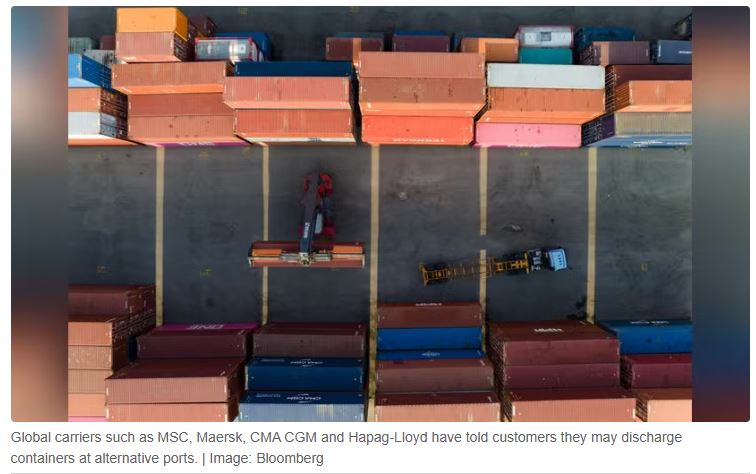
Amid the ongoing tensions in West Asia involving the United States, Israel, and Iran, global shipping companies have increasingly invoked the Liberties Clause in maritime contracts.
This has resulted in cargo rerouting, discharge at alternate ports, increased logistics costs, and disruption of global supply chains, particularly in sensitive maritime zones such as the Strait of Hormuz.
What is the Liberties Clause (Deviation Clause)?
- The Liberties Clause, also known as the Deviation Clause, is a standard contractual provision included in a Bill of Lading—the legal agreement between a shipper and a carrier.
- Core Idea: It grants the shipmaster the legal authority to alter the planned voyage under exceptional circumstances without being held liable for breach of contract.
Historical Evolution
- Originates from 19th-century maritime law
- Developed in an era marked by:
- Piracy threats
- Weather-related risks to wooden ships
- Frequent regional conflicts
- Purpose: To provide operational flexibility and legal protection to shipmasters navigating uncertain conditions
Objectives
- Protect carriers from legal liability when voyages are altered due to external risks
- Ensure continuity of trade under adverse conditions
- Balance commercial obligations with safety imperatives
Key Features
1. Route Alteration
- Permits deviation from the agreed or customary route
- Used to avoid:
- War zones
- Piracy-prone regions
- Environmental hazards
2. Alternative Port Discharge
- Cargo can be offloaded at the nearest safe and operational port
- Contract is deemed fulfilled even if delivery is not at the original destination
3. Cost Transfer Mechanism
- Once discharged:
- Cargo owners bear additional costs including:
- Inland transportation
- Storage and warehousing
- Customs clearance
- Cargo owners bear additional costs including:
4. Risk Reallocation
- Transfers transit risk from carrier to cargo owner
- Carrier liability is limited post-deviation declaration
Why is it Being Invoked Now?
Geopolitical Drivers
- Escalation of conflict in West Asia, particularly involving Iran
- Increased military activity and threats to commercial vessels
Strategic Maritime Vulnerability
- The Strait of Hormuz, through which a significant portion of global oil trade passes, has witnessed:
- Airstrikes
- Heightened naval tensions
Insurance and Risk Constraints
- Marine insurers have:
- Raised premiums
- Imposed stricter war-risk clauses
- Shipping firms invoke the clause to limit financial and operational exposure
Impacts on Global Trade
1. Increased Logistics Costs
- Cargo owners face additional costs running into thousands of dollars per container
- Unexpected financial burden disrupts trade planning
2. Supply Chain Disruptions
- Nearly 90% of global trade is seaborne
- Rerouting causes:
- Delays in delivery
- Inventory mismatches
- Production slowdowns
3. Inflationary Pressures
- Increased shipping and handling costs contribute to:
- Higher commodity prices
- Global inflationary trends
4. Contractual and Legal Implications
- Highlights the importance of:
- Risk-sharing clauses in international trade contracts
- Legal awareness among exporters/importers
Suraksha Sankalp Karyashala
- 21 Mar 2026
In News:
The Ministry of Health & Family Welfare, through the National AIDS Control Organisation (NACO), organised the Suraksha Sankalp Karyashala to enhance the effectiveness of district-level responses to HIV/AIDS, particularly in regions like Delhi and Haryana.
About Suraksha Sankalp Karyashala
Nature of the Initiative
- Suraksha Sankalp Karyashala is a national-level workshop initiative designed to strengthen HIV/AIDS control through decentralised, district-focused planning, supported by data-driven strategies and stakeholder coordination.
Objectives
1. Strengthening the HIV Care Continuum
- Improve early diagnosis and testing coverage
- Ensure timely linkage to treatment (ART)
- Achieve sustained viral suppression
2. Accelerating Epidemic Control
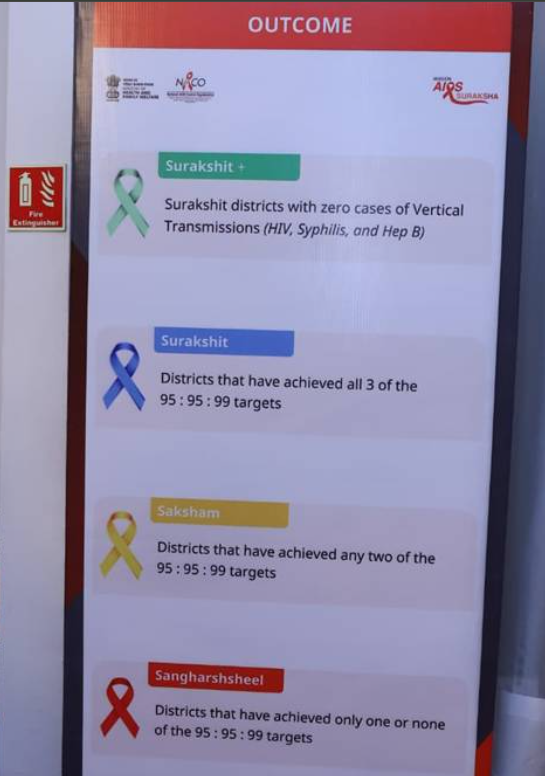
- Align with global 95:95:95 (India aims 95:95:99) targets:
- 95% diagnosed
- 95% on treatment
- 99% achieving viral suppression
- Contribute to the goal of ending HIV/AIDS as a public health threat by 2027–2030
Key Features
1. District-Centric Approach
- Focus on 219 priority districts
- Use of granular, real-time data to identify gaps and tailor interventions
2. Whole-of-System Coordination
- Convergence of national, state, and district-level stakeholders
- Inclusion of:
- Health officials
- Programme managers
- Community-based organisations
3. Evidence-Based Planning
- Emphasis on:
- Data analytics
- Monitoring and evaluation
- Outcome-oriented strategies
4. Capacity Building and Knowledge Sharing
- Workshops act as platforms for:
- Sharing best practices
- Addressing implementation challenges
- Enhancing administrative and technical capacity