
Khangchendzonga National Park
- 08 Nov 2025
In News:
- The International Union for Conservation of Nature (IUCN) has rated Khangchendzonga National Park as “Good” in its latest global review of Natural World Heritage Sites.
- It is the only Indian site to receive a positive “Good” conservation status, while sites like the Western Ghats and Sundarbans face concerns.
Location & Status
- Located in North Sikkim, along the India–Nepal border.
- Forms the core area of the Khangchendzonga Biosphere Reserve (KBR).
- India’s first “Mixed” UNESCO World Heritage Site (2016) – recognised for natural and cultural values.
- Part of the Himalaya Global Biodiversity Hotspot.
Geographical Features
- Area: ~ 1,784 sq. km
- Altitude Range: From 1,220 m to 8,586 m (vertical sweep of over 7 km).
- Home to Mount Khangchendzonga (8,586 m) - 3rd highest peak in the world.
- Landscape includes plains, deep valleys, alpine meadows, lakes, glaciers, and snow-clad mountains.
- Glaciers:
- 18 major glaciers (as per park records);
- Zemu Glacier - one of the largest glaciers in Asia.
Biodiversity
- Flora: Subtropical to alpine vegetation; oak, fir, birch, maple, rhododendron, alpine meadows.
- Fauna (Flagship species):
- Snow leopard
- Red panda
- Tibetan wolf
- Blue sheep
- Himalayan tahr
- Mainland serow
- Avifauna:
- Nearly half of India’s bird species recorded.
- Includes Impeyan pheasant (State bird of Sikkim) and Satyr tragopan.
Cultural & Community Significance
- One of the few regions with Lepcha tribal settlements.
- Known as “Mayel Lyang” (sacred land) by the Lepchas.
- Considered a sacred beyul (hidden valley) in Tibetan Buddhism.
- Ancient monasteries such as Tholung Monastery reflect cultural continuity.
Gravity Energy Storage
- 08 Nov 2025
In News:
As climate change intensifies and the global transition towards low-carbon energy accelerates, the integration of renewable energy into power grids has become a major policy and technological challenge. Solar and wind energy, though abundant and clean, are intermittent in nature, creating mismatches between electricity generation and demand. In this context, Gravity Energy Storage (GES) is emerging as a promising long-duration, grid-scale energy storage technology, offering a viable alternative to conventional battery-based systems.
What is Gravity Energy Storage?
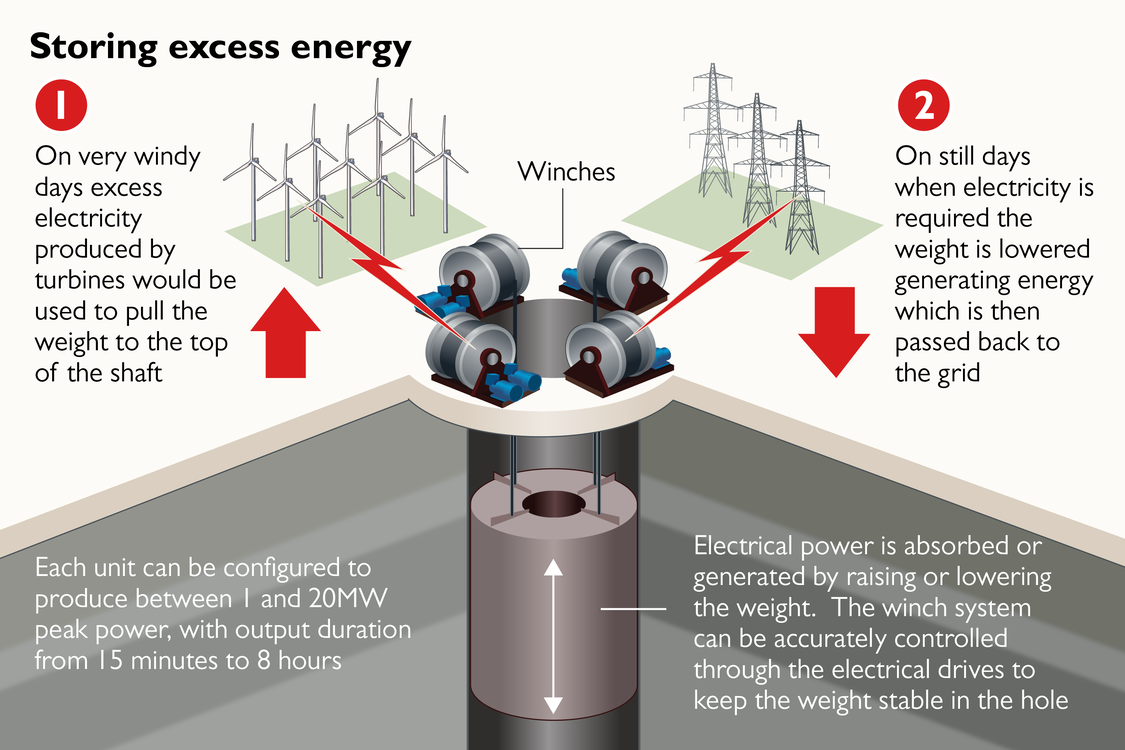
Gravity Energy Storage is an innovative energy storage technology that harnesses gravitational potential energy to store and release electricity. It involves lifting a heavy mass during periods of surplus electricity generation and allowing it to descend when demand rises, thereby converting stored energy back into electricity. The technology is particularly suited for renewable-dominated power systems, where supply fluctuations are frequent.
Working Mechanism
The basic principle of gravity energy storage is simple yet effective:
- During periods of excess renewable energy generation, such as peak solar output, surplus electricity is used to lift a heavy mass—commonly water, concrete blocks, or compressed earth blocks.
- This process converts electrical energy into stored gravitational potential energy.
- When electricity demand exceeds supply or renewable generation falls, the mass is released to descend under gravity.
- The downward motion drives water or mechanical systems through a turbine, generating electricity that is fed back into the grid.
A typical configuration may involve a heavy piston within a fluid-filled cylindrical container, where the piston’s vertical movement enables controlled energy storage and release. Unlike pumped-hydro storage, gravity energy storage systems offer greater flexibility in site selection and do not require large reservoirs or specific topographical features.
Advantages of Gravity Energy Storage
Gravity energy storage offers several strategic advantages that make it attractive for long-term energy planning:
- Long operational life: These systems can operate for several decades with minimal maintenance, unlike batteries which degrade chemically over time.
- Environmentally benign: The absence of toxic chemicals eliminates risks related to pollution, recycling, and disposal, aligning with sustainability goals.
- Cost-effective at scale: Lower lifetime costs of energy and storage make it suitable for large-scale grid applications.
- Flexible deployment: Can be installed in urban, space-constrained, or environmentally sensitive areas where pumped-hydro or large battery systems are not feasible.
- Grid stability: Provides reliable energy during peak demand and enhances grid resilience in renewable-heavy energy systems.
Limitations and Challenges
Despite its potential, gravity energy storage faces certain constraints:
- Early stage of development: High initial capital costs and limited commercial deployment pose adoption challenges.
- Regulatory and infrastructure hurdles: Large-scale installations require regulatory approvals and long-term planning.
- Geographical constraints: Although more flexible than pumped hydro, suitable locations are still required for large infrastructure.
- Lower energy density: Compared to batteries, gravity energy storage is less suitable for compact or small-scale applications.
Significance for Energy Transition
Gravity energy storage represents an important step towards clean, reliable, and sustainable energy systems. By addressing the intermittency of renewable sources, it supports grid stability, energy security, and decarbonisation goals. For countries like India, which are rapidly expanding solar and wind capacity, such storage technologies can play a vital role in achieving energy transition targets, reducing dependence on fossil-fuel-based peaking power, and strengthening climate resilience.
Chronic Obstructive Pulmonary Disease (COPD)
- 08 Nov 2025
In News:
Chronic Obstructive Pulmonary Disease (COPD) has emerged as one of the most significant non-communicable diseases affecting global health systems. According to the World Health Organization (WHO), COPD is the fourth leading cause of death worldwide, responsible for 3.5 million deaths in 2021, accounting for nearly 5 per cent of all global deaths. The disease disproportionately affects low- and middle-income countries (LMICs), highlighting the intersection between environmental exposure, socio-economic conditions, and public health outcomes.
What is COPD?
COPD is a chronic, progressive lung disease characterised by persistent airflow limitation, leading to breathing difficulties. The condition arises due to long-term damage to lung tissues, involving inflammation and scarring of the airways, the air sacs (alveoli), or both. While the lung damage caused by COPD is largely irreversible, early diagnosis and appropriate management can significantly improve quality of life and reduce complications.
Types of COPD
COPD primarily includes two clinical conditions, which often coexist:
- Chronic Bronchitis: This condition results from prolonged inflammation of the bronchi, the airways that carry air to the lungs. Inflammation narrows these airways and leads to excessive production of thick mucus, causing persistent cough and restricted airflow.
- Emphysema: Emphysema develops when the alveoli are damaged, reducing the lungs’ ability to transfer oxygen into the bloodstream. This leads to breathlessness, especially during physical activity.
Causes and Risk Factors
The leading cause of COPD is tobacco smoking, which accounts for over 70 per cent of cases in high-income countries. However, the disease burden in LMICs is shaped by a broader range of risk factors. In these countries, smoking contributes to 30–40 per cent of cases, while household air pollution emerges as a major cause.
Indoor air pollution results from the use of biomass fuels such as firewood, animal dung, crop residues, and coal for cooking and heating, often in poorly ventilated homes. Other risk factors include:
- Long-term occupational exposure to dust, fumes, and chemicals
- Second-hand smoke
- Outdoor air pollution
- Childhood respiratory infections and underdeveloped lungs
- Asthma and advancing age
- Rare genetic conditions such as Alpha-1 antitrypsin deficiency
Signs and Symptoms
COPD symptoms typically appear late, after significant lung damage has already occurred. Common symptoms include:
- A chronic cough with mucus lasting for three months or more
- Shortness of breath, particularly during physical exertion
- Chest tightness
- Wheezing or whistling sounds while breathing
- Frequent chest infections
- Fatigue and reduced exercise tolerance
Patients may experience acute exacerbations or flare-ups, during which symptoms worsen for days or weeks. These episodes can be triggered by infections, cold air, pollution, or strong odours. COPD also increases vulnerability to pneumonia, influenza, and cardiovascular diseases.
Diagnosis
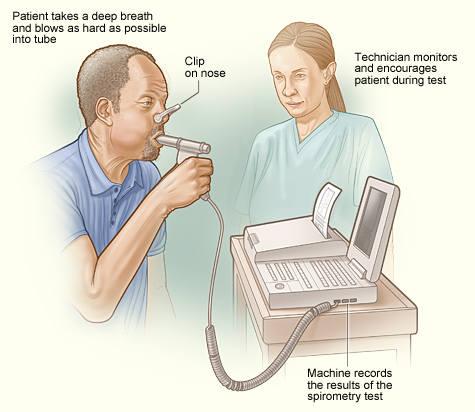
Diagnosis of COPD relies on clinical history, symptom assessment, and confirmatory tests. Spirometry is the most important diagnostic tool, measuring how much air the lungs can hold and how quickly air can be expelled. Based on spirometry results, COPD is staged according to severity, guiding treatment decisions. However, diagnosis is often delayed or missed, as symptoms may resemble other respiratory conditions.
Treatment and Management
There is no definitive cure for COPD, but effective management can slow disease progression and reduce symptom severity. The most crucial intervention is smoking cessation, supported by tobacco cessation programmes.
Treatment options include:
- Medications such as inhaled bronchodilators (to relax airway muscles) and corticosteroids (to reduce inflammation)
- Nebulised medicines for severe cases
- Antibiotics and oral steroids during flare-ups
- Oxygen therapy for patients with advanced disease
- Pulmonary rehabilitation, combining exercise training, breathing techniques, and patient education
In selected cases, surgical interventions may be recommended, including lung volume reduction surgery, removal of large air spaces (bullectomy), placement of endobronchial valves, or even lung transplantation.
Preventive measures include avoiding tobacco and pollutants, vaccination against influenza and pneumonia, maintaining physical activity, and practicing respiratory hygiene.
COPD in India and the Global South
COPD poses a particularly serious challenge for India. WHO estimates place COPD as the eighth leading cause of poor health globally, measured in disability-adjusted life years (DALYs). Nearly 90 per cent of COPD deaths among people under 70 years occur in LMICs.
Studies suggest that the prevalence of COPD in India is about 7.4 per cent, with higher prevalence in urban areas (11 per cent) compared to rural areas (5.6 per cent). Given India’s population distribution and the fact that COPD occurs at a younger age (above 35 years), the estimated burden of spirometry-defined COPD in India is approximately 37.6 million people. Importantly, a substantial proportion of cases arise from non-smoking causes, especially household air pollution.
Striped Hyena
- 08 Nov 2025
In News:
The recent sighting of a rare striped hyena (Hyaena hyaena) in the Kali Tiger Reserve near the Ganeshgudi bridge in Uttara Kannada district of Karnataka has drawn attention to changing wildlife movement patterns and the ecological importance of lesser-known carnivores. The observation, recorded on video by a local resident in early November 2025, marks the first documented presence of the species in this part of the Western Ghats, where it was previously unrecorded, particularly in the dense forests of the Dandeli region.
About the Striped Hyena
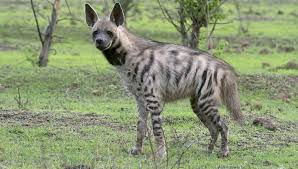
The striped hyena is a mammal belonging to the family Hyaenidae, which comprises four members: striped hyena, spotted hyena, brown hyena, and the aardwolf (the latter not being a true wolf). Compared to the spotted hyena, the striped hyena is smaller in size, with a distinctive coat marked by dark vertical stripes, giving it its name.
The species has a wide but fragmented distribution, extending across South Asia (India, Nepal, Afghanistan), North and Sub-Saharan Africa, West Asia, and parts of Central Asia. In India, it is typically associated with arid and semi-arid landscapes, inhabiting open savannas, grasslands, scrublands, and dry woodlands, rather than dense tropical forests.
Behaviour and Ecological Role
Striped hyenas are primarily nocturnal and solitary, though they display a limited social structure. They are territorial animals, marking boundaries through scent to deter rivals. An important behavioural trait is female dominance, with adult females generally more aggressive and dominant than males.
Ecologically, striped hyenas function mainly as scavengers, feeding on carrion and human refuse. By consuming animal remains, they play a critical role in ecosystem health, helping to prevent the spread of diseases and recycle nutrients. Forest officials have emphasised that the species poses no threat to humans, countering common misconceptions associated with hyenas.
Significance of the Kali Tiger Reserve Sighting
The appearance of a striped hyena in the lush, forested landscape of the Western Ghats is unusual and has generated scientific interest. Experts suggest that the animal may have dispersed from drier regions of northern Karnataka, such as Dharwad, possibly due to food scarcity, seasonal movement, climate-related habitat stress, or improved connectivity through wildlife corridors.
The sighting highlights the importance of landscape-level conservation, as wildlife movement increasingly transcends traditional habitat boundaries. In response, forest authorities have initiated non-invasive monitoring using camera traps to track the animal’s movement, ensure its safety, and assess the possibility of range expansion or previously undetected populations.
Conservation Status and Legal Protection
Despite its ecological importance, the striped hyena faces multiple threats, including habitat loss, road kills, persecution, and declining prey availability. Reflecting these pressures, the species is classified as Near Threatened on the IUCN Red List.
In India, it enjoys the highest level of legal protection under Schedule I of the Wildlife (Protection) Act, 1972, underscoring its conservation priority and the need for stringent safeguards.
State of Food and Agriculture (SOFA) Report 2025
- 08 Nov 2025
In News:
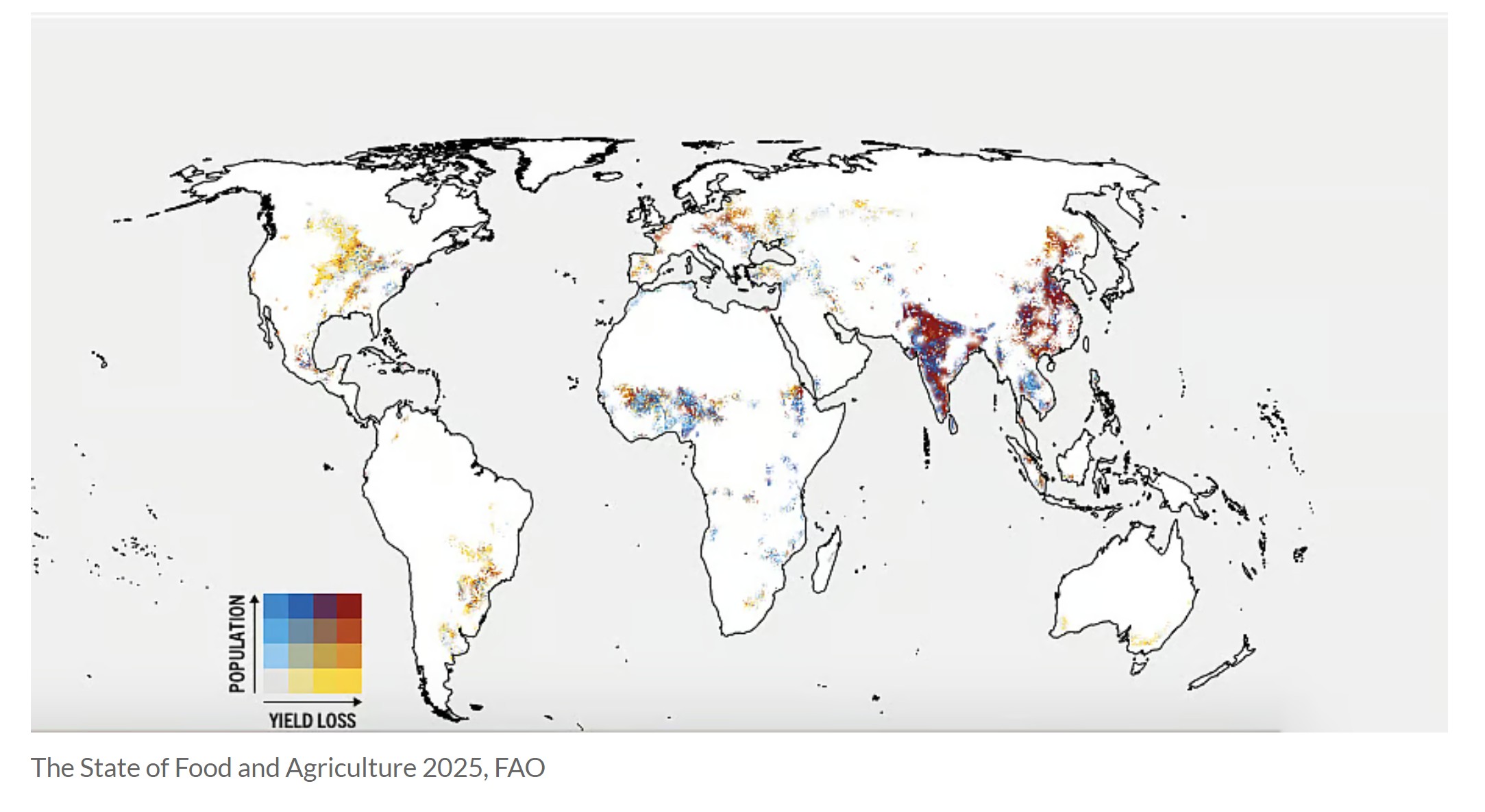
Land degradation has emerged as a silent but profound global crisis, undermining food security, livelihoods, and ecological sustainability. According to the State of Food and Agriculture (SOFA) Report 2025, published by the Food and Agriculture Organization (FAO) of the United Nations, nearly 1.7 billion people live in regions where agricultural productivity is declining due to human-induced land degradation. This degradation not only threatens global food systems but also exacerbates poverty, hunger, and malnutrition, particularly in developing regions.
Nature and Drivers of Land Degradation
The SOFA 2025 report provides a comprehensive assessment of how human activities have reshaped global land-use patterns over centuries. It identifies agricultural expansion as the primary driver of global deforestation, accounting for nearly 90 per cent of forest loss worldwide. While agriculture remains central to food production, its unregulated expansion has caused large-scale ecological stress.
In the 21st century (2001–2023), global agricultural land declined by 78 million hectares (mha), reflecting a complex land-use transition. Within this overall decline, cropland expanded by 78 mha, while permanent meadows and pastures contracted by 151 mha, indicating a shift towards more intensive cultivation. Regional variations were stark:
- Sub-Saharan Africa witnessed cropland expansion of 69 mha, accompanied by 72 mha of forest loss.
- Latin America recorded 25 mha of cropland growth, but lost 85 mha of forests, highlighting the trade-off between agricultural expansion and environmental sustainability.
Regional and National Impacts
The impacts of land degradation are unevenly distributed. The largest affected populations are concentrated in eastern and southern Asia, regions characterised by high population density and extensive land degradation. India stands out as one of the countries experiencing some of the highest yield gaps due to human-induced degradation, posing serious concerns for long-term food security and farmer incomes.
Globally, the report highlights that around 3.6 million hectares of croplands are abandoned every year, with land degradation playing a significant role. This abandonment reflects declining soil fertility, water stress, and unsustainable land management practices.
Land Degradation, Poverty and Nutrition
A critical contribution of the SOFA 2025 report lies in its identification of vulnerability hotspots, where land degradation overlaps with poverty, food insecurity, and malnutrition. The most severe intersections occur in Southern Asia and sub-Saharan Africa, regions already facing socio-economic stress.
Alarmingly, about 47 million children under the age of five, suffering from stunted growth, live in areas where severe yield losses are directly linked to land degradation. This underscores that land degradation is not merely an environmental issue but a human development challenge with intergenerational consequences.
Farm Size, Productivity and Degradation
The report also examines how farm size influences land management and degradation outcomes. Of the world’s approximately 570 million farms, nearly 85 per cent are smallholdings below 2 hectares, yet they cultivate only 9 per cent of global farmland. In contrast, just 0.1 per cent of farms larger than 1,000 hectares control about half of the world’s agricultural land.
Large farms often deploy advanced technologies and high external inputs to sustain yields. However, in intensively cultivated regions such as Europe and North America, historical degradation is often masked by heavy fertiliser and water use, leading to increasing economic and environmental costs.
Smallholder-dominated regions, especially in sub-Saharan Africa, face large yield gaps primarily due to resource constraints, limited access to credit, inputs, technology, and markets. Degraded soils in these regions respond poorly even when inputs become available, compounding vulnerability.
Despite these constraints, the world’s 500 million smallholder farmers play a vital role in global food systems, contributing 16 per cent of global dietary energy, 12 per cent of proteins, and 9 per cent of fats from crops, and supporting dietary diversity and rural livelihoods.
Scope for Reversal and Policy Implications
Importantly, the report highlights the significant potential for reversing land degradation. Restoring just 10 per cent of human-induced degradation on existing croplands could generate enough additional food to feed 154 million people annually. Furthermore, rehabilitating abandoned croplands could potentially feed between 292 and 476 million people, demonstrating that land restoration is a powerful tool for addressing global hunger.