
Sukhoi Su-30MKI
- 10 Mar 2026
In News:
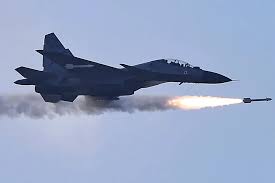
An Indian Air Force Sukhoi Su-30MKI crashed during a routine training mission at Inglong Ekopi Hill on March 5, 2026. The incident has drawn attention to the operational significance of the Su-30MKI, which remains one of the most advanced and widely deployed fighter aircraft in India’s defence arsenal.
Overview of the Sukhoi Su-30MKI
The Sukhoi Su-30MKI (NATO reporting name: Flanker-H) is a heavy, all-weather, long-range, two-seat multirole air superiority fighter designed to perform a variety of missions, including:
- Air superiority operations
- Ground attack missions
- Maritime strike operations
- Strategic deterrence roles
Originally designed by Sukhoi, the aircraft is manufactured in India under license by Hindustan Aeronautics Limited at its Nashik facility. The Su-30MKI represents a unique collaboration that combines Russian airframe technology, Indian avionics, and advanced subsystems from France and Israel, making it one of the most customised fighter aircraft in the world.
Purpose and Operational Role
- The primary objective of deploying the Su-30MKI is to ensure air dominance over the Indian subcontinent. Its long range, heavy payload capacity, and advanced avionics allow the aircraft to carry out complex missions across large operational theatres.
- The fighter serves as a core platform for both offensive and defensive air operations, enabling India to maintain strategic deterrence and respond effectively to emerging security challenges.
Key Features and Capabilities
1. Super-maneuverability: The Su-30MKI is equipped with thrust-vectoring nozzles and canards, allowing it to perform extreme aerial maneuvers such as the Pugachev’s Cobra. These capabilities enhance dogfighting performance and survivability in close-combat situations.
2. Advanced Avionics: The aircraft integrates sophisticated avionics and electronic warfare systems. It is equipped with a Passive Electronically Scanned Array (PESA) radar, which is planned to be upgraded to India’s Uttam Active Electronically Scanned Array (AESA) radar, significantly enhancing detection and targeting capabilities.
3. Weapons and Payload Capacity: The Su-30MKI can carry a combat payload of up to 8,000 kg, including a variety of missiles and precision-guided weapons. These include:
- BrahMos-A
- Astra Missile
- R-77
- Kh-59
Notably, the Su-30MKI is currently the only fighter aircraft capable of carrying the BrahMos-A supersonic cruise missile, significantly enhancing India’s strike capability.
4. Twin-Engine Power: The aircraft is powered by two AL-31FP turbofan engines, which provide high thrust, enabling long-range missions and sustained high-speed operations.
5. Increasing Indigenisation: As of 2026, the aircraft incorporates over 62.6% indigenous components, including:
- Indian flight-control systems
- Radar warning receivers
- Various avionics subsystems
This growing indigenisation aligns with India’s self-reliance in defence manufacturing (Atmanirbhar Bharat) initiative.
Essential Commodities Act, 1955 (ECA)

- 10 Mar 2026
In News:
Recently, the Government of India invoked the Essential Commodities Act, 1955 in response to an energy crisis triggered by geopolitical tensions in West Asia, including strikes involving Iran. The move highlights the continuing relevance of the Act as a policy instrument to manage shortages, regulate prices, and ensure the availability of essential commodities during emergencies.
About the Essential Commodities Act, 1955
The Essential Commodities Act (ECA), 1955 is a central legislation enacted to regulate the production, supply, and distribution of essential commodities to ensure their availability to the public at fair prices. The Act empowers the government to prevent hoarding, black marketing, and artificial scarcity of vital goods.
The primary objectives of the Act include:
- Ensuring the steady availability of essential goods.
- Preventing price manipulation and hoarding.
- Regulating the supply of commodities necessary for national security and defence operations.
Through regulatory mechanisms, the Act enables the government to intervene in markets when disruptions threaten consumer welfare.
Key Features of the Act
1. Declaration of Essential Commodities: The Act defines essential commodities as items listed in its Schedule. These may include food items and other goods considered crucial for daily consumption or national interest.
2. Power to Amend the Schedule: The Central Government, in consultation with state governments, can add or remove commodities from the Schedule depending on economic conditions and public needs.
3. Stock Limits: The Act empowers the government to impose stock limits on traders, wholesalers, and retailers. This prevents excessive hoarding that could create artificial shortages and price inflation.
4. Price Regulation: Authorities can regulate the sale price of essential commodities, particularly items such as food grains, edible oils, and sugar, to protect consumers from unreasonable price increases.
5. Penal Provisions: Violations of government orders issued under Section 3 of the Act may result in:
- Imprisonment ranging from three months to seven years, and
- Monetary fines.
6. Confiscation of Goods: Authorities may seize and confiscate commodities being illegally stored or transported, along with vehicles or animals used in their transport.
Situations When the Act is Invoked
The Essential Commodities Act is typically invoked during extraordinary circumstances when supply disruptions or price volatility threaten public welfare.
Common situations include:
1. War or Geopolitical Crises: The Act can be used to regulate supplies of fuel or food during international conflicts or energy disruptions.
2. Natural Disasters and Health Emergencies: For example, during the COVID-19 pandemic, the government invoked the Act to ensure the availability of essential medical items such as masks and sanitizers.
3. Sudden Price Rise: Government intervention is allowed when retail prices rise significantly—typically 50% for non-perishable agricultural goods and 100% for horticultural produce.
4. Market Stabilization During High-Demand Periods: The Act has historically been used to stabilize prices of commodities such as wheat or sugar during festive seasons or election periods.
Significance of the Act
The Essential Commodities Act remains an important policy tool in India’s regulatory framework.
1. Consumer Protection: The Act protects consumers, particularly economically vulnerable sections, by preventing sudden spikes in the prices of essential goods.
2. Prevention of Hoarding and Black Marketing: By limiting stock holdings and regulating distribution, the Act discourages speculative practices that create artificial shortages.
3. Crisis Management: During emergencies such as war, pandemics, or supply disruptions, the Act allows the government to quickly stabilize markets and ensure equitable distribution of essential commodities.
Precision Strike Missile (PrSM)
- 10 Mar 2026
In News:
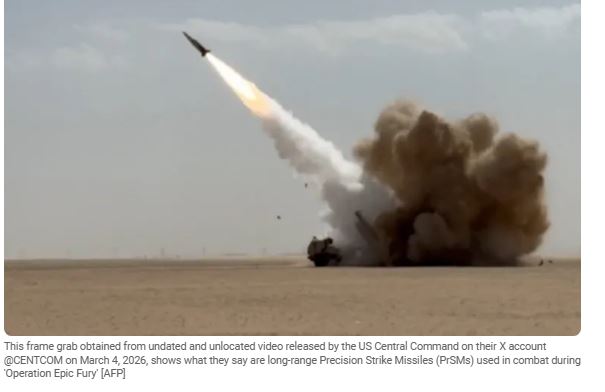
The Precision Strike Missile recently drew global attention after being reportedly used by the United States Central Command during military operations involving Iran. The deployment marked the first operational use of the missile, highlighting advancements in long-range precision strike capabilities and modern battlefield technologies.
Overview of Precision Strike Missile (PrSM)
- The Precision Strike Missile (PrSM) is a surface-to-surface guided ballistic missile designed to strike targets at long distances with high accuracy. It is primarily developed and manufactured by Lockheed Martin for the United States Army.
- The missile entered operational service in late 2023 as part of efforts to modernize the US Army’s long-range artillery systems and enhance its ability to engage high-value targets from extended distances.
Key Features of the PrSM
1. Long-Range Precision Strike Capability: The missile is capable of striking targets at ranges exceeding 500 kilometres, enabling forces to engage strategic targets such as command centres, radar systems, air defence installations, and logistics hubs far beyond the battlefield.
2. Advanced Guidance Systems: The PrSM uses a combination of:
- Global Positioning System (GPS) navigation
- Inertial guidance systems
These technologies allow the missile to maintain high targeting accuracy even in adverse weather or electronic warfare environments.
3. Compatibility with Existing Launch Platforms
One of the key design advantages of the PrSM is its compatibility with existing artillery platforms, including:
- M142 High Mobility Artillery Rocket System
- M270A2 Multiple Launch Rocket System
This interoperability allows rapid deployment without requiring entirely new launch infrastructure.
Technological Architecture
The missile incorporates an open systems architecture and modular design, enabling future upgrades and integration of new technologies.
Key technological features include:
- Solid rocket propellant for propulsion
- Hypersonic-class ballistic trajectory enabling high-speed travel
- Integration with satellite, drone, and radar networks for enhanced targeting and battlefield coordination
These features allow the PrSM to function as part of a broader network-centric warfare system.
Safety and Payload Design
- The missile carries an Insensitive Munitions (IM) energetic payload, which reduces the risk of accidental detonation during handling, transport, or storage. This improves operational safety for military personnel and logistical operations.
Strategic Significance
The development and deployment of the Precision Strike Missile reflects broader trends in modern warfare, including:
- Increasing emphasis on long-range precision strike capabilities
- Integration of weapons systems into networked battlefield environments
- Replacement of older missile systems with more accurate and flexible platforms
The PrSM also strengthens the US Army’s ability to conduct deep-strike operations against critical enemy infrastructure while minimizing collateral damage through improved targeting precision.
Discovery of a Megalithic Rock-Cut Chamber in Kerala
- 10 Mar 2026
In News:
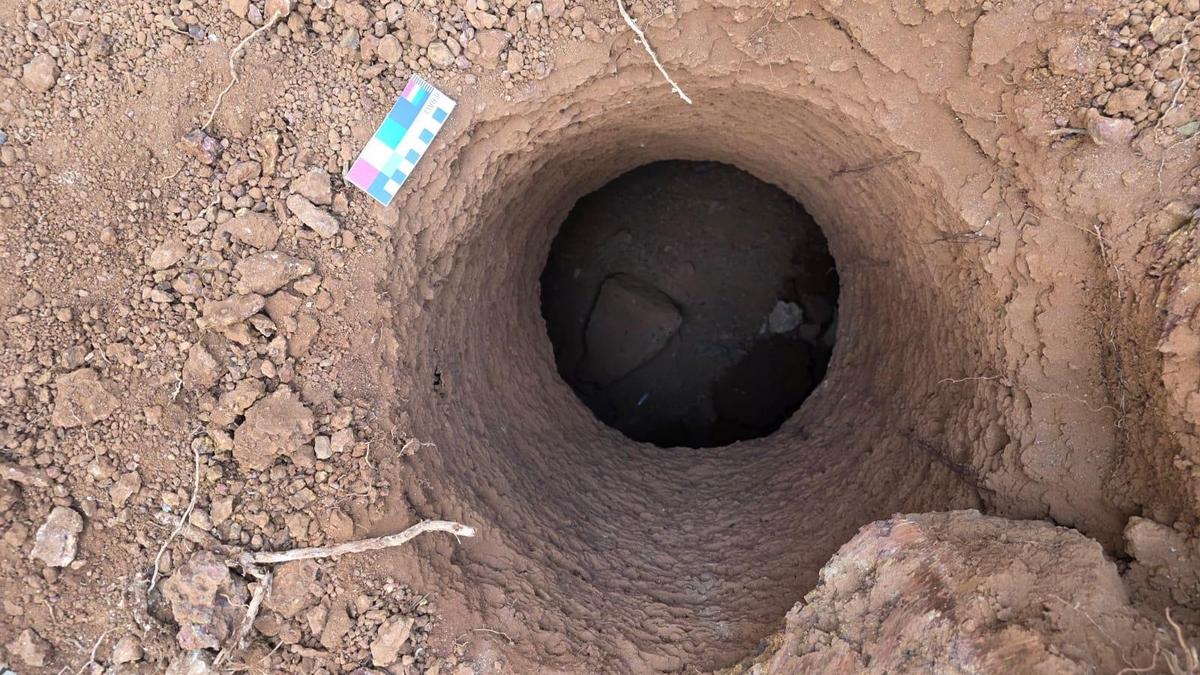
A significant archaeological discovery has been made in Kasaragod district, where a Megalithic laterite rock-cut chamber was unearthed at Panayal. The finding provides valuable insights into the burial practices, technological development, and cultural traditions of prehistoric societies in South India. The chamber forms part of a larger megalithic burial complex, where pottery of various shapes and sizes was interred as part of ritual practices associated with funerary traditions.
Megalithic Culture: An Overview
- The Megalithic Culture refers to a prehistoric tradition marked by the construction of large stone structures known as megaliths. These monuments were typically used for burial and commemorative purposes and were often located away from habitation sites.
- Archaeological evidence indicates that the South Indian Megalithic culture flourished roughly between 1000 BCE and 100 CE, with its peak phase occurring between 600 BCE and 100 CE. The period represents a fully developed Iron Age culture, evidenced by the widespread use of iron tools and weapons.
Iron Age Characteristics
The Megalithic period in South India is closely associated with the Iron Age, during which iron technology was widely adopted. Archaeological excavations across the region have yielded:
- Iron weapons and tools
- Agricultural implements
- Pottery and burial goods
These findings indicate technological advancement and suggest that communities had well-developed systems of agriculture, craftsmanship, and warfare.
Geographical Distribution of Megalithic Sites
The main concentration of megalithic sites in India is found in the Deccan region, particularly south of the Godavari River. Several important archaeological sites have been identified across the country.
Prominent sites include:
- Brahmagiri and Chandravalli in Karnataka
- Junapani, Khapa, and Muhurjhari in Maharashtra
- Adichanallur in Tamil Nadu
Evidence of megalithic culture has also been found in regions beyond South India, including:
- The Punjab plains
- The Indo-Gangetic basin
- Rajasthan and Gujarat
- Burzahom
This wide distribution indicates that megalithic traditions were practiced across diverse ecological zones in the Indian subcontinent.
Burial Practices and Material Culture
The recently discovered rock-cut chamber in Kasaragod is part of a burial complex, suggesting elaborate funerary traditions among megalithic communities. These burial sites often contained:
- Pottery vessels
- Iron tools and weapons
- Ornaments and ritual objects
The placement of pottery within burial chambers indicates ritualistic beliefs about life after death and ancestor worship.
Subsistence and Lifestyle
- Archaeological evidence suggests that megalithic communities practiced a mixed subsistence economy, including: agriculture, hunting, fishing, and animal husbandry
- Rock paintings discovered at some sites depict scenes of hunting, cattle raids, and group dancing, offering glimpses into the social and cultural life of these early communities.
Significance of the Discovery
The Kasaragod rock-cut chamber contributes to a deeper understanding of:
- The spread of megalithic culture in South India
- Funerary architecture and burial rituals
- The development of Iron Age societies in the Deccan region
Such discoveries help archaeologists reconstruct the technological, social, and religious practices of prehistoric populations.
Denmark’s Elimination of Mother-to-Child Transmission of HIV and Syphilis

- 10 Mar 2026
In News:
Recently, Denmark was certified by the World Health Organization as the first country in the European Union to eliminate mother-to-child transmission (MTCT) of both HIV and Syphilis. This achievement represents a major public health success and demonstrates the effectiveness of strong maternal healthcare systems, universal testing, and timely treatment interventions.
What is Mother-to-Child Transmission (MTCT)?
Mother-to-Child Transmission (MTCT), also known as vertical transmission, refers to the spread of certain infections from a pregnant woman to her baby during pregnancy, childbirth and breastfeeding.
Without timely intervention, infections such as HIV and syphilis can lead to serious consequences including:
- Infant HIV infection
- Congenital syphilis
- Stillbirths and neonatal deaths
- Severe lifelong health complications
Therefore, preventing MTCT is a major priority in global maternal and child health programmes.
WHO Criteria for Elimination of MTCT
The WHO defines elimination of mother-to-child transmission through strict epidemiological and health system indicators. A country must achieve:
- Transmission rates below 50 cases per 100,000 live births, and
- More than 95% coverage of testing and treatment among pregnant women
These benchmarks ensure that both detection and treatment systems are robust enough to prevent transmission to newborns.
Global Context of EMTCT
Denmark joins a growing group of countries validated by the WHO for eliminating MTCT or making significant progress toward this goal. More than 20 countries and territories worldwide have achieved or are nearing this milestone.
Examples include:
- Caribbean nations such as Anguilla and Antigua and Barbuda
- South American countries such as Brazil
- African countries such as Botswana
- Asian nations including Malaysia and Maldives
These achievements demonstrate that elimination is possible across different health systems when strong policies and universal maternal healthcare are implemented.
WHO’s Triple Elimination Strategy
To address maternal transmission of infectious diseases, WHO promotes a Triple Elimination Strategy targeting: HIV, Syphilis, and Hepatitis B
The strategy is built on four key pillars:
- Universal access to antenatal care
- Integrated testing for maternal infections
- Effective treatment and prevention protocols
- Strong health systems supported by community engagement and human-rights protections
This integrated approach helps ensure that maternal health services detect infections early and prevent transmission to infants.
Understanding the Diseases
HIV (Human Immunodeficiency Virus)
- HIV attacks the body’s immune system, particularly CD4 cells, weakening the body’s ability to fight infections.
- If untreated, HIV can progress to Acquired Immunodeficiency Syndrome (AIDS), making individuals vulnerable to life-threatening infections and cancers.
Syphilis
- Syphilis is a sexually transmitted bacterial infection caused by Treponema pallidum. The disease progresses through stages that may include painless sores, skin rashes, and severe complications affecting the heart, brain, and nervous system if left untreated. Congenital syphilis can cause severe health problems in newborns.
Significance of Denmark’s Achievement
Denmark’s certification highlights several important aspects of effective public health policy:
- Strong maternal healthcare and antenatal screening systems
- Universal testing and treatment for pregnant women
- Integration of infectious disease control with maternal health services
- Sustained public health surveillance and policy commitment
This milestone also reinforces the feasibility of eliminating vertical transmission of infectious diseases through coordinated healthcare strategies.