
Christmas Island

- 11 Nov 2025
In News:
Google has proposed establishing an artificial intelligence–enabled data centre on Christmas Island, a remote Australian territory in the Indian Ocean. The proposal follows a cloud services agreement between Google and Australia’s Department of Defence, underscoring the growing intersection of digital infrastructure, defence preparedness, and geopoliticsin the Indo-Pacific region.
About Christmas Island
- Location: Indian Ocean; about 360 km south of Java (Indonesia) and 1,400 km northwest of mainland Australia.
- Administrative status: External territory of Australia.
- Physical geography: Volcanic origin; summit of an oceanic mountain. Highest point is Murray Hill (361 m).
- Main settlement and port: Flying Fish Cove (north-eastern coast).
- Area & population: ~135 sq km; population around 1,600.
Ecological Features
- Dominated by tropical rainforest.
- Rich biodiversity with seabirds, reptiles, insects, and land crabs.
- Famous for the annual mass migration of the Christmas Island red crab (Gecarcoideanatalis), a major tourist attraction.
Historical Background
- Sighted by Europeans in 1615; named in 1643.
- Phosphate deposits discovered in 1887, leading to British annexation.
- Incorporated into the Straits Settlements in 1900.
- Occupied by Japan during World War II.
- Transferred to Australia in 1958.
Economy
- Historically dependent on phosphate mining (now nearly exhausted).
- Ongoing efforts to diversify through tourism.
- Limited local agriculture and fishing; heavy reliance on imports.
Google’s AI Data Centre Proposal
- Google is in discussions to lease land near the island’s airport to build a data facility.
- The project is linked to subsea cable infrastructure, including:
- A proposed cable connection between Christmas Island and Darwin.
- Future connectivity to Asia, enhancing digital resilience in the Indo-Pacific.
- Energy needs are expected to be met through a mix of diesel and renewable sources, raising concerns about local supply sustainability.
Strategic and Defence Significance
- Christmas Island is increasingly viewed as a strategic frontline outpost for monitoring maritime activity in the Indian Ocean.
- Its location offers surveillance advantages over key sea lanes such as the Sunda, Lombok, and Malacca Straits.
- Defence analysts suggest that a local data centre could support AI-enabled military command and control, especially for:
- Uncrewed systems (drones)
- Surveillance and targeting
- Subsea cables provide more reliable and high-bandwidth communication than satellites, which may be vulnerable during conflicts.
Community and Environmental Concerns
- Local authorities are assessing:
- Impact on energy availability
- Environmental safeguards in a biodiversity-rich island
- Potential benefits in terms of employment, infrastructure, and economic diversification
- The Australian government has stated that environmental and planning approvals are mandatory before project clearance.
Batten disease

- 11 Nov 2025
In News:
Batten disease refers to a group of rare, inherited neurodegenerative disorders that primarily affect the brain and nervous system. Scientifically, it is known as neuronal ceroid lipofuscinosis (NCL).
Nature of the Disease
- It is a congenital, progressive, and terminal neurological disorder.
- Onset may occur in infancy, childhood (most commonly), or rarely adulthood, often after an initial period of normal development.
- The disease leads to a gradual and irreversible decline in nervous system function.
Genetic Basis
- Batten disease is caused by mutations in a group of genes collectively called CLN genes.
- There are 13–14 recognised forms (CLN1 to CLN14), each linked to a different gene mutation.
- CLN3 disease is the most common form, typically manifesting between 4–7 years of age.
Clinical Features
- Early symptoms often include progressive vision loss, which is usually the first noticeable sign.
- Other major manifestations:
- Seizures
- Cognitive decline
- Loss of motor coordination and speech
- Behavioural and learning difficulties
- In advanced stages, affected individuals may become blind, non-ambulatory, unable to speak or swallow, and require full-time care.
- Life expectancy varies by subtype and age of onset, ranging from early childhood to the second or third decade of life.
Treatment Status
- No curative treatment exists at present.
- Management is symptomatic, including:
- Anti-epileptic drugs for seizures
- Physical and occupational therapy to maintain function and quality of life
- Several gene therapy approaches are currently under advanced research and experimental stages.
Recent Scientific Developments
Recent research has highlighted that sex and age significantly influence disease progression, particularly in CLN3 Batten disease.
- Researchers from the University of Rochester used electroencephalography (EEG) to non-invasively track brain function.
- Studies on mouse models of CLN3 disease revealed:
- Male mice showed early auditory processing deficits that partially improved with age.
- Female mice exhibited persistent auditory and brainwave abnormalities, indicating faster or more sustained progression.
- Similar EEG-based biomarkers had earlier been identified in human CLN3 patients, enabling better disease monitoring.
- The findings were published in the Journal of Neurodevelopmental Disorders.
Significance
- Confirms that Batten disease progression differs by sex, with females often showing later onset but more rapid progression.
- Establishes EEG-based neuromarkers as a reliable tool to track disease progression.
- Provides a translational animal model to test emerging therapies, especially gene-based interventions.
- Supports the future development of personalised and time-sensitive treatment strategies.
Rhesus Macaque
- 11 Nov 2025
In News:
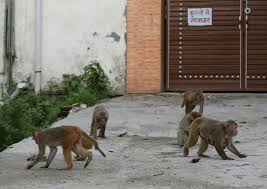
Recently, the Standing Committee of the National Board for Wildlife (SC-NBWL) has recommended reinstating the Rhesus macaque (Macaca mulatta) under Schedule II of the Wildlife (Protection) Act, 1972. The move aims to restore statutory protection, regulate scientific management, and curb illegal capture, cruelty, and trade of the species.
Rationale Behind the Recommendation
The recommendation follows consultations with state governments and expert bodies amid rising human–wildlife conflict involving rhesus macaques. Senior officials highlighted that Section 11 of the Wildlife (Protection) Act empowers states to manage conflict situations even when a species is protected, allowing controlled interventions without removing legal safeguards.
The proposal was supported by the Chairman of the Animal Welfare Board of India, animal protection organisations, and backed by the Central Zoo Authority and the National Tiger Conservation Authority. States have been advised to prepare site-specific management, mitigation, rescue, and rehabilitation plans, supported by baseline studies from the Wildlife Institute of India.
About Rhesus Macaque
- Scientific name: Macaca mulatta
- Category: Old World monkey
- Distribution: India, South Asia, Southeast Asia, southern China
- Habitat: Forests, grasslands, mangroves, mountains; highly adaptable to human-dominated landscapes
- Diet: Omnivorous (fruits, seeds, roots, bark, cereals)
- Behaviour: Social, diurnal, terrestrial and arboreal; live in large troops with complex communication
Conservation Status
- IUCN Red List: Least Concern
- Wildlife (Protection) Act, 1972: Proposed Schedule II (restoration of protection)
ReALCRaft Portal
- 11 Nov 2025
In News:
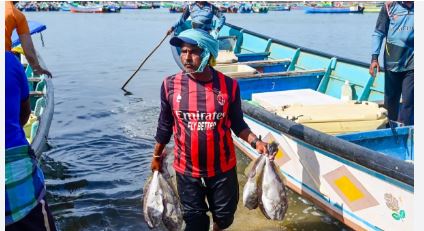
In a major step towards strengthening India’s Blue Economy, the Government of India has notified the Rules for “Sustainable Harnessing of Fisheries in the Exclusive Economic Zone (EEZ)” in November 2025. The framework aims to unlock the underutilised deep-sea fisheries potential of India’s EEZ while ensuring sustainability, traceability, coastal security, and inclusive growth of fishing communities.
Key Provisions of the EEZ Rules
- Priority access for Fishermen Cooperative Societies and Fish Farmer Producer Organisations (FFPOs) for deep-sea fishing operations.
- Promotion of value addition, certification, and traceability to boost seafood exports.
- Introduction of the mother–child vessel concept for mid-sea trans-shipment under regulatory oversight, particularly benefiting the Andaman & Nicobar Islands and Lakshadweep, which together account for 49% of India’s EEZ area.
- Foreign fishing vessels prohibited from operating in India’s EEZ.
Sustainability and Conservation Measures
- Ban on harmful practices such as LED light fishing, pair trawling, and bull trawling.
- Prescription of minimum legal fish sizes and preparation of Fisheries Management Plans for stock restoration.
- Promotion of mariculture (sea-cage farming, seaweed cultivation) as alternative livelihoods to reduce pressure on near-shore fisheries.
- Formulation of a National Plan of Action on Illegal, Unreported and Unregulated (IUU) Fishing.
Digital Access Pass System and ReALCRaft Portal
Under the new rules, mechanized and large motorised vessels must obtain a free Access Pass through the ReALCRaft portal, while traditional and small-scale fishers are exempted.
TheReALCRaft (Registration and Licensing of Fishing Craft) portal, developed by the Department of Fisheries, is a national, open-source digital platform that provides end-to-end services for:
- Registration and licensing of fishing vessels
- Transfer of ownership
- Real-time application tracking and time-bound approvals
Features and Integrations
- Integration with state treasury/payment gateways
- Linkage with security agencies for vessel tracking and coastal surveillance
- ISRO-enabled real-time communication with fishers at sea
- Integration with Marine Products Export Development Authority (MPEDA) and Export Inspection Council (EIC) for Fish Catch and Health Certificates, ensuring export compliance and traceability
- Integration with Nabhmitra App for safe navigation and transponder operation
Mandatory use of transponders and QR-coded Aadhaar/Fisher ID cards enhances fisher safety and strengthens coastal security with support from the Indian Coast Guard and Indian Navy.
Institutional and Financial Support
- Training, capacity building, and international exposure across the fisheries value chain
- Access to affordable credit under PMMSY and FIDF
Background and Significance
- India has a coastline of over 11,099 km and an EEZ of over 23 lakh sq km
- Supports livelihoods of over 50 lakh fishers across 13 coastal States/UTs
- India ranks second globally in fish production and aquaculture
- Seafood exports valued at ~?60,000 crore (Budget 2025–26)
- Deep-sea resources, especially tuna, remained underutilised earlier compared to Indian Ocean competitors
Global Alliance for Improved Nutrition (GAIN)
- 11 Nov 2025
In News:
A recent report by the Global Alliance for Improved Nutrition (GAIN) highlights that targeted nutrition investments in agri-food value chains can play a crucial role in reducing gender inequalities, enhancing productivity, and strengthening food system resilience. The report, The Case for Investment in Nutritious Foods Value Chains: An Opportunity for Gender Impact, stresses the need for increased financial support to nutritious food enterprises, particularly small and medium enterprises (SMEs) in emerging economies.
Women in Agri-Food Systems
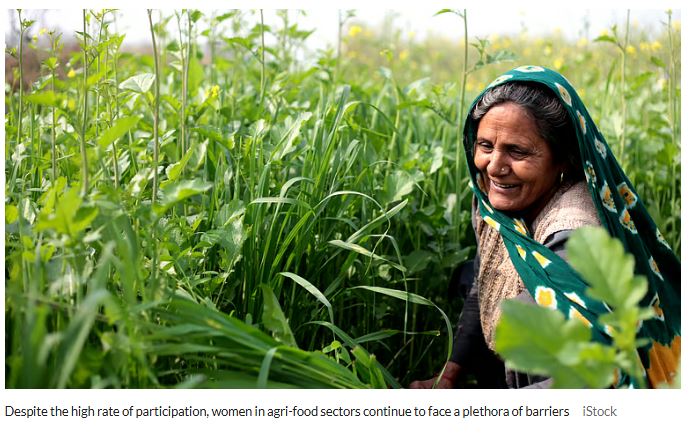
According to the Food and Agriculture Organization (FAO), women constitute about 38% of the global agri-food workforce. However, their participation is significantly higher in developing regions—66% in Sub-Saharan Africa and 71% in South Asia, including India. Despite this, women face persistent structural barriers such as limited access to land, credit, agricultural inputs, technology, extension services, and formal employment opportunities.
Discriminatory social norms, weak legal protections, and insecure working conditions further restrict women’s economic independence and expose them to gender-based violence and informal labour arrangements.
Nutrition as an Economic and Developmental Opportunity
The report underlines that food security cannot be achieved by focusing on production alone; nutrition outcomes must be central to agri-food investments. From a business perspective, investing in nutritious food value chains improves supplier productivity, builds resilient supply chains, and helps attract and retain women workers, thereby enhancing workforce diversity.
FAO estimates suggest that closing the gender gap in access to productive resources could raise women’s farm yields by 20–30%. Moreover, eliminating gender gaps in productivity and wages across agri-food systems could increase global GDP by nearly 1% (around $1 trillion).
Women’s empowerment has also been directly linked to improved household diets and better child nutrition outcomes, reinforcing the intergenerational benefits of gender-focused nutrition investments.
Geography-Specific Value Chains
The GAIN report analyses six nutritious food value chains across three regions:
- Sub-Saharan Africa: Cashew nuts and poultry
- Latin America: Aquaculture and quinoa
- South Asia: Tomatoes and dairy
For instance, Africa is the world’s largest producer of raw cashew nuts, yet only about 10% of processing occurs locally. Women dominate manual processing activities such as shelling and sorting, indicating scope for investment in local processing and value addition.
In South Asia, women play a critical role in tomato cultivation and dairy activities, but typically lack control over credit and modern agricultural technologies, which remain male-dominated.
Gender-Lens Investing and 2X Criteria
The report advocates the use of the 2X Criteria, a global framework for gender-lens investing updated in June 2024. It provides benchmarks for investments that promote women’s leadership, quality employment, access to finance, entrepreneurship, and gender-responsive products and services.
Gender-lens investments are especially important in male-dominated or informal sectors such as aquaculture, where women often remain underrepresented in leadership and ownership roles.
About GAIN and FAO
GAIN is a Switzerland-based foundation launched at the United Nations in 2002 to address malnutrition globally. Headquartered in Geneva, it works with governments, businesses, and civil society to make nutritious food more affordable, available, and desirable, reaching over 667 million vulnerable people across 30+ countries.
FAO is a specialized UN agency leading international efforts to combat hunger, improve nutrition, and ensure food security. Its sister organizations include the World Food Programme (WFP) and the International Fund for Agricultural Development (IFAD).