
Burevestnik Missile

- 04 Nov 2025
In News:
Russia has announced the successful testing of its Burevestnik nuclear-powered, nuclear-capable cruise missile, significantly escalating global concerns regarding a renewed nuclear arms race. The missile, known in Russia as 9M730 Burevestnik (“Storm Petrel”), is part of a new class of strategic weapons first unveiled in 2018.
About the Burevestnik Missile
- Type: Ground-launched, low-flying cruise missile.
- Capabilities:
- Nuclear-powered propulsion system.
- Nuclear warhead–capable.
- Designed for unlimited range and unpredictable flight trajectory.
- NATO Code Name: SSC-X-9 Skyfall.
- Developer: Russia.
- Introduced: One of six new strategic weapons announced by President Putin in 2018.
Key Features
1. Nuclear Propulsion System
- Powered by a miniaturised nuclear reactor.
- Reactor heats incoming air to generate thrust — replacing traditional chemical fuel.
- Enables theoretically unlimited flight time, constrained only by material durability and guidance systems.
- Offers the ability to loiter for days and strike from unexpected directions.
2. Long Range & Stealth
- Russia claims a test in 2023/2025 achieved:
- 14,000 km travel
- 15 hours of flight
- Low-altitude flight path makes detection by radar extremely difficult.
- Unpredictable trajectory designed to defeat missile defence systems.
3. Strategic Role
- Intended as a second-strike or surprise-attack weapon that can bypass US and NATO missile shields.
- Falls outside current New START definitions, as it is neither an ICBM, SLBM, nor heavy bomber.
Technical Background
- Nuclear-powered missiles were previously explored under the 1960s US Project Pluto (SLAM) but abandoned due to extreme safety risks.
- According to the Nuclear Threat Initiative (NTI), the Burevestnik uses a compact reactor similar in concept to nuclear ramjet technology.
Arms Control Context – New START Treaty
- New START Treaty (effective 2011, extended to 2026) limits deployed strategic nuclear weapons of the US and Russia.
- Russia suspended participation in February 2023.
- The Burevestnik is not restricted under New START, as it represents a new category of strategic cruise missile not covered under existing treaty definitions.
- Russia’s testing signals an attempt to sidestep treaty limits and intensify the nuclear competition.
Laokhowa Wildlife Sanctuary & Roumari–Donduwa Wetland Complex
- 04 Nov 2025
In News:
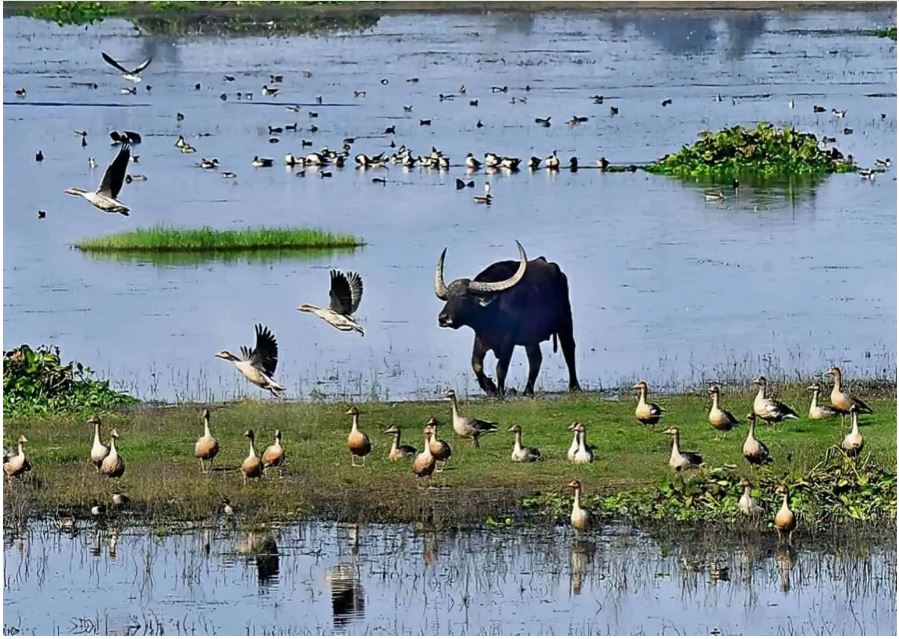
Civil society groups and conservationists in Assam have urged the government to designate the Roumari–Donduwa Wetland Complex, located within the Laokhowa Wildlife Sanctuary, as a Ramsar Site. The demand is based on the wetland’s high ecological value, rich avifaunal diversity, and its fulfillment of multiple Ramsar criteria.
About Laokhowa Wildlife Sanctuary
- Location: Southern bank of the Brahmaputra River, in Nagaon District, Assam.
- Area: Approximately 70.13 sq. km.
- Ecological System: Part of the Laokhowa–Burachapori ecosystem and a notified buffer zone of Kaziranga Tiger Reserve (KTR).
- Landscape: Lies within the Brahmaputra Valley; surrounded by human-dominated areas except to the north.
- Flora: Habitat types include:
- Alluvial grasslands
- Alluvial forests
- Moist deciduous forests
- Tropical semi-evergreen forests
- Fauna: Home to key species such as:
- Indian One-Horned Rhinoceros
- Royal Bengal Tiger
- Asiatic Water Buffalo
- Elephants
Roumari–Donduwa Wetland Complex
- Situated within Laokhowa Wildlife Sanctuary; covers ~2.5–3 sq. km.
- Supports 120+ resident and migratory bird species.
- During the 6th Kaziranga Wetland Bird Census (2025):
- 47,000+ birds from 163 species were recorded—higher than counts from Assam’s only current Ramsar Site, Deepor Beel.
- Important species recorded include:
- Knob-billed Duck
- Lesser Adjutant Stork (EN)
- Black-necked Stork
- Ferruginous Pochard (NT)
- Common Pochard (VU)
Ramnami Tribe

- 04 Nov 2025
In News:
The Ramnami tribe of Chhattisgarh recently came into national focus when two members of the community emotionally expressed gratitude after the Prime Minister allowed them to adorn him with their traditional peacock-feather crown, breaking official protocol. This gesture highlighted the tribe’s unique cultural identity and historical struggle for social equality.
Who Are the Ramnamis?
- A distinctive devotional sect from central and northern Chhattisgarh.
- Known for tattooing the word “Ram” across their faces and bodies, symbolising the omnipresence of God.
- Their belief centres on nirgun Ram—the formless, unmanifest divine.
Origin and Historical Background
- Emerged in the late 19th century as a peaceful socio-religious resistance against caste discrimination.
- Traditionally, many Ramnamis were denied access to temples.
- Founder is believed to be Parsuram Bhardwaj, the son of a low-caste sharecropper.
- Tattoos became a form of protest, asserting that God is accessible to all, irrespective of caste hierarchy.
Legal Recognition
- In 1910, upper-caste groups filed a case against the community for tattooing "Ram" on their bodies and garments.
- The Ramnami Samaj won the case, affirming their right to inscribe the divine name on their skin, attire, and homes.
Cultural Features
- Clothing: Plain white garments adorned with repeated inscriptions of “Ram”.
- Headgear: A crown made of peacock feathers, carrying symbolic and mythological significance.
- Music & Rituals:
- Use of ghungroos during devotional dances and bhajans.
- Emphasis on simplicity, devotion, and gender equality.
- Devotional Practice: Worship of Ram in any form—saffron robes, shaved head, or tattooed body—reflecting spiritual inclusivity.
Demographic Snapshot
- Historically estimated at ~6 lakh members.
- Numbers have declined significantly; current estimates range between 20,000 to 1,00,000 individuals.
Gogabeel Lake Added as a Ramsar Site
- 04 Nov 2025
In News:
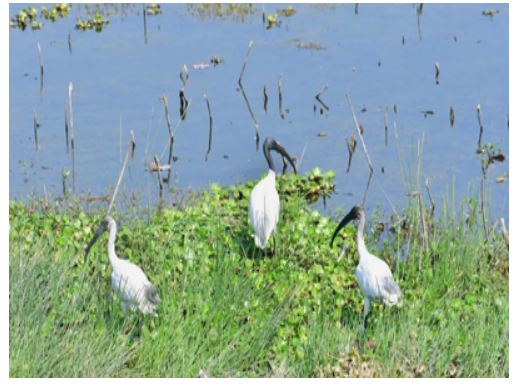
India has added Gogabeel Lake in Katihar district, Bihar to the Ramsar List of Wetlands of International Importance, raising the country’s total Ramsar sites to 94. With this, Bihar now has six Ramsar sites, placing it third after Tamil Nadu and Uttar Pradesh.
About Gogabeel Lake
- Location: Katihar district, Bihar; part of the Trans-Gangetic Plains.
- Wetland Type: A classic oxbow lake, situated between:
- River Mahananda (North-East)
- River Ganga (South)
- Hydrology: During floods, the lake temporarily links the two rivers.
- Legal Status: Bihar’s first Community Reserve, managed with active involvement of local communities.
- Cultural Significance: Traditional festivals such as Sirva, Adra, and Chhath are observed in the wetland region.
Ecological Features
- Flora: Dominated by tropical dry deciduous vegetation typical of the region.
- Fauna: Important wintering site for migratory birds and species of global conservation significance. Key species:
- Smooth-Coated Otter (Lutrogale perspicillata) – Vulnerable.
- Helicopter Catfish (Wallago attu) – Vulnerable, with the lake serving as a breeding ground.
Supports diverse fish assemblages and contributes to local fisheries.
Significance of the New Ramsar Designation
- Strengthens India’s position as:
- 1st in Asia
- 3rd globally (after the UK and Mexico) in terms of number of Ramsar sites.
- India has added 67 new Ramsar sites in the past 11 years, covering 13.6 lakh hectares.
- Recent additions from Bihar also include Gokul Jalashay (Buxar) and Udaipur Jheel (West Champaran).
Why Wetlands Matter
- Wetlands are areas where water is present permanently or seasonally.
- Provide essential ecosystem services:
- Flood control and groundwater recharge
- Water purification
- Habitat for biodiversity
- Support to local livelihoods through food, fibre, and raw materials
Ramsar Convention
- Adopted: 1971, in Ramsar, Iran.
- Objective: Conservation and wise use of wetlands through national action and international cooperation.
- Members: 172 countries, including India.
- Global Count: 2,546 Ramsar sites worldwide.
Exercise 'Poorvi Prachand Prahar
- 04 Nov 2025
In News:
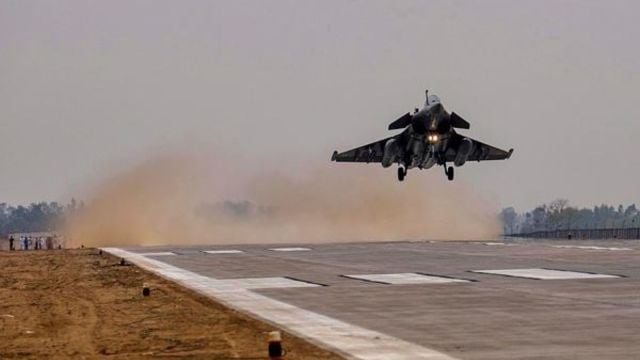
India is set to conduct the tri-service military exercise ‘Poorvi Prachand Prahar’ in the high-altitude terrain of Mechuka, Arunachal Pradesh. The drill represents India’s continued push toward jointness, interoperability, and multi-domain military readiness along the eastern sector.
About the Exercise
- Type: Tri-service exercise involving the Army, Navy, and Air Force.
- Location: Mechuka, a strategically significant forward area in Arunachal Pradesh.
- Nature: Designed as a forward-looking, multi-domain integration exercise.
Objectives
- Enhance warfighting capabilities under realistic operational conditions.
- Promote technological adaptation and the use of emerging platforms.
- Improve interoperability among the three services for integrated operations.
- Strengthen situational awareness and joint command-and-control mechanisms.
- Validate coordinated responses across land, air, and maritime domains.
Key Features
- Employment of:
- Special Forces
- Unmanned systems (UAVs and remote platforms)
- Precision weapon systems
- Networked operations centres
- Execution under rugged, high-altitude, and extreme-climate conditions.
- Testing of revised tactics, techniques, and procedures (TTPs) to improve combat agility and rapid response.
Strategic Importance
- Demonstrates India’s commitment to strengthening joint military preparedness along sensitive border regions.
- Enhances the ability to conduct synchronised, multi-domain operations in future conflicts.
- Integrates modern technologies to support real-time decision-making and network-centric warfare.
Background
‘Poorvi Prachand Prahar’ builds on earlier tri-service drills:
- ‘Bhala Prahar’ – 2023
- ‘Poorvi Prahar’ – 2024
Together, these exercises represent India’s broader drive toward theaterisation, integrated commands, and enhanced mission readiness.