
NCRB Data on Road Accidents
- 04 Oct 2025
In News:
According to the National Crime Records Bureau (NCRB) 2023 report, India recorded 4,64,029 road accidents, resulting in 1,73,826 deaths and 4,47,000 injuries. This marks a 1.6% rise in fatalities compared to 2022 (1,71,100 deaths) and highlights the continuing challenge of road safety in the country.
Key Trends and Statistics
- Total Accidents: 4,64,029 (17,261 more than in 2022).
- Fatalities: 1,73,826 people killed.
- Injuries: 4,47,000 people injured.
- Peak Accident Hours: 6 p.m. to 9 p.m. accounted for 20.7% of total accidents, followed by 3–6 p.m. (17.3%) and 12 noon–3 p.m. (15%).
Vehicle-Wise Analysis
Two-wheelers continued to be the most vulnerable category, responsible for nearly 46% of all road deaths.
- Two-wheelers: 79,533 deaths (45.8%)
- Pedestrians: 27,586 deaths (15.9%)
- SUVs/Cars/Jeep: 24,776 deaths (14.3%)
Tamil Nadu (11,490) and Uttar Pradesh (8,370) recorded the highest two-wheeler fatalities. Uttar Pradesh also reported the largest number of deaths due to car/SUV/jeep (19.2%) and truck/lorry (29.9%) accidents, reflecting both heavy traffic volumes and enforcement gaps.
Interestingly, while road accidents generally cause more injuries than deaths nationwide, states such as Andaman & Nicobar Islands, Jharkhand, Punjab, Bihar, and Uttar Pradesh reported higher fatalities relative to injuries.
Cause-Wise Distribution
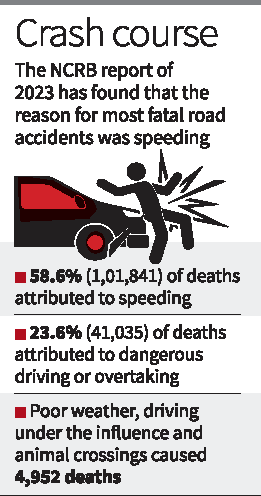
The NCRB data highlights that speeding and careless driving remain the leading causes of fatalities:
- Speeding: 58.6% of deaths (1,01,841 fatalities)
- Dangerous or Careless Driving/Overtaking: 23.6% (41,035 fatalities)
- Other Causes: 4,952 deaths due to poor weather, intoxicated driving, or animal crossings.
Highway Fatalities
Roads designed for faster travel remain the deadliest:
- National Highways: Accounted for 34.6% of total deaths.
- State Highways: Accounted for 23.4%.
Uttar Pradesh, Tamil Nadu, Maharashtra, Karnataka, and Madhya Pradesh reported the highest fatalities on national highways.
Urban Accident Patterns
Among metropolitan areas, Delhi recorded 5,715 accidents (8.2% of total in megacities) — the highest number — followed by Bengaluru (4,980) and Chennai (3,653). Delhi also reported the highest fatalities (1,457), followed by Bengaluru (915) and Jaipur (848).
Interpretation and Policy Implications
The rising toll of road accidents underscores the multi-dimensional nature of India’s road safety crisis, rooted in over-speeding, poor enforcement, unsafe road design, and inadequate emergency response. Despite policy initiatives like the Motor Vehicles (Amendment) Act, 2019, which strengthened penalties and accountability, implementation remains uneven across states.
The dominance of two-wheeler fatalities reveals the need for:
- Stricter helmet and speed regulation enforcement,
- Improved road engineering for vulnerable users,
- Enhanced awareness campaigns, and
- Expansion of trauma care infrastructure along highways.
NCRB Data on Crime Against Children

- 04 Oct 2025
In News:
According to the latest data released by the National Crime Records Bureau (NCRB), India recorded 1,77,335 cases of crimes against children in 2023, marking a 9.2% increase from 1,62,449 cases in 2022. The crime rate rose from 36.6 to 39.9 per lakh child population, reflecting both rising incidents and improved reporting mechanisms.
Major Trends and Patterns
The report reveals that kidnapping and abduction and sexual offences under the POCSO Act dominate crimes against children, together accounting for over 83% of total registered cases.
- Kidnapping and Abduction:
- 79,884 cases (45%) were registered, victimising82,106 children — a rate of 18 per lakh.
- Within this, 58,927 were general abductions, including 37,844 cases of missing children later deemed kidnapped.
- Alarmingly, 14,637 cases involved abduction of minor girls for forced marriage.
- POCSO Act Cases:
- 67,694 cases (38.2%) were filed under the Protection of Children from Sexual Offences (POCSO) Act.
- Of these, 40,434 involved penetrative sexual assault, affecting 40,846 child victims.
- In 39,076 cases, the offender was known to the victim, including 3,224 family members, 15,146 acquaintances, and 20,706 friends, online contacts, or live-in partners who exploited trust or false promises of marriage.
Victim Demographics
Among the 40,846 victims of penetrative assault:
- 762 were below 6 years,
- 3,229 were aged 6–12 years,
- 15,444 were between 12–16 years, and
- 21,411 were aged 16–18 years.
The vast majority of victims were girls, underscoring the gendered nature of sexual crimes against children.
Other Significant Offences
Beyond sexual and abduction-related crimes, the NCRB recorded:
- 1,219 murders, including 89 linked to rape or POCSO violations.
- 3,050 cases of simple hurt and 373 cases of abetment to suicide.
- 6,038 cases under the Prohibition of Child Marriage Act and 1,390 under the Child Labour (Prohibition and Regulation) Act, indicating persistent social and economic vulnerabilities affecting children.
Regional Distribution
Madhya Pradesh reported the highest number of cases (22,393), followed by Maharashtra and Uttar Pradesh.
Among smaller states and Union Territories:
- Assam recorded 10,174 cases, reflecting a sharp rise.
- Bihar followed with 9,906 cases.
- Delhi, despite its smaller population, registered 7,769 cases, among the highest rates nationally.
Law Enforcement and Justice Delivery
- Out of 2,57,756 cases investigated during the year, 1,12,290 were chargesheeted, leading to an overall chargesheeting rate of 64.3%. However, 80,198 cases remained pending at the end of 2023, highlighting systemic backlogs in investigation and prosecution.
- The chargesheeting rate varied considerably: it was higher in Tamil Nadu and Andhra Pradesh, but lower in Delhi and Haryana, reflecting uneven institutional efficiency across states.
Interpretation and Policy Significance
The steady increase in crimes against children underscores the growing vulnerabilities of minors in physical, digital, and domestic spaces. The dominance of offences by known persons reflects a disturbing breach of familial and social trust.
While better reporting and legal awareness may partly explain the rise, the data signals the urgent need for:
- Strengthening child protection systems and POCSO courts;
- Enhancing cyber surveillance to curb online grooming and exploitation;
- Expanding community-based awareness and school safety mechanisms; and
- Ensuring speedy investigation and trial to reinforce deterrence.
Interstellar Mapping and Acceleration Probe
- 04 Oct 2025
In News:
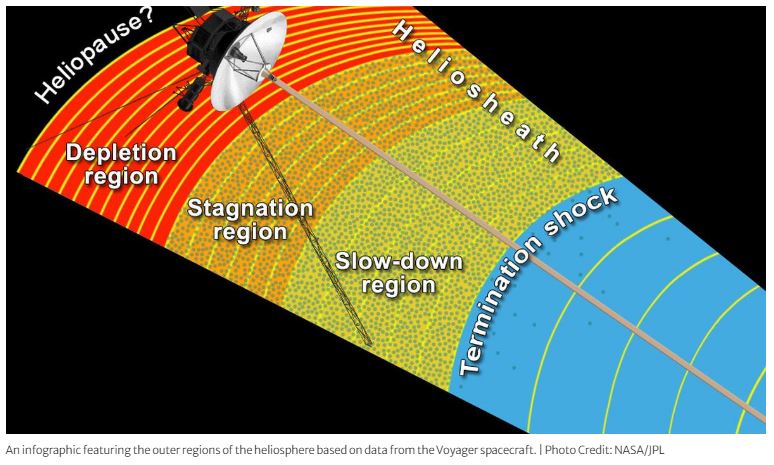
NASA has recently launched the Interstellar Mapping and Acceleration Probe (IMAP) to study how solar particles are energised and how the Sun’s protective bubble — the heliosphere — shields our solar system from harmful cosmic radiation. This mission represents a major step toward understanding the space environment critical for both scientific research and future human space exploration.
Understanding the Heliosphere
- The heliosphere is a vast bubble-like region created by the solar wind — a continuous stream of charged particles emitted by the Sun.
- It envelops the entire solar system and acts as a protective barrier against cosmic rays and interstellar particles. However, the structure, dynamics, and boundary of the heliosphere remain poorly understood.
- Understanding how solar particles are accelerated and how the heliosphere interacts with interstellar space is crucial, as variations in solar wind intensity influence space weather — which can damage satellites, affect communications, and pose health risks to astronauts.
About the IMAP Mission
- The IMAP spacecraft aims to map the boundary of the heliosphere, trace energetic particles, and enhance space weather forecasting.
- It is positioned at the first Earth–Sun Lagrange point (L1), about 1 million miles from Earth toward the Sun, enabling continuous observation of the solar wind in real time.
- IMAP will collect and transmit near real-time data to help scientists monitor solar wind disturbances and particle radiation hazards, improving preparedness for adverse space weather events.
- Its findings will also guide the planning of safer human missions beyond Earth, through improved spacecraft shielding and optimized flight paths.
Scientific Objectives
The IMAP mission will:
- Investigate how solar particles gain energy and how they are distributed throughout the heliosphere.
- Map the heliosphere’s outer boundary to understand its interaction with interstellar space.
- Enhance models of space weather, aiding the prediction of solar storms and radiation risks.
- Explore the fundamental physics governing plasma and particle behavior on both microscopic and galactic scales.
- Determine the composition of interstellar material and improve understanding of the cosmic building blocks of the universe.
Scientific Instruments
IMAP is equipped with 10 advanced instruments, each targeting specific phenomena in space.
Key instruments include:
- Energetic Neutral Atom Detectors — IMAP-Lo, IMAP-Hi, and IMAP-Ultra — which capture neutral atoms that were once charged ions and later gained electrons.
- Instruments to measure charged particles, magnetic fields, interstellar dust, and solar wind structures.
Together, these instruments will provide a comprehensive picture of particle behavior and energy flow within and beyond the heliosphere.
Significance
The IMAP mission bridges the gap between heliophysics, astrophysics, and planetary science. Its insights will:
- Advance our understanding of how the Sun’s magnetic and particle activity influences the solar system.
- Improve space weather forecasting, ensuring the safety of satellites, astronauts, and communication networks.
- Deepen scientific knowledge of how the heliosphere shields Earth and other planets from cosmic radiation.
- Support future human space missions, contributing to safer interplanetary travel.
By mapping our galactic neighborhood and decoding the physics of space particles, IMAP will transform our understanding of the Sun–Earth connection and the cosmic environment surrounding our solar system.
Red Sanders
- 04 Oct 2025
In News:
- Recently, the National Biodiversity Authority (NBA) sanctioned ?82 lakh to the Andhra Pradesh Biodiversity Board for the conservation of Red Sanders (Pterocarpus santalinus), an endemic and endangered tree species of India.
- The initiative, undertaken under the Access and Benefit Sharing (ABS) mechanism of the Biological Diversity Act, 2002 (amended in 2023), marks a crucial step towards community-based biodiversity conservation.
About Red Sanders
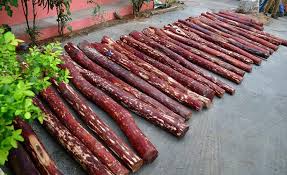
- Red Sanders, also known as Red Sandalwood, is native to the Southern Eastern Ghats, particularly in the Anantapur, Chittoor, Kadapa, and Kurnool districts of Andhra Pradesh.
- The species thrives in rocky, red soil regions with a hot and dry climate, often in degraded or fallow lands.
- Renowned for its deep red wood, which commands high demand in international markets for musical instruments, furniture, and medicinal purposes, Red Sanders faces serious threats from illegal felling and smuggling. Due to its restricted distribution and exploitation, it is listed as:
- IUCN: Endangered
- CITES: Appendix II (regulated international trade)
- Wildlife (Protection) Act, 1972: Schedule IV
Conservation Initiative
- The ?82 lakh grant aims to raise one lakh saplings of Red Sanders, which will be distributed among farmers under the Trees Outside Forests (ToF)programme. This aligns with India’s broader goal of enhancing green cover beyond traditional forest areas.
- The funds are sourced from benefit-sharing amounts collected from users of Red Sanders, ensuring that economic benefits are returned to local stakeholders such as farmers, tribal communities, and Biodiversity Management Committees (BMCs). The initiative exemplifies how the Access and Benefit Sharing mechanism promotes equitable sharing of biological resources and converts conservation into a community-driven effort.
- In addition, the NBA has previously released ?31.55 crore to the Andhra Pradesh Forest Department for similar conservation and protection activities related to Red Sanders. The present funding will further strengthen grassroots conservation, generating local employment, fostering skill development, and enhancing community stewardship of biodiversity resources.
National Biodiversity Authority (NBA)
The National Biodiversity Authority, headquartered in Chennai, is a statutory body established under the Biological Diversity Act, 2002, and became operational in 2003. It works in coordination with:
- State Biodiversity Boards (SBBs): Regulate access to biological resources at the state level.
- Biodiversity Management Committees (BMCs): Function at the local level to document and conserve biodiversity through People’s Biodiversity Registers (PBRs).
Composition:
- Chairperson: An eminent expert in biodiversity conservation and sustainable resource use.
- 10 Ex-officio Members: Senior representatives from various ministries.
- 5 Non-official Members: Experts from relevant fields of biodiversity management.
National Crime Records Bureau

- 04 Oct 2025
In News:
The latest report from the National Crime Records Bureau (NCRB) highlights an alarming surge in crimes against Scheduled Tribes (STs) across India. As per the “Crime in India 2023” data, crimes against STs rose by 28.8%, from 10,064 cases in 2022 to 12,960 cases in 2023, reflecting deepening vulnerabilities of tribal communities in several parts of the country.
NCRB: Mandate and Role
Established in 1986, the NCRB functions under the Ministry of Home Affairs (MHA) as India’s central repository for crime and criminal data. Its creation followed recommendations from the Tandon Committee, the National Police Commission (1977–1981), and the MHA Task Force.
Headquartered in New Delhi, the Bureau is responsible for:
- Collection, analysis, and dissemination of crime data to aid law enforcement and policy formulation.
- Implementing and monitoring the Crime and Criminal Tracking Network and Systems (CCTNS) project, enabling interlinkage of police stations and online citizen services such as e-FIR and complaint filing.
- Maintaining the National Database of Sexual Offenders (NDSO) and managing the Online Cyber-Crime Reporting Portal, through which citizens can report offences like child pornography and cyber sexual violence.
- Hosting CyTrain, a digital training platform for cybercrime investigation and prosecution, and managing the Central Finger Print Bureau, India’s national fingerprint repository.
- Publishing annual statistical reports — Crime in India, Accidental Deaths & Suicides in India, and Prison Statistics India.
Key Findings: NCRB Crime Data 2023
The 2023 data reveals that Manipur witnessed the steepest spike in crimes against STs, registering 3,399 cases — a dramatic increase from just one case in 2022. The rise is closely linked to the ethnic violence between the Meitei and Kuki-Zo communities that erupted in May 2023.
Major offences reported in Manipur included 1,051 cases of arson, 260 cases of dacoity, 203 cases of humiliation or intimidation, and 193 cases of unlawful occupation or disposal of tribal land.
At the national level, the leading categories of offences against STs included:
- Simple hurt (21.3%) – 2,757 cases
- Riots (13.2%) – 1,707 cases
- Rape (9.2%) – 1,189 cases
State-wise, Madhya Pradesh (2,858 cases) and Rajasthan (2,453 cases) followed Manipur as the most affected states.
Crimes against Scheduled Castes (SCs) registered a marginal increase of 0.4% to 57,789 cases, while crimes against women rose 0.7% to 4,48,211 cases in 2023. The report highlighted that most offences against women were related to cruelty by husband or relatives (29.8%), kidnapping (19.8%), and assault to outrage modesty (18.7%).
Crimes against children surged by 9.2%, with 1,77,335 cases registered—predominantly under kidnapping (45%) and the POCSO Act (38.2%). Cases involving juveniles in conflict with law rose by 2.7%, totaling 31,365 cases.
|
Crime / Category |
2022 Count |
2023 Count |
% Change / Rate Info |
Notes |
|
Crimes against Scheduled Tribes (STs) — India total |
10,064 |
12,960 |
+28.8% |
Crime rate rose from 9.6 (2022) to 12.4 (2023) |
|
Manipur — Crimes against STs (state total) |
1 |
3,399 |
Huge increase |
2022 had 1 case; 2023 jumped to 3,399 |
|
Manipur — Dacoity (against STs) |
— |
260 |
— |
260 cases in 2023 |
|
Manipur — Arson (against STs) |
— |
1,051 |
— |
1,051 cases in 2023 |
|
Manipur — Intentional insult / intimidation (humiliation) |
— |
203 |
— |
203 cases in 2023 |
|
Manipur — Occupy / dispose of ST land |
— |
193 |
— |
193 cases in 2023 |
|
Crimes against Scheduled Castes (SCs) — India total |
57,582 |
57,789 |
+0.4% |
Slight increase year-on-year |
|
Crime against women — India total |
445,256 |
448,211 |
+0.7% |
Minor increase |
|
Crime against children — India total |
162,449 |
177,335 |
+9.2% |
Noticeable increase |
|
Juvenile cases (in conflict with law) |
30,555 |
31,365 |
+2.7% |
Cases involving juveniles |