
IONS Maritime Exercise (IMEX)
- 01 Apr 2026
In News:
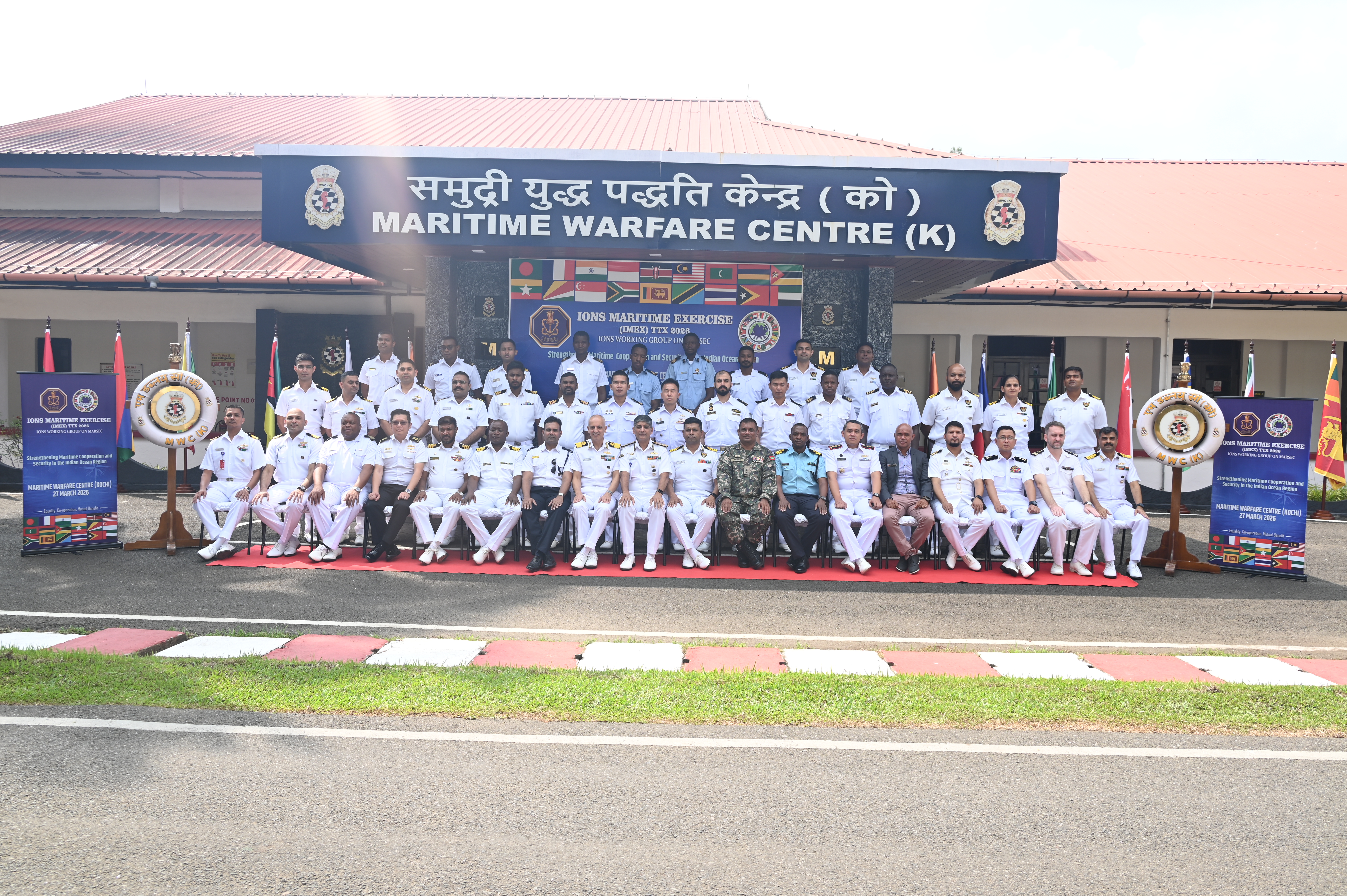
In a significant stride toward regional maritime stability, the Indian Navy recently hosted the IONS Maritime Exercise (IMEX) Table Top Exercise (TTX) 2026. Held at the Maritime Warfare Centre under the Southern Naval Command in Kochi, the exercise underscores India’s proactive role in the Indian Ocean Region (IOR) under the vision of SAGAR (Security and Growth for All in the Region).
Key Highlights
The 2026 edition of IMEX was designed as a Table Top Exercise (TTX), providing a simulated environment to refine strategic responses without the deployment of actual fleet assets.
- Core Focus: The exercise prioritized non-traditional maritime security threats, including maritime terrorism, piracy, illegal fishing (IUU), and humanitarian crises.
- Objectives:
- Enhancing interoperability and coordination among diverse navies.
- Streamlining real-time information sharing and collective decision-making.
- Validating existing maritime security frameworks to ensure they are robust enough for complex, multi-dimensional scenarios.
- Participating Nations: A diverse group of 12 littoral states participated, including Bangladesh, France, Indonesia, Kenya, Maldives, Mauritius, Myanmar, Seychelles, Singapore, Sri Lanka, Tanzania, and Timor-Leste.
Understanding the Indian Ocean Naval Symposium (IONS)
The IONS is a cornerstone of India’s naval diplomacy and serves as a vital "Track 1.5" or formal diplomatic initiative for the Indian Ocean.
Genesis and Structure
- Inception: Conceived and launched by the Indian Navy in 2008. The inaugural edition was held in New Delhi, with India serving as the first Chair (2008–2010).
- Nature: A voluntary and inclusive initiative that brings together the navies of the littoral states of the IOR.
- Operational Framework: It functions through a rotating chairmanship, biennial Conclaves of Chiefs (CoC), and specialized Working Groups (WGs) focusing on areas like HADR and Maritime Security.
Geographic Scope
The IONS membership is divided into four sub-regions to ensure equitable representation:
- South Asian Littorals (e.g., India, Bangladesh, Sri Lanka)
- West Asian Littorals (e.g., UAE, Oman, Iran)
- East African Littorals (e.g., Kenya, South Africa, Mauritius)
- South East Asian & Australian Littorals (e.g., Australia, Indonesia, Singapore)
Balirajgarh site
- 01 Apr 2026
In News:
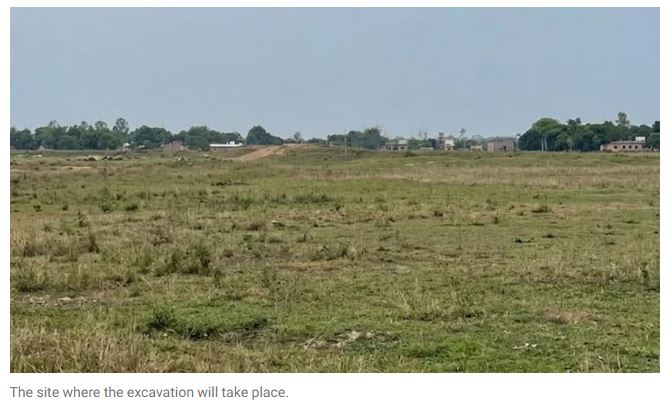
The Archaeological Survey of India (ASI) officially commenced a large-scale scientific excavation at the historic Balirajgarh site in Bihar’s Madhubani district in March 2026. This project seeks to bridge the gap between ancient Indian mythology and material history, potentially pushing back the timeline of urban civilization in the Mithila region to the Iron Age.
The Balirajgarh Site: Gateway to Ancient Mithila
Located in the Babubarhi block of Madhubani, Balirajgarh (officially the "Remains of Ancient Fort of Garh") is a centrally protected monument of national importance.
- Mythological Roots: Local folklore identifies the site as the capital of the legendary King Bali.
- Historical Identity: It is widely believed to have been a major administrative and political hub of the ancient Videha Kingdom (associated with King Janaka in Vedic texts).
- Physical Scale: The site spans approximately 176 acres and features a massive brick fortification and over 20 archaeological mounds.
Chronology of Habitation (Five-Fold Sequence)
Previous excavations conducted between 1962 and 2014 established that Balirajgarh was a site of continuous habitation for over 1,500 years. The discovered layers correspond to:
- Northern Black Polished Ware (NBPW) Phase (c. 700–200 BCE): Represents the earliest urban layer, characterized by high-quality deluxe pottery.
- Sunga Period (c. 2nd Century BCE): Notable for the construction of massive brick fortifications.
- Kushan Period: Evidence of trade and sustained urban life.
- Gupta Period: Represents the "Classical Age" of settlement.
- Pala Period (c. 8th–12th Century CE): Marks the later medieval stages before the site’s eventual decline.
Objectives of the 2026 Excavation
The current phase of excavation, led by the ASI Patna Circle, employs modern archaeological tools to answer specific historical questions:
- The "Virgin Soil" Quest: Archaeologists aim to reach the deepest, undisturbed layers of soil to determine if settlement predates the NBPW phase, possibly linking it directly to the early Iron Age Videha tribe.
- Advanced Technology: To overcome previous challenges like the high water table, the ASI is using Satellite Imagery, Ground Penetrating Radar (GPR), and systematic 3D mapping.
- Mithila Civilization: The overarching goal is to reconstruct the "early Mithila civilization" and its socio-economic networks.
Institutional Profile: Archaeological Survey of India (ASI)
- Genesis: Founded in 1861 by Sir Alexander Cunningham (the "Father of Indian Archaeology").
- Statutory Status: Post-independence, it became a statutory body under the Ancient Monuments and Archaeological Sites and Remains (AMASR) Act, 1958.
- Nodal Ministry: Functions under the Ministry of Culture, Government of India.
- Key Responsibilities: * Maintenance of over 3,600 monuments of national importance.
- Regulation of the Antiquities and Art Treasure Act, 1972.
- Conducting scientific research, excavations, and chemical preservation of heritage.
Solar Radio Burst
- 01 Apr 2026
In News:
In a major advancement for heliophysics, researchers from the Indian Institute of Astrophysics (IIA), an autonomous body under the Department of Science and Technology (DST)have recently solved a decades-old mystery regarding Solar Radio Bursts (SRBs). This breakthrough, published in early 2026, significantly enhances our ability to predict space weather and protect critical technological infrastructure.
Understanding Solar Radio Bursts (SRBs)
Solar Radio Bursts are intense emissions of radio waves from the Sun, typically triggered by solar transients such as Solar Flares and Coronal Mass Ejections (CMEs).
- Scientific Nature: They serve as direct signatures of accelerated electrons moving through the solar atmosphere.
- Wavelength Diversity: SRBs are observed across a massive spectrum, from millimeters (GHz range) to kilometers (kHz range).
- Short wavelengths indicate activity near the solar surface.
- Long wavelengths reflect activity occurring at greater distances from the Sun as shocks travel outward.
- Classification: Morphologically, SRBs are divided into five categories (Types I through V). Among these, Type II bursts are "slow-drifting" emissions that track shock waves moving through the solar corona at speeds of approximately 1,000 km/s.
The IIA Breakthrough: The "Fundamental vs. Harmonic" Puzzle
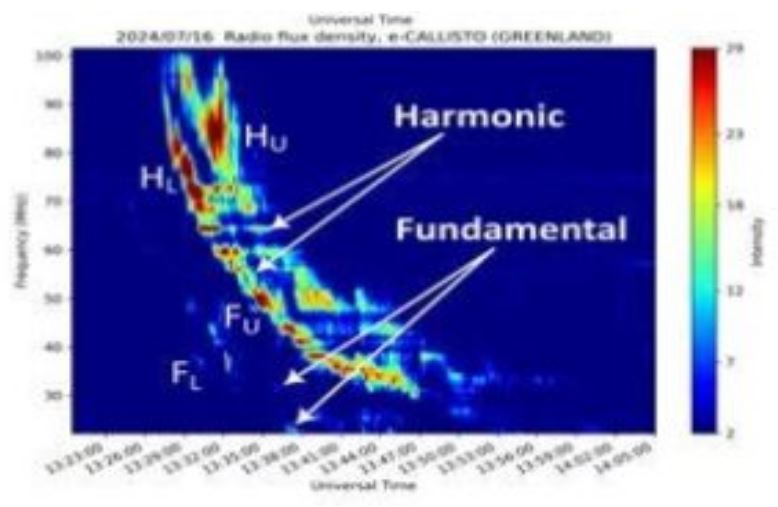
For years, scientists were puzzled by the varying relative strengths of the two components of Type II bursts: the Fundamental emission (the base frequency) and the Harmonic emission (the overtone). While theory suggests the fundamental should be stronger, observations often showed the opposite.
The Discovery
The IIA team, led by Dr. K. Sasikumar Raja, analyzed 58 Type II bursts using the global CALLISTO (Compound Astronomical Low Frequency Low Cost Instrument for Spectroscopy and Transportable Observatory) network and the Gauribidanur Low Frequency Solar Spectrograph (GLOSS).
- The Longitude Factor: The study found that the location of the solar active region (heliographic longitude) determines which emission reaches Earth more strongly.
- The 75° Rule: * Events < 75° (Disk Center): Exhibit stronger Fundamental emissions.
- Events > 75° (Solar Limb/Edges): Exhibit stronger Harmonic emissions.
- The Mechanism: This is due to refractive effects in the solar corona and "viewing angles." Fundamental emissions have narrow "cone angles" and get blocked or weakened when originating from the Sun's edges. Harmonic emissions have broader angles, allowing them to bypass these obstacles and reach Earth effectively.
Implications for Space Weather and Technology
- GNSS Interference: SRBs reduce the signal-to-noise ratio of Global Navigation Satellite Systems (like GPS and India’s NavIC), potentially causing a "loss of lock" and affecting aviation and maritime navigation.
- Satellite Health: Understanding these bursts helps in predicting the arrival of solar storms that can damage satellite electronics and solar panels.
- Communication Hubs: High-intensity bursts can disrupt high-frequency (HF) radio communications used by emergency services and the military.
- Forecasting Models: By understanding how these waves propagate, scientists can now develop more accurate models to provide earlier warnings for geomagnetic storms.
The Path Ahead: AI and Machine Learning
The IIA researchers have indicated that the next phase of this study involves applying Machine Learning (ML) to the vast datasets collected by spectrometers like CALLISTO. This will help automate the detection of solar shocks and further refine the accuracy of space weather alerts.
Government Revises PM e-DRIVE Scheme
- 01 Apr 2026
In News:
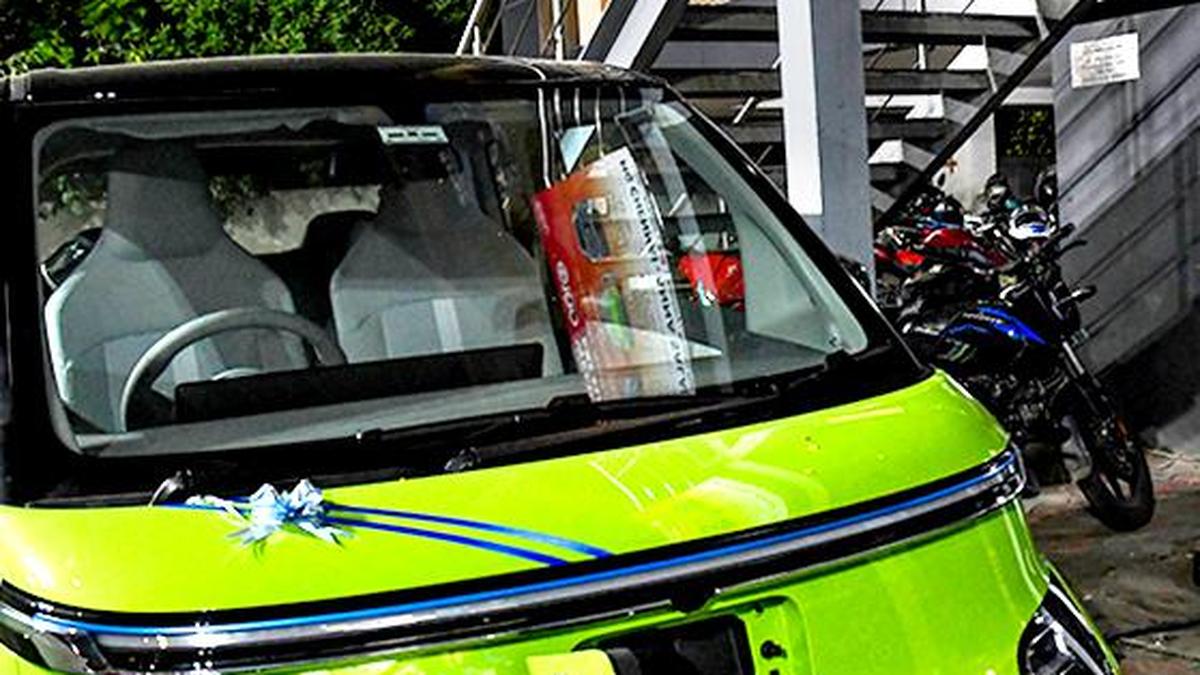
The Ministry of Heavy Industries (MHI) recently revised the PM Electric Drive Revolution in Innovative Vehicle Enhancement (PM e-DRIVE) scheme. This recalibration introduces strict "terminal dates" and unit-specific caps to manage the transition from a subsidy-led market to a self-sustaining EV ecosystem.
Context and Evolution
- Launched in October 2024 with a total outlay of ?10,900 crore, the PM e-DRIVE scheme replaces the earlier FAME (Faster Adoption and Manufacturing of Hybrid and Electric Vehicles) phases.
- It aims to synchronize India’s transport sector with the Aatmanirbhar Bharat vision and the Panchamrit climate goals.
Revised Timelines and Deadlines
The government has established clear cut-off dates for vehicle registrations to qualify for incentives:
- Electric Two-Wheelers (e-2W): Subsidy extended until 31st July 2026.
- Electric Three-Wheelers (e-3W): Incentives for e-rickshaws and e-carts extended until 31st March 2028.
- L5 Category (High-speed e-3W): This sub-component was officially closed on 26th December 2025 after achieving its target volume.
Key Components and Targets
The scheme operates on a "first-come, first-served" basis and is fund-limited. If the budget is exhausted before the terminal dates, the portal will close automatically.
A. Demand Incentives and Caps
To ensure support reaches the mass market, the scheme imposes ex-factory price ceilings:
Vehicle Category Ex-Factory Price Cap Unit Support Cap
Electric 2-Wheelers ?1.5 Lakh ~24.79 Lakh units
Electric 3-Wheelers ?2.5 Lakh ~3.16 Lakh units*
e-Rickshaws & e-Carts - 39,034 units
Note on Incentives: The subsidy has been recalibrated to approximately ?2,500 per kWh, with a maximum cap of ?5,000 for e-2Ws and ?12,500 for e-3Ws.
B. Infrastructure & Specialized Segments
- Public Transport: Allocation of ?4,391 crore for the procurement of 14,028 e-buses across nine major cities (including Delhi, Mumbai, and Bengaluru).
- e-Ambulances & e-Trucks: A combined fund of ?1,000 crore is dedicated to these emerging segments. For e-trucks, incentives are linked to scrapping certificates from MoRTH-approved centers.
- Charging Infrastructure: A budget of ?2,000 crore to install 72,300 public fast chargers (including 22,100 for e-4Ws and 48,400 for e-2Ws/3Ws).
Technology and Quality Standards
- Advanced Batteries: Only vehicles equipped with advanced battery chemistry (e.g., Lithium-ion) qualify. Outdated lead-acid batteries are excluded.
- The "Super App": Developed by BHEL, this digital platform will allow users to locate chargers, check real-time availability, and make payments seamlessly.
- Testing Agencies:?780 crore allocated to modernize MHI testing agencies to ensure high safety and performance standards for domestic EV manufacturing.
1st Inter-State Initiative for Great Indian Bustard (GIB)
- 01 Apr 2026
In News:
The Great Indian Bustard (Ardeotis nigriceps), a flagship species of the Indian grasslands and the state bird of Rajasthan, is currently at the center of one of India’s most complex conservation battles. Recent breakthroughs in "jumpstart" technology and legal interventions have provided a renewed glimmer of hope for a species that was once on the verge of extinction.
The "Jumpstart" Breakthrough: A Milestone in Kutch
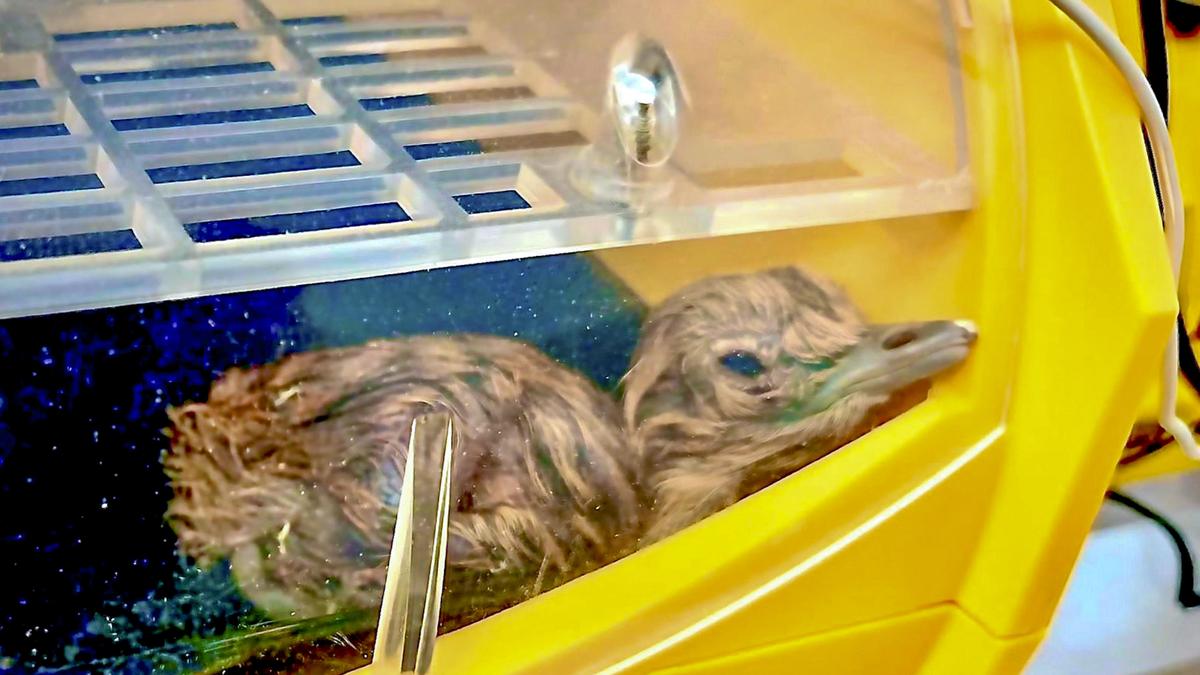
In March 2026, a Great Indian Bustard chick was hatched in Gujarat’s Kutch region for the first time in over a decade. This was achieved through the “Jumpstart” Approach, a sophisticated conservation method coordinated by the Ministry of Environment, Forest and Climate Change (MoEFCC), the Wildlife Institute of India (WII), and the Forest Departments of Rajasthan and Gujarat.
- The Mechanism: The process involved identifying a wild female in Gujarat that had laid an infertile egg (due to the absence of wild males in the region). A fertile, captive-bred egg from Rajasthan’s breeding center was transported 770 km over a 19-hour road journey in a portable incubator.
- The Outcome: The fertile egg was placed in the wild nest. The female GIB accepted the egg, completed the incubation, and is currently rearing the chick in the wild.
- Significance: This is the first inter-state trans-location of its kind, ensuring the chick grows up with natural survival instincts under a foster mother, rather than being reared in a lab.
Species Profile and Ecological Role
The GIB is an indicator species for the health of grassland ecosystems. Its presence ensures that the "barren" looking grasslands are actually vibrant, functional biomes.
- Physical Traits: One of the heaviest flying birds in the world; lacks a preen gland and has poor frontal vision (making it prone to collisions).
- Diet: Omnivorous (insects, rodents, seeds).
- Current Range: Primarily the Thar Desert (Rajasthan). Small, fragmented populations exist in Gujarat (Kutch), Maharashtra, Karnataka, and Andhra Pradesh.
Conservation Status and Legal Framework
The GIB enjoys the highest level of legal protection both nationally and internationally:
- IUCN Red List: Critically Endangered.
- Wildlife (Protection) Act, 1972: Schedule I.
- CITES & CMS: Appendix I.
- Project GIB (2016): Launched to create breeding enclosures and mitigate human pressure.