
Nutrient Transporter Protein
- 13 Mar 2026
In News:
- Scientists from ETH Zurich and the Technical University of Munich have developed a novel method to engineer bacteria to produce customised “designer proteins” using artificial amino acids.
- The breakthrough enables microorganisms to synthesize proteins with new biological and chemical properties, opening possibilities for advanced drug delivery systems and next-generation biotechnology applications.
- The research focuses on modifying nutrient transport mechanisms in bacteria such as Escherichia coli (E. coli) so that cells can efficiently import artificial amino acids required to build synthetic proteins.
Nutrient Transporter Proteins
- A nutrient transporter protein is a membrane-bound protein that facilitates the movement of essential molecules such as amino acids, peptides, and other nutrients—across the cell membrane.
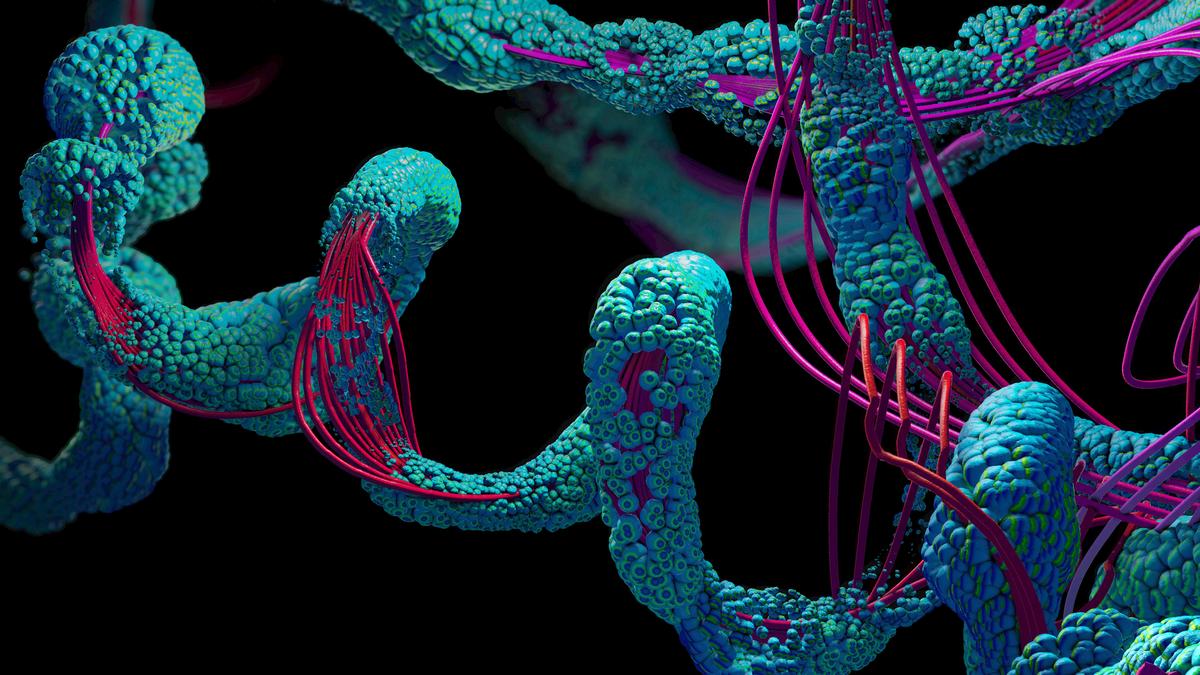
- In the recent research, scientists engineered a specialized ABC (ATP-Binding Cassette) transporter in bacteria. Normally, this transporter imports small peptide molecules used as nutrients. By modifying it, researchers enabled bacterial cells to import peptides carrying artificial amino acids, which can then be used to assemble customised proteins.
Objective of the Research
- The main goal of the study was to enable cells to incorporate artificial amino acids into proteins efficiently. Natural proteins are typically built from 20 standard amino acids, but introducing synthetic amino acids allows scientists to design proteins with new functional properties.
- However, artificial amino acids generally cannot easily cross the cell membrane. By engineering a transporter protein capable of importing these molecules, researchers overcame a major barrier in synthetic biology and protein engineering.
Mechanism of the System
The engineered system works through a multi-step biological process:
- Engineering of ABC Transporter – Scientists modified the transporter protein to improve its ability to import peptides containing artificial amino acids.
- Trojan Horse Strategy – Artificial amino acids are concealed inside short peptide chains such as tripeptides or tetrapeptides composed of natural amino acids.
- Transport into the Cell – The transporter imports these peptide chains across the cell membrane.
- Release of Artificial Amino Acids – Once inside the cell, enzymes break the peptides into individual amino acids.
- Protein Synthesis – The ribosome, the cellular machinery responsible for protein production, incorporates the artificial amino acids into newly synthesized proteins.
Through this approach, bacterial cells can generate custom-designed proteins on demand.
Key Innovations
- Trojan Horse Delivery Strategy: Artificial amino acids are hidden within natural peptide structures, allowing them to bypass cellular membrane barriers and enter the cell.
- Engineered ABC Transporter: The modified transporter is capable of importing up to ten times more artificial amino acids compared to natural transport systems.
- Directed Evolution: Researchers used directed evolution, a technique that mimics natural selection in the laboratory, to improve the efficiency of the transporter protein under nutrient-rich conditions.
- Multifunctional Protein Design: The system allows two different artificial amino acids to be incorporated into a single protein, enabling complex and multifunctional molecular designs.
- Compatibility with Standard Laboratory Conditions: The engineered bacteria can function effectively in standard laboratory growth media, making the system practical for widespread scientific use.
Jal Jeevan Mission Extended to 2028
- 13 Mar 2026
In News:
The Union Cabinet has approved the extension of the Jal Jeevan Mission (JJM) until December 2028, marking a transition from merely building water infrastructure to ensuring sustained and reliable service delivery in rural areas. The decision aims to consolidate earlier achievements and strengthen long-term drinking water supply systems across villages in India.
About Jal Jeevan Mission
The Jal Jeevan Mission is a flagship programme of the Government of India that seeks to provide safe and adequate drinking water to all rural households through Functional Household Tap Connections (FHTC).
- Launch Date: 15 August 2019
- Nodal Ministry: Ministry of Jal Shakti
- Core Objective: Achieve “Har Ghar Jal” by ensuring 55 litres of potable water per person per day to every rural household through tap connections.
The mission addresses long-standing challenges related to water scarcity, unsafe drinking water, and the burden of water collection, particularly faced by women and children in rural India.
Shift in Focus: Jal Jeevan Mission 2.0
With the extension until 2028, the mission is entering a new phase often described as JJM 2.0, where the emphasis moves beyond infrastructure creation to sustainable water service delivery.
Key aspects include:
- Utility-Based Service Delivery: The programme will focus on continuous and reliable water supply systems, supported by structural reforms and Memoranda of Understanding (MoUs) with State governments to improve management and accountability.
- Digital Monitoring – Sujalam Bharat Framework: Under the Sujalam Bharat Digital Framework, each village will receive a unique “Sujal Gaon ID”. This system digitally maps the entire water supply chain—from source to household tap— enabling improved monitoring, transparency, and data-driven decision-making.
- Water Quality Monitoring: The mission prioritises regular water quality testing through:
- Field Test Kits at the village level
- Accredited water testing laboratories
This helps detect contaminants and ensures that drinking water meets safety standards.
- Greywater Management: To ensure sustainability, the programme incorporates greywater management, involving:
- Construction of soak pits
- Use of wastewater in kitchen gardens and local irrigation
This reduces water wastage and promotes sustainable water use.
Convergence with Other Schemes
The mission promotes integration with several government initiatives, including:
- Mahatma Gandhi National Rural Employment Guarantee Scheme (MGNREGS)
- Swachh Bharat Mission (Gramin)
- Grants recommended by the 15th Finance Commission
Such convergence helps strengthen water conservation, recharge structures, and source sustainability.
Kavach 4.0
- 13 Mar 2026
In News:
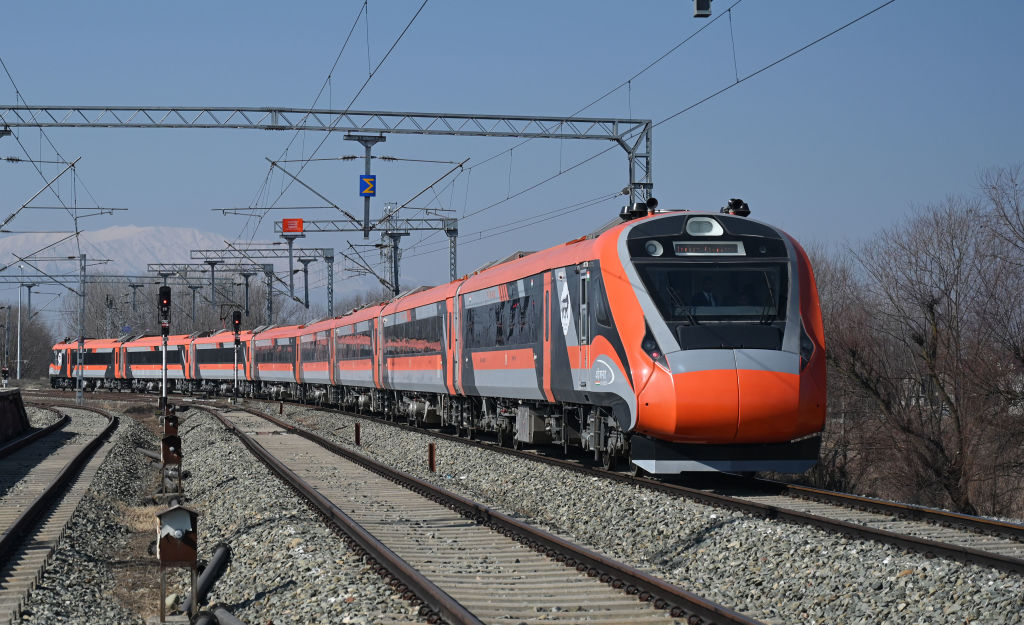
The Government of India has informed the Lok Sabha that Kavach 4.0, India’s indigenous Automatic Train Protection (ATP) system, has been successfully commissioned across 1,452 route kilometres on the high-density Delhi–Mumbai Railway Corridor and Delhi–Howrah Railway Corridor.
The system represents a major technological advancement aimed at improving railway safety and reducing accidents caused by human error. Kavach forms a crucial part of the modernization and safety enhancement efforts of Indian Railways.
What is Kavach?
- Kavach is an indigenously developed Automatic Train Protection (ATP) system designed to prevent train collisions and ensure safer railway operations. It is a sophisticated electronic safety mechanism that automatically monitors train movement and intervenes when necessary.
- The system has been developed by the Research Design and Standards Organisation (RDSO) in collaboration with domestic industry partners, reflecting India’s push toward self-reliance in railway technology.
Objectives of Kavach
The primary objective of Kavach is to achieve “Zero Accidents” in railway operations by addressing key safety risks.
Major goals include:
- Signal Passing at Danger (SPAD), where a train crosses a stop signal.
- Controlling overspeeding of trains.
- Ensuring safe operations during adverse weather conditions, especially dense fog.
- Reducing accidents caused by human error.
Working Mechanism
Kavach operates through an integrated communication and monitoring network that continuously tracks train movement and signal conditions.
The system functions through the following components:
- RFID tags installed along railway tracks
- On-board equipment installed in locomotives
- Radio communication towers at railway stations
These components exchange real-time data regarding the train’s speed, location, and signal status. If the system detects a possible collision, signal violation, or overspeeding, it automatically activates the braking system, even if the loco pilot fails to respond.
Key Features of Kavach 4.0
The Kavach 4.0 version introduces several technological improvements for better reliability and precision.
- Enhanced Precision: The system offers improved location accuracy and better processing of signal information, particularly in complex railway yards and high-density corridors.
- Integration with Electronic Interlocking: Kavach integrates directly with Electronic Interlocking systems, enabling real-time access to track occupancy data and signal status, thereby enhancing operational safety.
- Advanced Communication Network: It uses Optical Fibre Networks (OFN) and Ultra High Frequency (UHF) radio communication to enable continuous station-to-station communication and uninterrupted connectivity.
- Automatic Braking: If a train crosses a red signal or exceeds the permitted speed, the system automatically applies brakes, preventing potential accidents.
- SOSR (Save Our Souls) Feature: The SOSR emergency broadcast system allows a train or station to transmit emergency alerts to all trains within a defined radius, helping prevent large-scale accidents during critical situations.
Significance for Railway Safety
The deployment of Kavach is a major step toward improving the safety standards of Indian Railways.
Key benefits include:
- Reduction in accidents: Consequential train accidents have reportedly declined by nearly 90% since 2014 due to enhanced safety investments.
- Minimization of human error: Automated monitoring and braking reduce dependence on manual response.
- Improved efficiency: Trains can operate at higher speeds safely even during low-visibility conditions such as winter fog.
- Technological self-reliance: The system strengthens India’s indigenous railway technology ecosystem.
Blue-and-White Flycatcher

- 13 Mar 2026
In News:
A male Blue-and-White Flycatcher, a rare migratory bird in India, was recently recorded on the Pavagadh Hills in Gujarat. The sighting is significant because the species is seldom observed in the Indian subcontinent, highlighting the ecological importance of hill and forest habitats that occasionally serve as stopover sites for migratory birds.
About the Blue-and-White Flycatcher
The Blue-and-White Flycatcher is a migratory songbird belonging to the Old World flycatcher family (Muscicapidae).
- Scientific Name: Cyanoptila cyanomelana
- Common Name: Japanese Flycatcher
- Type: Small insectivorous migratory bird
Flycatchers are known for their agile aerial movements and their ability to catch insects mid-flight, which makes them important for natural pest control and ecological balance.
Geographic Distribution and Migration
The Blue-and-White Flycatcher is mainly distributed in East and Southeast Asia.
Breeding Range
- Japan
- South Korea
- Northeastern China
- The Russian Far East
Wintering Range
- Vietnam
- Cambodia
- Thailand
- Islands such as Sumatra and Borneo
During migration, individual birds may occasionally appear outside their normal range, which explains rare sightings in India such as the one in Gujarat.
Habitat
The species typically inhabits forested landscapes and prefers:
- Wooded lowlands
- Submontane forests
- Taiga-like environments
- Wooded slopes and gullies
It is usually found at elevations up to about 1,200 metres. The bird may also adapt to scrublands, bushes, and plantation areas, especially during migration.
Physical Characteristics
The Blue-and-White Flycatcher exhibits sexual dimorphism, meaning males and females have distinct appearances.
Male
- Upper body covered in bright cobalt-blue plumage
- Blue coloration on wings, tail, and upperparts
- Black chin, throat, breast, and flanks
- White belly and vent
- Black bill and dark brown eyes
Female
- Grey-brown upperparts, including head and face
- Blackish wings with rufous-brown edges on tertial feathers
- Grey to grey-brown chin and throat
- Cream-coloured throat patches
These differences help birdwatchers distinguish between sexes in the field.
Conservation Status
According to the International Union for Conservation of Nature (IUCN) Red List, the Blue-and-White Flycatcher is classified as Least Concern.
Despite its stable global population, the species still depends on healthy forest ecosystems and migratory corridors for survival.
Visakhapatnam selected for High-Energy Proton Accelerator
- 13 Mar 2026
In News:
- India has selected Visakhapatnam, Andhra Pradesh, as the site for establishing a high-energy proton accelerator system to support its long-term nuclear energy strategy.
- The project will play a crucial role in advancing the Accelerator-Driven System (ADS) technology, which is central to India’s effort to utilise its vast thorium reserves and enhance nuclear safety.
- The initiative is being developed by the Raja Ramanna Centre for Advanced Technology (RRCAT) located in Indore, Madhya Pradesh.
- Visakhapatnam was chosen because of its strong technological ecosystem, availability of research infrastructure, and proximity to the sea, which ensures sufficient cooling water for operating high-energy accelerator systems.
High-Energy Proton Accelerator System
A high-energy proton accelerator is a scientific device that uses electromagnetic fields to accelerate protons (positively charged particles from ionised hydrogen) to extremely high speeds. The accelerated protons form a powerful proton beam that is directed toward a heavy metal target such as lead or bismuth.
When the high-speed protons collide with the heavy metal nucleus, a process known as spallation occurs. In this reaction:
- The heavy nucleus breaks apart due to the impact.
- A large number of high-energy neutrons are released.
- These neutrons can then be used to initiate nuclear fission reactions in a reactor system.
Thus, the proton accelerator becomes an external source of neutrons required for controlled nuclear reactions.
Accelerator-Driven System (ADS)
The Accelerator-Driven System is a nuclear reactor concept in which the neutron supply required for fission is provided externally by a proton accelerator.
Key features of ADS include:
- The reactor core remains sub-critical, meaning it cannot sustain a chain reaction independently.
- The spallation neutrons generated by the proton accelerator are injected into the reactor core to maintain fission.
- If the accelerator stops functioning due to a power outage or malfunction, the neutron supply ceases immediately.
This design provides high inherent safety, as the nuclear reaction automatically stops without external intervention, significantly reducing the risk of reactor meltdown.
Role of ADS in India’s Three-Stage Nuclear Programme
- India’s nuclear energy strategy follows a three-stage programme aimed at maximising the utilisation of its limited uranium resources and abundant thorium deposits.
- ADS technology supports the third stage of this programme, which focuses on thorium-based nuclear energy.
Harnessing Thorium Resources
India possesses around 25% of the world’s thorium reserves, primarily in monazite sands along its coastal regions. However, naturally occurring Thorium-232 is fertile rather than fissile, meaning it cannot directly sustain a nuclear chain reaction.
For thorium to become a usable nuclear fuel:
- Thorium-232 must absorb a neutron.
- It undergoes nuclear transformation (transmutation).
- It converts into Uranium-233, which is a highly fissile material capable of sustaining nuclear reactions.
The high-energy neutrons generated by the ADS system are particularly effective in facilitating this conversion, enabling thorium to become a viable fuel for large-scale electricity generation.
Nuclear Waste Management
Another major advantage of ADS technology lies in nuclear waste transmutation.
Conventional nuclear reactors generate long-lived radioactive waste, including minor actinides, which remain hazardous for thousands of years. ADS systems can use high-energy neutrons to:
- Break down long-lived radioactive isotopes
- Convert them into shorter-lived or stable elements
This process significantly reduces the toxicity and storage duration of nuclear waste, thereby addressing one of the major environmental concerns associated with nuclear power.