
Urban Challenge Fund
- 16 Feb 2026
In News:
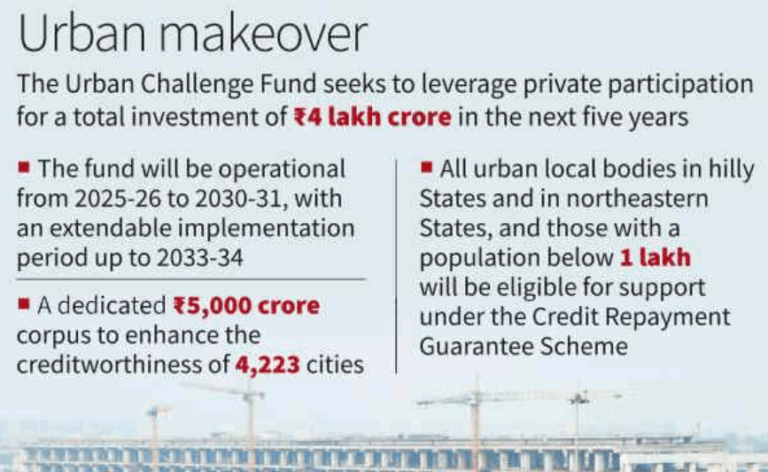
The Urban Challenge Fund (UCF) marks a structural shift from grant-based urban financing to market-linked, reform-driven and outcome-oriented urban infrastructure development.
Background & Rationale
- Approved by the Union Cabinet; operational from FY 2025–26 to FY 2030–31 (extendable till FY 2033–34).
- Total Central Assistance (CA): ?1 lakh crore.
- CA limited to 25% of project cost, mandating minimum 50% financing from market sources.
- Expected to leverage ?4 lakh crore total investment over five years.
- Implements Budget 2025–26 vision: Cities as Growth Hubs, Creative Redevelopment, Water & Sanitation.
2. Financing Architecture
- Minimum 50% market mobilisation: municipal bonds, bank loans, PPPs.
- Remaining share: States/UTs/ULBs.
- Dedicated ?5,000 crore corpus to enhance creditworthiness of ~4,223 cities.
- Positions ULBs as a bankable asset class.
Credit Repayment Guarantee Scheme (?5,000 crore)
- For NE & Hilly States and smaller ULBs (<1 lakh population).
- Central guarantee:
- First loan: up to ?7 crore or 70% of loan (whichever lower).
- Subsequent loan: up to ?7 crore or 50% of loan.
- Enables projects of ?20–28 crore in smaller cities.
3. Challenge-Based Selection
- Competitive, transparent “challenge mode”.
- Linked to reforms, milestones & defined KPIs.
- Digital, paperless monitoring via MoHUA portal.
- Continuation of reforms mandatory for further fund release.
4. Reform-Linked Framework
Focus areas:
- Urban governance & digital reforms
- Market/financial reforms (creditworthiness)
- Operational efficiency
- Urban planning & spatial reforms (TOD, green infra)
- Project-specific KPIs with third-party verification
5. Project Verticals
- Cities as Growth Hubs – economic nodes, transit-oriented development, mobility, corridor development.
- Creative Redevelopment – CBD renewal, brownfield regeneration, climate resilience, decongestion (esp. NE & hilly states).
- Water & Sanitation – water supply, sewerage, stormwater, solid waste management, legacy waste remediation.
6. Coverage
- Cities ≥10 lakh population (2025 estimates).
- All State/UT capitals.
- Industrial cities ≥1 lakh population.
- Smaller & hilly/NE ULBs via guarantee mechanism.
Bio-based Chemicals and Enzymes
- 16 Feb 2026
In News:
India is prioritising bio-based chemicals and enzymes under the BioE3 policy to reduce petrochemical imports, promote sustainable manufacturing, and strengthen its bioeconomy.
What are Bio-Based Chemicals?
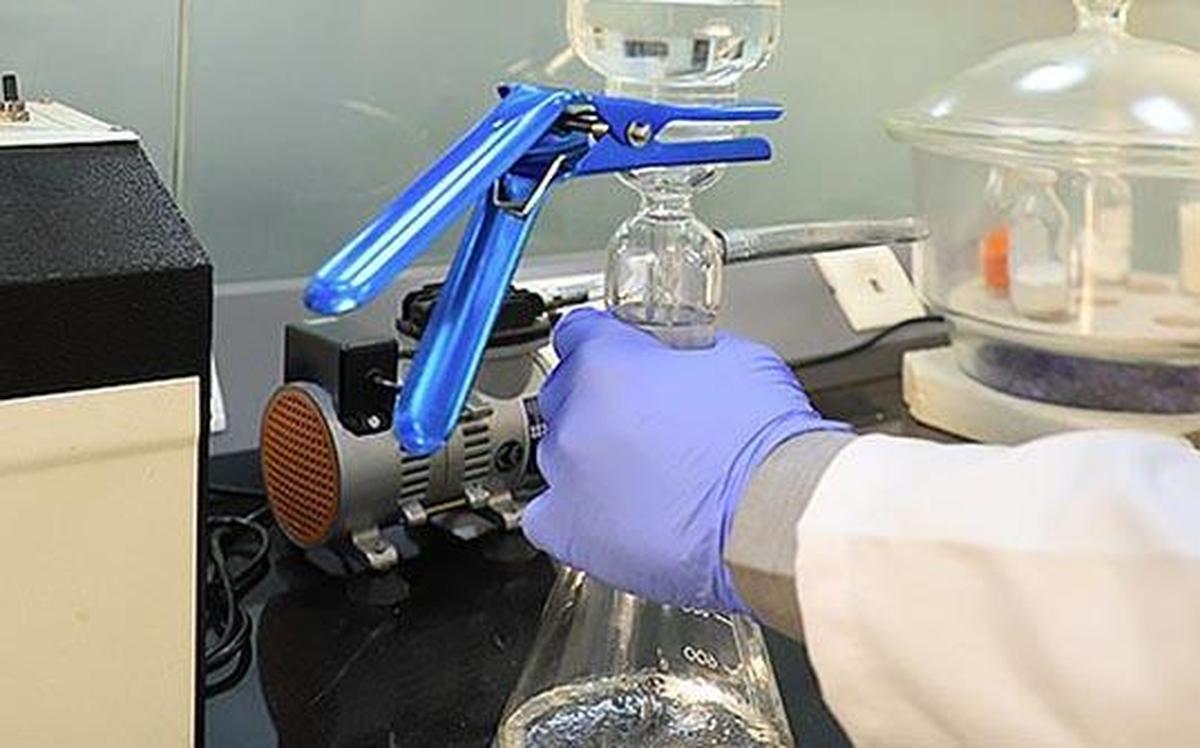
Bio-based chemicals are industrial chemicals produced from renewable biological feedstocks such as sugarcane, corn, starch, and agricultural residues, rather than fossil fuels. They are typically manufactured through fermentation, enzymatic conversion, or microbial processes using biomass.
Examples:
- Organic acids (e.g., lactic acid)
- Bio-alcohols
- Solvents
- Surfactants
- Chemical intermediates used in plastics, cosmetics, pharmaceuticals
These chemicals form a core component of the bioeconomy, which integrates biological resources and biotechnology into industrial production systems to create sustainable alternatives to petrochemicals.
What are Enzymes?
Enzymes are biological catalysts (mainly proteins) that accelerate chemical reactions without being consumed in the process. While enzymes have been used traditionally in brewing and baking for centuries, modern industrial enzyme engineering expanded significantly in the 20th century with advances in biotechnology.
Enzymes are produced via microbial fermentation, followed by purification and formulation for industrial use.
Key Characteristics
- Renewable Feedstock Base – Derived from biomass instead of fossil hydrocarbons.
- Lower Carbon Footprint – Reduced greenhouse gas emissions compared to petrochemical pathways.
- Energy Efficiency – Enzymes operate at lower temperatures and pressures.
- Biodegradability – Many bio-based products are environmentally friendly.
- High Specificity – Enzymes provide targeted catalytic action, improving efficiency and reducing waste.
Applications
1. Chemical Industry
- Organic acids (lactic acid)
- Acetyl intermediates (acetic anhydride, ethyl acetate)
- Solvents and specialty chemicals
2. Pharmaceuticals & Vaccines: Active ingredient synthesis through fermentation technologies.
3. Food & Beverage: Brewing, baking, dairy processing.
4. Textiles & Detergents: Stain removal, fabric treatment.
5. Biomanufacturing & Clean Technology: Sustainable plastics, biofuels, specialty chemicals.
Why Does India Need Bio-Based Chemicals?
India has strong structural advantages:
- Large agricultural base (ample biomass availability)
- Established fermentation expertise (pharmaceuticals and vaccines)
- Expanding manufacturing ecosystem
- Rising demand for sustainable industrial inputs
India imported approximately $479.8 million worth of acetic acid in 2023, reflecting dependence on petrochemical imports. Scaling domestic bio-based chemical production can:
- Reduce import dependence
- Create value-added markets for agricultural produce
- Strengthen climate commitments
- Boost rural and industrial employment
Policy Support: BioE3 Initiative
India has identified bio-based chemicals and enzymes as priority sectors under the Department of Biotechnology’s BioE3 Policy.
BioE3 focuses on:
- Biomanufacturing scale-up
- Shared infrastructure (biofoundries, pilot plants, demonstration facilities)
- Innovation ecosystem development
- Reducing capital risk for emerging firms
Industry Landscape in India
Bio-Based Chemicals
- Praj Industries
- Godrej Industries
- Godavari Biorefineries
- Jubilant Ingrevia
- StringBio
Enzymes Market
The Indian enzyme market is highly consolidated, with top players accounting for over 75% market share.
Key companies:
- Novozymes India
- DuPont
- DSM
- Advance Enzyme Technologies
- BASF SE
- Ultreze Enzymes Private Limited
Global Initiatives
European Union
The EU Bioeconomy Strategy links industrial transformation with:
- Climate mitigation
- Circular economy
- Waste reduction
United States
- The USDA BioPreferred Program mandates federal procurement preference for certified bio-based products, helping create stable demand.
China
- Bioeconomy development plans prioritise high-value bio-based chemicals and enzyme technologies as strategic sectors.
Japan
- Projects supported by METI/NARO integrate research with manufacturing readiness in bio-based chemicals.
African Union
- 16 Feb 2026
In News:
The African Union (AU), launched in 2002 to replace the OAU, is a continental body of 55 African states headquartered in Addis Ababa, Ethiopia.
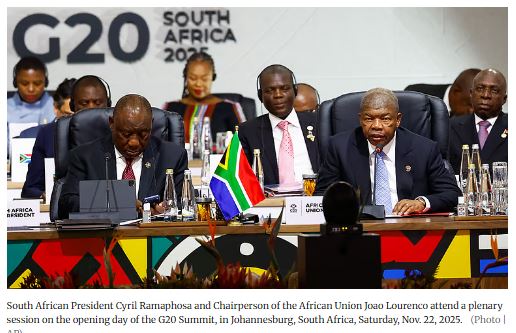
Recently, the African Union (AU) held its annual summit in Ethiopia amid growing discussions on governance reforms and youth representation within the bloc.
Origin and Evolution
The African Union was officially launched in 2002, replacing the Organization of African Unity (OAU), which had been established in 1963.
Why the Transition?
- The OAU primarily focused on decolonization and anti-apartheid struggles.
- The AU was created with a broader mandate including:
- Political and economic integration
- Conflict resolution
- Sustainable development
- Stronger global representation for Africa
Membership
- Comprises 55 member states (all internationally recognized African countries).
- It represents the entire African continent.
Headquarters
- Located in Addis Ababa, Ethiopia.
Objectives of the African Union
The AU aims to:
- Promote unity and solidarity among African countries.
- Foster peace, security, and stability.
- Advance economic integration and development.
- Protect sovereignty and territorial integrity.
- Enhance Africa’s voice in global governance.
Governance Structure
Assembly
- Highest decision-making body.
- Composed of Heads of State and Government.
- Determines policy direction.
Executive Council
- Consists of Foreign Affairs Ministers.
- Prepares decisions and policies for the Assembly.
AU Commission
- Administrative arm of the AU.
- Implements decisions of the Assembly and Executive Council.
- Headquartered in Addis Ababa.
Peace and Security Council (PSC)
- Responsible for:
- Conflict prevention
- Peacekeeping missions
- Crisis response mechanisms
The PSC functions somewhat similarly to the UN Security Council but at the continental level.
Participatory and Advisory Bodies
To promote democratic participation:
- Pan-African Parliament
- Ensures representation of African peoples.
- Economic, Social and Cultural Council (ECOSOCC)
- Civil society advisory body.
These institutions reflect the AU’s goal of citizen engagement and inclusive governance.
Contemporary Context
Recent summits have witnessed debates over:
- Youth representation in governance
- Leadership renewal within member states
- Democratic accountability
- Economic integration initiatives such as the African Continental Free Trade Area (AfCFTA)
With Africa having one of the world’s youngest populations, youth inclusion has become a prominent theme in AU deliberations.
Yuva AI for All Initiative
- 16 Feb 2026
In News:
Launched by the Ministry of Electronics and Information Technology (MeitY) under the IndiaAI Mission, this initiative is a first-of-its-kind free AI literacy programme designed for mass outreach.
Key Features
- Target: Empower 1 crore (10 million) citizens with foundational AI skills.
- Duration: Approximately 4–4.5 hours, self-paced.
- Structure: Six modules covering:
- AI fundamentals
- Generative AI basics
- Ethics in AI
- Real-world applications
- Eligibility: No prior coding knowledge required.
- Certification: Official Government of India certificate upon completion.
- Accessibility: 100% free and open to all.
- Platforms: Available on
- FutureSkills Prime
- iGOT Karmayogi
- Coursera
- TCS iON and other ed-tech portals
The course is designed with India-specific examples, making it practical and relatable for students, professionals, and general learners.
Kaushal Rath: Mobile AI Awareness Initiative
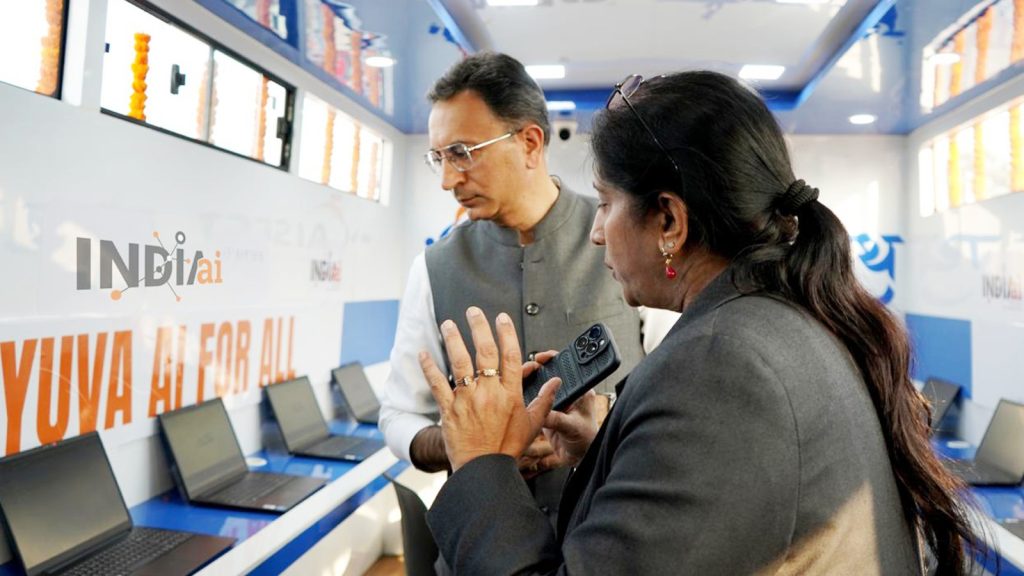
To expand outreach beyond digital platforms, MeitY, in collaboration with the All India Society for Electronics and Computer Technology (AISECT), launched Kaushal Rath.
Key Highlights
- Flagged off from India Gate, New Delhi.
- Designed as a mobile computer lab equipped with:
- Internet-enabled systems
- Audio-visual tools
- Structured AI training modules
- Will travel to:
- Schools
- Colleges
- Industrial Training Institutes (ITIs)
- Community centers
- Provides:
- Hands-on exposure to AI and Generative AI tools
- On-the-spot course registrations
- Instructor-led sessions with trained facilitators
The initiative focuses particularly on semi-urban and underserved regions, ensuring AI awareness reaches beyond metropolitan centers.
Institutional Framework
IndiaAI Mission
The programme is part of the broader IndiaAI Mission, where skilling is one of the seven core pillars. The mission seeks to strengthen India’s AI ecosystem through:
- Capacity building
- Innovation support
- Ethical AI frameworks
- Workforce readiness
Link with India AI Impact Summit 2026
The initiative also serves as a precursor to the India AI Impact Summit 2026. The summit is positioned as:
- The first major global AI gathering hosted in the Global South.
- Focused on development-oriented AI outcomes.
- Thematically aligned with People, Planet and Progress.
Kaushal Rath will operate across Delhi-NCR in the run-up to the summit to generate public awareness and encourage AI adoption.
Removal of the Lok Sabha Speaker
- 16 Feb 2026
In News:
The Lok Sabha Speaker can be removed only by a resolution passed by an Effective Majority (majority of all the then members of the House) under Article 94(c) of the Constitution.
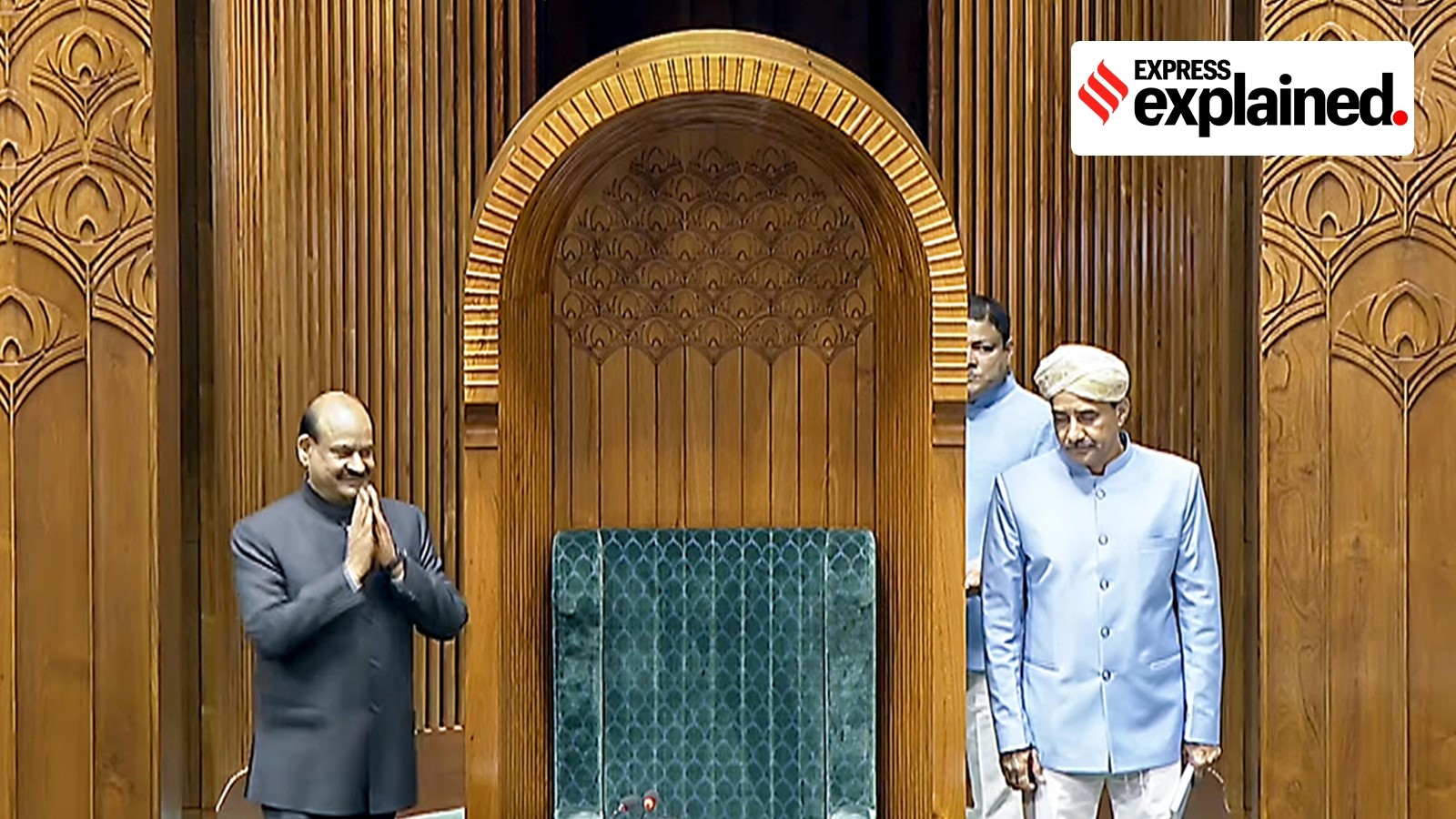
The recent notice seeking the removal of Lok Sabha Speaker Om Birla has revived attention on the constitutional and procedural safeguards governing the office of the Speaker.
Constitutional Basis
The removal of the Speaker is governed primarily by:
Article 94 of the Constitution of India
It lays down the circumstances under which the Speaker or Deputy Speaker vacates office:
- Article 94(a) – If they cease to be a member of the Lok Sabha.
- Article 94(b) – They may resign by writing addressed to the Deputy Speaker (or Speaker, in case of Deputy Speaker).
- Article 94(c) – They may be removed by a resolution of the House passed by a majority of all the then members of the House (Effective Majority).
This provision applies only to the Lok Sabha and not to the Rajya Sabha.
Effective Majority
An Effective Majority means: Majority of all the then members of the House (excluding vacant seats).
It is different from:
- Simple Majority – Majority of members present and voting.
- Absolute Majority – Majority of total membership of the House.
- Special Majority – Required in constitutional amendment cases (Article 368).
Procedural Framework
The detailed procedure is laid down under Rules 200–203 of the Rules of Procedure and Conduct of Business in Lok Sabha.
Notice Requirement
- A written notice must be submitted to the Secretary-General of the Lok Sabha.
- At least 14 days’ prior notice is mandatory.
- It may be signed by one or more members.
Admission of Motion
- The motion is listed in the List of Business.
- The presiding officer reads it to the House.
- At least 50 Members must rise in support.
- If fewer than 50 members stand → Motion fails (no “leave of the House”).
Conditions on the Motion (Rule 200A)
The resolution must:
- Be specific and precise
- Clearly state charges
- Not contain arguments, inferences, defamatory or ironic expressions
Discussion must remain strictly confined to the charges mentioned.
Role of the Speaker During Removal Proceedings
Under Article 96:
- The Speaker cannot preside while the resolution is under consideration.
- They have the right to:
- Speak
- Participate in debate
- Vote in the first instance (as an ordinary member)
- They cannot exercise a casting vote in case of a tie.
Timeline After Admission
If 50 or more members support:
- Leave is granted.
- The resolution must be taken up within 10 days.
- Discussion follows.
- The member moving the motion may speak (maximum 15 minutes, if allowed).
If passed by Effective Majority → The Speaker is removed immediately.
Continuity of Office
- Even after dissolution of the Lok Sabha, the Speaker continues in office until immediately before the first meeting of the new Lok Sabha.
- However, removal by resolution results in immediate vacation of office.
Historical Precedents
No Speaker has ever been removed through this process.
Three motions have been moved:
- 1954 – Against G. V. Mavalankar (First Speaker of Lok Sabha)
- 1966 – Against Hukam Singh
- 1987 – Against Balram Jakhar
All three motions failed.