
Meghalaya’s Living Root Bridges

- 01 Feb 2026
In News:
India has formally submitted the Living Root Bridges of Meghalaya for inscription on the UNESCO World Heritage List under the title “Jingkieng Jri / Lyu Chrai Cultural Landscape” for the 2026–27 evaluation cycle. These bioengineered bridges, developed by indigenous communities, represent a rare example of living architecture, blending ecological knowledge, cultural traditions, and sustainable engineering.
What are Living Root Bridges?
Known locally as Jingkieng Jri (Khasi) or Lyu Chrai (Jaintia), these bridges are found across the southern slopes of the Khasi and Jaintia Hills in the state of Meghalaya.
They are:
- Living structures, grown rather than built
- Crafted using the aerial roots of the Ficus elastica (Indian rubber tree)
- Developed over 15–30 years
- Capable of spanning 15 to 250 feet
- Durable for several centuries with proper care
Construction Process: Indigenous Bioengineering
The bridges are a result of traditional tree-shaping techniques perfected over generations:
- Young aerial roots of Ficus trees are guided across streams using hollowed trunks of Areca catechu.
- These trunks protect the roots and direct their growth.
- A temporary bamboo scaffold supports the structure during early stages.
- Over time, roots thicken and undergo inosculation (natural fusion), forming a strong, self-supporting bridge.
- As the bridge matures, the support materials decay, leaving a resilient living structure.
This method reflects deep ecological understanding and sustainable resource use.
Cultural Landscape Significance
The nomination recognises not just the bridges but an entire cultural landscape shaped by the Khasi and Jaintia tribes. The bridges embody:
- Community-based land management
- Intergenerational knowledge transfer
- Spiritual reverence for Mei Ramew (Mother Earth)
- Harmony between human activity and fragile hill ecosystems
Thus, they represent intangible cultural heritage expressed through a tangible living form.
Why UNESCO Recognition Matters
Inclusion in the UNESCO World Heritage List would:
- Provide global recognition of indigenous ecological knowledge
- Strengthen conservation and sustainable tourism efforts
- Encourage preservation of traditional practices amid modernization
- Highlight nature-based solutions in climate-resilient infrastructure
Institutional Role in Nomination
The nomination dossier was submitted by India’s Permanent Representative to UNESCO with contributions from:
- Archaeological Survey of India
- Ministry of External Affairs
- Government of Meghalaya
- Local indigenous communities, who remain the primary custodians
India Energy Week (IEW) 2026
- 01 Feb 2026
In News:
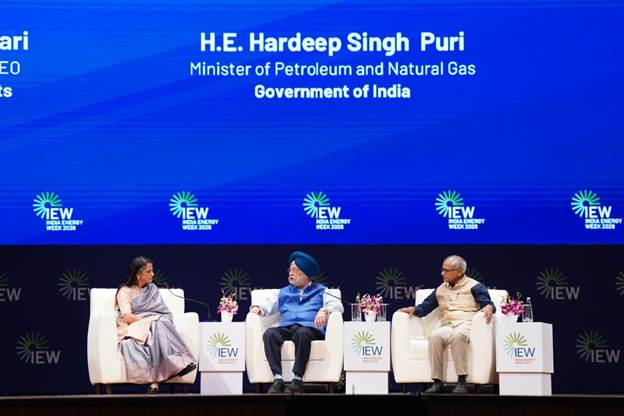
India Energy Week (IEW) 2026, held in Goa, concluded with India reaffirming its position as a resilient and credible energy leader amid global geopolitical volatility. The event highlighted India’s dual strategy: ensuring energy security through diversified conventional supplies while accelerating the transition toward cleaner fuels.
India’s Energy Strategy: Resilience in a Volatile World
Union Petroleum and Natural Gas Minister Hardeep Singh Puri emphasised that India has successfully navigated successive global disruptions by:
- Diversifying crude oil and gas import sources
- Strengthening domestic exploration
- Expanding clean energy adoption
India today ranks as:
- 3rd-largest energy consumer
- 4th-largest refining hub
- Among the top exporters of petroleum products
Despite global price shocks, India maintained stable domestic fuel and LPG prices, shielding consumers through policy and Oil Marketing Company (OMC) interventions.
Paradigm Shift: From Energy Transition to “Energy Addition”
A key theme at IEW 2026 was that the global transition is not about replacing fossil fuels overnight but about “energy addition”:
- Continued investment in oil and gas for stability
- Rapid scale-up of biofuels, LNG, green hydrogen, and renewables
This balanced approach recognises developmental realities while pursuing climate goals.
Domestic Exploration & Upstream Reforms
India aims to reduce import dependence by boosting domestic production through:
- Hydrocarbon Exploration Licensing Policy (HELP)
- Open Acreage Licensing Policy (OALP)
- Discovered Small Fields (DSF) rounds
- Oilfields (Regulation & Development) Amendment Act, 2025
- Petroleum and Natural Gas Rules, 2025
These reforms aim to improve ease of doing business and attract global investment into India’s sedimentary basins.
Downstream and Infrastructure Reforms
- Unified Pipeline Tariff (UPT) under One Nation, One Gas Grid to reduce regional disparities
- Integration of refining and petrochemicals to enhance value addition
- Digitalisation and AI-driven optimisation to improve logistics and operational resilience
Clean Energy Acceleration
India’s energy transition efforts include:
- 20% ethanol blending achieved in 2025
- Expansion of Compressed Biogas (CBG) with a 5% blending target by 2030
- Scaling Green Hydrogen under the National Green Hydrogen Mission
- Growth in solar and wind capacity, with India ranking among the top global producers
India has already achieved 50% of its installed electricity capacity from non-fossil sources, five years ahead of its 2030 target.
Global Partnerships: India–UAE Energy Ties
At IEW 2026, the United Arab Emirates reaffirmed its role as a reliable energy partner:
- 4th-largest source of India’s oil imports
- Key LPG supplier
- Bilateral trade target: USD 200 billion by 2032
The UAE highlighted underinvestment in energy as a global risk, echoing India’s call for balanced investment across energy types.
Role of States: Goa’s Renewable Vision
As host, Goa presented a roadmap to achieve 100% renewable energy by 2050, linking:
- Green Economy (clean energy growth)
- Blue Economy (sustainable ocean resource use)
This reflects sub-national participation in India’s climate strategy.
Energy Security: India’s Current Status
Achievements:
- 3rd globally in solar capacity
- 4th in wind and overall renewable capacity
- Strong refining and export capabilities
Challenges:
- Still the 3rd-largest net energy importer
- Ranking drop in the World Economic Forum Energy Transition Index
India Adds Two New Ramsar Sites
- 01 Feb 2026
In News:
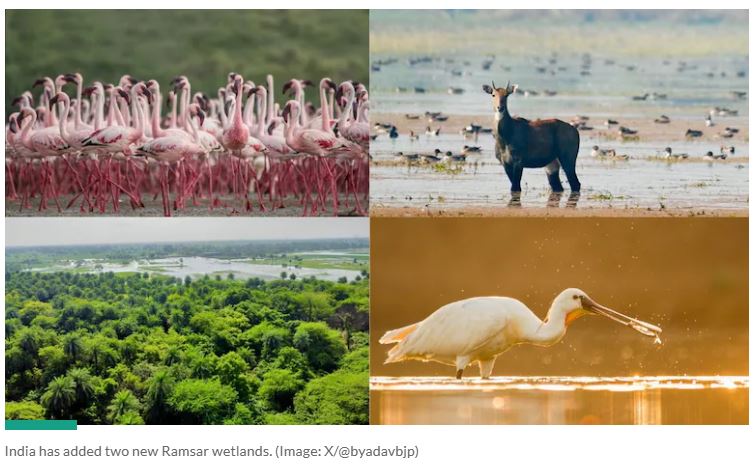
India has recently expanded its network of internationally recognised wetlands by designating two additional sites as Ramsar wetlands - the Patna Bird Sanctuary in Uttar Pradesh and Chhari-Dhand in Gujarat ahead of World Wetlands Day observed on 2 February. This brings the total number of Ramsar Sites in the country to 98, reflecting a significant increase from 26 sites in 2014 and underscoring India's growing commitment to wetland protection and biodiversity conservation.
Ramsar Convention: An Overview
The Ramsar Convention is an international treaty signed in 1971 in Ramsar, Iran, aimed at conserving wetlands and promoting their sustainable use. India became a signatory in 1982 and has progressively expanded its list of designated wetlands that meet criteria for ecological significance. Designation as a Ramsar Site recognises a wetland’s importance for biodiversity, water security, climate resilience, and ecosystem services.
Newly Designated Ramsar Sites
1. Patna Bird Sanctuary (Uttar Pradesh)
- Location & Ecosystem: Situated in eastern Uttar Pradesh, the sanctuary comprises freshwater marshes, grasslands, and woodland patches, embedded within an agricultural landscape.
- Biodiversity Value: The mosaic of habitats supports rich biodiversity and has been recognised as an Important Bird and Biodiversity Area (IBA) by BirdLife International.
- Flora and Fauna:
- Around 178 species of birds, including migratory and resident species
- Approximately 252 species of plants
- Ecological Significance: The wetland acts as a critical refuge for avifauna, contributing to regional ecological stability and supporting ecosystem services such as groundwater recharge.
2. Chhari-Dhand Wetland (Gujarat)
- Location & Nature: Located in the Kutch region of Gujarat, Chhari-Dhand is a seasonal saline wetland, positioned between the Banni grasslands and the salt flats of Kutch.
- Avifaunal Importance: It serves as an important wintering and stopover site for migratory waterfowl.
- Key Species Supported:
- Critically endangered sociable lapwing
- Vulnerable common pochard
- Annual congregation of common cranes (Grus grus)
- Ecological Role: The wetland sustains unique saline ecosystem biodiversity and supports pastoral and local livelihoods indirectly.
Grain ATMs
- 01 Feb 2026
In News:
In a move aimed at modernising food security delivery, the state of Bihar has initiated a pilot project to install “Grain ATMs” (Annapurti machines) in Patna. The initiative seeks to enhance efficiency, transparency, and beneficiary convenience under the Public Distribution System (PDS) one of the world’s largest food security programmes.
This reform represents the integration of digital governance and automation into welfare delivery.
What is a Grain ATM?
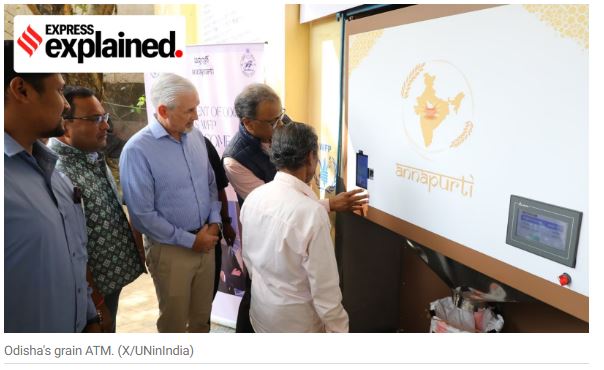
A Grain ATM, also called Annapurti, is an automated food grain dispensing machine designed to function similarly to a banking ATM. It enables eligible beneficiaries to collect their rationed grains without depending entirely on manual distribution at Fair Price Shops (FPSs).
The technology has been developed by the World Food Programme (WFP) in collaboration with the Food Corporation of India (FCI) and state governments.
Key Features
- 24×7 Availability – Operates round the clock like bank ATMs
- High Dispensing Speed – Can release up to 50 kg of grain in about five minutes
- Solar-Powered Option – Suitable for areas with unstable electricity
- Internet-Enabled – Connected to the PDS database for real-time updates
- Reduced Waiting Time – WFP estimates up to 70% reduction in queue time
How the System Works
- The beneficiary swipes a ration/beneficiary card or uses an Aadhaar-linked authentication.
- Biometric verification is completed through a PoS device.
- The beneficiary selects the type and quantity of grain within their entitlement limit.
- The machine dispenses the grain automatically.
- The transaction is digitally recorded in the PDS database.
- A printed slip is issued as proof of distribution.
This process minimises human intervention and manual weighing errors.
Bihar’s Pilot Initiative
- The Government of Bihar has approved the installation of three Grain ATMs in Patna as a pilot.
- The Food and Consumer Protection Department is the nodal implementing agency.
- If successful, the project may be expanded across urban and eventually rural areas.
Bihar has a large food security footprint:
- Over 8.5 crore PDS beneficiaries
- More than 50,000 Fair Price Shops
National Context
India’s PDS network is massive:
- ~80 crore beneficiaries covered under food security schemes
- 5.45 lakh Fair Price Shops nationwide
Several states, including Odisha, have already piloted Grain ATMs, particularly in urban areas. The Union government plans to expand such technology-driven systems to the Panchayat level in the future.
Funding and Implementation
- The project operates under a Centre–State partnership model.
- States provide physical space for installation.
- Maintenance and security costs are shared between the Centre and state governments.
Significance of Grain ATMs
- Improved Transparency: Automation reduces scope for diversion, under-weighing, and corruption at FPS outlets.
- Beneficiary Convenience: 24×7 access reduces long queues and allows flexible collection times, especially for daily-wage earners.
- Digitisation of Welfare Delivery: Real-time database updates strengthen data accuracy and monitoring.
- Women & Elderly Friendly: Faster service benefits vulnerable groups who struggle with long waiting times.
- Energy Sustainability: Solar-powered machines align with clean energy goals.
‘CHAKRA’ – Centre of Excellence (CoE)

- 01 Feb 2026
In News:
In a significant move to align banking with India’s future economic priorities, the State Bank of India (SBI) has launched ‘CHAKRA’ – Centre of Excellence (CoE). The initiative is designed to support financing for sunrise sectors that are expected to play a decisive role in India’s transition toward a technology-driven, sustainable, and globally competitive economy.
This step signals a shift in institutional finance from traditional asset-heavy industries toward innovation-led and climate-aligned growth sectors.
What is CHAKRA?
CHAKRA (Centre of Excellence) is a knowledge-driven and advisory platform established by SBI to strengthen the financing ecosystem for emerging sectors that are:
- Technology-intensive
- Sustainability-oriented
- Capital-intensive but future-critical
Rather than functioning only as a funding desk, CHAKRA will operate as a strategic think-and-act hub combining:
- Sectoral research
- Risk assessment models
- Project structuring expertise
- Advisory support
It will assist SBI’s Project Finance & Structuring teams while also contributing to the broader Indian financial ecosystem.
Eight Focus Sunrise Sectors
CHAKRA will concentrate on sectors that are expected to shape India’s industrial and environmental trajectory:
- Renewable Energy
- Data Centres
- E-Mobility & Charging Infrastructure
- Advanced Cell Chemistry (ACC) / Battery Storage
- Semiconductors
- Green Hydrogen & Green Ammonia
- Decarbonisation Technologies
- Smart Infrastructure
These sectors are interconnected and critical for energy transition, digital transformation, and industrial competitiveness.
Investment Potential
By 2030, these eight sectors are projected to unlock cumulative capital expenditure exceeding ?100 lakh crore.
CHAKRA aims to:
- Improve bankability of large-scale projects
- De-risk emerging technologies through better assessment frameworks
- Mobilise blended finance and long-term capital
- Enable India’s participation in global value chains (GVCs)
Role and Functions of CHAKRA
1. Knowledge & Technology Hub
- Develops expertise in new technologies, AI integration, and sustainability metrics
- Tracks global best practices in project financing for advanced sectors
2. Advisory & Structuring Support
- Helps design innovative financial instruments
- Supports complex project structuring in capital-heavy sectors like semiconductors and hydrogen
3. Ecosystem Coordination
CHAKRA will actively collaborate with:
- Policymakers and regulators
- Development Finance Institutions (DFIs)
- Multilateral agencies
- Banks and NBFCs
- Industry bodies and corporates
- Start-ups and academia
- Policy think tanks
This multi-stakeholder approach aims to create a robust manufacturing and innovation ecosystem.
Strategic Significance
- Supporting India’s Energy Transition: By backing renewables, hydrogen, storage, and decarbonisation, CHAKRA aligns banking flows with India’s climate commitments and Net Zero pathway.
- Strengthening Technological Sovereignty: Financing for semiconductors, batteries, and data centres reduces import dependence and enhances strategic autonomy.
- Enabling Digital & Infrastructure Growth: Smart infrastructure and data centres are essential for Digital India, AI adoption, and Industry 4.0.
- Financial Sector Innovation: The CoE model marks a transition from collateral-based lending to knowledge-based financing, especially for technology-driven sectors where risks are complex but long-term returns are high.