
Digital Hub for Reference and Unique Virtual Address (DHRUVA)
- 07 Dec 2025
In News:
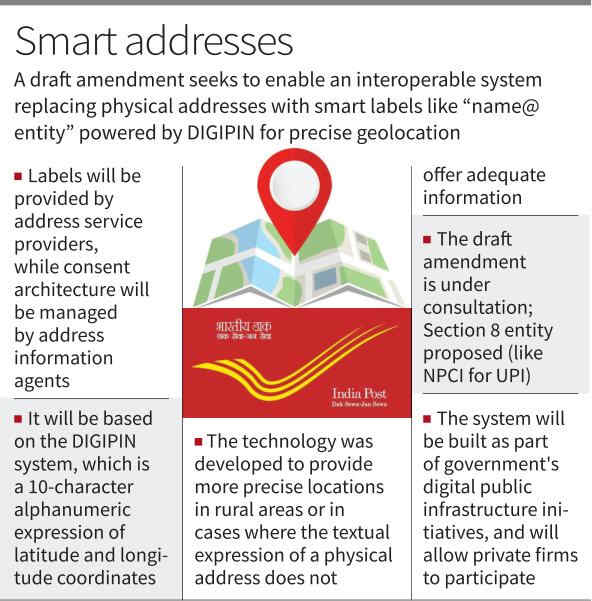
The Department of Posts (DoP) under the Ministry of Communications has proposed a new digital addressing framework called DHRUVA (Digital Hub for Reference and Unique Virtual Address). It aims to create a standardised, interoperable, and user-centric digital address system as part of India’s Digital Public Infrastructure (DPI) initiatives.
What is DHRUVA?
DHRUVA is designed as a national digital address framework that allows individuals to use UPI-like virtual address labels such as “name@entity” instead of repeatedly sharing full physical addresses.
These virtual labels act as proxies for real-world locations and are built on the concept of Address-as-a-Service (AaaS), a system for secure, consent-based management and sharing of address data.
Key Features
1. Virtual Address Labels: Users will be able to share a simple label (similar to a UPI ID or email ID) instead of filling out detailed address forms across platforms.
2. Consent-Based Access: Users can authorise companies to access their address information for a limited duration, after which access must be renewed. This gives citizens control over who can view their address.
3. Interoperability &Standardisation: DHRUVA aims to standardise address formats and ensure interoperability across government services, e-commerce platforms, logistics providers, and emergency services.
4. Public–Private Participation: Private firms can participate in the ecosystem, similar to how the UPI system involves banks and fintech firms. A not-for-profit entity (on the lines of NPCI) may oversee operations under government supervision.
DIGIPIN: Foundational Layer
DHRUVA builds upon the DIGIPIN (Digital Postal Index Number) system.
Key Facts about DIGIPIN:
- Developed by the Department of Posts with IIT Hyderabad and NRSC, ISRO
- A 10-character alphanumeric code representing precise geographic coordinates
- Each code corresponds to roughly a 4 m × 4 m grid (earlier approximated as ~14 sq m area)
- Open-source and covers the entire territory of India
- Useful in areas where traditional textual addresses are unclear or absent
DIGIPIN improves location accuracy for rural areas, logistics, emergency response, and public service delivery.
Institutional Framework
- Address labels will be issued by Address Service Providers (ASPs)
- Consent management will be handled by Address Information Agents (AIAs)
- The platform will be designed with multilingual and mobile-first access
- It may integrate with identity systems like Aadhaar for verification
Significance
- Reduces repetitive address entry across digital platforms
- Enhances privacy through consent-based data sharing
- Improves e-governance, e-commerce, logistics, and emergency services
- Strengthens India’s digital infrastructure alongside Aadhaar and UPI
Antarctic Ozone Hole: Early Closure in 2025
- 07 Dec 2025
In News:
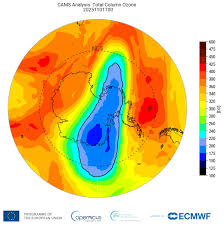
In 2025, the Antarctic ozone hole closed earlier than usual, with closure recorded on 1 December, marking one of the smallest ozone holes in the past five years. The early closure has been seen as a strong sign of long-term recovery of the ozone layer, despite the backdrop of record global temperatures.
What is the Antarctic Ozone Hole?
- The Antarctic ozone hole refers to the seasonal thinning of the stratospheric ozone layer over Antarctica during the austral spring (September–November). Scientists define the ozone hole as regions where ozone concentration falls below 220 Dobson Units (DU).
- It is not a literal hole but an area of severely reduced ozone levels in the stratosphere, first discovered in 1985.
Why Does the Ozone Hole Form Over Antarctica?
Several unique atmospheric conditions combine to intensify ozone depletion in the region:
1. Polar Vortex:During the Antarctic winter, a strong polar vortex traps cold air, preventing mixing with warmer air from lower latitudes.
2. Polar Stratospheric Clouds (PSCs):Extreme cold leads to PSC formation. These clouds facilitate chemical reactions that activate chlorine and bromine from human-made chemicals such as chlorofluorocarbons (CFCs) and halons.
3. Return of Sunlight:When sunlight returns in spring, it triggers rapid chemical reactions that destroy ozone molecules, producing the ozone hole.
2025 Ozone Hole Highlights
- The ozone hole reached a maximum area of just over 21 million sq km, significantly smaller than the record 29 million sq km in 2006.
- It closed earlier than usual, marking the second consecutive year of relatively small ozone holes.
- Scientists attribute this trend to declining levels of ozone-depleting substances (ODS) and favourable atmospheric conditions.
What is Ozone?
Ozone (O?) is a gas made of three oxygen atoms and exists in two layers:
|
Layer |
Type |
Role |
|
Stratosphere (15–30 km) |
Good ozone |
Absorbs harmful UV radiation |
|
Troposphere (near surface) |
Bad ozone |
Pollutant, contributes to smog |
Global average ozone concentration is about 300 DU.
Impacts of Ozone Depletion
- Increased UV-B radiation causes skin cancer, cataracts, and immune suppression
- Damages crops, forests, and marine phytoplankton
- Alters atmospheric circulation patterns in the Southern Hemisphere
Global Response
- Montreal Protocol (1987):A landmark global treaty phasing out ozone-depleting substances. It is the first UN treaty with universal ratification.
- Kigali Amendment (2016):Targets hydrofluorocarbons (HFCs)—not ozone-depleting but potent greenhouse gases.
These actions are estimated to prevent up to 0.5–1°C of global warming by 2050.
Outlook
If current trends continue, scientists estimate ozone levels could return to pre-1980 levels around:
- 2040 globally
- 2045 in the Arctic
- 2066 in Antarctica
Exercise GARUDA SHAKTI
- 07 Dec 2025
In News:
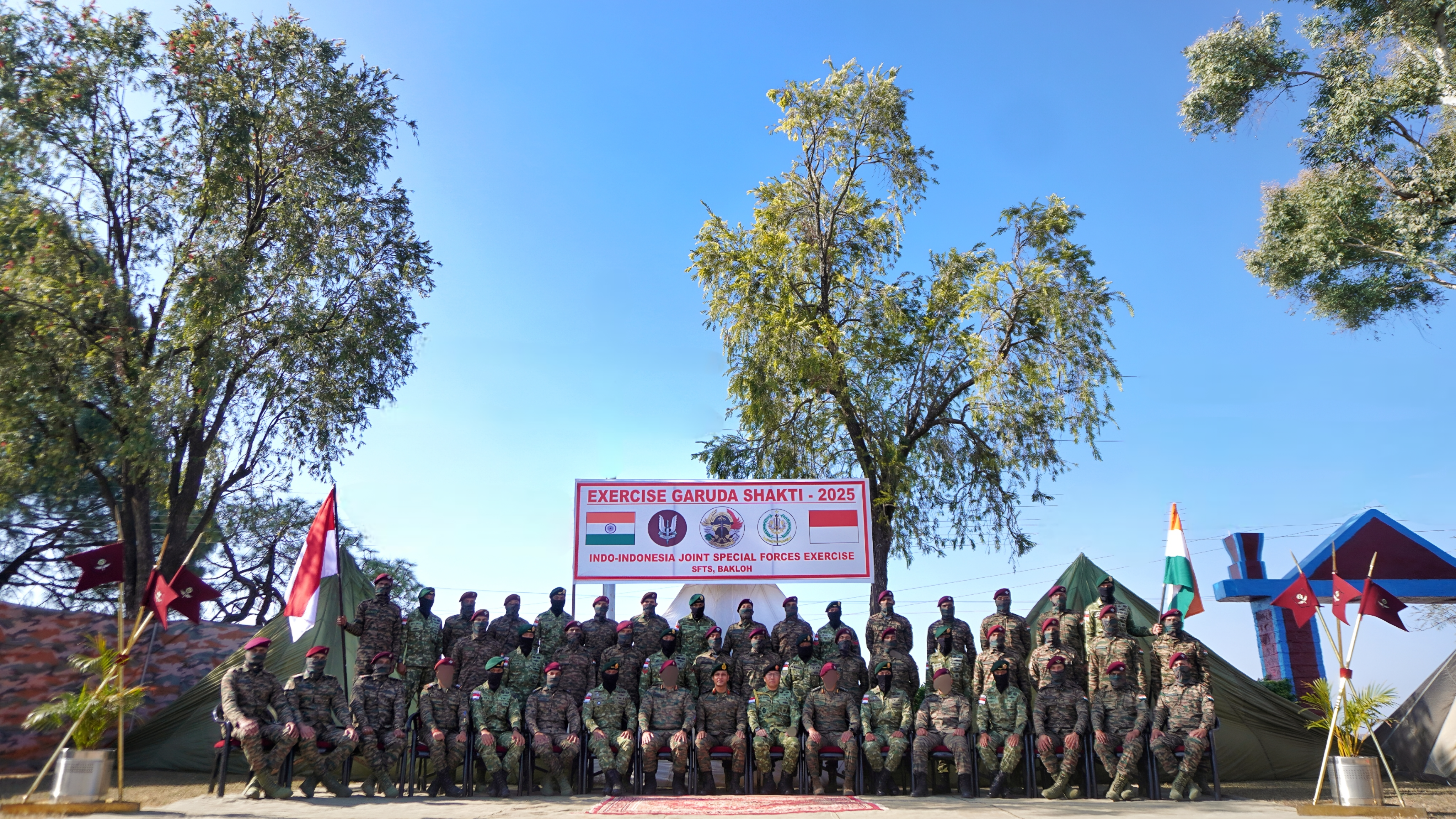
The 10th edition of Exercise GARUDA SHAKTI, a joint Special Forces exercise between India and Indonesia, is being conducted at the Special Forces Training School, Bakloh, Himachal Pradesh.
Participating Forces
- India: Troops from The Parachute Regiment (Special Forces) of the Indian Army
- Indonesia: Personnel from the Indonesian Special Forces
This exercise is part of the growing defence engagement between the two Indo-Pacific partners.
Nature of the Exercise
GARUDA SHAKTI is a bilateral Special Forces exercise designed to enhance mutual understanding, cooperation, and interoperability between elite troops of both nations. It focuses on high-intensity combat training and realistic operational scenarios in semi-mountainous terrain.
Key Areas of Training
The exercise includes a range of tactical and operational drills relevant to modern counter-terror and special operations environments:
- Counter-terrorism tactics at the troop level
- Unarmed combat techniques
- Combat shooting and sniping
- Heliborne operations
- Planning and execution of operations involving:
- Drones
- Counter-Unmanned Aerial Systems (Counter-UAS)
- Loitering munitions
The training emphasisesphysical endurance, tactical coordination, and combat readiness.
Exchange of Expertise
A key component of GARUDA SHAKTI is the exchange of knowledge related to:
- Weapons and specialised equipment
- Tactical drills and operational procedures
- Best practices in special operations
Such exchanges help both sides understand each other’s operational doctrines and capabilities.
Validation Phase
The joint training culminates in a validation exercise, simulating a real-world operational scenario. This phase tests:
- Joint planning capabilities
- Coordination under stress
- Tactical response and decision-making
- Endurance and teamwork of both contingents
Strategic Significance
- Strengthens India–Indonesia defence cooperation
- Enhances interoperability between Special Forces
- Contributes to regional security collaboration in the Indo-Pacific
- Reflects India’s broader policy of deepening defence partnerships with ASEAN nations
Indonesia holds strategic importance due to its location near key Sea Lanes of Communication (SLOCs) such as the Malacca Strait, making defence cooperation crucial for maritime and regional stability.
India’s Special Forces
The Parachute Regiment (Special Forces) is among India’s most elite military units, trained for:
- Counter-terrorism
- Special reconnaissance
- Direct action missions
- High-altitude and difficult terrain operations
World Soil Day (WSD)

- 07 Dec 2025
In News:
World Soil Day (WSD) is observed annually on 5 December to raise global awareness about the importance of healthy soils and to promote the sustainable management of soil resources. The observance is supported by the Food and Agriculture Organization (FAO) of the United Nations and endorsed by the UN General Assembly (UNGA).
History and Background
- The idea of a global day dedicated to soil conservation was first proposed in 2002 by the International Union of Soil Sciences (IUSS).
- FAO promoted the initiative, and in 2013 the FAO Conference endorsed the proposal and sought formal UN recognition.
- The UN General Assembly officially designated 5 December 2014 as the first World Soil Day.
Theme for 2025
“Healthy Soils for Healthy Cities”
The 2025 theme highlights the critical role of urban soils in supporting sustainable cities. It shifts attention from rural agriculture to the often-overlooked soils beneath urban environments.
Importance of Healthy Soils
Soils are a life-sustaining resource essential for:
- Food production
- Water filtration and groundwater recharge
- Carbon storage and climate regulation
- Biodiversity support
- Nutrient cycling
In urban areas, healthy soils help mitigate:
- Urban heat island effect
- Flooding by acting as natural water sponges
- Pollution through filtration of contaminants
- Food insecurity through urban agriculture
Extent of Soil Degradation
Despite their importance, soils are under severe stress:
- The FAO estimates that nearly one-third of the world’s soils are degraded.
- Urban soils face compaction, contamination, and sealing by concrete, reducing their ecological functions.
- Unsustainable agricultural practices, deforestation, and land misuse further worsen soil erosion and nutrient depletion.
Global Soil Conservation Efforts
1. Global Soil Partnership (GSP):An FAO-led initiative aimed at improving soil governance and promoting sustainable soil management worldwide.
2. United Nations Convention to Combat Desertification (UNCCD):Works to prevent land degradation and achieve Land Degradation Neutrality (LDN) by 2030.
India’s Soil Conservation Initiatives
India has launched multiple programmes to protect and restore soil health:
- Soil Health Card Scheme: Provides farmers with soil nutrient analysis to encourage balanced fertiliser use.
- Paramparagat Krishi Vikas Yojana (PKVY): Promotes organic farming to maintain soil fertility.
- Pradhan Mantri Krishi Sinchayee Yojana (PMKSY): Improves water management and reduces soil erosion.
- Watershed Development Programmes: Enhance soil moisture and prevent land degradation.
- MGNREGA land works: Support soil and water conservation at the local level.
- Smart Cities Mission: Encourages green infrastructure, open spaces, and soil-friendly urban planning.
Tensor Processing Units (TPUs)
- 07 Dec 2025
In News:
Recent reports indicate that Meta is in advanced discussions with Google to use its Tensor Processing Units (TPUs), highlighting growing competition in the global AI hardware ecosystem.
What is a TPU?
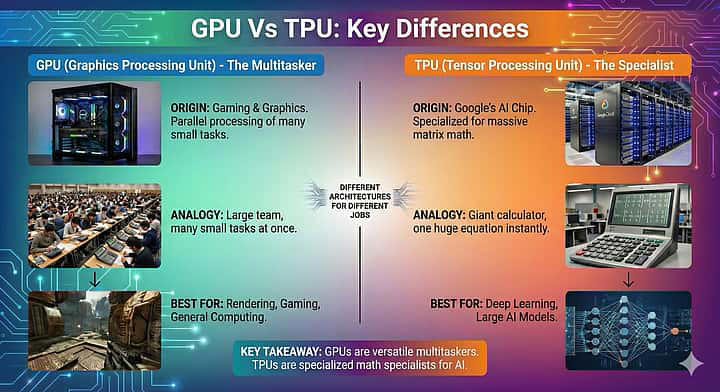
A Tensor Processing Unit (TPU) is a custom-designed semiconductor chip developed by Google to accelerate Artificial Intelligence (AI) and Machine Learning (ML) workloads. Unlike Central Processing Units (CPUs), which handle general computing tasks, or Graphics Processing Units (GPUs), which are versatile and widely used for AI and graphics processing, TPUs are application-specific integrated circuits (ASICs) built specifically for deep learning operations.
Google began developing TPUs in the early 2010s to meet the growing computational demands of AI applications such as Google Search, Translate, Photos, and voice recognition systems. The first TPU was introduced around 2015–16, and multiple generations have since been deployed in Google’s data centres and cloud platforms.
How TPUs Work
AI models depend heavily on tensor operations—mathematical calculations involving multi-dimensional arrays of numbers. Deep neural networks process data through repeated matrix multiplications and tensor algebra, which are computationally intensive.
TPUs are optimised for these operations through:
- Massive Parallelism: They perform a very large number of calculations simultaneously.
- Specialised Architecture: Circuits are tailored for AI workloads, reducing unnecessary processing steps.
- Energy Efficiency: TPUs often deliver high performance with lower power consumption compared to traditional GPUs.
This makes them particularly efficient for training and inference in large-scale AI models.
TPUs vs CPUs vs GPUs
|
Feature |
CPU |
GPU |
TPU |
|
Primary Use |
General-purpose computing |
Graphics & parallel tasks |
AI/ML acceleration |
|
Flexibility |
Very high |
High |
Limited to AI tasks |
|
Optimised for |
Sequential tasks |
Parallel processing |
Tensor/matrix operations |
|
Energy Efficiency for AI |
Low |
Moderate |
High |
Strategic Importance
The reported interest of major AI firms in TPUs reflects a shift in the AI hardware landscape. For years, NVIDIA GPUs dominated AI training and deployment due to their performance and software ecosystem. However, large technology companies are increasingly investing in custom AI chips to reduce costs, improve efficiency, and reduce dependence on external suppliers.
Google has begun offering TPU access through its cloud infrastructure, enabling external firms to run AI workloads on TPU clusters. This signals the rise of merchant AI silicon, where companies design chips not only for internal use but also for commercial deployment.