
South Africa G20 Summit 2025
- 25 Nov 2025
In News:
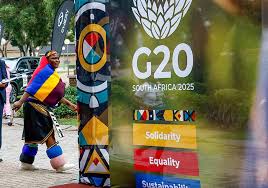
The 20th G20 Summit (2025) concluded in Johannesburg, South Africa, marking the first G20 Leaders’ Summit hosted on African soil. Despite a U.S. boycott, members adopted the Johannesburg Leaders’ Declaration, foregrounding Global South priorities under the theme “Solidarity, Equality, Sustainability.”
What is the G20?
- Nature: Premier forum for international economic cooperation.
- Members: 19 countries + European Union and African Union.
- Share: ~85% of global GDP, 75%+ of world trade, ~two-thirds of global population.
- Evolution:
- 1999: Formed after the Asian Financial Crisis (FM & CB Governors).
- 2008–09: Elevated to Leaders’ level post Global Financial Crisis.
- Structure: No permanent secretariat; rotating presidency with a Troika (past–present–incoming).
Johannesburg Leaders’ Declaration
- Multilateralism & Ubuntu: Emphasised the African philosophy of Ubuntu (“I am because you are”)—shared responsibility and interconnectedness.
- Climate Action: Scale climate finance (“billions to trillions”), prioritise adaptation, renewables, and just transitions under the Paris Agreement.
- Debt & Finance Reform: Launched a Cost of Capital Commission to reduce unfair risk premiums; spotlight on Africa’s ~USD 1.8 trillion debt burden.
- UNSC Reform: Support for expanding representation for Africa, Asia-Pacific, and Latin America.
- Terrorism: Unequivocal condemnation of terrorism in all forms.
- Gender & Youth:
- 25% gender parity in labour force participation by 2030.
- Nelson Mandela Bay Target: Reduce NEET rate by 5% by 2030.
- Energy Access: Mission 300-electricity for 300 million people in Sub-Saharan Africa by 2030.
- Critical Minerals: Welcomed a G20 framework for sustainable value chains and local beneficiation.
Key Outcomes & Initiatives
- Declaration Adopted despite U.S. boycott-underscored resilience of multilateral consensus.
- ACITI Partnership: Australia–Canada–India cooperation on critical technologies, AI, supply chains, clean energy.
- Developing Countries’ Focus: Debt restructuring, affordable finance, resilience for vulnerable economies.
India’s Role & Proposals
- Growth Vision: Human-centric, equitable, sustainable development (Integral Humanism).
- Global South Push:
- Africa Skills Multiplier: Train 1 million certified trainers over 10 years.
- Global Traditional Knowledge Repository.
- Open Satellite Data Partnership (agriculture, fisheries, disasters).
- Security: G20 Drug–Terror Nexus Initiative (incl. synthetic drugs like fentanyl).
- Critical Minerals: Circularity Initiative (recycling, urban mining).
- AI Governance: Global compact-human oversight, safety-by-design, transparency; invited to AI Impact Summit 2026 (India).
Troika (2025–26)
- Past: Brazil | Current: South Africa | Incoming: United States
Humboldt Penguin
- 25 Nov 2025
In News:
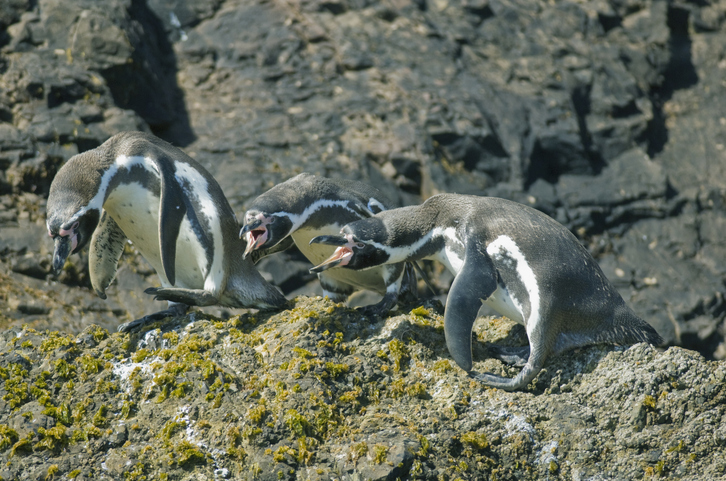
Chile has reclassified the Humboldt penguin as Endangered, citing a sharp population decline along its Pacific coastline. Scientists warn that without stronger conservation measures, the species may face further decline.
About the Humboldt Penguin
- Scientific Name: Spheniscus humboldti
- Habitat Range: Coastal regions of Chile and Peru, closely associated with the Humboldt Current in the Pacific Ocean.
- Global Distribution: Nearly 80% of the world’s population is found along Chile’s coast.
- Population Trend: Declined from about 45,000 (late 1990s) to fewer than 20,000 at present.
Physical Features
- White C-shaped band extending from the eye around the head
- Distinct black breast band
- Pink fleshy patch around the eyes (thermoregulation)
Diet and Behaviour
- Diet: Carnivorous; feeds mainly on anchovies, sardines, herring, and small marine organisms.
- Nesting: Uses burrows, caves, and guano deposits; does not form large chick crèches, unlike many other penguin species.
Conservation Status
- Chile (National): Endangered
- IUCN: Vulnerable
- CITES: Appendix I (commercial trade prohibited)
Major Threats
- Overfishing & Bycatch: Competition with commercial fisheries; deaths in fishing nets
- Habitat Loss & Pollution: Coastal degradation and marine pollution
- Climate Change: Disruption of food availability and breeding cycles
- El Niño Events: Alter ocean productivity, reducing prey
- Disease: Outbreaks such as avian (bird) flu
Conservation Concerns
- Experts warn that continued pressures could push the species from Endangered to Critically Endangered.
- Reclassification highlights the need for:
- Stricter sustainable fishing regulations (industrial and small-scale)
- Protection of breeding and feeding habitats
- Integrated conservation measures beyond legal reclassification
GeM–UN Women MoU & Womaniya Initiative
- 25 Nov 2025
In News:
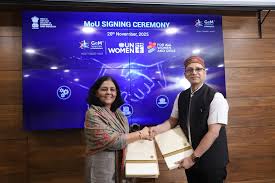
The Government e-Marketplace (GeM) and UN Women signed a Memorandum of Understanding (MoU) to enhance the participation of women entrepreneurs, especially from the informal sector, in India’s public procurement system under the Womaniya initiative.
About the GeM–UN Women MoU
- Purpose: Promote gender-responsive public procurement by increasing sourcing from women-led businesses.
- Focus Areas:
- Expanding market access for women entrepreneurs on GeM
- Capacity building, training, and onboarding of women-led MSEs, SHGs, artisans, and informal-sector enterprises
- Strengthening hyper-local and forward market linkages
- Implementation:
- UN Women:
- Design training modules
- Share global best practices and success stories
- Develop validation criteria for women-led businesses
- Support Womaniya – #VocalForLocal outlet, Udyam registration, and mentoring linkages
- GeM:
- Conduct training and onboarding workshops
- Sensitise government buyers
- Develop vernacular learning material
- Connect women entrepreneurs with R&D institutions and Government Labs for product development
- UN Women:
- Outcome Alignment: Contributes to Sustainable Development Goal 5 (Gender Equality).
Womaniya Initiative
- Launch: 2019 (on GeM platform)
- Aim: Enable women-led MSEs, SHGs, artisans, and marginalised women to sell directly to government buyers.
- Key Objective: Address the triple challenge faced by women entrepreneurs:
- Access to markets
- Access to finance
- Access to value addition
- Policy Linkage: Supports the objective of 3% reservation in government procurement for women-owned enterprises.
- Impact (Udyam Data):
- Women-owned MSMEs: 20.5% of total MSMEs
- Employment contribution: 18.73%
- Share in total investment: 11.15%
Government e-Marketplace (GeM)
- Launched: 2016
- Nodal Ministry: Ministry of Commerce and Industry
- Nature: One-stop online public procurement portal for Central & State Ministries, Departments, PSUs, and autonomous bodies
- Operator: GeM Special Purpose Vehicle (SPV) – fully government-owned, not-for-profit entity
- Coverage: Adopted across all 36 States and UTs (with several states mandating its use)
- Objectives: Transparency, efficiency, cost savings, and reduced corruption
- Independent assessments (e.g., World Bank) note ~10% cost savings
- Inclusivity Footprint:
- 10+ lakh MSEs
- 1.3 lakh artisans & weavers
- 1.84 lakh women entrepreneurs
- 31,000+ startups
- Innovation: GeMAI – India’s first generative AI-powered public sector chatbot, supporting voice and text in 10 Indian languages.
350th Martyrdom Day of Guru Teg Bahadur
- 25 Nov 2025
In News:
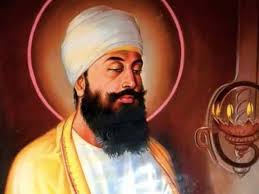
The President of India paid tribute to Guru Tegh Bahadur on his 350th Martyrdom Day on 24 November.
About Guru Tegh Bahadur
- Position: 9th Sikh Guru
- Known for: Spiritual depth, courage, and supreme sacrifice for religious freedom.
Early Life and Lineage
- Born: 21 April 1621, Amritsar
- Parents: Guru Hargobind (6th Sikh Guru) and Mata Nanki
- Birth Name: Tyag Mal (reflecting ascetic inclination)
Education and Training
- Scriptural Education: Trained under Bhai Gurdas
- Martial Training: Trained by Baba Budha
- Represents the Sikh tradition of spiritual–temporal synthesis (Miri–Piri).
Contributions and Leadership
- Bani: Composed 116 hymns included in the Guru Granth Sahib
- Preaching: Travelled widely across the Indian subcontinent spreading Sikh teachings
- Town Founded: Chak-Nanki, later developed into Shri Anandpur Sahib (Punjab)
Martyrdom and Legacy
- Year: 1675
- Place: Delhi (near present-day Gurudwara Sis Ganj Sahib)
- Cause: Executed on the orders of Aurangzeb for opposing forced religious conversions and defending freedom of conscience.
- Title Earned: “Hind di Chadar” (Shield of India)
Significance
- First martyr in world history to sacrifice life for the religious freedom of others.
- His martyrdom strengthened India’s tradition of pluralism, tolerance, and human rights.
Seychelles Joins Colombo Security Conclave (CSC)
- 25 Nov 2025
In News:
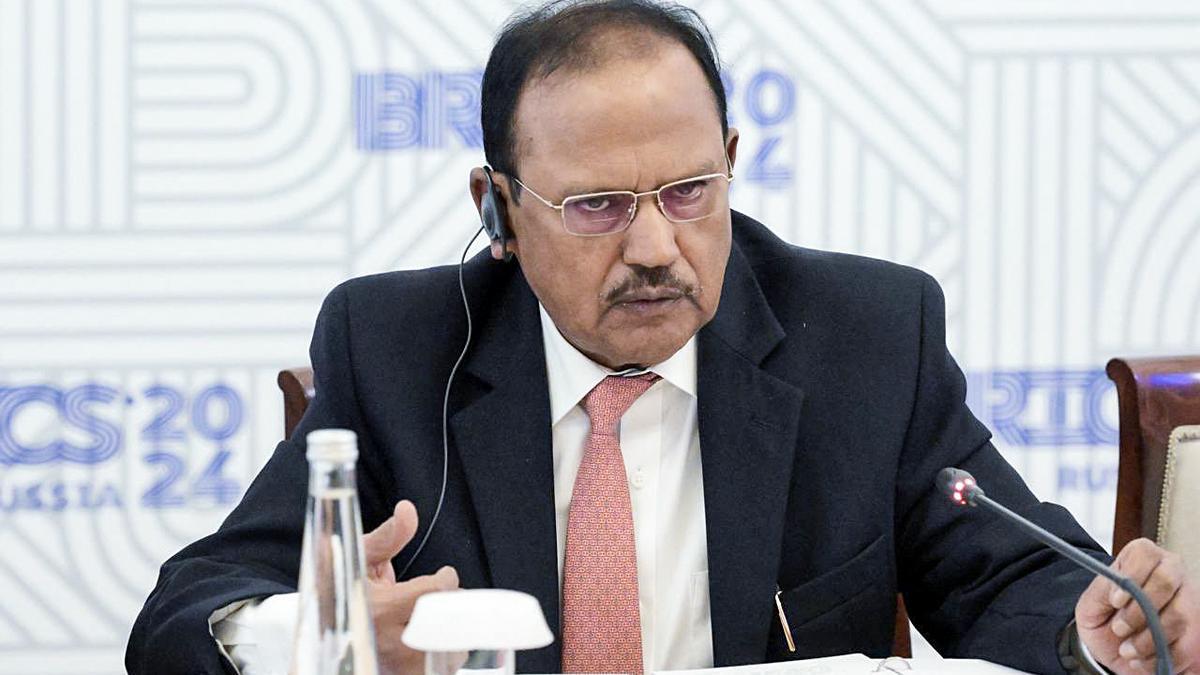
The 7th National Security Adviser (NSA) level meeting of the Colombo Security Conclave was held in New Delhi. Seychelles was inducted as the 6th full member, marking a significant expansion of the grouping and strengthening cooperative security in the Indian Ocean Region (IOR).
About the CSC
- Nature: Regional security grouping of Indian Ocean littoral states.
- Members (2025): India, Sri Lanka, Maldives, Mauritius, Bangladesh, and Seychelles.
- Participants: National Security Advisors (NSAs) and Deputy NSAs for coordinated security cooperation.
- Aim: Address shared transnational security challenges in the IOR.
Origin and Evolution
- 2011: Began as Trilateral Maritime Security Cooperation (India–Sri Lanka–Maldives).
- Post-2014: Momentum slowed due to regional geopolitical dynamics.
- 2020: Revived and rebranded as the Colombo Security Conclave.
- Expansion: Mauritius (2022), Bangladesh (2024), Seychelles (2025).
Core Objectives
- Enhance regional security cooperation.
- Tackle transnational threats of common concern through information-sharing, coordination, and capacity-building.
Pillars of Cooperation
- Maritime safety and security
- Counter-terrorism and counter-radicalisation
- Combating trafficking and transnational organised crime
- Cyber security and protection of critical infrastructure
- Humanitarian Assistance and Disaster Relief (HADR)
Institutional Framework
- Permanent Secretariat: Colombo (ensures continuity and coordination).
- Working Mechanism: Regular NSA and Deputy NSA–level meetings.
Significance for India
- Strengthens India’s strategic influence in the IOR through coordinated maritime security, counter-terrorism, and cyber resilience.
- Institutionalised NSA dialogue advances Neighbourhood First and SAGAR (Security and Growth for All in the Region) vision.
- Contributes to a stable, secure, and rules-based regional order.
Seychelles: Strategic Snapshot
- Geography: Archipelagic state of 155 islands in the western Indian Ocean, northeast of Madagascar; located on the Mascarene Plateau.
- Capital: Victoria (Mahé Island).
- Profile: Africa’s smallest and least populated country.
- Strategic Importance: Sits astride key maritime trade routes; crucial for anti-piracy, maritime security, and the Blue Economy; an important partner in India’s IOR diplomacy and SAGAR vision.