
Pilia malenadu
- 05 Nov 2025
In News:
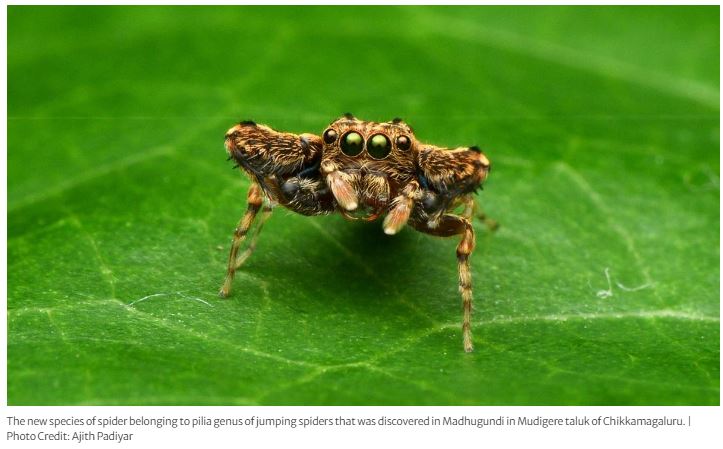
A biodiversity exploration team working in the Western Ghats has discovered a new spider species, Pilia malenadu, marking a major addition to India’s arachnid diversity. The finding is notable because species belonging to the genus Pilia were last reported more than 123 years ago (1902) from Kerala.
About Pilia malenadu
- Pilia malenadu is a newly identified jumping spider belonging to the genus Pilia (Family: Salticidae).
- Location of Discovery:
- Found at Madhugundi, in Mudigere taluk, Chikkamagaluru district, Karnataka.
- The site lies at the foothills of the Western Ghats, a global biodiversity hotspot.
- Etymology:
- The species is named “malenadu” to honour the local region (Malenadu/Malnad).
- Scientific Importance:
- First recorded species of Pilia since 1902.
- First time both male and female specimens of a Pilia species have been documented.
Habitat Specificity
- The species demonstrates high microhabitat specialization.
- Observed only on two plant species:
- Memecylon umbellatum
- Memecylon malabaricum
- Spiders were found concealed between the leaves of these plants, indicating a narrow ecological niche.
Conservation Implications
- The study highlights that Pilia malenadu is strictly habitat-specific.
- Loss or alteration of its host plant species or habitat could threaten the survival of this newly discovered spider.
- Underscores the need for habitat-level conservation in the Western Ghats, particularly in lesser-studied microhabitats.
Amphipod Species
- 05 Nov 2025
In News:
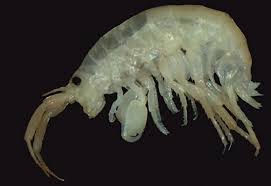
Researchers from Berhampur University (Odisha) and Hemchandracharya North Gujarat University (Gujarat) have identified two new species of marine amphipods from the Chilika Lagoon and the Gulf of Khambhat, underscoring India’s expanding marine biodiversity documentation.
What are Amphipods?
- Amphipods are small, shrimp-like crustaceans belonging to the subclass Amphipoda.
- They are related to crabs, lobsters, and shrimp.
- Occur in a wide range of habitats: marine, freshwater, subterranean caves, and even terrestrial zones (e.g., sandhoppers).
- The name Amphipoda means “different-footed”, referring to their anatomically varied appendages.
- Globally, 7,000+ species are known (majority under Gammaridea).
- Size range: 0.1 cm to 34 cm; deep-sea species tend to be the largest.
- Ecological role: mostly detritivorous or scavenging species that contribute to nutrient cycling and ecosystem cleaning.
Newly Discovered Species
1. Grandidierella geetanjalae
- Location: Chilika Lagoon, near Rambha (Ganjam district, Odisha).
- Size: ~5.5–6 mm.
- Naming: In honour of Geetanjali Dash, Vice-Chancellor of Berhampur University.
- Nature: Detritivorous; important for organic matter decomposition.
2. Grandidierella khambhatensis
- Location: Gulf of Khambhat, Gujarat.
- Size: ~5.5–6 mm.
- Naming: After its type locality (Khambhat).
- Ecological Role: Similar detritivorous function supporting ecosystem health.
Research Background and Previous Discoveries
- The research team has earlier discovered five amphipod species from eastern India, including:
- Quadrivisio chilikensis (Chilika, near Nalabana Bird Sanctuary)
- Demaorchestia alanensis (Barkul beach)
- Talorchestia buensis (West Bengal coast)
- These discoveries indicate that Indian coastal ecosystems remain under-explored and possess high micro-faunal diversity.
Ecological Importance
- Amphipods function as key components of benthic food webs, recycling detritus and supporting fish populations.
- Their presence is an indicator of habitat quality, especially in sensitive ecosystems such as lagoons, estuaries, and coastal wetlands.
- Discoveries from Chilika and Khambhat strengthen the case for monitoring anthropogenic pressures, salinity changes, and sediment dynamics in Indian coastal habitats.
Rowmari–Donduwa Wetland Complex
- 05 Nov 2025
In News:
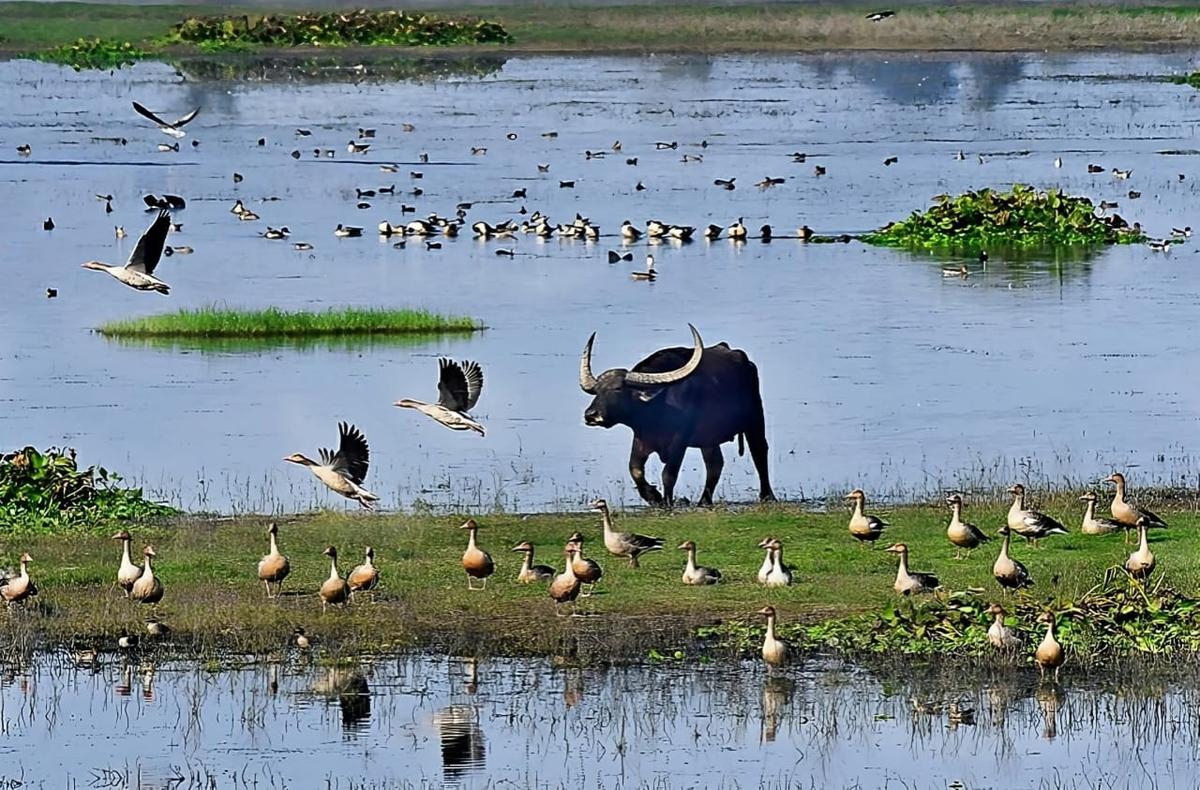
The Rowmari–Donduwa Wetland Complex in Assam has recently emerged as a strong contender for Ramsar Site designation, driven by its exceptional biodiversity, critical ecological functions, and strategic location within the Kaziranga landscape.
Location and Ecological Setting
- The Rowmari–Donduwa Wetland Complex lies within the Laokhowa Wildlife Sanctuary, a buffer zone of the Kaziranga Tiger Reserve.
- It forms an interconnected floodplain–marsh system extending 2.5–3 sq km.
- Together with the adjoining Burhachapori WLS, it serves as an important wildlife corridor between the Kaziranga–Orang landscape, with the Brahmaputra River shaping its riverine and wetland ecosystems.
Biodiversity Significance
1. Exceptional Avifaunal Diversity
- The 6th Kaziranga Wetland Bird Census (2025) reported
- 20,653 birds from 75 species at Rowmari Beel
- 26,480 birds from 88 species at Donduwa Beel
- Total: 47,000+ birds
- This exceeds the bird counts of Northeast India’s existing Ramsar sites—Deepor Beel (Assam) and Loktak Lake (Manipur).
- More than 120 species of resident and migratory birds recorded, including threatened species such as:
- Knob-billed Duck
- Black-necked Stork
- Ferruginous Pochard
2. Habitat Diversity: The wetland complex contains marshes, floodplain lakes, grasslands, and riverine islands (chars), supporting high ecological productivity.
3. Presence of Rare & Endangered Species: Recent surveys by scholars from Tezpur, Gauhati, and Nagaon Universities have documented rare and critically endangered waterbirds, emphasizing the site's international ecological value.
The Ramsar Convention (1971)
- A global treaty for conservation and wise use of wetlands, signed at Ramsar, Iran (1971).
- India joined in 1982 and today hosts 94 Ramsar Sites (as of Nov 2025)—the highest in Asia.
- Chilika Lake (Odisha) was India’s first Ramsar Site (1981).
- Tamil Nadu has the highest number of Ramsar Sites among Indian states.
- About 10% of India’s wetland area is under the Ramsar framework.
Laokhowa–Burhachapori Wildlife Sanctuary
- Serves as a buffer and migration corridor between Kaziranga and Orang National Parks.
- Home to key species:
- Great Indian One-horned Rhinoceros
- Royal Bengal Tiger
- Asiatic Elephant
- Asiatic Water Buffalo
- Otters, pangolins
- The Brahmaputra River supports the Gangetic River Dolphin.
Kaziranga National Park
- Established: 1908, National Park (1974)
- UNESCO World Heritage Site: 1985
- Tiger Reserve: 2006
- Supports ~2,200 one-horned rhinos (≈ two-thirds of global population).
- Rich in large mammals, birds, and aquatic fauna, forming the ecological backbone of the region.
LVM3-M5 Launch Vehicle
- 05 Nov 2025
In News:
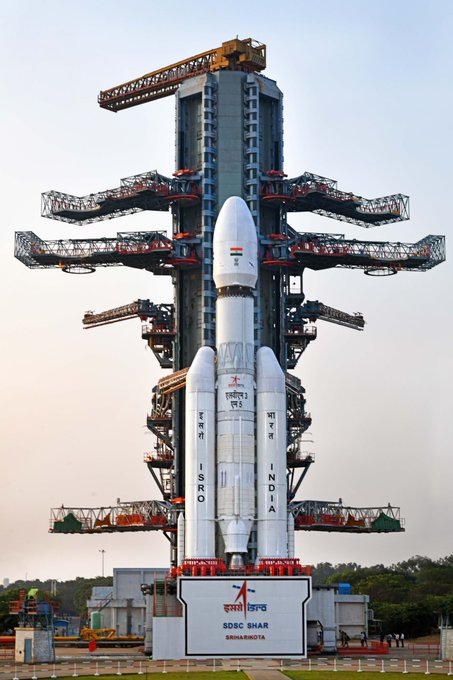
The Indian Space Research Organisation (ISRO) successfully launched CMS-03 (GSAT-7R), India’s heaviest communication satellite, aboard the LVM3-M5 launch vehicle from Sriharikota. The mission strengthens India’s strategic communication architecture, particularly maritime and defence networks, while reinforcing self-reliance in heavy satellite launch capability.
CMS-03 (GSAT-7R)
- CMS-03, also known as GSAT-7R, is an advanced multi-band communication satellite designed to enhance secure, high-capacity communication links across land and oceanic regions.
- It replaces the ageing GSAT-7 “Rukmini” and significantly expands India’s maritime communication footprint.
- Developed by: ISRO under the Department of Space, with all stages, subsystems, and payloads built using indigenous technology.
- Key Objectives:
- To provide secure, high-bandwidth communication for defence, especially the Indian Navy.
- To enhance network-centric warfare, fleet coordination, and maritime domain awareness.
- To strengthen India’s digital, strategic, and disaster management communication infrastructure.
- To expand India’s oceanic communication footprint under Atmanirbhar Bharat.
- Major Features
- Mass: 4,410 kg — heaviest Indian satellite launched from Indian soil.
- Bands & Payloads: Multi-band communication including C, extended-C, Ku, Ka, and support for UHF & S bands for strategic defence applications.
- High-throughput transponders supporting broadband, satellite internet, and real-time secure data flow.
- Coverage: Entire Indian mainland and wide Indian Ocean Region (IOR), including remote and contested waters.
- Mission Life: ~15 years.
- Role in Naval Operations:
- Backbone of the Navy’s communication grid.
- Supports secure voice, video, and data links between warships, submarines, aircraft, and command centres.
- Enhances situational awareness, joint operations, and maritime security.
LVM3-M5
- The Launch Vehicle Mark-III (LVM3), known as the “Baahubali” of Indian rockets, is ISRO’s most powerful three-stage heavy-lift launcher capable of placing 4-tonne class satellites into Geosynchronous Transfer Orbit (GTO).
- Key Objectives:
- To ensure self-reliance in launching heavy communication and strategic satellites.
- To reduce dependence on foreign launch services.
- To support future deep-space, high-mass, and crewed platforms.
- Key Features
- Three-stage configuration:
- Two S200 solid boosters
- One L110 liquid core stage
- C25 cryogenic upper stage with an indigenously developed engine
- Three-stage configuration:
- Capabilities:
- 4,000 kg to GTO
- 8,000 kg to Low Earth Orbit (LEO)
- Mass & Size: 641 tonnes; 43.5 metres tall.
- Cryogenic re-ignition test conducted for future multi-satellite deployment.
- Developed by Vikram Sarabhai Space Centre (VSSC) with enhanced payload efficiency (~10%).
- Proven reliability in eight consecutive missions, including Chandrayaan-3 and now CMS-03.
- Candidate launcher for future Gaganyaan crewed missions.
Employee’s Enrolment Scheme 2025

- 05 Nov 2025
In News:
- The Ministry of Labour and Employment has launched the Employee’s Enrolment Scheme 2025 (EES-2025) to widen the social security net by bringing excluded employees into the Employees’ Provident Fund (EPF) fold.
- Implemented by the Employees’ Provident Fund Organisation (EPFO), the scheme provides a single, time-bound opportunity for employers to voluntarily regularise workers who should have been covered under the EPF Act but were not enrolled earlier.
About the Scheme
- Type: One-time voluntary compliance window.
- Implementing Agency: EPFO, Ministry of Labour & Employment.
- Coverage Period for Eligible Employees: 1 July 2017 to 31 October 2025.
- Operational Window: 1 November 2025 – 30 April 2026 (six months).
The scheme allows employers to declare and enrol employees who were omitted—intentionally or inadvertently—from EPF coverage during the above period.
Objectives
- To expand EPF coverage under the EPF & MP Act, 1952.
- To promote voluntary compliance and foster trust between employers and regulators.
- To support workforce formalisation and ensure financial protection for previously unregistered workers.
- To reduce litigation and compliance burden by providing a simplified remedial mechanism.
Key Features
- Employers may enrol all eligible employees engaged between July 2017 and October 2025 who were not covered earlier.
- Waiver of employee contribution for the past period if it was not deducted earlier.
- Employers are required to pay:
- Employer’s share of EPF contribution, and
- A nominal penalty of ?100 per establishment.
- Applicable even to establishments under inquiry under:
- Section 7A of the EPF Act, or
- Paragraph 26B of the EPF Scheme.
- EPFO will not initiate suo motu action for earlier non-compliance once the employer makes full voluntary disclosure under the scheme.
Significance
- Strengthens social security by widening EPF coverage for millions of workers.
- Boosts ease of doing business by reducing penalties and enabling smooth compliance.
- Encourages formalisation, aligning with India's goal of universal social protection.
- Helps reduce disputes, improve employer-employee relations, and enhance long-term financial safety for the workforce.