
Export of Assam’s GI-Tagged Joha Rice

- 14 Mar 2026
In News:
- India recently facilitated the export of 25 metric tonnes of GI-tagged Joha rice from Assam to the United Kingdom and Italy.
- The initiative was supported by the Agricultural and Processed Food Products Export Development Authority (APEDA) to expand global access to India’s niche agricultural products and strengthen export opportunities for farmers in the North-Eastern region.
- This export marks an important step in promoting geographical indication (GI) products in international markets while enhancing income opportunities for local producers.
About Joha Rice
- Joha Rice is a short-grain aromatic rice variety traditionally cultivated in Assam. Known for its distinctive fragrance and soft texture, it is an integral part of Assamese cuisine and cultural traditions.
- The rice received Geographical Indication (GI) status in 2017, recognising its unique origin, traditional cultivation methods, and region-specific characteristics.
Region of Cultivation
Joha rice is primarily cultivated in Upper and Central Assam, where agro-climatic conditions support its growth. Major producing districts include:
- Sivasagar
- Jorhat
- Golaghat
- Dibrugarh
- Lakhimpur
The crop is usually grown during the Sali (winter) rice season, which is the primary paddy cultivation cycle in Assam.
Key Characteristics
Joha rice possesses several unique features that distinguish it from other rice varieties:
- Aromatic Quality: The rice emits a distinct natural fragrance, similar to premium aromatic varieties, making it suitable for specialty dishes.
- Short-Grain Variety: It is a short-grain winter paddy, known for its soft texture when cooked.
- Nutraceutical Properties: Studies indicate that Joha rice contains several bioactive compounds, including:
- Omega-3 and omega-6 fatty acids
- Antioxidants
- Flavonoids and phenolic compounds
- Potential Health Benefits: Bioactive compounds such as oryzanol, ferulic acid, and tocotrienols are associated with anti-diabetic and cardio-protective properties, increasing its appeal in health-conscious markets.
Significance of the Export
- Promoting GI-Tagged Products: The export highlights the growing international demand for India’s geographically unique agricultural products, reinforcing the value of the GI certification system.
- Enhancing Farmer Income: GI-tagged agricultural commodities often command premium prices in international markets, benefiting local farmers and producers.
- Boosting Agricultural Exports: The initiative supports India’s strategy to diversify agricultural exports by promoting specialty and high-value crops.
- Supporting North-East Agricultural Development: Export promotion of Joha rice contributes to economic development in the North-Eastern region, integrating local farmers into global supply chains.
Fiscal Health Index 2026
- 14 Mar 2026
In News:
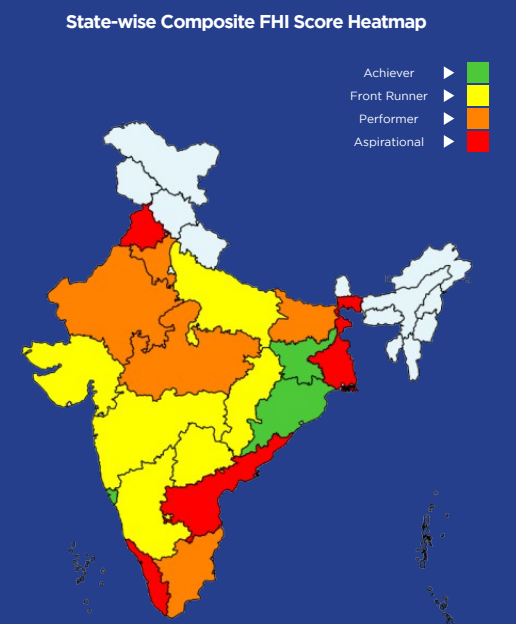
- The NITI Aayog has released the second edition of the Fiscal Health Index (FHI) 2026, which evaluates the fiscal performance and sustainability of Indian states for the financial year 2023–24.
- The index provides a comprehensive framework to assess the fiscal strength, vulnerabilities, and sustainability of state finances, moving beyond traditional indicators such as fiscal deficit to a broader evaluation of fiscal management.
- Given that state governments account for around one-third of India’s general government debt, their fiscal health plays a critical role in ensuring macroeconomic stability and sustainable economic growth.
What is the Fiscal Health Index?
- The Fiscal Health Index (FHI) is a comparative analytical framework developed by NITI Aayog to evaluate the financial performance of states using multiple fiscal indicators. It aims to promote transparent fiscal governance, data-driven policymaking, and peer benchmarking among states.
Key Pillars of the Index
The FHI evaluates states based on five core pillars:
- Quality of Expenditure: This indicator examines the composition of government spending, focusing on the proportion allocated to developmental and capital expenditure rather than committed or routine spending.
- Revenue Mobilisation: It measures the ability of states to generate own tax and non-tax revenues, reflecting fiscal self-reliance.
- Fiscal Prudence: This pillar evaluates how effectively states manage their fiscal deficits and adhere to the norms under the Fiscal Responsibility and Budget Management Act (FRBM).
- Debt Index: It assesses the size and burden of outstanding liabilities, indicating the level of indebtedness.
- Debt Sustainability: This dimension examines the long-term ability of states to service their debt obligations without creating fiscal stress.
State Rankings (FY 2023–24)
Top Performing States
- Odisha – Rank 1 (Score: 73.1)
- Goa – Rank 2 (Score: 54.7)
- Jharkhand – Rank 3 (Score: 50.5)
- Gujarat – Rank 4
- Maharashtra – Rank 5
Bottom Performing States
- Punjab – Rank 18
- Andhra Pradesh – Rank 17
- West Bengal – Rank 16
- Kerala – Rank 15
Among the North-Eastern and Himalayan states, Arunachal Pradesh emerged as the top performer, largely due to high-quality expenditure and relatively stable fiscal management.
Key Findings of the Report
- Expanded Coverage: The 2026 edition expanded its scope to include 10 North-Eastern and Himalayan states, recognising their unique geographic and structural fiscal constraints.
- Improved Capital Expenditure: Several states have increasingly prioritised capital expenditure and social sector spending, reflecting a shift toward growth-oriented investments.
- Persistent Fiscal Stress in Some States: Certain states continue to face structural fiscal challenges, including rising debt levels, weak revenue growth, and high fiscal deficits.
- Importance for National Macroeconomic Stability: With state finances forming a significant portion of public debt, improving fiscal management at the state level is essential for India’s overall fiscal stability.
Major Challenges Highlighted
- High Committed Expenditure: Large portions of state budgets are locked into salaries, pensions, and interest payments, leaving limited resources for development. For example, committed expenditure in Punjab accounted for about 80% of revenue receipts in 2023–24.
- Weak Own-Revenue Mobilisation: Several states depend heavily on central transfers rather than internal revenue generation. In Bihar, own revenue contributes less than one-third of total receipts, increasing fiscal vulnerability.
- Fiscal Deficit Pressures: Some states have breached the fiscal deficit limits prescribed under the FRBM framework. For instance, Andhra Pradesh’s fiscal deficit reached 4.35% of GSDP in 2023–24, exceeding the recommended threshold.
- Rising Interest Burden: High levels of debt lead to large interest payments. West Bengal spends over 20% of its revenue receipts on debt servicing, reducing fiscal flexibility.
- Geographic Constraints: States with challenging terrain face higher infrastructure and service delivery costs. For example, Himachal Pradesh experiences fiscal stress due to the high cost of maintaining infrastructure in mountainous regions along with rising pension liabilities.
Way Forward
To strengthen fiscal sustainability, the report suggests several reforms:
- Broadening the tax base and improving GST compliance to enhance state revenue capacity
- Rationalising subsidies and committed expenditure to create fiscal space for development
- Increasing the quality of capital expenditure to generate long-term economic growth
- Adopting medium-term fiscal frameworks to manage deficits and debt trajectories
- Enhancing transparency and data-driven governance, using tools such as the Fiscal Health Index for benchmarking
Devon Island
- 14 Mar 2026
In News:
Scientists from the National Aeronautics and Space Administration (NASA) continue to use Devon Island in the Canadian Arctic as a major Mars analogue research site. The island’s barren terrain, extreme cold, and polar desert conditions closely resemble the Martian environment, making it an ideal location to test next-generation rovers, autonomous drones, and life-support systems intended for future Mars missions.
Location and Geographic Setting
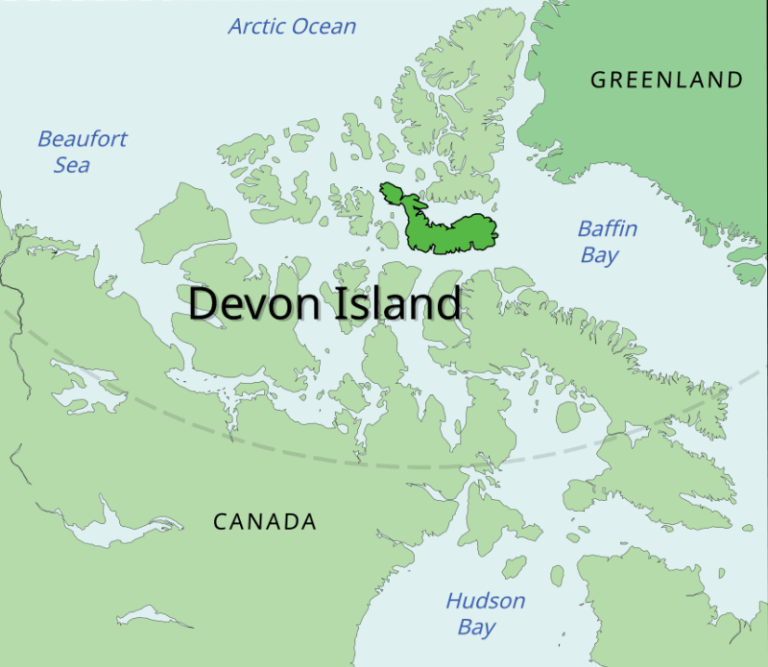
- Devon Island is located in the Canadian Arctic Archipelago within the territory of Nunavut, Canada, and lies well within the Arctic Circle.
- It is recognized as the largest uninhabited island on Earth, characterized by extremely harsh climatic conditions and limited biological activity.
Neighbouring Regions
- North: Separated from Ellesmere Island by Jones Sound
- South: Separated from Somerset Island and Baffin Island by Lancaster Sound
- West: Cornwallis Island, home to the settlement of Resolute
- East: Baffin Bay
Climate and Environmental Conditions
Devon Island is classified as a polar desert, characterized by extremely low precipitation and harsh climatic conditions.
Key climatic features include:
- Short growing season: Approximately 40–55 days per year
- Summer temperatures: Around 2°C to 8°C
- Winter temperatures: Can fall to −50°C
- Low solar energy input and minimal rainfall
These conditions severely limit vegetation growth, resulting in a barren, rocky landscape covered by snow and ice for much of the year.
Major Geographic Features
Haughton Impact Crater
- A prominent feature of the island is the **Haughton Impact Crater, approximately 20 kilometres (14 miles) wide, formed about 39 million years ago when a meteorite struck the region.
- The crater’s rocky, fragmented terrain and absence of vegetation make it one of the closest terrestrial analogues to the cratered surface of Mars.
Martian-Like Terrain
Devon Island contains several geological features that resemble Martian landscapes:
- Permafrost and underground ice deposits
- Dried lakebeds and sedimentary plains
- Deep canyons and rugged rocky valleys
These conditions simulate the extreme dryness, cold, and geological features found on Mars.
Endolithic Microbial Habitats
- Scientists have discovered microorganisms living inside rocks within the Haughton Crater. This phenomenon, known as endolithic colonisation, allows microbes to survive extreme conditions such as intense ultraviolet radiation and limited nutrients.
- Such findings help scientists understand how life might survive in harsh extraterrestrial environments.
Scientific and Space Exploration Significance
Testing Space Technology
Devon Island serves as a testing ground for space exploration equipment, including:
- Advanced planetary rovers
- Autonomous aerial drones
- Deep-drilling systems
- Pressurized exploration vehicles
Testing technologies in such remote conditions helps engineers evaluate equipment that cannot be repaired once deployed on Mars.
Searching for Signs of Life
- Research on microbial life in Devon Island’s frozen soils provides insights into potential biosignatures and survival strategies of life on Mars, guiding future astrobiology missions.
Astronaut Training
- The island’s extreme isolation, harsh climate, and barren terrain also provide a realistic environment for astronauts preparing for long-duration space missions, helping them adapt to the psychological and operational challenges of extraterrestrial exploration.
Black Rain
- 14 Mar 2026
In News:
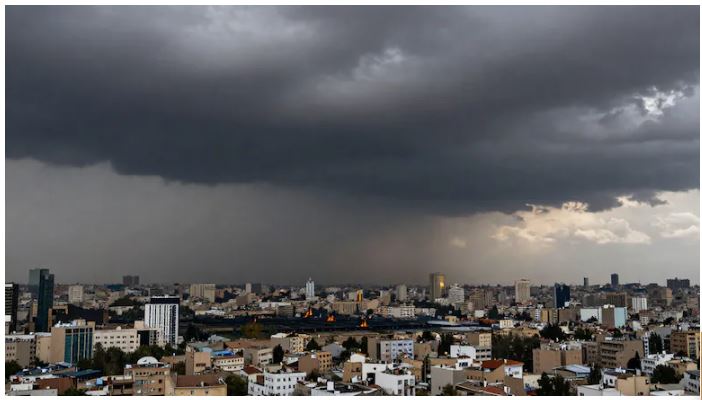
Following airstrikes on oil storage facilities in Tehran and Alborz Province in early March, residents reported the occurrence of “black rain”, a rare environmental phenomenon in which rainfall becomes contaminated with pollutants such as soot, hydrocarbons, and toxic chemicals. The event highlighted the severe environmental and health risks associated with large-scale industrial fires and atmospheric pollution.
What is Black Rain?
Black rain refers to precipitation that becomes heavily contaminated with soot, hydrocarbons, and chemical pollutants present in the atmosphere. Unlike normal rainwater, black rain appears dark, oily, and chemically polluted, often leaving a layer of toxic residue on surfaces.
This phenomenon generally occurs when dense smoke and particulate matter from fires mix with rain clouds, causing the falling rain droplets to absorb pollutants from the surrounding air.
Formation Process
The formation of black rain typically involves several atmospheric processes:
- and Smoke Generation: Large fires, especially from oil refineries or fuel storage facilities, release thick plumes of smoke containing soot and chemical vapours into the atmosphere.
- Atmospheric Loading: The smoke carries high concentrations of particulate matter and toxic gases, which accumulate in the lower atmosphere.
- Coalescence with Rain Clouds: When rainfall occurs, the raindrops pass through polluted air layers, absorbing suspended particles and chemicals before reaching the ground.
- Topographical Influence: In cities surrounded by mountains, such as Tehran, topographic barriers can trap smoke and pollutants, preventing dispersion and increasing the likelihood of contaminated rainfall.
Chemical Components
Black rain can contain a mixture of hazardous substances, including:
- Toxic hydrocarbons, such as benzene, which is a known carcinogen
- Sulphur oxides (SOx) and nitrogen oxides (NOx), which can react with water vapour to produce acid rain
- Particulate matter (soot) composed of carbon particles
- Per- and polyfluoroalkyl substances (PFAS) or “forever chemicals,” often released from industrial fire-suppression systems
These pollutants combine with rainwater to form a chemically contaminated precipitation.
Key Characteristics
Black rain exhibits distinct physical properties compared to normal rainfall:
- Appearance: Dark or jet-black droplets that may stain surfaces permanently
- Odour: Strong smell of burning petroleum and chemicals
- Texture: Greasy or viscous due to hydrocarbon contamination
- Spread: Polluted rainfall can fall many kilometres away from the original fire site depending on wind direction and atmospheric circulation
Environmental and Health Implications
Health Risks
Exposure to contaminated rainfall may cause:
- Skin irritation and burns
- Eye irritation
- Respiratory disorders due to inhalation of toxic particles
- Long-term risks such as lung damage or cancer from carcinogenic chemicals
Environmental Contamination
Pollutants deposited by black rain can contaminate soil and groundwater, potentially entering the food chain through crops and livestock.
Acid Rain Effects
The presence of sulphur and nitrogen oxides may lead to acidic precipitation, which can damage:
- Vegetation and crops
- Buildings and monuments
- Urban infrastructure
Persistent Pollution
Certain chemicals such as PFAS are highly persistent in the environment and may remain in soil and water for decades, posing long-term ecological challenges.
PM-SETU Scheme

- 14 Mar 2026
In News:
- The Government of India has constituted a National Steering Committee (NSC) to guide the implementation of the Pradhan Mantri Skilling and Employability through Upgraded ITIs (PM?SETU) scheme.
- The committee will function as the apex body to oversee reforms aimed at modernising Industrial Training Institutes (ITIs) and improving employability outcomes across the country.
- Approved by the Union Cabinet in 2025 with an estimated outlay of ?60,000 crore, PM-SETU represents a major initiative to align India’s vocational training ecosystem with emerging industry demands and technological changes.
Objectives of PM-SETU
The scheme seeks to transform the country’s skill development framework by:
- Upgrading Industrial Training Institutes (ITIs) with modern infrastructure and technology.
- Improving employability of youth through industry-relevant training.
- Promoting industry participation in vocational education.
- Aligning skill development programmes with future sectors such as advanced manufacturing, electronics, mobility, and logistics.
A key objective is to shift the model of skill training from government-led programmes to an industry-driven ecosystem, where companies actively participate in curriculum design, training delivery, and infrastructure development.
Hub-and-Spoke Model for ITI Upgradation
A major structural reform under PM-SETU is the introduction of the hub-and-spoke model.
- Around 200 ITIs will be upgraded as “Hub” institutions with advanced infrastructure and modern training facilities.
- Each hub will mentor approximately four nearby “Spoke” ITIs, sharing resources such as specialised equipment, digital learning platforms, and technical expertise.
This model aims to create regional clusters of high-quality skill training centres, ensuring wider access to modern vocational education.
Strengthening National Skill Training Institutes
The scheme also focuses on upgrading National Skill Training Institutes (NSTIs) into global Centres of Excellence. Key NSTIs targeted under the initiative are located in:
- Bhubaneswar
- Chennai
- Hyderabad
- Kanpur
- Ludhiana
These institutions will provide advanced training, support instructor development, and promote innovation in skill training methodologies.
Governance through Special Purpose Vehicles (SPVs)
Each upgraded ITI will be managed through a Special Purpose Vehicle (SPV) formed under an industry-government partnership model.
Key features include:
- Industry partners hold 51% ownership, while the government holds 49%.
- Industry participants can receive up to 83% government funding for infrastructure and training upgrades.
- The SPV structure ensures professional management, accountability, and industry alignment.
This governance model is designed to bring corporate expertise and efficiency into vocational education management.
Industry Participation
To enhance collaboration with the private sector, the **Ministry of Skill Development and Entrepreneurship has invited Anchor Industry Partners (AIPs) through an Expression of Interest (EOI) process.
These industry partners will play a key role in:
- Designing industry-relevant curricula
- Upgrading training infrastructure
- Providing hands-on exposure and apprenticeships
- Improving placement opportunities for trainees
Modern Training Ecosystem
The Directorate General of Training has introduced 31 new-age courses under the Craftsmen Training Scheme (CTS) to address emerging industry requirements.
Training programmes will focus on high-growth sectors such as:
- Advanced manufacturing
- Electronics and semiconductor-related technologies
- Mobility and electric vehicles
- Logistics and supply chain management
These reforms aim to build a future-ready workforce equipped with modern technical skills.