
Darjeeling Mandarin Orange Gets GI Tag

- 01 Dec 2025
In News:
Darjeeling Mandarin Orange, a premium citrus fruit grown in the hill regions of West Bengal, has been accorded Geographical Indication (GI) status, recognising its unique quality, flavour, and regional identity. With this, it becomes the third GI-tagged product from the Darjeeling region, after Darjeeling Tea and Dalley Khursani chilli.
About Darjeeling Mandarin Orange
- Botanical name: Citrus reticulata Blanco
- Region: Hills of Darjeeling and Kalimpong, West Bengal
- Local name: Suntala
- Economic importance: Major cash crop of the Darjeeling hills, known for distinct aroma, sweetness, and flavour
- Applicant/Owner: Darjeeling Organic Farmers Producer Organisation (DOFPO), Mirik, ensuring community ownership
Climatic & Edaphic Requirements
- Altitude: 600–1,500 metres above mean sea level
- Climate: Frost-free tropical to subtropical
- Rainfall: ~100–120 cm annually
- Temperature: 10°C–35°C
- Soil: Medium to light loamy soils
Production & Significance
- Output (2016): ~15,000 metric tonnes from Darjeeling & Kalimpong districts
- Market: Historically exported; high demand including European markets
- Challenges: Production declined over the past 15 years due to virus and pest attacks
- Expected impact of GI:
- Revival of cultivation and farmer incomes
- Protection against misuse/imitations
- Branding and premium pricing in domestic and export markets
What is a Geographical Indication (GI) Tag?
- A sign identifying goods as originating from a specific region where quality, reputation, or characteristics are attributable to that origin.
- Covered goods: Agricultural products, foodstuffs, wines & spirits, handicrafts, industrial products.
- Legal framework: Geographical Indications of Goods (Registration and Protection) Act, 1999
- Validity: 10 years, renewable.
Hansa-3 NG Trainer Aircraft

- 01 Dec 2025
In News:
The CSIR–National Aerospace Laboratories (CSIR-NAL), Bengaluru, has launched the production-version of the indigenous Hansa-3 (NG) trainer aircraft, marking a significant step towards strengthening India’s self-reliance in civil aviation training and indigenous aircraft manufacturing.
About Hansa-3 Aircraft
- Type: Indigenous two-seat trainer aircraft
- Developer: CSIR-NAL
- Purpose: Basic / ab-initio flight training
- Primary Users: Flying clubs, pilot training academies, and civil aviation training institutions
Design & Construction
- Built entirely using fiberglass and carbon composite materials
- Advantages:
- High corrosion resistance
- Better damage tolerance
- Ease of repair and maintenance
- Lightweight airframe suited for repetitive training operations
Hansa-3 (NG – New Generation): Key Upgrades
The Hansa-3 NG is an advanced version of the earlier Hansa-3, incorporating modern avionics and performance improvements:
- Digital Glass Cockpit
- Replaces traditional analogue instruments
- Enhances situational awareness and training efficiency
- Increased Fuel Capacity
- Allows longer training sorties
- Improves aircraft endurance
- Improved Flight Characteristics
- Low stall speed
- Stable and predictable handling
- Ideal for first-time trainee pilots
- Training-Friendly Design
- Simple systems
- Forgiving flight envelope for beginners
Significance of Production-Grade Launch
- Transition from prototype to production-ready aircraft
- Boosts Atmanirbhar Bharat in civil aviation
- Reduces dependence on imported trainer aircraft
- Supports expansion of pilot training capacity in India
- Strengthens the civil aerospace ecosystem led by CSIR laboratories
Opening India’s Nuclear Sector to Private Players
- 01 Dec 2025
In News:
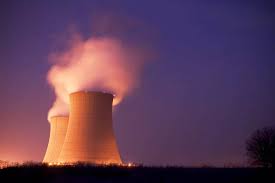
The Prime Minister of India, Narendra Modi, has stated that the Government is moving towards opening the nuclear power sector for private participation, marking a major reform similar to earlier liberalisation of the space sector. The reform aims to strengthen energy security, clean energy transition, and technological leadership, while creating opportunities in small modular reactors (SMRs), advanced reactors, and nuclear innovation.
Background: Nuclear Power Sector in India
- Traditionally, nuclear power plants in India are owned and operated only by public sector entities:
- Nuclear Power Corporation of India Limited (NPCIL)
- Bharatiya Nabhikiya Vidyut Nigam (BHAVINI)
Proposed Legal Changes
To enable private sector entry, the Government has proposed amendments to:
- Atomic Energy Act, 1962 – Governs development, control, and regulation of nuclear energy.
- Civil Liability for Nuclear Damage Act, 2010 – Provides compensation mechanisms and fixes liability in case of nuclear incidents.
What is Nuclear Energy?
- Energy released during nuclear reactions:
- Fission: Splitting of heavy nuclei (e.g., uranium, plutonium) – used in nuclear power plants.
- Fusion: Merging of light nuclei (future potential).
- Nuclear fission produces large amounts of energy with low carbon emissions, making it crucial for clean baseload power.
Status of Nuclear Power in India
- Installed Capacity: ~8,180 MW
- Reactors: 24 nuclear reactors in operation
- Long-term Target: 100 GW nuclear capacity by 2047
- Under Construction:
- 10 new reactors (≈8 GW) in Gujarat, Rajasthan, Tamil Nadu, Haryana, Karnataka, Madhya Pradesh
- Approval for a 6 × 1208 MW nuclear plant in Andhra Pradesh in collaboration with the USA
Government Initiatives
- ?20,000 crore R&D mission for development of Small Modular Reactors (SMRs).
- Target to deploy at least five indigenously developed SMRs by 2033.
- NPCIL–NTPC Joint Venture:
- National Thermal Power Corporation (NTPC) and NPCIL formed a JV named ASHVINI.
- ASHVINI will build, own, and operate nuclear power plants, including the 4 × 700 MWe PHWR Mahi-Banswara Rajasthan Atomic Power Project.
Benefits of Private Sector Participation
- Faster Capacity Expansion: Mobilises large-scale private investment.
- Technological Advancement: Access to global expertise and innovation.
- Cost Efficiency: Competitive processes reduce delays and overruns.
- Energy Security: Reduces dependence on fossil fuels and supports climate goals.
- Clean Energy Transition: Strengthens India’s low-carbon energy mix.
Key Concerns
- Regulatory Challenges: Need for strong and clear regulatory oversight.
- High Capital Requirement: Large upfront costs and long gestation periods.
- Liability Issues: High operator liability under existing law deters investors.
- Safety & Security: Nuclear safety, waste management, and national security concerns.
- Public Perception: Fear of radiation risks and nuclear accidents.
Way Forward
- Clear Regulatory Framework: Transparent rules ensuring safety and accountability.
- Public–Private Partnerships (PPPs): Government oversight with private investment and operations.
- Phased Implementation: Pilot projects and SMRs before large-scale private entry.
1st Blind Women’s T20 World Cup 2025
- 01 Dec 2025
In News:
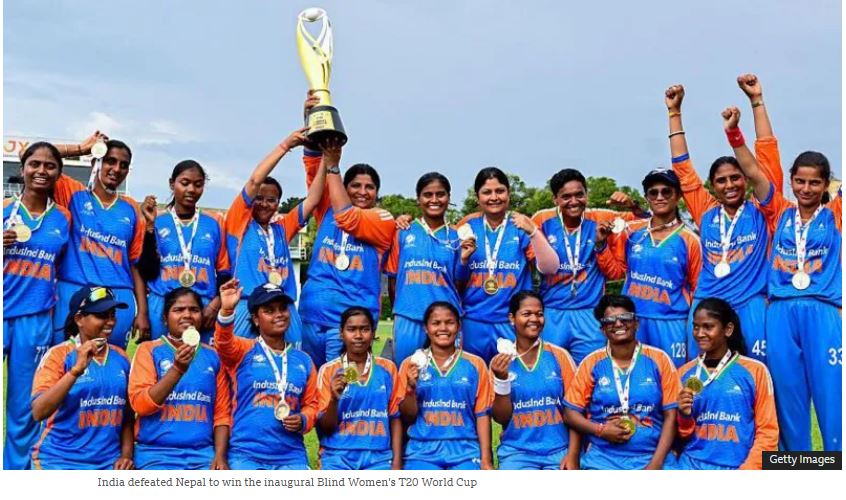
The Prime Minister of India, Narendra Modi, met and felicitated the Indian Women’s Blind Cricket Team after their historic victory in the first-ever Blind Women’s T20 World Cup 2025, where India defeated Nepal in the final.
Key Details:
- The Blind Women’s T20 World Cup 2025 is the first global cricket championship exclusively for women cricketers with visual impairment.
- A landmark initiative promoting inclusivity, representation, and international recognition for blind women athletes.
Organising Body
- Organised by World Blind Cricket Ltd. (WBC)
- Hosted jointly with:
- Cricket Association for the Blind in India (CABI)
- Cricket Association for the Blind in Sri Lanka
Hosts & Venues
- Co-hosts: India and Sri Lanka
- Venues:
- Delhi (India)
- Bengaluru (India)
- Colombo (Sri Lanka)
- Final Venue: P. Sara Oval Stadium, Colombo
Tournament Structure & Format
- Participating Nations (6): India, Nepal, Pakistan, Sri Lanka, Australia, USA
- Format:
- Round-robin league
- Semi-finals
- Final
Unique Playing Features (Blind Cricket Rules)
- Player Categories:
- B1: Totally blind
- B2 & B3: Partially sighted
- Mandatory mix of all categories in the playing XI
- Equipment & Rules:
- White plastic ball with metal bearings to produce sound
- Underarm bowling along the ground
- B1 batters use runners
- Each run scored by a B1 batter is counted double
Results & Indian Team Highlights
- Champion: India (Unbeaten throughout the tournament)
- Final Result: India defeated Nepal by 7 wickets
- Player of the Final: Phula Saren
- Captain of India: Deepika TC (Deepika Gaonkar)
Vikram-I Rocket & India’s Private Space Ecosystem
- 01 Dec 2025
In News:
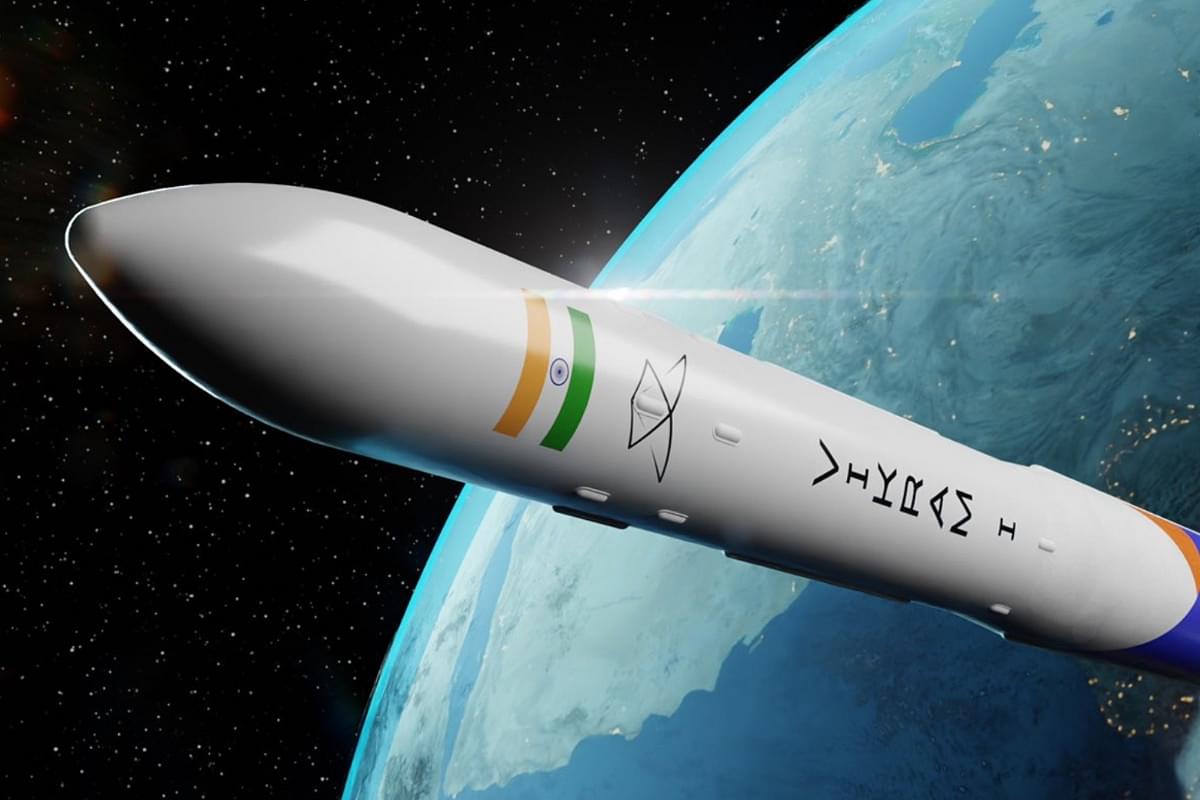
The Prime Minister of India, Narendra Modi, recently inaugurated the Infinity Campus of Skyroot Aerospace and unveiled its first orbital-class launch vehicle, Vikram-I. This milestone highlights the rapid expansion of India’s private space sector following recent space sector reforms.
About Skyroot Aerospace
- India’s leading private space startup.
- Founded by Pawan Chandana and Bharath Dhaka, former scientists of ISRO.
- Became the first Indian private company to launch a rocket to space with the successful sub-orbital launch of Vikram-S (November 2022).
Vikram-I Rocket: Key Features
- Type: India’s first private orbital-class launch vehicle.
- Naming: Named after Vikram Sarabhai, father of India’s space programme.
- Height: ~20 metres.
- Stages: Four-stage rocket
- Stages 1–3: Solid-fuelled
- Stage 4: Hypergolic liquid stage (cluster of four Raman engines using MMH fuel and NTO oxidiser).
- Thrust: ~1,200 kN.
- Structure: All-carbon composite for high strength-to-weight efficiency.
- Payload Capacity:
- Up to 350 kg to Low Earth Orbit (LEO)
- Up to 260 kg to Sun-Synchronous Orbit (SSO)
- Mission-specific capacities (e.g., ~290 kg to 500 km SSO; ~480 kg to 500 km LEO at 45° inclination).
- Launch Readiness: Designed for rapid launches (within ~24 hours from any location).
- Target Segment: Small satellite and multi-satellite launch missions.
Technological Innovations
- 3D-printed rocket engines.
- Advanced avionics with real-time guidance and navigation.
- Ultra-low-shock pneumatic separation systems for satellite safety.
- Hybrid propulsion architecture combining solid stages with a precise liquid upper stage.
Strategic & Economic Significance
- Expected debut: Early 2026.
- Supports India’s goal of a ~$77 billion space economy by 2030.
- Reduces launch burden on ISRO and ensures indigenous, on-demand access to orbit.
- Boosts downstream applications in defence, disaster management, environment monitoring, communication, and infrastructure.
- Strengthens India’s position as a global hub for cost-effective small satellite launches.